




The best applications for a mobile glass cutter machine include architectural glazing, emergency window replacement, interior partitions, furniture glass, automotive glass, smart mirrors, and decorative panels. In each case, the machine cuts glass closer to where it is needed, which shortens response time and reduces handling. We at HUASHIL build mobile glass cutter machine solutions, including the HSL-LSX6133. Buyers get the best results when they match the machine to glass type, panel size, and daily volume. This article walks through each use case, the key features of the HSL-LSX6133, and the checks we recommend before you buy.
Core Applications for a Mobile Glass Cutter Machine
Architectural Glazing and Curtain Wall Work
Building glazing is used most of the time. Sheets are cut or adjusted to fit windows, doors, storefronts, shower enclosures, and curtain walls. Cutting close to where the work is going to be done saves time and money because you don't have to move and measure things again or keep a lot of rough sizes on hand. This works best for changes that need to be made, hotels, and stores that are hard for factories to get to. Note that ASTM C1048 only applies to fully tempered and heat-strengthened flat glass. Once it's been tempered, it can't be cut. When safety glazing is needed for a job, teams should cut the glass first and then send it to be tempered. Make sure there is enough airflow, safety on the floor, and a stable place to work.
Emergency Replacement and Field Service
Facility managers and glazing service teams often need to quickly change out a pane that is broken. Because of stores, schools, offices, and hospitals, you can't make things take a long time. For one visit, the crew can confirm the hole, check the glass specs, cut the panel, look over the edge, and put it in place with a mobile glass cutter machine. Unique openings are best because sizes change from job to job. Teams still have to check that the opening needs safety glazing before they cut it, as required by rules like ANSI Z97.1 or 16 CFR Part 1201.
Remote and Temporary Project Sites
Because of the dangers and cost of moving big screens, construction sites and temporary buildings are often far away. The team needs to plan how to set up the mobile unit so that it can do work on-site. Before you do anything else, check the floor's size, levelness, lifting paths, panel storage, and weather protection. It is also important to plan your utilities because electric and pneumatic types need different types of energy, engines, and compressed air. Before you place your order, you should look over these details. Buying a machine that doesn't work on the spot wastes time and money.
Interior, Furniture, and Specialty Glass Uses
Interior Partitions, Furniture, and Decorative Glass
Interior designers and people who make furniture use cutting tools to create room dividers, shelves, showcases, and decorative panels. Moving big panels to a plant costs more and makes it more likely that they will break, so it's better for a team to work inside a finished building. Small shops also use these tools to make samples, extra parts, and short runs. Make sure it works with different types of glass and thicknesses before you buy it. There are float, tinted, coated, mirror, and laminated glass. Productivity can be measured by how fast the machine cuts, how long it takes to set up, how well it works every time, and how skilled the operator is.
Automotive Glass and Smart Mirrors
In our product description, we say that our product is for the architectural, automotive, smart mirror, and decorative glass industries. For cars, glass has to be carefully shaped to fit the shape of the car. Smart mirrors also often use glass that has been cut to fit their special shapes. Being right is important in these jobs, and they help people become more open. HUASHIL says that its mobile glass cutter machines are accurate to within 0.1 mm. Small glass cutters are also good for workshops that don't have a lot of space because they don't take up as much floor space. If someone wants to buy complicated-shaped glass, they should still get a test cut on their own glass first. This is because the results depend on the type of glass, the tools used, and how well they were calibrated.
Small Businesses, Distributors, and OEM Buyers
It's possible for small glass shops to provide more services without having to buy a full fixed line. Distributors and OEM buyers look at a lot of factors, such as the quality control at the plant, the company's experience with exporting, the private label options, the voltage in the area, the paperwork, the spare parts, and the terms of the guarantee. HUASHIL can help with OEM support for certain needs. You should think about more than just the price when you shop around. The cost of shipping, setting up, training, supplies, and repairs are also things you should think about. Mobile workshops also need a plan for how to move, set up, store, and keep the dust down. Find out how each supplier meets these needs.
HSL-LSX6133 Features
Three-Table Layout and Large-Format Capacity
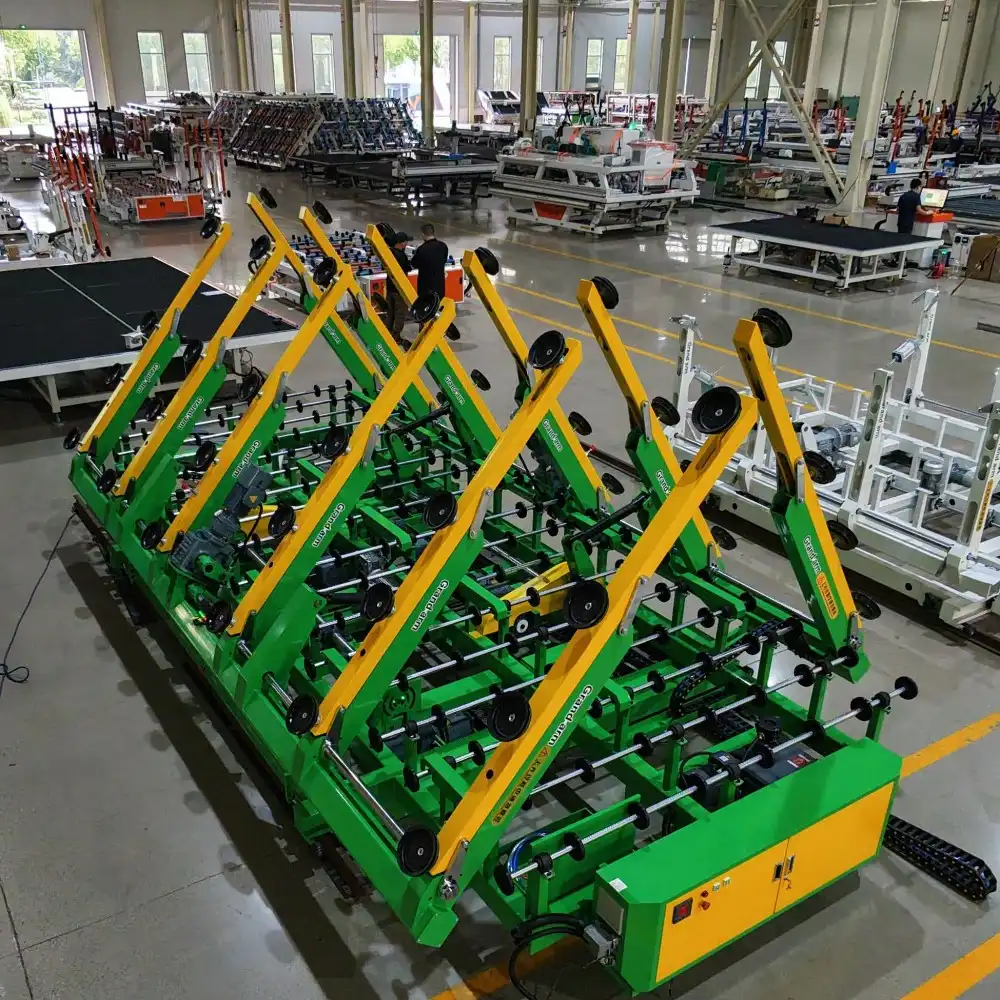
The HSL-LSX6133 has three tables: one for loading, one for cutting, and one for breaking. It is clear that the glass is loaded, cut, and broken in the right order because there are lines between each step. 6100 x 3300 mm is the biggest piece of glass that can be used, which is good for big building sheets. Plan software also lets you put more parts on one large sheet, which helps you use less paper. Shops with enough floor space and safe ways to lift big panels are the best places for this size of machine to work.
Optima Software for Cutting Layouts
The Optima software can be used with the HSL-LSX6133 to make things better. Layout software puts the right amount of glass on each sheet so that the operator can plan cuts that waste as little glass as possible. The glass shop doesn't have to guess as much when they get orders of different sizes. It's also easier to see how the list of orders fits with the cutting plan. You should give engineers a real cutting list when you show them the software so they can see how it works with their own workflow. This is something that our team can talk to your tech boss about.
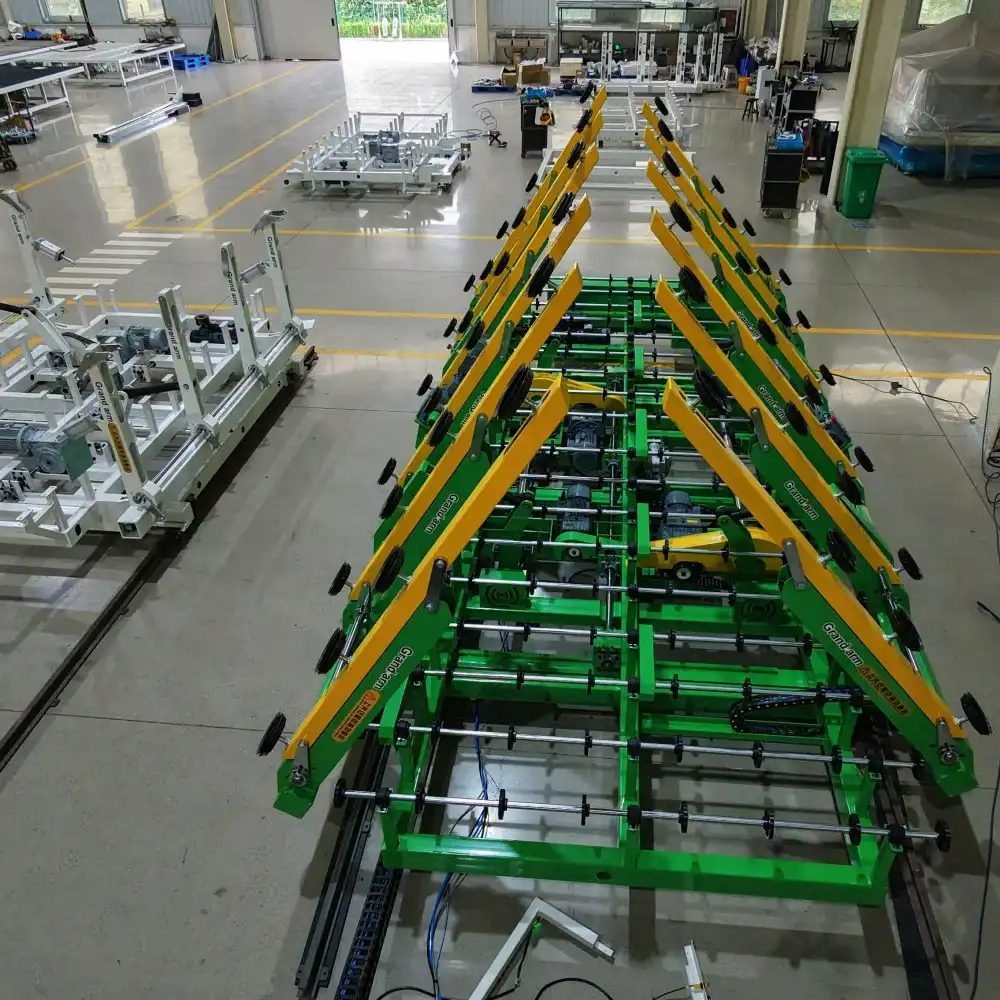
Rail Options, Stations, and Six Grand Arms
The machine has a 2+2 station layout that can be changed to meet the needs of the shop. The rail could be on or below the ground. Each side has six big arms. Your plant manager can match the type of rail to the floor plan and the way it will be put in place. Before you decide, show them your floor plans, glass sizes, and daily business. Because of this, our experts can be sure of how the station is set up and laid out. We need to choose the rail early on so there are no issues during the project.
Choosing the Right Machine
Mobile, Stationary, and CNC Systems Compared
Mobile machines can be set up more quickly and don't need as much space. They're good for repairs, light work, and moving to different locations. When there is a lot of work to be done, standard workflows, and continuous production, stationary systems work well. With CNC glass cutting, you can use digital files, have the plan made for you, and make forms that are more involved. But it costs more, takes up more space, and needs more help with technology. In plants that make a lot of things, a stationary CNC line is often the main system. An extra mobile glass cutter machine is kept on hand for service calls, repairs, and odd jobs. Decide whether you want more output or more freedom.
Manual Versus Automatic Operation
Manual models are good for occasional straight cuts and tight budgets, but they need to be set up and measured by people who know what they're doing. When the same order is made over and over, semi-automatic and automatic models work best because they reduce human variation and make the process more consistent. Not only look at the price, but also at how long it takes to set up, how many people need to be trained, and how much maintenance it needs. Types that use vacuums can also make the setting more stable. Before you sign, you should ask the seller to show you how the amount of automation will work with your work.
Checks Before You Request a Quote
Think about the use case first, then the price. It's important to be clear about the type of glass, the range of thicknesses, the largest panel size, the monthly volume, the cutting patterns, the accuracy, and the conditions at the site. Jobs that need to be broken, edge treated, or drilled should be kept separate from jobs that just need to be cut. Providers can tell you about datasheets, test cuts, warranty terms, spare parts, and training. You should include the voltage or compressed air, the delivery port, and the date of delivery in your RFQ. After technical review, site visits, and other steps, it usually takes three to six months for full production lines to be agreed upon. Plan to be there for that long.
Safety, Maintenance, and Cost
Safe Operating Workflow
People and glass are safe when the workflow is controlled. People who work on the machine and in the work area make sure the glass fits the requirements. They also clean and support the panel, make sure the machine is calibrated, set the cutting settings, make the cut, and check the result. OSHA says that bosses need to think about the risks and make sure that workers have the right safety gear. For most jobs with glass, that means safety shoes, gloves that won't cut, and eye or face protection. People should be able to walk around the workers without running into wires and hoses.
Routine Maintenance
Cutting stays clean with preventative care. Every once in a while, make sure to check the cutting tools, support surfaces, safety devices, guides, links, lubricating spots, and calibration. The filter, the cover, and the pressure on vacuum types all need to be checked. Before you call tech support, write down the settings and conditions that caused the edges to chip, the glass to slip, or the sizes to be off. Those notes speed up the diagnosis process. You should follow the manufacturer's plan and only use approved extra parts. This is because it's important to have a steady supply of parts for automated equipment.
Total Cost and Delivery
The price is based on how automated it is, how big the cut is, how accurate it is, how thick the glass is, the controls, how much customization is done, and where it is done. Things like shipping, insurance, taxes, setup, training, supplies, extra parts, utilities, and work are all fair things to compare. If you're an experienced buyer, used machines can be good. But before you buy one, you should check the warranty, service history, wear, accuracy, and electrical condition. When you order something from another country, you can usually pay with a deposit and the rest of the money at the end of the term. Get a full price that includes shipping and customer service terms.
Conclusion
Mobile glass cutter machines are most useful when they can cut glass close to where it will be used. It takes less time to transport, handle, and respond. This is best for glazing buildings, fixing things quickly, glass for furniture and the inside of buildings, car glass and smart mirror work, and projects that are far away or only last a short time. Fit depends on the type of glass, the size of the panel, the volume, the accuracy, the needs of the site, and the tools that are available. When you want to temper glass, you first have to cut it. Moving units don't take the place of fixed and CNC lines in high-volume plants; they work with them instead. For bigger jobs, the HSL-LSX6133 can handle a maximum size of 6100 × 3300 mm and comes with Optima software. It also has a rail option with settable stations. The total cost, safety, and upkeep are just as important as the price.
FAQ
1. What is the maximum glass size for the HSL-LSX6133?
The largest piece of glass that can be used is 6100 x 3300 mm. Give us your sheet sizes and thickness range, and we'll make sure the setup is correct.
2. Can a mobile glass cutter machine cut tempered glass?
No, not after it has cooled down. Do all of your cutting, drilling, and edge work before you temper the glass. When you score or cut it, it breaks into little pieces. Only annealed glass can be used in a mobile machine. Before you buy any other types of glass, you should ask the supplier about them.
3. What does the HSL-LSX6133 include?
The program Optima helps it run better. The rail can go above or below ground, and there are six big arms on each side. On the tables, you can load, cut, and break things.
4. What should I send with a quote request?
Send information about the type of glass, its thickness, panel size, monthly volume, accuracy needs, voltage or compressed air information, and the port where the glass is going.
Request a Mobile Glass Cutter Machine Quote from HUASHIL
Want a mobile glass cutter machine that can fit your shop's layout and the sizes of your glasses? Shandong Huashil Automation Technology Co., LTD has years of experience making things and sending them overseas, which shows in every job they work on. They can also help OEMs. Please email salescathy@sdhuashil.com with the type of glass, panel size, and amount you need, and they will make a good suggestion.
References
1. ASTM International, Standard Specification for Flat Glass (ASTM C1036), 2021
2. ASTM International, Standard Specification for Heat-Strengthened and Fully Tempered Flat Glass (ASTM C1048), 2018
3. American National Standards Institute, Safety Glazing Materials Used in Buildings (ANSI Z97.1), 2015
4. U.S. Consumer Product Safety Commission, Safety Standard for Architectural Glazing Materials (16 CFR Part 1201), 1977
5. Occupational Safety and Health Administration, Personal Protective Equipment (OSHA 3151), 2004
6. Glass Association of North America, GANA Glazing Manual, 2008
