




An automatic double glass processing machine is a manufacturing method to produce sealed insulating glass units (IGUs) from Low-E glass sheets with stable quality and less manual effort. It generally includes washing, fitting, pressing, gas loading, and sealing. The HUASHIL HSL-LSX5133 is a cutting line that prepares the sheets before they reach that stage. In this article, I explain why low-e glass automation is needed, how the automation process works, what the HSL-LSX5133 delivers, and what to verify before you purchase.
Why Low-E Glass Requires an Automatic Double Glass Processing Machine
Low-E Glass Is Valuable but Sensitive
Low-E glass has a very thin layer of metal on it that stops heat from moving through a window. In order to meet energy codes and the needs of homeowners, builders use it in windows, doors, commercial facades, and curtain walls. The layer that makes the glass useful also makes it less flexible. A scratch, a fingerprint, or putting it on the wrong side can ruin a lite or make the whole unit less strong. When finishing soft-coat goods, you need to be extra careful and make sure the surfaces are clean. I think of Low-E processing as work that is more about control than speed.
Where Manual Production Falls Short
Working by hand often comes with extra risk. The people who work there lift big lights, turn them, and line them up with a spacer frame. Every touch can leave marks, bring in dust, or put the finish on the wrong surface. Edges that aren't lined up right are called offset, and weak seals let water into the cavity, which fogs up the unit. This is made worse by a lack of skilled workers, who are hard to find and train. When you automate, fixed settings take the place of repeated manual steps. This means that the unit is made the same way on the first shift and the third shift.
Who Gains the Most from Automation
People who process medium to large amounts of glass will benefit the most, especially architectural glass and window plants that want to expand their IGU range. When project deadlines leave little time for rework, curtain wall integrators do well. Glass makers who make shower doors, walls, and furniture can start with smaller setups and add more stations as needed. Engineers keep an eye on compatibility and uptime, plant managers keep an eye on output and labor costs, and finance teams keep an eye on payback. All three issues can be solved by an automatic double glass processing machine that is sized based on your actual order volume rather than a best-case scenario.
What Is an Automatic Double Glass Processing Machine?
Definition and Common Names
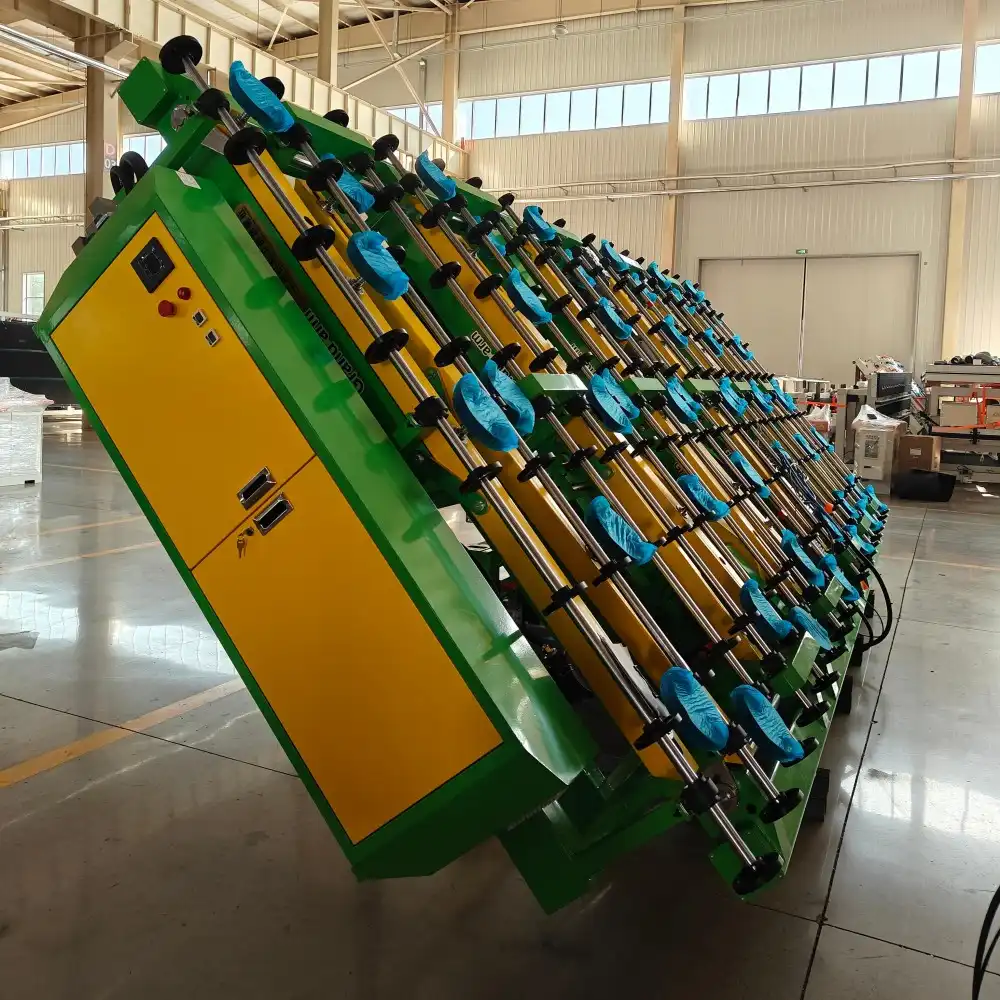
An automatic double glass processing machine is a system for making sealed insulating glass units that works as a whole. It can do more than one thing at once, depending on how it's set up. It can wash, dry, place, press, fill with argon, and seal the glass again. You can also get it from suppliers as an automatic IGU machine or an automatic insulating glass production line. Searching for all three names will help you get a fair picture of the offers. Buyers use the phrase for a single machine or for the whole line. I always ask vendors to list the exact stations that are included in the price they give me.
Parts of a Double-Glazed Unit
A standard double-glazed unit has two panes, a spacer that holds desiccant, a primary seal, a secondary seal, an insulating cavity, and an argon fill that can be added if need be. The desiccant soaks up any moisture that is stuck in the space between the panes, and the spacer keeps them apart. Because it doesn't move heat around as well as air, argon is used in many Low-E units. ASTM E2190 specifies how insulating glass units should work and be evaluated, so buyers in the US should make sure their process can meet it.
Compatibility Checks Before You Order
Make sure you know what kinds of glass the tools can handle before you sign. Ask about Low-E, laminated, tempered, oversized, double-glazed, and triple-glazed units, and get written confirmation of the largest and smallest sizes available. Check to see how the line handles coating orientation and if it works with the type of spacer you have. Engineers shouldn't just ask for brochures; they should also ask for technical documents and data on performance. A short test with your real glass can often tell you more than a long list of specs. If the mix of your products will change in two years, you should buy for that mix now.
How an Automatic Double Glass Processing Machine Works
From Loading to Washing
An automatic IGU line moves the glass in a controlled way that keeps the measurements accurate. Usually, it starts with loading and identification, which is where the system finds and keeps track of each light. The next step is to wash and dry. It is important that the glass is clean and dry because dust and wetness can make it hard for the sealant to stick and can leave marks inside the final unit. Machine cleaning also gets rid of the differences that happen when different people wipe each pane by hand.
Assembly, Pressing, and Gas Filling
Once it's dry, the line makes the spacer and puts the two panes together. Before the unit presses, sensors check the position of the spacers, the coating, and the alignment of the panes. When you press, the cavity is set to the desired thickness. When the order says to, the line puts argon in the space. These checks are important because once the coating is sealed, it can't be fixed if it's off or backward. To catch it at the sensor, it only takes minutes. To catch it at the customer site, it takes a service visit and a new unit.
Sealing, Curing, and Inspection
Next, the line puts on the secondary sealant, and the unit cures. During the final inspection, scratches, contamination, offset, sealant coverage, and gas performance are all looked for. Barcodes, production records, and inspection data can all be used to connect each unit to its order. This is useful for when a customer asks a question after several months. Traceability also helps quality teams find problems that happen over and over, like one station going out of tolerance. You should find out how long the system keeps records and how you can get the data out of the system.
HUASHIL HSL-LSX5133 Cutting Line for Low-E Glass Preparation
Role in Your Insulating Glass Line
Every IGU begins with a cut sheet; therefore, the quality of the cut impacts every step that follows. The HUASHIL HSL-LSX5133 is a glass cutting line. It works before washing, assembling, and sealing in a double glazing facility. To be clear, it does not clean, fill, or shut units. It prepares the lites for the automated double-glass processing equipment to manufacture IGUs. The two are combined into a single flow from raw sheet to completed unit.
Three Tables and Optima Software
One is for loading, one is for cutting, and the third is for breaking. 3 tables in HSL-LSX5133. Each table has a particular role in the cutting process. Optima program cuts the layout such that each page creates more useful pieces and less waste. Low-E glass is more expensive than clear float glass, thus, the savings from reduced waste pay off fast. Operators tell the line what to cut, then load the list. This takes a lot of the guessing out of setting things out by hand.
Rail, Stations, Arms, and Size
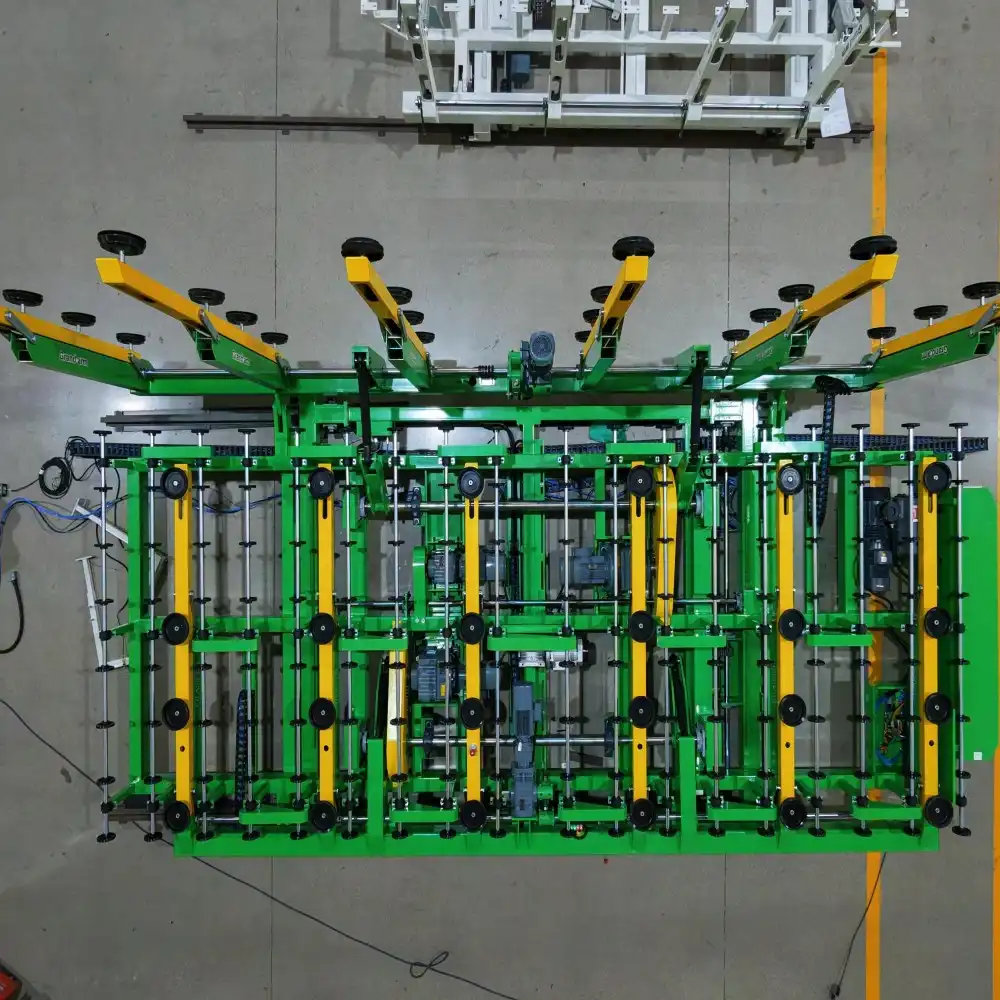
The HSL-LSX5133 may be installed on an above-ground or an underground rail depending on your floor design. It features two plus two stations that may be arranged in any manner that works best for you. Each side has five huge arms. This means the largest piece of glass that may be utilized is 5100 by 3300 mm or around 16.7 by 10.8 feet. This size is suitable for huge architectural lights for curtain walls and facades. Send us your daily volume and sheet sizes, and we’ll match them up against these guidelines.
What to Check Before Buying
Uptime, Service, and Spare Parts
Automation works only when it is on. Ask each vendor to provide you with their warranty conditions in writing, how long it takes to receive replacement parts, and how to seek professional advice. Engineers should also seek aid with installation and operator training. If an automatic double glass processing machine needs to wait two weeks for a part, it may be somewhat more expensive to purchase. HUASHIL is a China-based manufacturer and supplier of automatic glass equipment. We are sending you certain documents for your technical inspection.
Total Cost of Ownership
Price is one line of a larger budget. The total cost of ownership includes shipping, installation, training, maintenance, spare parts, and the money you save on labor and scrap. If a proposal is clear on each issue, finance teams are more inclined to approve. Buyers might ask all of the vendors to price the same scope to compare prices. International orders are usually paid for using a Letter of Credit, a deposit plus the amount due, or both. We may discuss which one is ideal for your project.
Timeline, Customization, and Next Steps
Normally, it just takes a few weeks for one of the machines to pass evaluation. “It takes three to six months to build a full production line or a unique system – the technical review, site visits, and getting the money approved.” OEM and ODM support is vital for system builders and developers since line layouts seldom match a standard catalog. Collect your glass sizes, daily production, plant dimensions, and product list that you want to sell and submit them to us. The pricing cycle is quicker, and there is less back and forth with clear inputs.
Conclusion
The complete procedure works properly only if all the cutting and sealing of low-E glass is done correctly. Doing the task by hand has a higher chance of scratches, contaminants, alignment problems, poor seals, etc. The automated double glass processing equipment, however, washes, puts together, presses, fills with gas, seals, and inspects everything automatically. Sensors and output records may also assist in tracing quality along the route. The first automatic double glass processing machine in the series is the HSL-LSX5133. It has Optima software, two plus two stations, five grand arms on each side, and a maximum glass size of 5100 x 3300 mm. “People should think about the line they buy and how well it’s going to work in the long run, in terms of connectivity, service, spare parts, total cost of ownership and delivery times.”
FAQ
1. Can the HSL-LSX5133 make insulating glass units on its own?
The HSL-LSX5133 is a glass cutting line that has a loading table, a cutting table, and a breaking table. It gets the sheets ready. Cleaning, putting together, pressing, gas filling, and sealing are all done by a separate automatic double glass processing machine or insulating glass line.
2. What is the largest glass size it handles?
The largest piece of glass that can be used is 5100 × 3300 mm, which is 16.7 by 10.8 feet. Send us the sheet sizes and thicknesses you use most often, and our team will make sure they fit with you before you make a choice.
3. What should I prepare before asking for a quote?
Get your glass types, sheet sizes, daily output, plant dimensions, and choice of rail type together. Tell us if you want an above- or below-ground rail system and how you plan to set up the 2+2 stations. With these details, our engineers can make a proposal that is clear and correct.
Talk to HUASHIL About Your Automatic Double Glass Processing Machine
We can help you plan a line that works for your plant because HUASHIL makes high-tech, automatic glass machines. Send your glass sizes and output goals to salescathy@sdhuashil.com if you are looking for a supplier of an automatic double glass processing machine. We will talk with you about the HSL-LSX5133 cutting line and your other IGU needs.
References
1. ASTM E2190, Standard Specification for Insulating Glass Unit Performance and Evaluation, ASTM International, 2019
2. ASTM C1036, Standard Specification for Flat Glass, ASTM International, 2021
3. Window Systems for High-Performance Buildings, W. W. Norton, 2004
4. Glass in Building: A Guide to Modern Architectural Glass Performance, Butterworth Architecture, 1993
5. Transparent Conductors as Solar Energy Materials: A Panoramic Review, Solar Energy Materials and Solar Cells, 2007
6. Structural Use of Glass, IABSE Structural Engineering Documents, 2008