




If you own a glass fabrication facility or operate a curtain wall manufacturing line, you know that not every glass is going to react the same way when run through an automated loading system. Huashil GTM glass loading machine can handle a wide variety of glass, from regular float glass to heavy laminated panels. The HSL-YTJ3829 model may be used for architectural glass, furniture, and construction applications and can handle glass thickness from 2 mm to 19 mm and sheet sizes up to 3,660 × 2,800 mm.
Understanding the Range of Glass Types Compatible with GTM Glass Loading Machines
Glass manufacturing factories in the United States process a wide range of materials every day. Each kind has its own handling issues, and a loading machine that cannot respond to these variances is going to slow your line down or damage goods.
Float Glass
Float glass is the most used substrate for manufacturing windows and doors. It is quite homogeneous in thickness and surface roughness, and therefore a suitable place to begin automated loading. The HSL-YTJ3829 is able to process float glass from 2 mm upwards, offering architectural glass factories a reliable basis for big volume runs.
Tempered and Heat-Strengthened Glass
Tempered glass can not be trimmed after processing; therefore, it is sent to the line at the final size. What counts here is how you handle stability. The automated pressure control mechanism of the machine modulates the suction force to the panel weight, avoiding surface stress that can cause spontaneous shattering – a major problem with full tempered lites.
Laminated Glass
Laminated glass is made up of two or more layers of glass bound together by an interlayer, often PVB. This makes it heavy and requires good edge support. The air flotation mechanism of the HSL-YTJ3829 lifts sheets off the table with little contact; thus, even with the maximum supported thickness of 19 mm panels, the danger of edge chipping is minimized.
Insulated Glass Units (IGU)
Insulated glass units are premanufactured and sensitive to pressure imbalance. The automated edge-finding mechanism properly finds the perimeter of each panel before loading starts, so the machine never applies force to the incorrect area. The accuracy needed is important for IGU lines where the seal integrity is paramount.
These four glass categories comprise the overwhelming bulk of what U.S. fabrication companies work on each week. One machine's reliable handling of them cuts down on line changeover time and ensures constant throughput across product mixtures.
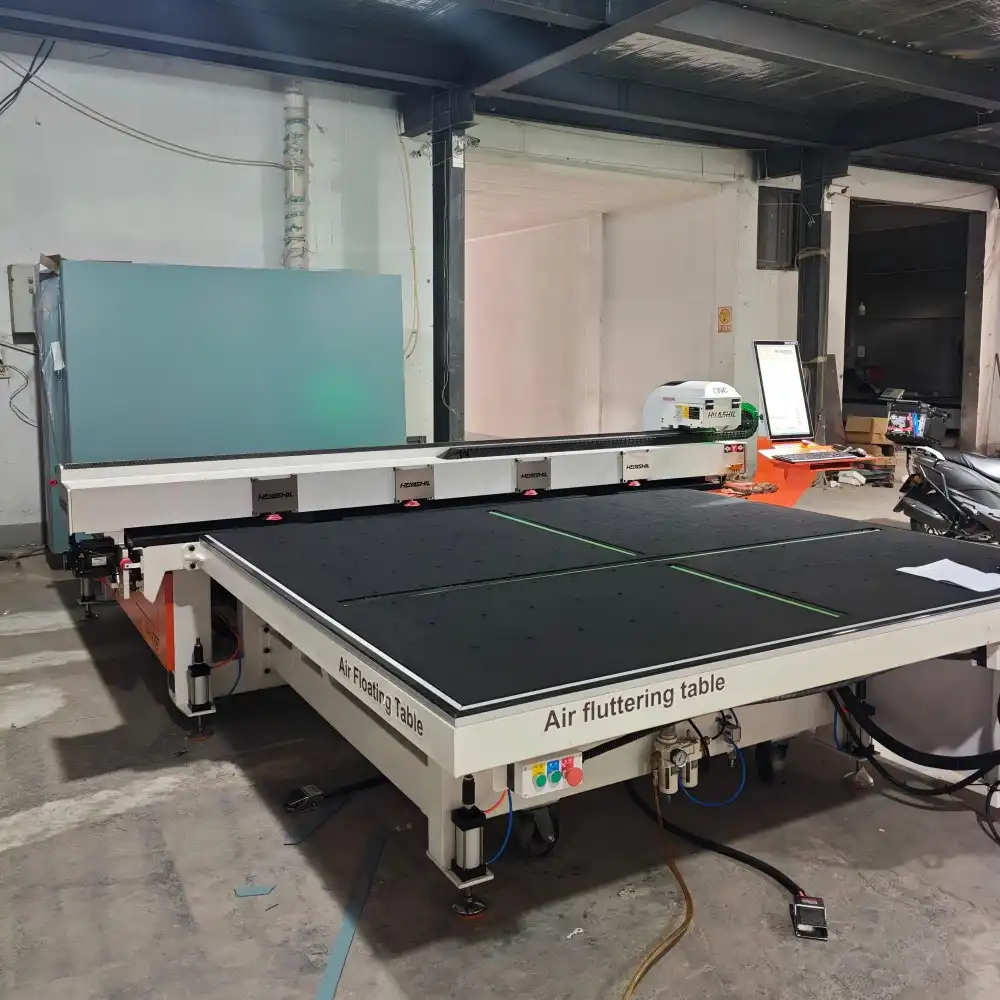
Key Features of GTM Glass Loading Machines Enhancing Glass Type Versatility
The difference between a good gtm glass loading machine and a frustrating one is the quality of the control system and the mechanical architecture. The HSL-YTJ3829 is provided with a series of characteristics that meet the needs of mixed-type glass manufacturing directly.
The key technological capabilities of this machine are:
- Automatic loading with synchronous belt conveyor: Glass sheets are pulled in at an equal pace without jerking or sliding. This is particularly important for thin 2-3 mm ornamental glass that may bend under uneven stress.
- Automatic pressure control: The technology measures the weight of the glass and modifies the clamping force in real time. This allows a 2 mm mirror and a 19 mm structural panel to be safely processed on the same machine without human recalibration between runs.
- Automatic edge finding: The machine detects the precise edge of the sheet before each cycle. This eliminates offset loading, which is one of the main causes of edge damage on coated and low-e glass panels.
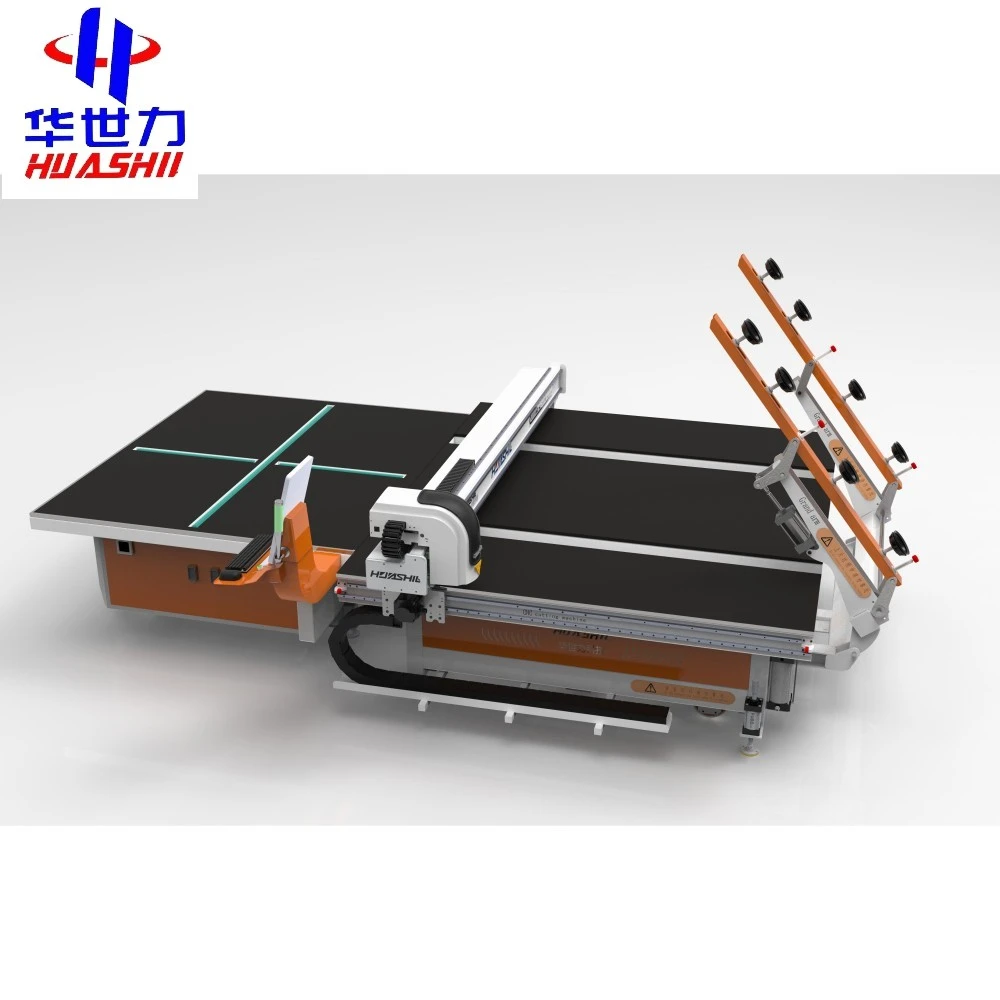
- Air flotation system with break table: The air cushion lifts the glass off the surface during transfer, reducing friction contact to near zero. The integrated break table enables smooth separation of scored glass without relocating it to a secondary station.
- 360-degree remote control walking: The operator controls the whole loading cycle from a hand-held remote, keeping workers out of the glass travel path and minimizing handling-related hazards.
These characteristics enable the HSL-YTJ3829 to process float, tempered, laminated, coated, and insulated glass in one production shift. The Optima optimization program also minimizes material waste by estimating the most cost-effective cutting scheme, even before the first sheet loads.
The machine is CE and ISO 9001 certified and has the quality paperwork required for U.S. purchasers' vendor compliance programs.
Comparing GTM Glass Loading Machines with Industry Competitors
When a plant manager looks at a new automated glass loader, he typically ends up comparing it on three counts: Can it handle our mix of glass? What is the ownership cost over 5 years? What happens when something’s broken?
Many competitive mid-range gtm glass loading machines handle basic float glass well, but laminated or coated glass requires additional additions. The HSL-YTJ3829 offers air flotation and automated pressure control as standard, not as expensive options. That difference has a direct impact on total cost of ownership.
European suppliers’ competing loaders may be well known, but wait times for internationally sent replacement parts may exceed 30 days. Huashil has a dedicated spare parts supply channel with defined response times for U.S. clients to reduce accidental downtime.
Some companies only provide inflexible standard models on customisation. Huashil provides OEM and ODM configurations that allow curtain wall integrators or furniture glass makers to choose loading dimensions, conveyor lengths, or software integrations to meet their current line layout without needing to rebuild to a fixed-footprint machine.
Not the sole choice in its class, the HSL-YTJ3829 is well positioned for plants handling different glass types at medium-to-high volume, thanks to its broad range of supported glass, integrated automation, and after-sales structure.
Procurement Guide: How to Select and Purchase a GTM Glass Loading Machine for Specific Glass Types
Be sure to clarify your manufacturing needs before making an order. The proper machine selection is driven by three questions:
- What thickness of glass are you processing now, and do you see it changing in two years?
- Q. What is the biggest sheet size you can handle? A. More than 3,660 mm × 2,800 mm.
- Is the machine to be integrated into an existing cutting table or edging line?
Once those questions are answered, the procurement procedure with Huashil follows in a simple progression. Complete specification sheets and wiring diagrams are provided for engineers' examination of the technical material prior to any commercial commitment. Standard payment conditions are a deposit + final payment. For overseas transactions, a Letter of Credit is allowed.
The equipment comes with training and installation help for the operator. Huashil’s after-sales staff offers remote support and may organize on-site help when necessary. HSL-YTJ3829 spare parts are in stock and cataloged by part number for easy reordering when worn parts require replacement.
Huashil creates project documentation for big line projects with several machines or unique configurations, including milestones, acceptance standards, and technical requirements. The paperwork is the structure procurement and finance departments need to get internal clearance.
Conclusion
The HSL-YTJ3829 gtm glass loading machine from Huashil can load float, tempered, laminated, insulated, and coated glass in a single system. The automated pressure control, air flotation, edge-finding, and remote operating capabilities help to tackle the practical issues of glass fabrication operations when they operate mixed product schedules. Its supported thickness range is 2 to 19 mm, and the maximum sheet size is 3,660 by 2,800 mm, suitable for the production scale of major U.S. architectural, curtain wall, and furniture glass businesses. It is CE and ISO 9001 certified equipment and comes with documented after-sales support, which makes it a machine worth serious consideration.
FAQ
1. What is the maximum glass thickness the HSL-YTJ3829 can handle?
The machine supports glass cutting thicknesses from 2 mm to 19 mm. This range covers standard window glass, structural laminated panels, and most insulated glass unit components used in U.S. construction projects.
2. Can the machine handle coated or low-e glass without scratching the surface?
Yes. The air flotation system lifts glass sheets during transfer, minimizing surface contact. Combined with automatic pressure control, the machine applies only the force needed for each specific panel weight, which protects delicate coatings during loading.
3. Does the machine work with Optima cutting optimization software?
The HSL-YTJ3829 integrates with Optima optimization software. This software calculates cutting layouts to reduce material waste before the first sheet enters the line, which directly affects raw material costs over time.
4. What certifications does the machine carry?
The HSL-YTJ3829 holds CE and ISO 9001 certification. These certificates satisfy common vendor qualification requirements for U.S. buyers and support compliance documentation for facility audits.
5. How long does installation typically take?
Installation time depends on site conditions and whether the machine integrates with existing line equipment. Huashil provides installation support and operator training as part of the standard delivery package.
Contact HUASHIL — Your Trusted GTM Glass Loading Machine Supplier
HUASHIL has been manufacturing and exporting automated glass processing equipment for many years, with a production record that includes customers across North America and beyond. The HSL-YTJ3829 GTM glass loading machine is available for direct purchase and custom configuration. Reach out to our team at salescathy@sdhuashil.com for full specifications, installation case references, and a personalized quotation. Our team responds promptly to all technical and commercial inquiries.
References
1. Glass Magazine. (2023). Automation Trends in Architectural Glass Fabrication. National Glass Association.
2. Glass Processing Technology: Principles and Practice. (2020). Society of Glass Technology.
3. Building and Construction Glass Standards: ASTM C1048. (2021). ASTM International.
4. Float Glass Manufacturing and Processing. (2019). Pilkington Technical Advisory Services.
5. Safety Glazing Materials in Buildings: Performance Specifications and Methods of Test. (2022). ANSI Z97.1.
6. Laminated Architectural Glass. (2018). Interlayer Solutions Group, Glass Association of North America (GANA).