




If you work in the industry of glass fabrication, architectural processing, or furniture manufacturing, you’ve definitely asked yourself this question at some point. Glass handling is one of the most dangerous and labor-intensive procedures in any manufacturing line. Getting things wrong costs money, effort, and potentially safety. A Semi Automatic Glass Loading Machine is industrial equipment for moving glass sheets and placing them on a cutting or processing table. It blends mechanical help with the operator’s input. Your team gets speed and control without the capital expenditure of a fully robotic system.
Understanding Semi Automatic Glass Loading Machines
Knowing precisely how these devices are created and how they perform is helpful before purchasing any glass handling equipment. In this part, we’ll look at the basic construction, the main specifications, and the day-to-day workflow that will help you decide whether this kind of machine will work for your production setting.
Core Components and Structure
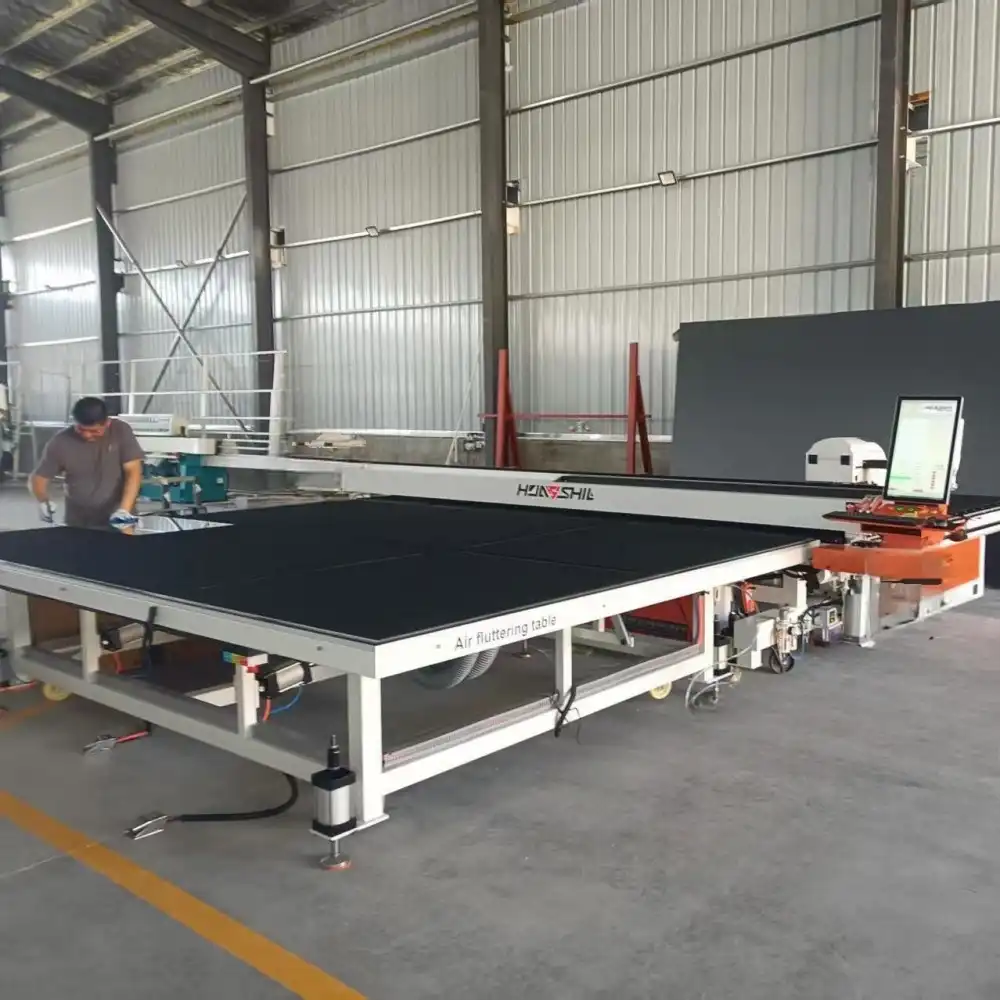
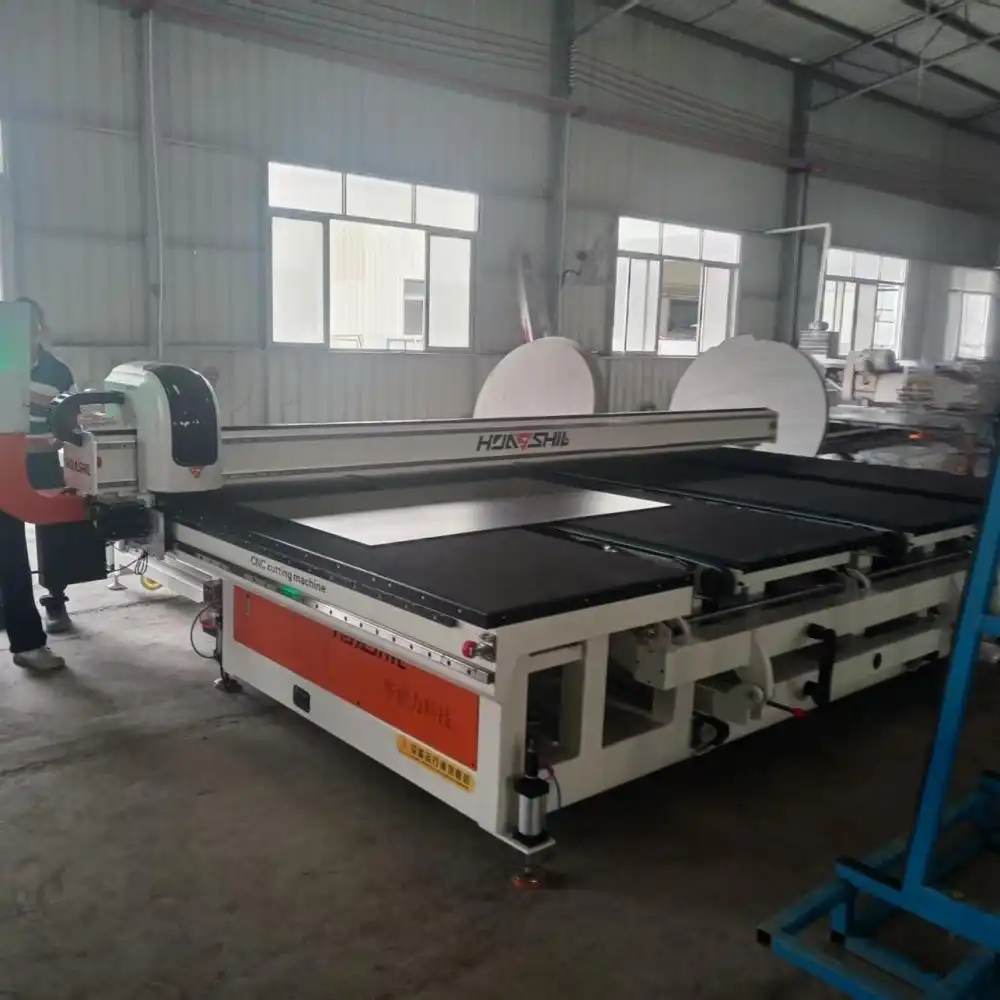
A typical glass sheet loading machine has a loading platform, ejector rods, a flip-style cutting table, and a control interface. The HUASHIL type employs three ejector rods to support the glass during the loading process, and the cutting table is manually flipped to align the sheets properly. The machine can handle glass sheets up to 3660×2440mm, which meets the requirements of most architectural and furniture manufacturing applications.
How the Workflow Operates
The operator loads glass sheets manually on the loading station. The three ejector rods raise and position the sheet, while the turned cutting table keeps it still. The machine operates on Optima optimization software, which automatically generates the most efficient cutting arrangement. This eliminates material waste and increases throughput. The operator controls the process, but the software makes the layout selections, and each cycle is quicker and more consistent than pure human handling.
Key Specifications to Know
There is no breaking table included with this model. Standard movement is accomplished without a remote control—although hand-pushed walking wheels may be added for easy repositioning on the shop floor. These design decisions help to make the machine simple and cost-effective, while yet serving the needs of mid-scale production lines.
Benefits and Industry Applications
Glass loading equipment is not a generic buy. The suitable semi automatic glass loading machine relies on your industry, your glass types, and your production volume. These are the main benefits that make semi-automated loading systems a feasible solution for many fabricators.
- Higher throughput without the expense of complete automation: The machine takes care of the repeated positioning jobs; the operator handles the feeding operation. This division decreases cycle times vs. complete manual loading without the expenditure required for a robotic line.
- Flexible glass size handling: Supporting sheets of up to 3660×2440mm, this equipment is applicable for architectural glass, shower enclosures, curtain wall panels, ornamental glass furniture, etc. All of which are typical product lines of HUASHIL’s clients in the U.S. market.
- Optima software integration: Integrated cutting optimization software develops optimal cut patterns to minimize material waste – before the blade ever touches the glass. This immediately decreases the cost of raw materials for each square meter.
- Maintenance-friendly: The simple mechanical design – flip table, ejector rods, and manual walk mechanism – allows personnel to check and repair components without special equipment or extensive downtime periods.
- These benefits are in direct response to the two most typical reasons plant managers upgrade aging equipment: uneven output quality and increasing labor expense. This machine automates layout calculations and standardizes the loading action, thereby decreasing the human variables that lead to mistakes and slowdowns.
This equipment is mostly used by architectural glass facilities that create windows, doors, and curtain wall panels, furniture manufacturers who produce glass tabletops, shower doors, and partitions, and sintered stone fabricators processing big format slabs. All these areas benefit from the mix of human control and mechanical assistance provided by a semi-automatic system.
Semi-Automatic vs. Other Glass Loading Machines
The amount of production, budget, and the kind of glass you operate will determine whether you go for a manual, partly automated, or completely automatic loading system. Here is how each alternative works in reality.
Manual Loading: The Starting Point
Handling glass manually involves lifting and positioning individual panes by hand. This works OK for extremely low numbers, but as manufacturing goes up, so do the injury risks, breakage rates, and labor expenses. Studies of occupational safety repeatedly reveal that manual handling of glass is one of the main causes of laceration injuries in manufacturing.
Semi-Automatic: The Middle Ground
One operator remains in the loop with a partially automated glass loading system that manages the actual placing of the glass. This decreases the operator’s physical burden and the number of workers each shift. The HUASHIL model is integrated into the Optima software, adding another layer of process efficiency beyond the world of pure manual systems.
Fully Automatic: When Volume Justifies the Investment
Robotic loading systems are intended for large-volume, continuous manufacturing and virtually eliminate the operator. They include much greater initial expenses and more complicated maintenance agreements. For mid-size fabricators or companies operating mixed product types, a completely automated line sometimes provides a slower return on investment than a correctly equipped partially automatic arrangement.
Maintenance and Safety Best Practices
All glass processing equipment should be monitored consistently to ensure it remains productive and safe. Having a basic maintenance program helps safeguard your investment and keeps your operators operating confidently.
Routine Inspection Schedule
Check the ejector rods every week for wear or misalignment. Check the flip table mechanism weekly for loose fasteners and check that the table locks firmly in both positions. Keep the surface of the loading platform clean to avoid glass chips from generating surface scratches or alignment problems.
Lubrication and Mechanical Care
Regularly lubricate all moving parts with the lubricant recommended by the manufacturer. If fitted, the walking wheel mechanism should be examined for smooth movement and the condition of the wheels. Proper lubrication and clean mechanical parts increase the service life and avoid unexpected stoppage during manufacturing runs.
Operator Safety Protocols
Train operators on the equipment before they operate it by themselves. Develop and post defined emergency stop procedures in a visible location at the workplace. Since this semi automatic glass loading machine is used to process big glass sheets up to 3660×2440mm, the use of adequate personal protective equipment like cut-resistant gloves and safety boots is a must on the factory floor.
How to Choose and Procure the Right Machine
Buying glass handling equipment is a capital choice that will impact your manufacturing line for years to come. Here’s what to consider before signing off on a purchase order.
Match Machine Specs to Your Production Needs
Start with your biggest glass size and average daily volume. If you routinely process sheets in the range of 3660×2440mm, check that the structural support of the machine is rated for that size. If you alter your product mix often, be sure the Optima software is capable of running numerous cutting schemes without having to reprogram it every time.
Evaluate Total Cost of Ownership
The purchase price is just half of the equation. Think about installation, training of operators, availability of replacement parts, and after-sales technical assistance. HUASHIL offers comprehensive technical documentation and fast assistance to its foreign clients, which is particularly important for U.S. purchasers who are handling the logistics of purchasing equipment abroad.
Confirm Customization and After-Sales Support
If you need to move the machine around your floor plan a lot, ask about solutions like hand-pushed walking wheels. Please confirm warranty conditions and turnaround on replacement parts. For bigger projects requiring whole production lines, ask for a written technical proposal with specifications and acceptance requirements before committing.
Conclusion
For most mid-size glass fabricators, a semi automated glass loading machine is a meeting point of practicality and performance. Reduces manual work and enhances cutting accuracy with Optima software. It can handle glass sheets up to 3660×2440mm, without the complexity of a fully robotic system. If you manage an architectural glass factory, a furniture fabrication shop, or a curtain wall processing line, this technology may provide quantifiable benefits in output uniformity and operator safety. The important thing is to be sure that the machine you choose has the specs that you really need for your manufacturing.
FAQ
1. How much does a semi-automatic glass loading machine cost?
Pricing depends on configuration, glass size capacity, and optional add-ons like walking wheels. Contact the manufacturer directly for a formal quotation that reflects your specific production requirements and shipping destination.
2. Can this machine integrate with an existing cutting line?
Yes. The HUASHIL semi-automatic loader is designed to work alongside standard cutting tables. The flip-table design and Optima software allow it to function as the first stage in a larger processing sequence without major line modifications.
3. What is the maximum glass size this machine handles?
The standard maximum glass size is 3660×2440mm, which covers most architectural, furniture, and curtain wall production formats.
4. Does the machine come with a breaking table?
No. This model does not include a breaking table. If your workflow requires one, discuss this with HUASHIL's technical team to explore compatible add-on options.
5. What after-sales support does HUASHIL provide?
HUASHIL offers technical documentation, operator guidance, and spare parts supply for international orders. Support terms are confirmed during the purchasing process and outlined in the commercial proposal.
Get a Quote from HUASHIL — Trusted Semi Automatic Glass Loading Machine Supplier
HUASHIL, backed by years of manufacturing experience and an active global export record, offers semi-automatic glass loading machines built for real production environments. As a professional semi automatic glass loading machine manufacturer, we provide technical documentation, customization options, and responsive after-sales service for U.S. buyers. Contact our team today to discuss your requirements and request a product demonstration.
Email: salescathy@sdhuashil.com
References
1. Glass International – Annual Review of Glass Processing Technology, 2023.
2. Occupational Safety and Health Administration (OSHA) – Glazing and Glass Handling Safety Guidelines, 2022.
3. Glass Processing Days Conference Proceedings – Automation Trends in Flat Glass Manufacturing, 2021.
4. International Journal of Advanced Manufacturing Technology – Semi-Automation in Sheet Material Handling Systems, 2020.
5. Glassman Europe – Market Report on Glass Cutting and Loading Equipment, 2022.
6. Construction Glass & Glazing – Equipment Selection for Architectural Glass Fabrication, 2023.