




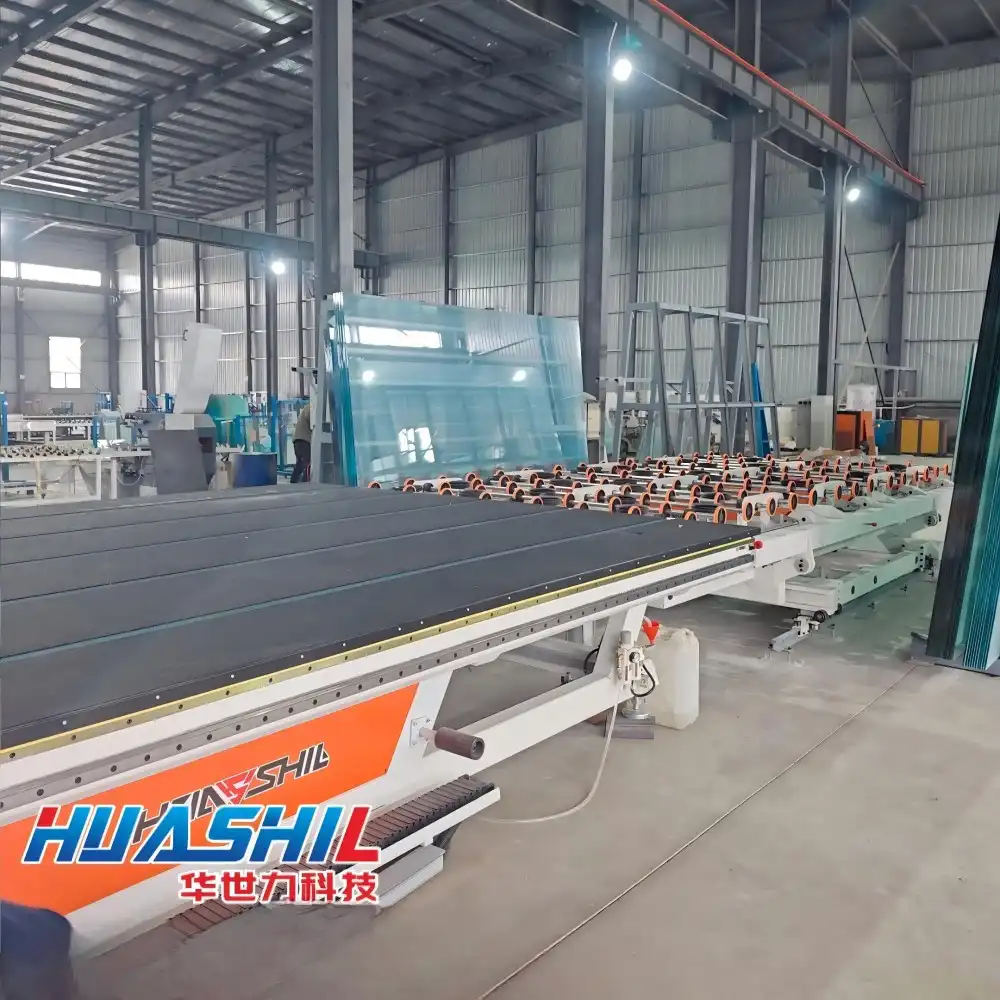
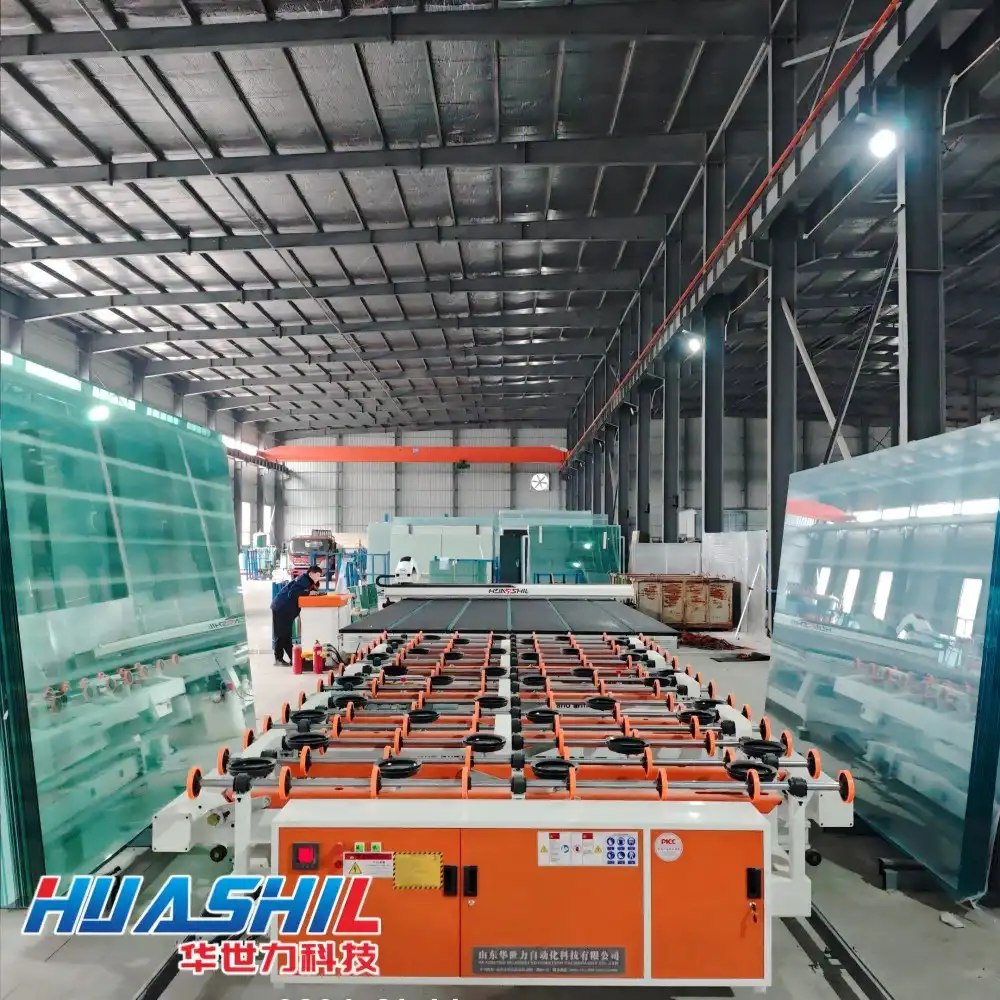
The 5133 glass cutting line is a great way to work with heavy glass because of its strong HSL-LSX5133 model design, which can handle glass sheets up to 5100*3300mm in size. This computerized system has two rails and two+2 stations that can be set up in different ways. It has three specialized tables for loading, cutting, and breaking. It also has advanced Optima optimization software. Each side has five great arms that make it easier to work with glass. This makes it perfect for making artistic glass, curtain walls, and large-scale industrial glass processing jobs that need to be precise and reliable.
Understanding the 5133 Glass Cutting Line: Key Features and Technical Specifications
The HSL-LSX5133 model is the best example of technical excellence in technology for automatic glass processing. The complex design of this cutting line takes into account the special difficulties of working with heavy glass and cutting precisely.
Advanced Three-Table Configuration System
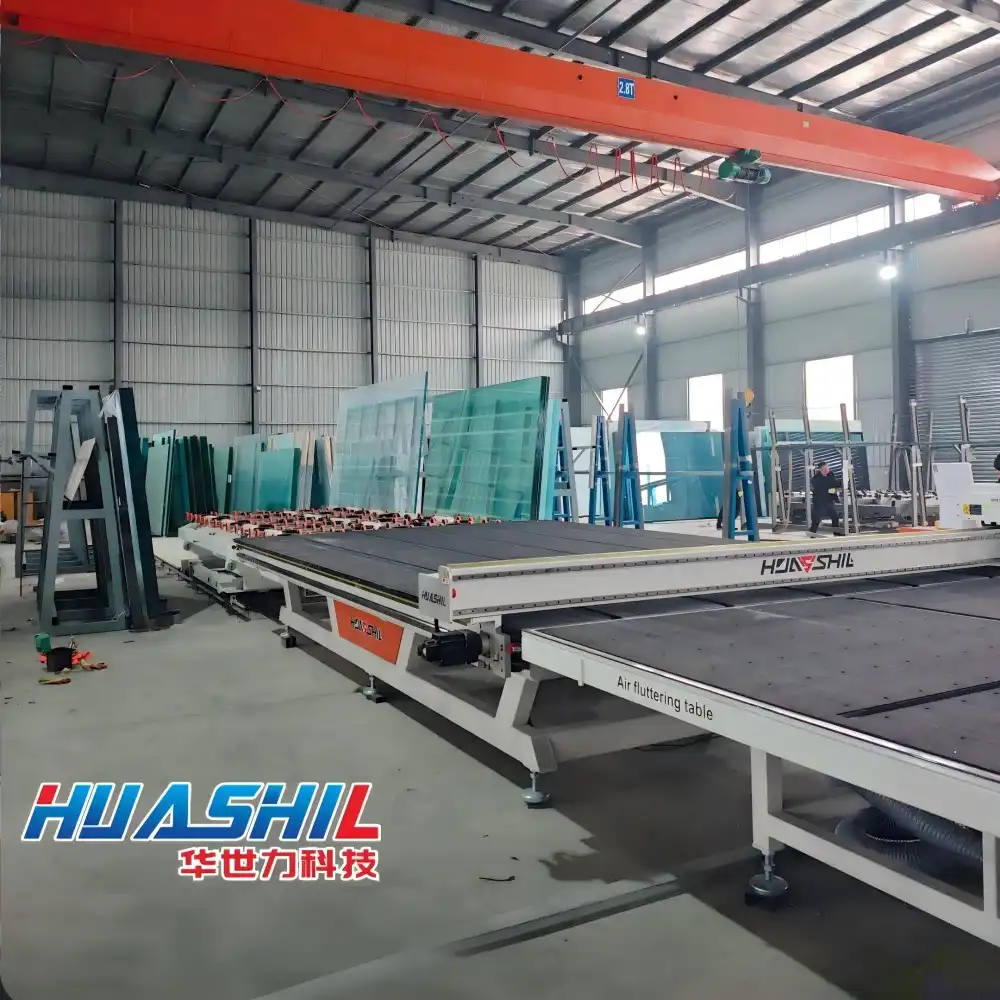
The design of the system is based on three specific workstations that make work flow more efficient. The filling table safely positions heavy glass panels by using air lifting systems that make the job easier for the operator while keeping the accuracy of the position. The cutting table has precisely designed tracks that can hold heavy pieces of glass without bowing. This makes sure that the quality of the cuts is the same across the whole panel surface. The process is finished by the breaking table, which has controlled separate devices made just for thick, heavy glass.
This unified method gets rid of the problems with moving materials that usually happen in big glass processes. Each table works on its own, but all of them are communicating with each other at the same time. This lets operators move on to the next panels while the current cutting processes continue without interruption.
Optima Software Integration and Automation Capabilities
The Optima optimization program is in charge of the whole cutting process and makes it smart. This clever system figures out the best cutting methods to get the most work done with the least amount of waste. To keep quality standards constant, the software takes into account changes in glass thickness, patterns of stress distribution, and cutting tool wear.
Automatic tool height change, real-time tracking of cutting force, and predictive maintenance alerts are some of the automation features. These features cut down on the need for human input while keeping results uniform across production runs. The software's learning methods change based on the type of glass and the cutting conditions, making it work better over time.
Rail System and Station Configuration Flexibility
The combination of above- and underground-level rails makes it very stable to move big glass during the cutting process. The 2+2 station setup lets you change the way work gets done to fit different production needs and building plans. Each stand can handle different sizes of glass at the same time, which makes the best use of the tools.
The rail system in the glass cutting machine factory can hold more weight than what is normally recommended for big glass uses. It can support panels that would be hard for regular cutting tools to handle. Precision linear guides keep the setting accurate within very small ranges, even when working with panels that are getting close to the maximum size of 5100mm x 3300mm.
How the 5133 Glass Cutting Line Excels Over Traditional and Competitive Solutions?
The physical demands and accuracy needs of heavy glass handling make it hard for traditional ways of cutting glass to work. When cutting big, thick glass pieces by hand, there are a lot of safety risks and limits on how much can be done.
Performance Advantages Over Conventional Methods
The automatic method gets rid of the human error factors that often lower the grade of cuts made by hand. Cutting pressure, scoring depth, and breaking forces that are always the same make sure that the quality of the edges is the same from one production run to the next. The system keeps cutting accurately, no matter how heavy the glass is or how tired the person is.
Gains in production efficiency are most noticeable in businesses that make a lot of products. For safe handling of heavy glass with manual methods, you need more than one person. The automatic system cuts down on labor needs while increasing output. Studies of time show that compared to standard hand cutting methods, these methods are 200–300% more productive.
Competitive Analysis Against Alternative Systems
When you compare the 5133 to smaller cutting lines like the 5120 and 5140, you can see that it has more capacity and is more stable. The bigger work area can fit ornamental glass with dimensions that are too big for small systems. The improved drive systems and strengthened frame construction can handle bigger loads without affecting the accuracy of positioning.
Alternatives to CNC cutting don't always have the special features that are needed to make glass efficiently. When it comes to glass, standard CNC systems have trouble meeting the needs for controlled scoring pressure, optimized breaking patterns, and tool management that is specific to the material. The 5133 was specifically designed to deal with these problems.
Cost-Effectiveness and Return on Investment
The economic gains go beyond just making people more productive. Cutting patterns that are designed to lose less material save a lot of money in high-volume processes. The constant quality of the system's output cuts down on rework and customer returns, which protects profits and builds the company's image.
Having features that save energy helps lower running costs. Variable-speed drives change how much power they use based on what they need to cut, and idle modes use as little power as possible when production stops. As energy costs continue to rise in factories, these traits become more and more important.
Critical Advantages of the 5133 Glass Cutting Line for Heavy Glass Handling
When you look at how well the 5133 system can handle big glass, you can really see how well the engineers designed it. Each part shows that the problems that come with big, thick glass screens were carefully thought out.
Robust Mechanical Design and Load-Bearing Capacity
High-quality steel metals were picked for their strength and ability to reduce vibrations, which is how the frame is put together. This base gives you the steadiness you need for precise cutting and can hold heavy glass weights. At critical stress points, reinforcements are built in to keep the structure from deflecting when it's under the most stress.
Here are the main technical benefits that make this method stand out:
- Better structural stiffness keeps the frame from bowing during heavy glass processing, so the cutting is accurate across the whole work area.
- Bearing assemblies that are too big last longer in heavy-duty activities that run all the time, and they need less upkeep.
- Precision-ground guide surfaces make sure that the glass moves smoothly during the cutting process, so it doesn't stick or slip, which can lead to edge chipping.
- Multiple safety systems, such as emergency stop devices and load tracking, keep both the tools and the people working with heavy glass safe.
The problems that regular cutting tools have when they try to work with heavy glass are directly fixed by these practical benefits. The money spent on better parts comes off in the form of steady performance and less downtime.
Advanced Automation Features and Control Systems
The five big arms on each side make it possible to move and shape glass in ways that are more precise than when it is handled by hand. These automated systems organize the complicated moves needed to place heavy glass while keeping the contact pressures low enough to avoid damage to the surface.
Intelligent control algorithms in the 5133 glass cutting line keep an eye on the cutting forces in real time and change the settings automatically to keep the cutting conditions at their best. This ability to change is very useful when working with different sizes of glass in the same production run. The system can tell when a material's properties change and makes adjustments automatically, without any help from the user.
Integration Capabilities and Workflow Optimization
Integration of production lines is a key part of large-scale glassmaking processes. The 5133 system has standard connectors that make it easy to connect to glass washing systems upstream and tempering ovens downstream.
Communication standards make it easy for data to be shared with plant management systems. This lets you keep an eye on production and quality in real time. This connection helps lean manufacturing efforts by finding bottlenecks and making the best use of resources throughout the whole production process.
Selecting and Procuring a 5133 Glass Cutting Line: What B2B Buyers Should Know
When buying this expensive equipment, you need to carefully consider a lot of things besides the initial purchase price. Understanding the total cost of ownership helps make sure that the most value is realized over the long run.
Key Evaluation Criteria for Industrial Buyers
Initial choices about size are based on production capacity needs, but opportunities for future growth should also be taken into account. The 5133's flexible design lets you add more capacity without replacing the whole system. This protects your initial investments and helps your business grow.
In addition to the specs of the equipment, suppliers are also judged on their service skills, the availability of spare parts, and the quality of their expert support. Domestic service networks cut down on the time it takes to respond to urgent maintenance situations, and thorough training programs make sure that workers get the most out of their tools.
Customization Options and Configuration Flexibility
There are big differences between the manufacturing conditions used for different types of glass production. The 5133 system has a lot of customizable options that can be used to meet particular production needs without affecting the normal performance traits.
Custom software settings change cutting patterns to work with specific types of glass that are often used in architecture. The different choices for choosing tools make cutting better for different glass thicknesses or types. These customization options make sure that the best performance in a wide range of production settings.
Installation and Implementation Considerations
For equipment installation to go smoothly, expert teams from suppliers and building engineering staff need to work together to plan and coordinate. Site planning needs to include making sure the floor can hold enough weight, knowing how to get electricity, and figuring out the size of the compressed air system.
Training programs include both teaching operators how to do their jobs and certifying repair technicians. Complete documentation packages include reference materials that help with ongoing operations and lower the need to hire outside service providers for regular repair tasks.
Troubleshooting and Maintaining the 5133 Glass Cutting Line for Long-Term Efficiency
Preventive maintenance plans are necessary to keep technology running at its best for as long as it is possible. Knowing about common problems and how to fix them keeps production running smoothly and extends the life of parts.
Common Operational Challenges and Solutions
Problems with the quality of the edges of glass are often caused by worn-out cutting tools or wrong parameter settings. Scheduling regular inspections of tools stops quality loss before it affects work output. Systematic recording of parameters makes it easy to find and fix problems quickly when quality changes.
Usually, problems with positioning precision mean that the guide systems are worn out or that the setting has shifted. Regular testing methods keep the accuracy within the acceptable ranges and show which parts are getting close to needing replacement. Predictive repair methods cut down on unplanned downtime and make the best use of new part stock levels.
Preventive Maintenance Protocols and Best Practices
The repair plan in the glass cutting machine factory strikes a balance between the need to protect components and the need to reduce production costs. Important parts that wear out quickly are inspected often, while strong parts work for longer periods of time. Maintenance management software keeps track of past service records and guesses when parts should be replaced.
In operator training, it's important to learn how to spot problems early and know what to do next. Fixing small problems quickly keeps them from getting worse and causing long periods of downtime for big fails. Keeping records of repair tasks helps make sure warranties are followed and builds institutional knowledge.
Technical Support and Warranty Coverage
Comprehensive guarantee coverage keeps parts from breaking down before they should and gives you peace of mind for big investments. Technical help methods include phone consultations, remote tests, and services that can be done on-site, depending on how urgent the problem is.
Parts supply promises make sure that when equipment breaks down, it can be fixed quickly. Strategic suggestions for extra parts help facilities balance the costs of keeping supplies with the risks of downtime based on their unique needs.
Conclusion
The 5133 glass cutting line gets great results when working with big glass because it has a strong mechanical design, advanced automatic features, and smart control systems. Additionally, the HSL-LSX5133 type can handle glass up to 5100*3300mm, and its three-table layout and Optima software optimization give makers the dependability and accuracy they need for tough jobs. The system is perfect for heavy glass processing jobs that need consistent quality and high productivity because it can handle more weight, has a lot of automation features, and can be set up in a lot of different ways.
FAQ
This part answers some of the most common questions about the 5133 glass cutting line's features and how it works. This will help people who are thinking about buying it figure out how well it fits their specific industrial needs.
Q1: What glass thicknesses can the 5133 handle effectively?
The method can work with different sizes of glass, from thin architectural glass to heavy plate glass. The strong mechanical design can handle different widths without needing a lot of setting changes between runs. The cutting settings change automatically to keep the best edge quality across all thicknesses.
Q2: How does automation improve cutting accuracy compared to manual methods?
Automated systems get rid of the human factors that make cutting inconsistent when done by hand. Controlled breaking forces, exact tool placement, and consistent scoring pressure make sure that all production runs produce the same results. Real-time tracking systems notice changes right away and make changes automatically, without the need for a person to do anything.
Q3: What are typical installation timelines and space requirements?
Installation timelines depend on how well the building needs to be prepared and how complicated the customizations are. Standard installations, which include placing the equipment, connecting the utilities, and teaching the user, are usually finished in two weeks. The space needs to be big enough to hold the largest glass panels and have enough storage areas for materials and operator entry zones.
Partner with HUASHIL for Advanced Glass Processing Solutions
Because HUASHIL is dedicated to quality and new ideas, you can trust us to provide you with automatic glass cutting options. Our experienced engineering team helps with everything, from the first meeting to installation and continued service. Our cutting-edge technology and years of knowledge in the field guarantee that your investment will pay off in the long run.
Get in touch with our technical experts at salescathy@sdhuashil.com to talk about your unique heavy glass processing needs and find out how our advanced 5133 glass cutting line maker solutions can help you run your business more efficiently.
References
1. Glass Manufacturing Industry Council. "Heavy Glass Processing Standards and Best Practices in Industrial Applications." Journal of Glass Technology, 2023.
2. International Glass Machinery Association. "Comparative Analysis of Automated Glass Cutting Systems for Architectural Applications." Industrial Glass Processing Review, 2023.
3. American Glass Research Institute. "Load-Bearing Requirements and Safety Protocols for Heavy Glass Manufacturing Equipment." Technical Standards Publication, 2022.
4. European Glass Technology Foundation. "Optimization Software Applications in Modern Glass Cutting Line Operations." Advanced Manufacturing Systems Quarterly, 2023.
5. Architectural Glass Manufacturers Association. "Economic Impact Study of Automated Glass Processing Equipment in Commercial Construction." Industry Economic Report, 2022.
6. International Building Glass Standards Committee. "Performance Metrics and Quality Standards for Large-Format Glass Cutting Equipment." Construction Materials Technology Journal, 2023.