




At 40,000 m² per month, the HSL-LSX5133 is the safer glass cutting line when your plant handles large sheets up to 5100 × 3300 mm, runs more than one shift, or expects growth. A 2721 line can suit medium-format, single-shift production, but only if its written specifications prove enough effective capacity. The target equals about 1,540 m² per working day, so nominal speed alone will not settle the choice. I recommend comparing both machines against your real glass mix, shifts, and floor space before you request quotations.
5133 vs 2721 Glass Cutting Line—Core Specification Comparison
This guide was made to help engineers, plant managers, and buying teams pick out an automatic glass cutting line. So I use what the public says about the HSL-LSX5133 and what the general public says about the 2721 because "5133" and "2721" can mean different versions from different companies. People who want to buy something should get written proof of all the numbers.
Maximum Glass Size and Cutting Table Configuration
Glass up to 5100 × 3300 mm can be used with it. That's big enough to fit big architectural sheets. The third table is used to break things. The first table is used to load. This split lets one sheet load while another is cut and a third is broken. The machine keeps going. From what I know about the 2721, it doesn't say what the largest size is. You should write down the supplier's table measurements and the area that can be used for cutting. The size of the line determines what jobs it can do, so figure that out first.
Loading, Breaking, and Rail Layout
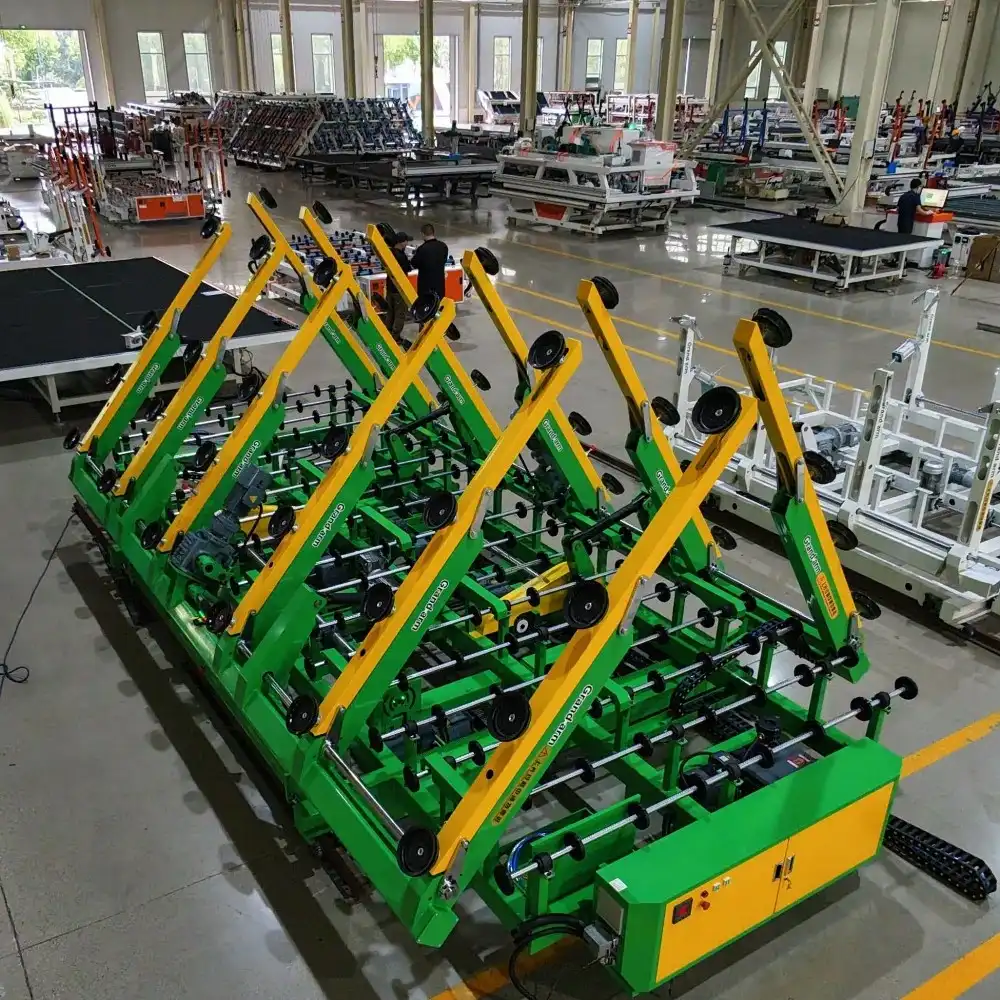
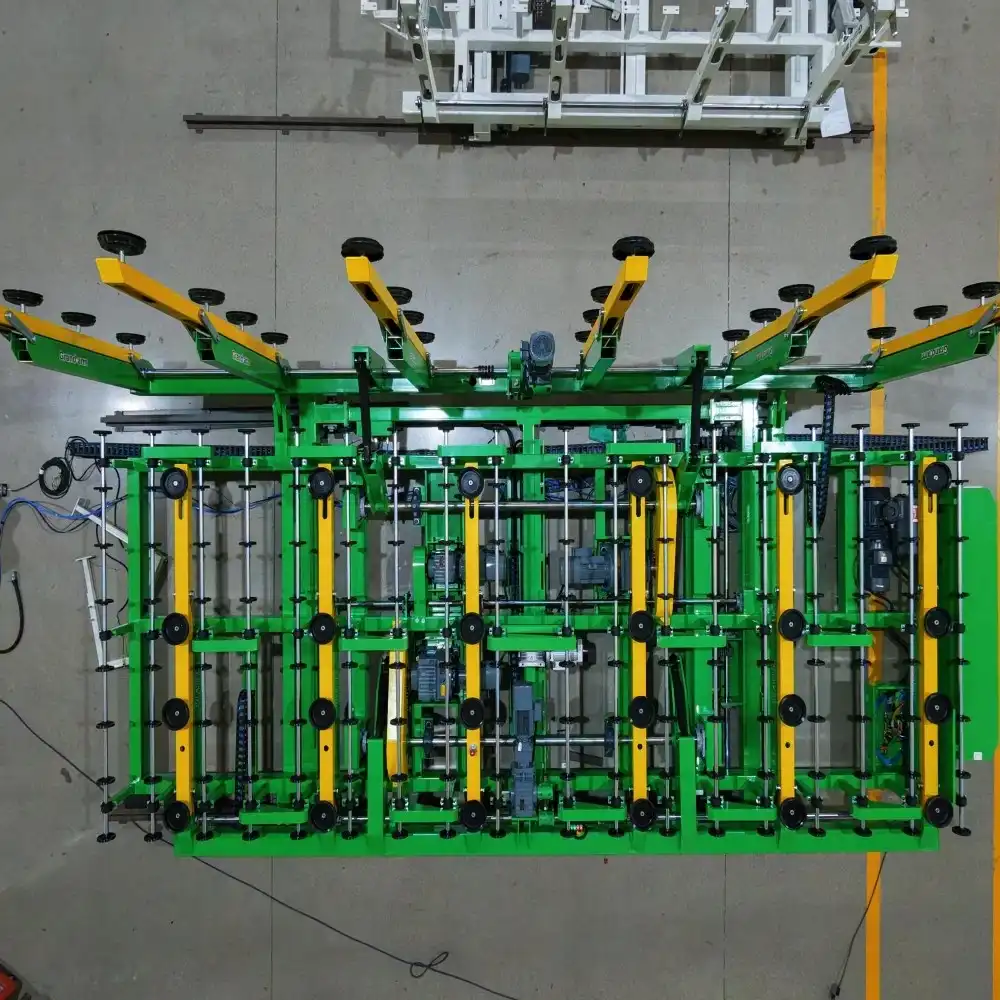
The 5133's rail can go above or below ground, and its 2+2 stops can be changed to fit your needs. Each side has five big arms. Forklift routes and floor plans vary from factory to factory, which is why the rail option is important. Most of the time, the floor has to be prepared first for an underground rail. You don't have to dig for a rail that is above ground. It is best to ask the 2721 seller what features are included and not included for loading, breaking, and sorting. Quotes list them in many different ways.
Optima Software and Production Data
The HSL-LSX5133 can plan cutting layouts that make the most of each sheet and reduce waste with the Optima optimization software. With this much glass, a 1% yield gain equals 400 m² of glass every month. Costs change based on layout quality. See what software the 2721 comes with and see if it can open CAD files. Also, make sure it can connect to your ERP or order system. Ask to see an example of the output report before you sign anything.
Capacity Analysis—Can the 5133 or 2721 Handle 40,000 m² per Month?
There is a number that tells you how fast the machine is cutting. Real capacity also takes into account things like breaking, loading, changing layouts, upkeep, and junk. One way for manufacturers to figure out this gap is to use overall equipment effectiveness (OEE). It is tied to Seiichi Nakajima's full repair work and is explained in ISO 22400-2. It will miss its monthly goal if a line cuts quickly but waits for sheets. There are three tables on the 5133 that can be used at the same time to load, cut, and break. You should ask each supplier to show you how they calculated the monthly output.
Nominal Cutting Speed Versus Real Production Capacity
Cutting speed indicates how quickly a machine processes glass, but the actual capacity of a glass cutting line also depends on breaking, loading, layout changes, maintenance, and scrap. Manufacturers can use overall equipment effectiveness (OEE) to assess this gap. OEE is associated with Seiichi Nakajima's total productive maintenance approach and is addressed in ISO 22400-2. A line that cuts quickly but frequently waits for sheets may still miss its monthly production target. The 5133 features three tables that allow loading, cutting, and breaking operations to run simultaneously. Ask each supplier to explain how they calculate monthly output.
Shift Math for 40,000 m²
Let's say there are 26 business days. Now the goal is about 1,540 m² per day. If every minute is used for work, that's about 192 m² per hour in one shift and 96 m² per hour in two shifts. For plants to work, the speed needs to be faster because they don't use every minute. These numbers don't come from machine specs; they're just the result of dividing two numbers together. In order to make it work for you, change the working days, shifts, and usage. Then, compare the result to the written capacity number from each provider.
Capacity Buffer and Future Expansion
A 15% to 30% margin is a good idea when demand changes or growth is likely. If you start with 40,000 m², plan for 46,000 to 52,000 m² per month. There's no room on the line for a quick order, a problem, or a new customer. The goal is met. The 5133 has a large format range and 2+2 stations that can be set up in different ways. This gives plants more room to move. What if the 2721's proven output is greater than the amount that was stored? It can still work.
Application Fit—Which Glass Cutting Line Is Better for Your Product Mix?
The most important things for people who make windows, doors, and curtain walls are sheet size and yield. The 5133's 5100 × 3300 mm size is good for these jobs. People who buy flat glass can use ASTM C1036 to find new stock that matches what they already have. To make sure they work together, Low-E and tinted glass need to be tried out. Ask for test cuts and written lists of the material. You might be able to handle sales of normal-sized homes with less money if most of your sales are for those sizes. Look at your past sales before you decide what to do.
Architectural and Construction Glass
The most important things for people who make windows, doors, and curtain walls are sheet size and yield. The 5133's 5100 × 3300 mm size is good for these jobs. People who buy flat glass can use ASTM C1036 to find new stock that matches what they already have. To make sure they work together, Low-E and tinted glass need to be tried out. Ask for test cuts and written lists of the material. You might be able to handle sales of normal-sized homes with less money if most of your sales are for those sizes. Look at your past sales before you decide what to do.
Furniture, Mirror, and Decorative Glass
Most of the time, people who make furniture, shower doors, and mirrors work in smaller groups that come in different sizes. A certain kind of glass is often used to make smart and decorative mirrors. Putting the parts together will depend on how well they fit together based on their exact sizes. A company called HUASHIL says that its glass cutting lines can be used to make smart mirrors and pretty glass. Another name for the 2721 is a "high-precision line." It is run by a CNC and has a simple interface. When these plants look at raw speed, changeover time, and layout software, they should remember that changing sizes often slows down output more than running long runs of the same size.
Automotive and Special-Shaped Glass
HUASHIL's glass cutting lines are used for many things, like making autoglass panels that fit the car's body standards. To make unique shapes, you need digital templates to make sure the tools are working and to be able to easily move on to steps further down the line, such as cutting, bending, or laminating. Cutting is only one part of the process. Make sure that the cut and handling of the sheet are right for the next steps before you temper or laminate it. You can also ask to see a cut of your own pattern.
Total Cost of Ownership and Final Choice
Things aren't always what they seem to be based on their price. For the same price, you should be able to get software, vacuum and air systems, safety gear, installation, packing, and tables for cutting, loading, and breaking. Then you need to add up the costs of shipping, taxes, electrical work, floor cleaning, operator training, energy, supplies, spare parts, and fixes. Choose the right rail for the 5133 to get the best floor work. The scopes should match when you look at a 5133 and a 2721 side by side. This is because in the long run, a lower price that doesn't include software or training usually costs more.
Price and Ownership Cost Beyond the Quote
Things aren't always what they seem to be based on their price. For the same price, you should be able to get software, vacuum and air systems, safety gear, installation, packing, and tables for cutting, loading, and breaking. Then you need to add up the costs of shipping, taxes, electrical work, floor cleaning, operator training, energy, supplies, spare parts, and fixes. Choose the right rail for the 5133 to get the best floor work. The scopes should match when you look at a 5133 and a 2721 side by side. This is because in the long run, a lower price that doesn't include software or training usually costs more.
Return on Investment for a 40,000 m² Monthly Load
There isn't just one number I use for payback because it changes with the country, the hourly wage, and the profit margin. As you make a three- or five-year plan, you can use your own monthly volume, labor hours saved, yield gain, breakage reduction, and processing margin. 40,000 m² of glass are made for every 1% rise in volume. A lot of foreign orders use a letter of credit or a deposit plus the full amount. Write down how you'd like to be paid. When the inputs to the model are written down, finance teams give their OK more quickly.
When to Choose the 5133 or the 2721
If you need to cut a lot of sheets, do a lot of work, or think your business will grow, choose the 5133. Choose a 2721 if your glass is medium-sized, you only work one shift, you don't have much floor space, or you want to save money. Just make sure that the agreed-upon capacity is enough to reach your buffered goal. Before you place an order, you should ask each supplier about their guaranteed output, the materials they work with, the operator requirements, the scope of the installation, references, the time it takes to get spare parts, the terms of their warranty, and how quickly they can respond to your request for remote support. It's easy to defend the comparison when you have a scoring sheet with weights. If you have questions about machine safety, ANSI B11.19 is also a good place to look.
Conclusion
Reaching a monthly target of 40,000 m² requires a glass cutting line with sufficient production capacity, regardless of its type or rated speed. With a 15% to 30% buffer, planned capacity should reach 46,000 to 52,000 m², or approximately 1,540 m² per working day. The HSL-LSX5133 features three tables, Optima software, configurable 2+2 stations, and above- or below-ground rail options. Its maximum glass size is 5100 × 3300 mm. These features support large-format processing, production growth, and multiple shifts. A 2721 line may suit medium-format, single-shift operations if its capabilities are confirmed in writing. Selection should consider not only price but also software, installation requirements, and total cost of ownership, supported by capacity calculations and sample cutting tests.
FAQ
1. Is the 5133 automatically better than the 2721?
The HSL-LSX5133 can only handle big formats up to 5100 × 3300 mm. But if its written specs and real ability are checked, a 2721 glass cutting line might be good for medium-format work. Compare them to your floor space, shifts, and glass mix.
2. Can either line handle 40,000 m² per month?
That amount of space is equal to about 1,540 m² per working day if you use 26 days as an estimate. Question each service about their ability instead of their stated speed. This should be based on the sizes and thicknesses of your sheets as well as any breaks and shifts.
3. What should a quotation include?
It should have a list of the software, vacuum and air systems, safety gear, packing, installation, training, terms of the guarantee, and spare parts for the tables that load, cut, and break. There are no shocks after the order is placed if the scope is written down.
Request a Customized 5133 vs 2721 Glass Cutting Line Proposal
A company in Shandong called HUASHIL makes glass cutting lines. They can look at your work and help you make a good plan. The largest glass size for the HSL-LSX5133 is 5100 × 3300 mm, and it comes with Optima software. Send salescathy@sdhuashil.com an email with your monthly amount, types of glass, thicknesses, shifts, and plant data. We'll get back to you with a capacity number and a detailed quote.
References
1. ASTM International, ASTM C1036: Standard Specification for Flat Glass, 2021
2. ASTM International, ASTM C1048: Standard Specification for Heat-Strengthened and Fully Tempered Flat Glass, 2018
3. International Organization for Standardization, ISO 22400-2: Automation Systems and Integration—Key Performance Indicators for Manufacturing Operations Management, 2014
4. Seiichi Nakajima, Introduction to TPM: Total Productive Maintenance, Productivity Press, 1988
5. American National Standards Institute, ANSI B11.19: Performance Requirements for Risk Reduction Measures—Safeguarding, 2019
6. International Organization for Standardization, ISO 12543-1: Glass in Building—Laminated Glass and Laminated Safety Glass, 2021