




A high quality mirror processing machine starts with the right match between your mirror stock, your output target, and your quality standard. I suggest checking four things in order: sheet size and thickness range, the loading and handling method, the control and software features, and the supplier's proof of quality. Then compare total cost, not only the quote. Mirrors scratch easily, and the reflective coating suffers from rough handling, so gentle conveying matters as much as cutting accuracy. This guide covers each step and shows where the HUASHIL HSL-YTJ2721 fits.
Start With Your Production Needs
Define Material, Size, and Thickness
Before you call a supplier, make a list of the sheet sizes and thicknesses you cut most often. A lot of different kinds of mirror stock are used for bathrooms, furniture, and wall panels. The working range should be big enough to fit your biggest sheet plus some extra. The HSL-YTJ2721 can cut glass up to 2700 × 2100 mm in size and between 2 mm and 19 mm thick. In that range, you can find both thin mirrors for decoration and thicker glass for buildings. Write down the type of finish you want and the size of the edges you need. These will determine how gently each sheet needs to move through the line.
Set Output and Quality Targets
Step 2: Write down your goals and give them numbers. Find out how many sheets you count per shift, how many patterns you cut per order, and how much scrap you're willing to take today. Quality targets should have even sizes, edges that aren't round, and shiny surfaces that aren't scratched. When it comes to flat glass in the US, ASTM C1036 sets quality levels, some of which are suitable for use as mirrors. Using this language helps you and the supplier talk about what you expect from them. Your engineer can judge each machine based on facts instead of sales claims if you give them a written list of goals.
Match Machine Type to Your Workflow
It is common for mirror work to go from filling to cutting, then to edging, cleaning, or packing. A loading and cutting machine sets up the sheet sizes, while a grinding and finishing machine smooths out the sides and surfaces. Pick the stage that makes you move more slowly. Most of an operator's shift might be spent lifting and arranging sheets. An automatic loading and cutting machine like the HSL-YTJ2721 can help with this. Makers of furniture glass, shower doors, and walls often start there and add edging tools as their work volume increases.
Check the Technical Features That Protect Your Mirrors
Once I know what you want, I check out how the machine moves the glass, since that's when most damage happens.
Automatic Loading and Suction Cup Conveying
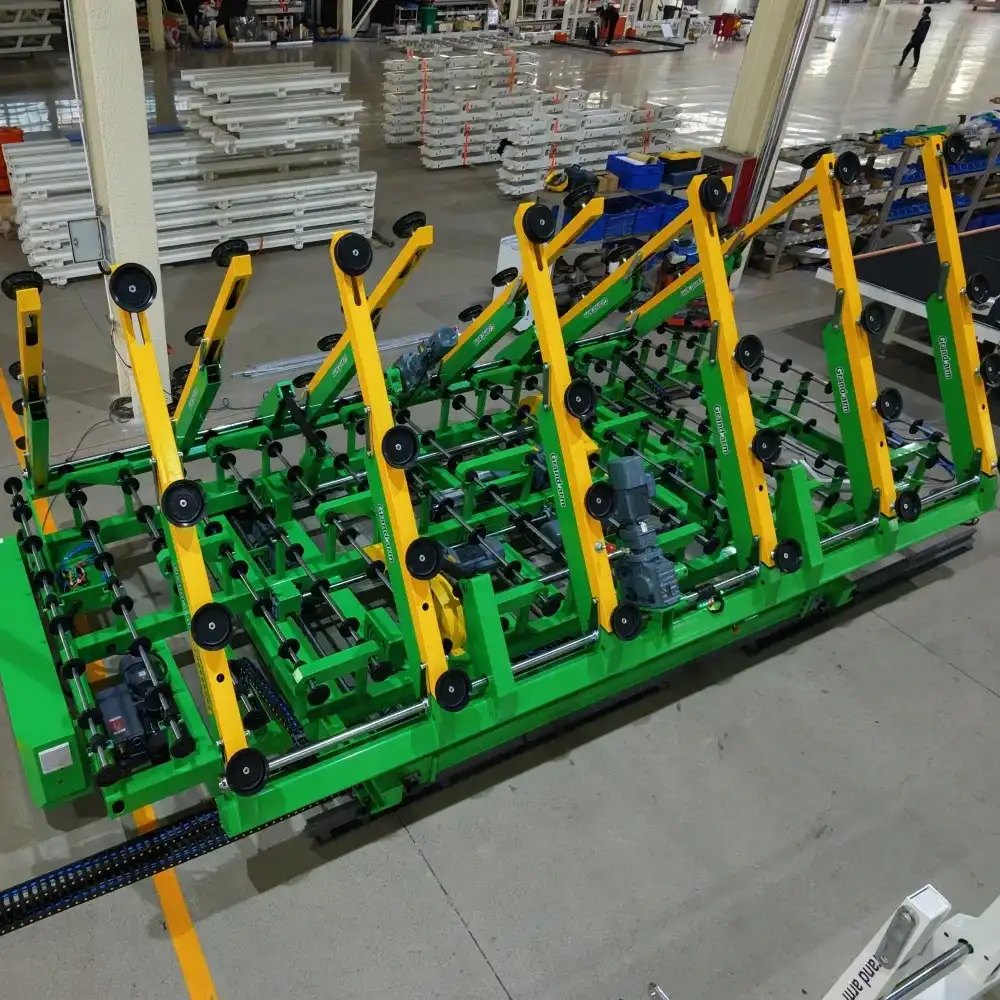
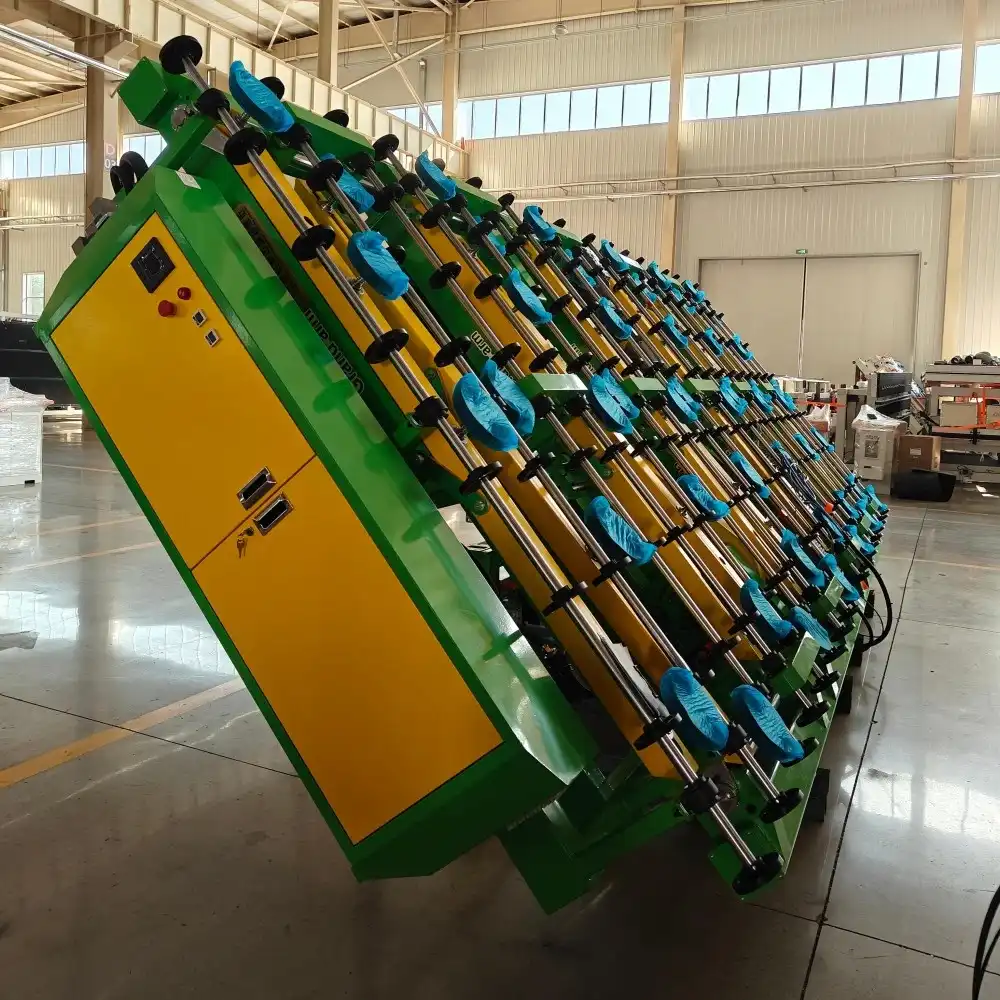
Handling mirrors can cause more damage than many buyers expect. The HSL-YTJ2721 can automatically load and transfer glass using suction cups, making it a potential high quality mirror processing machine for reducing manual handling. The suction cups reduce the need to lift or slide sheets by hand and limit contact with coated surfaces. For plant managers, this means fewer manual lifts and more consistent cycle times. Engineers should use the heaviest sheet within the required size range to verify suction cup configuration and holding force. Ask the supplier to demonstrate loading with your actual glass products.
Pressure Control, Edge Finding, and Air Flotation
This model has three functions that fix common cutting faults. When you switch between thin and thick sheets, automatic pressure control helps keep the cutting pressure under control. The sheet edge is found automatically so the cut can begin in the right place. The air flotation device keeps the sheet in place on a cushion of air, which keeps it from pulling on the surface. These functions work together to get rid of scratches, off-line cuts, and edge chips, which are the flaws that cause mirrors to be thrown away.
Optima Software and Remote Walking Control
The cutting layout determines how much glass is used for production and how much is wasted. The Optima optimization program sets up the cut patterns on each sheet for the HSL-YTJ2721. The model also has a remote control walking feature that works in all directions, so an operator can control movement from a comfortable spot. Ask to see the software in action and make sure you know what kinds of info it can handle. When you use good layout software, you can save material every shift, and that savings should be included in your cost calculation.
Judge the Supplier and the Total Cost
A good machine still needs a provider that backs it up with paperwork, tests, and service.
Verify Certificates and Documentation
Certificates are the first thing you should look for. The HSL-YTJ2721 is certified by both CE and ISO9001. The requirements for a quality management system are set out in ISO 9001:2015. The EU Machinery Directive 2006/42/EC is what CE marking for machinery is all about. US buyers should still make sure the machine follows their own safety rules, so they should ask for instructions, wiring diagrams, and information on how to guard the machine early on. Before the machine comes, your electrician and safety officer will both want to read them.
Request Sample Cutting and Demonstration
You can learn more from a sample test than from a brochure. Send your mirror stock or ask for a video of how the machine handles sheets that are the same. Compare your goals with the cut quality, edge state, surface scratches, and cycle time. For big projects, when your engineer goes to a plant or a trade show to show how it works, it speeds up the technical review process. Shandong Huashil Automation Technology Co., Ltd. designs, builds, and sells automated glass machinery all over the world. You can ask the team about ways to see their machines in action.
Compare Total Cost of Ownership
The purchase price is only one part of the budget for a high quality mirror processing machine. Lisa Ellram discussed the concept of total cost of ownership in 1993. It includes installation, training, maintenance, spare parts, downtime, and consumables. Finance teams value this approach because it provides a clearer picture of overall spending. Calculate the production time lost when spare parts are unavailable and the labor saved through improved layouts. To compare quotations accurately, ask each supplier to document spare parts lead times and warranty terms.
Plan Procurement and Acceptance
It's easier to buy things and get things going when you plan ahead.
Speak to Each Decision Maker
Usually, four people make a purchase. There is downtime and production that the plant manager looks at. The engineering manager looks over data on specifications, compatibility, and stability. The purchasing manager looks at the price, the terms of delivery, and the warranty. Finance agrees with the budget. I think you should make one short paper for each: a specification sheet for engineers, a business deal for buying, and an estimate of how much money you will get back. In this way, the review is cut down on time, and questions are asked less often.
Lead Time, Payment, and Customization
Most of the time, single machines shut down within a few weeks. After the budget is approved and the technical study is done, it can take three to six months to build a full production line. For international orders, it is common to pay with a Letter of Credit or a deposit and the full amount at the end. If you want to make a full line, find out about OEM and ODM options. For example, OEM services can change equipment to fit your floor plan. Find out when the delivery will happen and how it will be installed before you sign.
Acceptance Testing and Operator Training
Take a moment to agree on the steps for acceptance before the shipment. Check the machine against the written specs for sheet size, range of thicknesses, loading, pressure control, finding edges, and safety stops. Do the checks again with your own mirrors after the process is done. Training is just as important as tools, so set up classes for operators and repair workers and make sure to record them. Written records of acceptance keep everyone safe and give your team a starting point for later checks on their work.
Conclusion
To get a high quality mirror processing machine, you need to make sure that it fits your sheet sizes, range of thicknesses, output needs, and quality goals. Auto-loading, suction cup conveying, and an air flotation system are some of the handling features that protect the mirror surface. The Optima program, pressure control, and edge finding all help with the quality of the cut and the use of materials. A supplier's claims can be backed up by certificates, sample tests, and written acceptance steps. The total cost of ownership is a better way to compare products than just price. Different people making decisions need different kinds of evidence, and a clear brief keeps the review short. The HSL-YTJ2721 shows these requirements for the loading and cutting stage. It has a maximum size of 2700 × 2100 mm and a thickness range of 2–19 mm.
FAQ
1. What makes a mirror processing machine high quality?
Why is a high-quality mirror processing machine important? If you want a steady cut, gentle handling, clear documentation, and service support, look for these things. Proof points like certificates, sample results, and a range that fits your sheets all count.
2. What sizes and thicknesses does the HSL-YTJ2721 handle?
It can cut glass up to 2700 x 2100 mm and between 2 mm and 19 mm thick. An air flotation system is also built in, as well as automatic edge finding, automatic pressure control, and automatic loading.
3. Can I test my own mirrors before buying?
Ask for an example cut or a video showing how your stock can be used. Match your goals for edge sharpness, scratches, and cycle time.
4. Should I judge a machine by price alone?
No, you should look at the purchase price along with the cost of setup, training, spare parts, maintenance, downtime, and expected scrap.
Request a High-Quality Mirror Processing Machine Quotation from HUASHIL
Get in touch with HUASHIL to talk about the sizes, thicknesses, and output goals of your mirrors. If you want to buy a high quality mirror processing machine, our team can suggest a set of machines, such as the HSL-YTJ2721. Send your drawings and needs to salescathy@sdhuashil.com for more information on the products they sell. We respond with a technical proposal that is based on what you need for production.
References
1. ISO 9001:2015 Quality Management Systems – Requirements, International Organization for Standardization, 2015
2. Directive 2006/42/EC on Machinery, European Parliament and Council of the European Union, 2006
3. ASTM C1036 Standard Specification for Flat Glass, ASTM International, 2021
4. ANSI Z97.1 Safety Glazing Materials Used in Buildings, American National Standards Institute, 2015
5. Introduction to Glass Science and Technology, Royal Society of Chemistry, 2005
6. Total Cost of Ownership: Elements and Implementation, International Journal of Purchasing and Materials Management, 1993