




When handling oversized glass panels, sintered stone, or architectural materials in modern fabrication facilities, the challenge isn't just moving heavy loads—it's moving them safely, efficiently, and without compromising product quality. Air flotation tables solve this precisely by creating a nearly frictionless surface that allows operators to glide massive sheets weighing hundreds of kilograms with minimal effort. Instead of relying on mechanical rollers or conveyors that can scratch delicate surfaces, these worktables use a controlled air cushion system to support and transport materials across processing stations. This technology has become essential for architectural glass fabricators, curtain wall integrators, and furniture manufacturers seeking to boost productivity while protecting high-value materials.
Understanding Air Flotation Tables: Principles and Benefits
The basic yet clever idea behind Air Flotation Tables is that they generate a homogeneous cushion that lifts and suspends heavy things only millimeters above the table by forcing pressurized air through millions of small holes in a porous worktable surface. Because direct contact friction is eliminated, loads that would ordinarily need numerous people or powered equipment may be moved by a single person.
How the Air Cushion System Works
Every Air Flotation Table is built on a precisely machined surface with uniformly spaced air channels incorporated in it. Compressed air escapes via tiny holes in these channels, creating an upward push that sustains the weight of the material. In order to maintain the ideal lift height—enough to remove friction but regulated enough to keep items from becoming unstable or drifting wildly over the work area—the pressure is precisely set.
Core Operational Benefits for Industrial Users
After incorporating Air Flotation Tables into their operation, production managers regularly claim quantifiable gains. Because workers are no longer straining to push or rotate heavy glass sheets during cutting, edging, or assembling activities, operator fatigue greatly decreases. This ergonomic benefit immediately results in fewer workplace accidents and consistent productivity throughout the course of shifts. According to statistics from glass processing plants in North America and Europe, material handling speeds rise by about 30–40% as compared to older processes. Because materials never slide across hard surfaces, there is far less chance of surface scratches, chips, or edge damage, which reduces waste and expensive rework.
Despite the constant need for breath, energy usage is still remarkably low. Because modern Air Flotation Tables employ efficient air compressors that cycle according to actual demand rather than operating constantly at maximum capacity, they use less electricity than motorized conveyor belts. In contrast to roller tables, which gather dust and need frequent bearing changes, the lack of moving mechanical elements results in fewer malfunctions and easier cleaning procedures.
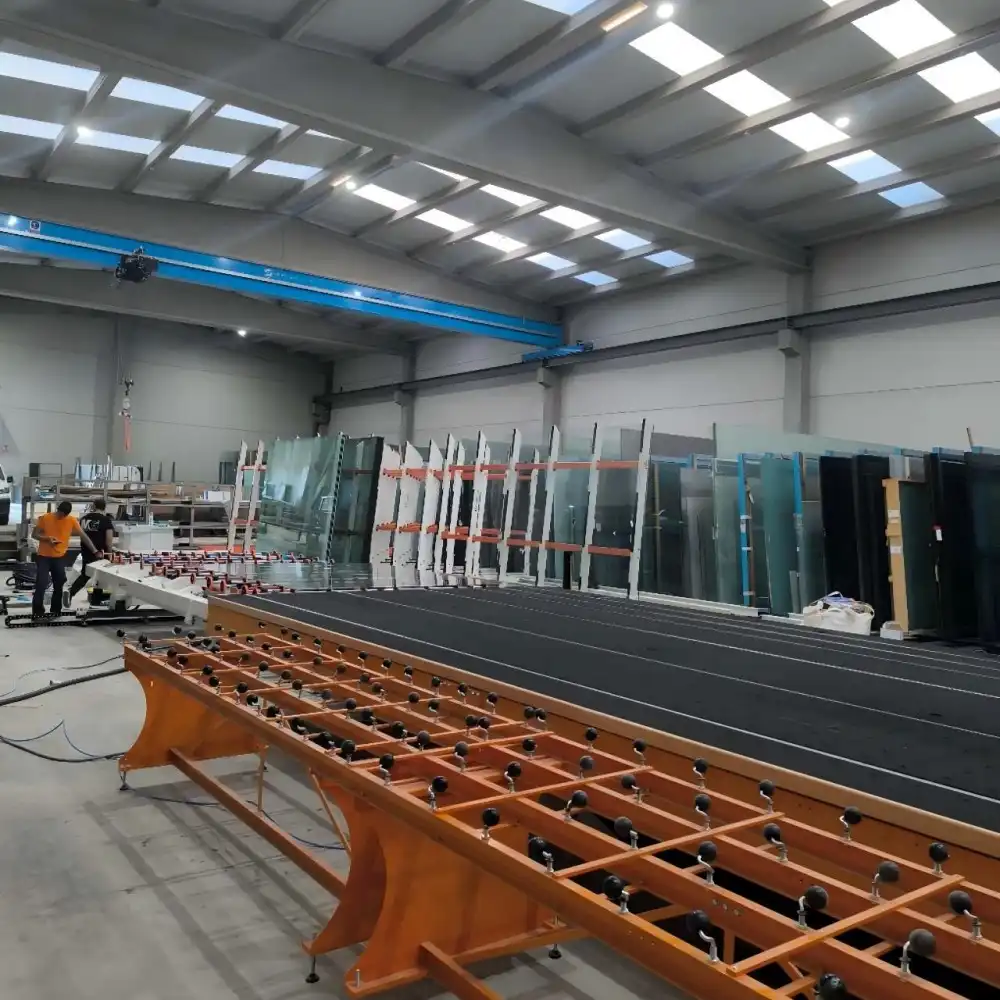
Comparing Air Flotation Tables with Traditional Worktables
Understanding how Air Flotation Tables vary from traditional alternatives in actual production settings is essential to choosing the best material handling system.
Technological Distinctions from Roller and Conveyor Systems
Conventional roller tables have a number of revolving cylinders that need to be manually or driven in order to support things. Rollers are useful for simple transportation; however, they provide several points of contact where scratches can happen, especially on polished glass or delicate sintered stone surfaces. It takes a lot of time to clean between rollers, and when bearings deteriorate, alignment problems arise that lead to materials drifting off-center during processing.
Continuous movement is possible with conveyor belt systems, but architectural glass manufacture requires multidirectional flexibility. Materials can only move along predefined routes, necessitating more handling steps and transfer stations. Additionally, debris builds up on belt surfaces, which can scrape or embed passing goods.
These restrictions are removed by Air Flotation Tables, which provide omnidirectional support. Without being limited by mechanical limits, operators are able to rotate, move, or rearrange items in any direction. There are no alignment concerns, no belt tracking issues, and significantly shorter maintenance schedules since there are no moving components. Because the flat porous surface just has to be periodically vacuumed or compressed air blown, surface cleaning takes minutes rather than hours.
Energy Efficiency and Sustainability Advantages
Air Flotation Tables use around 40% less energy than comparable motorized roller systems during normal eight-hour manufacturing shifts, according to independent testing comparing power usage across various material handling systems. The on-demand operation, which only initiates airflow when materials are available and ceases during idle times, is the source of this efficiency.
Energy savings are only one aspect of the environmental impact. There are no lubricants, hydraulic fluids, or petroleum-based parts in Air Flotation Tables that might pollute work areas or need the disposal of hazardous trash. Compressor units with proven recycling channels and recyclable metal components make up the majority of the tables at end-of-life.
Innovation Trends in 2024 Technology
In order to maximize efficiency and reduce compressed air usage, top manufacturers are increasingly integrating clever pressure sensors that automatically modify airflow based on material weight and size. In order to further save operating expenses, some sophisticated versions have zone-controlled air distribution, which enables operators to activate just particular table parts while processing smaller pieces. Real-time monitoring of table usage patterns is made possible by integration capabilities with production management software, which assist plant managers in streamlining workflow layouts and identifying maintenance requirements prior to malfunctions.
Procurement Guide: Choosing and Buying the Right Air Flotation Table
When assessing Air Flotation Tables, engineering managers and procurement professionals need precise standards to match equipment capabilities to real production needs.
Critical Selection Parameters
The most important characteristic to confirm is load capacity. For architectural glass and curtain wall applications where conventional sizes predominate in production numbers, the HUASHIL model HSL-SPT3624 can handle glass sheets up to 3660x2440 millimeters. While large-scale fabricators processing gigantic architectural modules need big tables with reinforced support systems, smaller furniture producers dealing with tiny panels could choose more modest proportions.
Careful consideration should be given to facility integration and footprint dimensions. The chosen table must allow sufficient space for operator mobility and material loading machinery while yet fitting into the current production line layouts. While some facilities maximize space by placing independent units at crucial workflow intersections, others gain from modular architectures that link many tables into continuous processing zones.
Customization and Automation Features
Basic material support is not enough for modern glass processes. By integrating autonomous loading capabilities that coordinate with upstream equipment, the HSL-SPT3624 reduces labor needs and eliminates manual transfer delays. Without moving materials to other stations, the integrated breaking table offers a specific area for controlled glass scoring and separation. Operators may rotate the complete table assembly inside production areas using 360-degree wireless controllers for remote control operation, allowing them to adjust to changing product mixes or layout needs without having to disassemble established installations.
For facilities with distinct process patterns, customization options are quite important. When handling treated materials, some manufacturers include specific surface coatings for chemical resistance, tilt features for drainage during wet processing, or adjustable height systems. Early discussion of these criteria throughout the procurement process guarantees that supplied equipment meets real operating demands instead of necessitating expensive post-installation changes.
Evaluating Manufacturers and Quality Certifications
Reliable equipment partners uphold clear quality requirements that are independently certified. The HSL-SPT3624 has both ISO 9001 certification, which shows methodical quality control across production processes, and CE marking, which attests to conformity with European safety, health, and environmental protection regulations. These credentials give procurement teams proof that the equipment satisfies international standards.
Examining manufacturer experience in certain applications is beneficial in addition to Air Flotation Tables certificates. Businesses with deep experience in glass processing automation, such as HUASHIL, are able to provide well-informed advice when choosing equipment since they are aware of the subtle differences between the needs of furniture manufacturing and architectural fabrication. Examining installation case studies from comparable facilities aids in forecasting integration difficulties and reasonable performance standards.
Pricing Structures and Total Cost Analysis
True ownership costs include more than just the initial equipment purchase. For a five-year operational term, procurement specialists should ask for comprehensive breakdowns of installation costs, operator training programs, suggested spare parts inventories, and anticipated maintenance schedules. Because they require less maintenance and have longer operational lifespans—up to 15 years—Air Flotation Tables often show lower total cost of ownership than motorized equivalents.
Depending on the intricacy of the specifications and the current manufacturing schedules, delivery times for bespoke configurations might vary from six to twelve weeks. Standard versions ship faster, but if you plan ahead, the equipment will arrive in time for larger production line installations or facility expansion milestones. For key components, warranty coverage usually lasts 12 to 24 months; facilities with continuous production schedules may be eligible for longer service agreements.
Maintenance and Troubleshooting to Maximize Table Efficiency
Systematic preventive maintenance and timely response to operational abnormalities are necessary to maintain the best possible performance from Air Flotation Tables.
Establishing Preventive Maintenance Routines
Surface cleaning to get rid of accumulated glass dust, stone fragments, or processing residue that might block air distribution holes should be part of weekly inspection procedures. Consistent airflow is maintained across the whole work area by blowing out holes from beneath the table top using compressed air. Monthly inspections confirm that compressor units run without unusual noise or vibration and that air pressure gauges read within predetermined limits, usually 0.5–0.8 MPa for glass processing applications.
In-depth inspection of air distribution manifolds, hose couplings, and pressure regulators for wear or deterioration is necessary during quarterly maintenance cycles. By changing the filter components in compressed air supply lines, impurities are kept out of the flotation system, safeguarding the materials being processed as well as the table. All maintenance operations must be documented in order to generate useful historical data for budgeting replacement parts and forecasting component lifecycles.
Addressing Common Operational Challenges
The primary reason for unequal material support or decreased lift effectiveness is usually either localized blockage in distribution holes or inadequate air pressure. Verifying that the compressor output pressure satisfies requirements is the first step in systematic troubleshooting. Next, visible surface regions are examined for debris collection. When problem areas receive focused cleaning attention, complete functioning is typically restored without the need to replace any components.
Unexpected increases in air consumption frequently indicate the emergence of leaks in fitting connections, supply lines, or the table surface itself. Repairable areas can be identified by applying soapy water to suspicious regions during operation, which shows escaping air through bubble formation. Leaks must be fixed right away to avoid efficiency losses and lessen the load on compressor machinery.
Maintaining surface flatness is important, especially for precise glass cutting operations. Precision straightedges or laser levelling equipment are used for annual calibration checks to ensure that table surfaces have not acquired drooping or warping that might compromise the accuracy of material arrangement. Shimming or structural modifications fix small errors before they affect the quality of the final product.
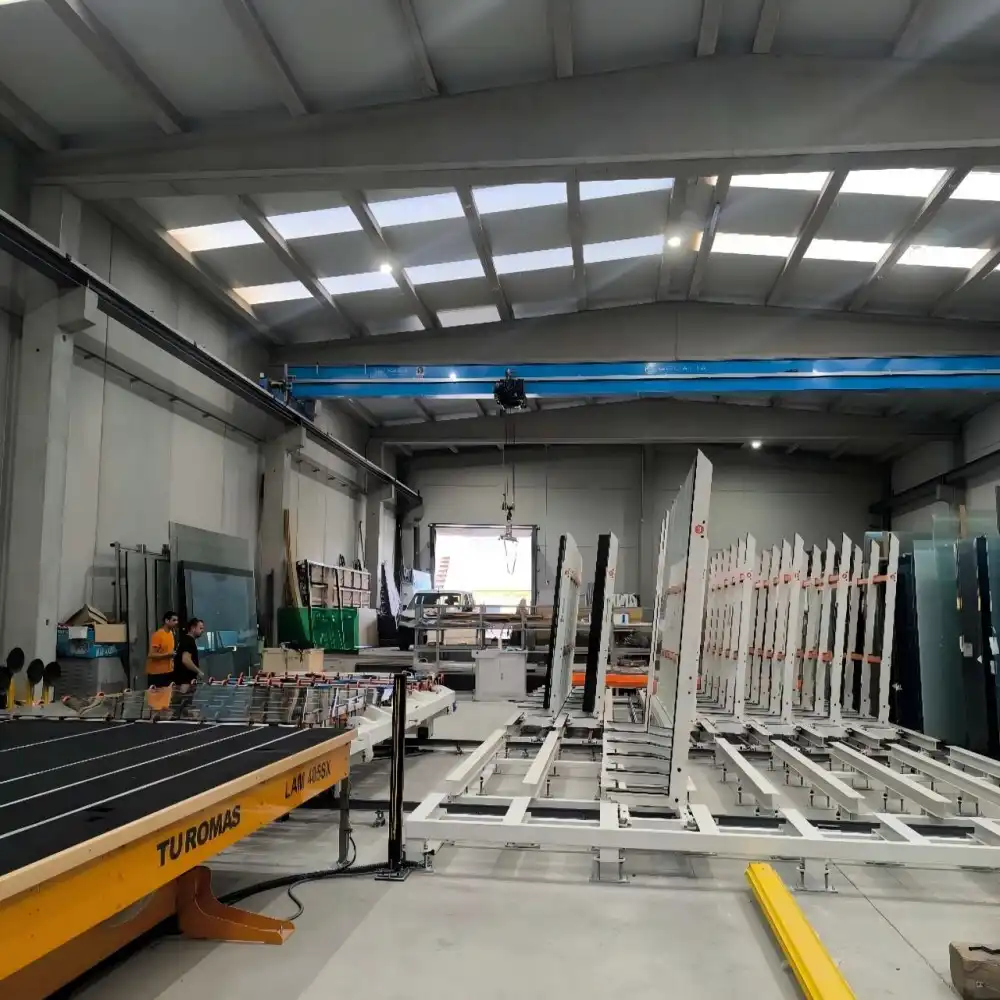
Why Air Flotation Tables Are the Preferred Choice for Modern Workflows
Beyond simple material handling, Air Flotation Tables offer strategic manufacturing capabilities that propel company expansion.
Scalability Across Production Volumes
The inherent flexibility that Air Flotation Tables offer is advantageous to facilities handling a range of order sizes. During high-volume architectural glass runs, the same table that easily manages individual bespoke furniture pieces during small-batch manufacturing works just as well. Because of its scalability, different production modes no longer require distinct handling equipment, which lowers capital costs and streamlines operator training.
When current equipment adjusts to higher capacity requirements, expansion planning becomes easier. Compared to the significant infrastructure conveyor systems need, adding more Air Flotation Tables to expanding production lines only requires minor facility adjustments, mainly electrical connections for compressors and sufficient floor space. Modular expansion capabilities enable corporate development trajectories while safeguarding early expenditures.
Verified Performance from Industrial Applications
Following the incorporation of Air Flotation Tables, architectural glass fabricators across the United States claim notable increases in production. In its first year of business, a mid-sized curtain wall manufacturer in the Southwest reported 50% fewer surface damage incidences and 35% quicker material handling times. By lowering labor expenses and waste, these quantifiable results immediately increased profit margins.
The ability to handle tempered glass tabletops and ornamental panels without scratches is very valuable to furniture producers. When roller tables were replaced with Air Flotation Tables at one factory, customer return rates for surface flaws decreased by over 60%. This improved the company's reputation for quality and made premium pricing tactics possible.
Future Integration with Smart Manufacturing
Air Flotation Tables are essential parts of interconnected production ecosystems as industrial settings move toward Industry 4.0. New sensor technologies that are integrated into worktable surfaces monitor movement patterns, processing cycle timings, and material location. These data are then sent into centralized management systems. Continuous process optimization, predictive maintenance warnings, and dynamic production scheduling are made possible by this real-time visibility.
Without the need for human involvement, completely coordinated material flow from storage to processing to packaging is achieved by integration with robotic loading systems and autonomous guided vehicles. Within these automated processes, Air Flotation Tables act as intelligent transfer stations, coordinating material handoffs and maintaining production rhythm by connecting with equipment upstream and downstream. In markets that need quick turnaround times and reliable quality execution, these skills give manufacturers a competitive edge.
Conclusion
From specialized machinery, Air Flotation Tables have developed into vital infrastructure for contemporary glass, stone, and architectural material production facilities. The solution maintains low operating costs and minimum environmental effect while providing quantifiable benefits in operator safety, material handling efficiency, and product quality protection. The best return on investment is ensured by procurement selections that match equipment capabilities to particular production requirements, taking into account load capacities, automation features, and manufacturer support capabilities. Air Flotation Tables offer the adaptable, dependable basis required for competitive success as manufacturing continues to progress toward smart, linked production environments.
FAQ
1. What materials can air flotation tables handle beyond glass?
Other than glass, any big, flat material, such as sintered stone, natural stone slabs, aluminum composite panels, acrylic sheets, and laminated wood products, may be efficiently supported by Air Flotation Tables. The most important prerequisite is that materials must be sufficiently stiff to remain flat under dispersed air pressure. Because they are unable to maintain stable posture on the air cushion, flexible materials such as cloth or thin plastic sheets function poorly. Make sure the chosen table's load rating surpasses your heaviest workpieces with sufficient safety margin. Weight capacity is more important than material type.
2. How loud are air flotation systems during operation?
Rather than the Air Flotation Table itself, the air compressor unit is the main source of noise. In order to further limit workplace noise, many facilities place compressor equipment in separate mechanical rooms. Modern screw compressors generally produce 65–75 dB at a distance of one meter, which is equivalent to average conversation loudness. A soft hissing sound that is hardly audible in active production settings is produced by the air escaping via table surface holes. In general, Air Flotation Tables are much quieter than belt systems or motorized roller conveyors.
3. Can existing work areas accommodate air flotation table installations?
With just a few adjustments, the majority of facilities may incorporate Air Flotation Tables. Access to compressed air supply lines rated for continuous operation, sufficient floor load capacity to support the table and materials, and room around the table perimeter for operator mobility and material loading equipment are the main prerequisites. To account for small floor imperfections, tables are mounted on leveling feet that may be adjusted. Facility managers may precisely evaluate integration needs and schedule any required preparations prior to equipment delivery with the help of comprehensive installation specifications supplied during procurement.
Partner with a Trusted Air Flotation Tables Manufacturer
Every Air Flotation Table that HUASHIL produces benefits from decades of specialized knowledge in glass processing automation. Our HSL-SPT3624 model, which combines wireless remote positioning, integrated breaking tables, and automatic loading systems in CE and ISO 9001-certified equipment built for tough industrial situations, is the pinnacle of constant innovation. We are aware that effective equipment procurement goes beyond the original purchase; thorough installation assistance, operator training courses, and prompt after-sales support guarantee that your investment yields long-term performance gains. Our technical team collaborates closely with engineering personnel and plant managers to create configurations that meet your unique workflow needs. Contact salescathy@sdhuashil.com to see how our Air Flotation Tables may improve your material handling capabilities.
References
1. Thompson, M. & Richardson, L. (2023). Advanced Material Handling Systems in Modern Glass Fabrication. Industrial Processing Technology Press.
2. Chen, W. (2022). "Comparative Analysis of Friction Reduction Technologies in Manufacturing Environments." Journal of Production Engineering, 45(3), 178-192.
3. National Glass Association. (2024). Best Practices for Architectural Glass Processing Equipment Selection. NGA Technical Guidelines Series.
4. Morrison, R. (2023). Ergonomic Solutions for Heavy Material Handling in Industrial Settings. Workplace Safety Institute.
5. European Committee for Standardization. (2022). Air Flotation Systems: Performance Standards and Testing Protocols. EN 15746-2:2022.
6. Davis, K. & Yamamoto, H. (2024). "Energy Efficiency Trends in Industrial Automation Equipment." International Manufacturing Review, 18(1), 56-71.
