




Air flotation tables are important equipment in contemporary glass fabrication and material handling operations where consistent performance significantly affects production throughput and product quality. Huge and delicate materials, usually huge glass panes, are moved about the factory floor without any surface contact damage by use of specialised systems using innovative air cushion technology. Main elements affecting their operating efficiency include constancy of air pressure, accuracy of surface flatness, quality of component materials, maintenance procedures, and ambient conditions. Understanding the interaction of these factors helps plant managers and technical purchasers make educated choices when buying and maintaining this crucial automation equipment for architectural glass processing, curtain wall fabrication, and furniture manufacturing applications.
Understanding Air Flotation Technology in Glass Handling Systems
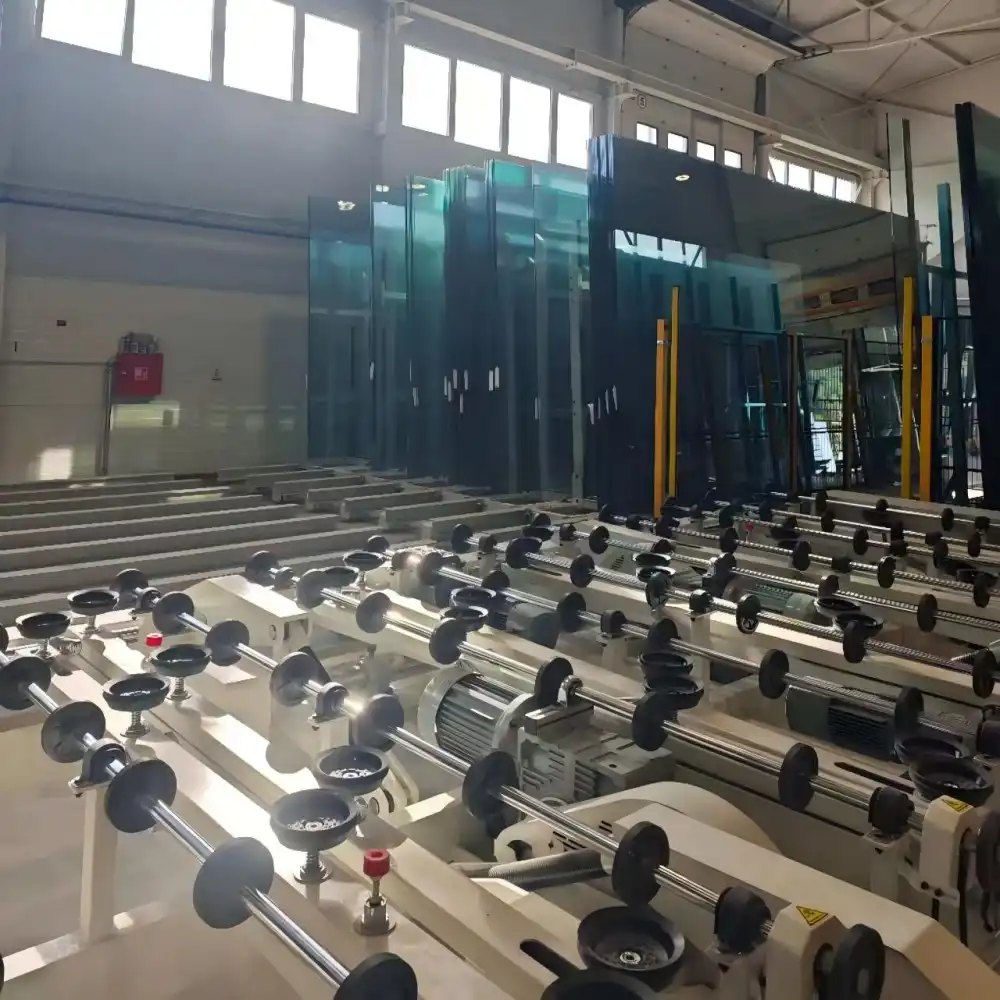
Air flotation systems are based on a simple concept that offers excellent results in industrial settings. The glass sheets, weighing several hundred kilos, are lifted and suspended on a thin cushion of compressed air that is disseminated via precision-engineered perforations in a specially constructed table surface. This non-contact handling approach prevents scratching, decreases breakage rate, and allows a smooth flow of material through cutting, edging, and packing stations.
Core Components That Define System Performance
Modern air flotation equipment is a combination of many main subsystems, operating together. The air supply network consists of compressors, regulators, and distribution manifolds that provide constant pressure across the whole table surface. The table itself is made of thousands of air holes, and each hole is placed in the exact location to provide the best lifting power for the load it will be carrying. Control systems are designed to monitor pressure and adjust output in real time, providing steady operation even when working with different-sized and thickness glass sheets.
Key Performance Indicators for Industrial Applications
Production managers analyse the effectiveness of air flotation tables using quantitative indicators that are indicative of operating expenses and quality results. The air consumption rates translate into energy costs. The lifting capacity determines the maximum size of the workpiece, for example, 3660×2440mm in the top-end versions. The precision of the movement influences the accuracy of the downstream processing, which is especially relevant in the case of automated lines where tolerances in position influence the operations of cutting and edging. High volume fabrication operations consider this a priority since the response time loading new materials affects total production cycle rates.
Critical Factors Impacting Operational Efficiency
Several linked factors influence whether an air flotation table system can achieve production requirements or generate bottlenecks in operations. If technical managers understand these air flotation table elements, they may specify the correct equipment and set reasonable performance expectations.
Air Pressure Stability and Distribution Uniformity
To provide successful material handling, the uniform pressure must be maintained throughout the whole surface of the air flotation table. Fluctuations might create uneven lifting and make the glass unstable during transit and cause quality problems in later processing processes. Uniformity of distribution is a function of manifold design, hole pattern engineering, and supply line size. Systems that experience pressure dips at the edges or corners of the table will need extensive airflow study and possible adjustment. Industrial compressors must provide the necessary cubic feet per minute (CFM) with low pulsation. This usually means the inclusion of integrated air receivers and precision regulators, calibrated to meet the particular needs of the application.
Table Surface Condition and Structural Integrity
The physical condition of the table surface directly impacts the safety of handling and the quality of the material. Even little bumps on the surface may produce small areas of pressure change that can cause sheets of glass to tilt or move in unexpected ways. Table building material is a compromise between weight and durability, with aluminium alloys and specific composites having the best strength-to-weight ratio. Structural bending under severe loads impairs air distribution patterns. Rigid frame architecture is crucial for large-scale handling applications. By regularly inspecting the surface, you may detect wear patterns, contaminant build-up, and blockage of holes before they result in production failures.
Environmental Conditions and Contaminant Control
The factory conditions create factors that greatly affect the life of air flotation systems. In cutting and edging operations, there is always a generation of glass dust, and this dust collects in the air holes, limiting the flow rate and hence the efficacy of the lift. Humidity is a factor that affects the quality of compressed air. Moisture condensation will corrode interior components and degrade seals. Temperature extremes affect how much a material expands and the density of the air. This has to be accounted for in the pressure settings. Proper filtration systems and environmental controls preserve your equipment investment and provide constant performance during seasonal changes.
Common Durability Challenges in High-Production Settings
Air flotation equipment in harsh industrial applications is subject to many failure scenarios during extended operation. Knowing these weaknesses, proactive maintenance measures may be used to avoid unexpected downtime.
Mechanical Wear in Moving Components
Samples with automated loading features and remote-controlled placement, such as the HSL-SPT3624 that can rotate 360 degrees, have mechanical assemblies under constant stress. The drive wheels, bearings, and guiding systems wear with use, according to the hours of operation and cycling of the load. Lubrication deterioration promotes frictional damage, especially at high-temperature industrial sites. Quality of parts varies widely across manufacturers. Premium materials and excellent manufacturing may increase service intervals considerably. Procurement choices to balance initial cost against total ownership expenditures should carefully assess mechanical subsystem requirements and manufacturer track records in comparable applications.
Corrosion and Material Degradation
Corrosive elements in glass manufacturing settings damage equipment surfaces over time. Coolant overspray from cutting operations, chemical residues from cleaning procedures, and moisture in the atmosphere combine to generate circumstances favourable to oxidation and material degradation. Aluminium components need to be anodised or coated with protective paints to prevent corrosion. Steel structures may be galvanised or treated with particular paint systems. Chemical attack on seal materials causes air leakage and decreases system efficiency. The equipment specification process should consider the particular environmental conditions that are expected to be found at the sites where the equipment is to be installed.
Fouling and Blockage Issues
The most prevalent operating difficulty with air flotation tables is blockage of the air passages. Fine glass particles penetrate air distribution networks, accumulate at orifices, and reduce flow capacity. Degradation is a slow process and may go undetected until the lifting ability is appreciably degraded and the unit requires a thorough cleaning. Condensation in the air lines adds water vapour. This forms muck that further clogs the channels. Preventive methods include upstream filtration, periodic emptying of the compressed air system, and planned processes for cleaning the table surface to eliminate accumulation before major effects on performance.
Maintenance Strategies That Extend Equipment Lifespan
Structured maintenance plans provide verifiable benefits in terms of decreased downtime, reduced repair costs, and increased service life of capital equipment. Such approaches do not need a large commitment of resources yet provide significant operational advantages.
Preventive Inspection Schedules
Routine inspection intervals are determined by operating hours, not calendar time. This ensures that maintenance actions correspond to equipment use. Visual inspections are made weekly to look for visible concerns such as air leaks, surface deterioration, and build-up of pollution. Monthly comprehensive evaluations consist of pressure tests throughout the surface of the table to identify abnormalities in the distribution of pressure, and lubrication checks on mechanical components. Complete reviews, quarterly: Structural strength, electrical system status, control function correctness. Inspection findings documentation builds trend data, which helps forecast component replacement schedule and promotes continuous improvement efforts.
Component Replacement and Upgrade Protocols
Even the best maintained systems ultimately need component replacement when parts approach end-of-service life. Keep sufficient spare parts, especially wear-out items such as seals, filters, and bearings, to reduce interruption to production when breakdowns happen. Having common parts across different machines makes inventory management easier and the buying process easier. Advances in technology occasionally make better parts with higher performance or longer wear-out times available, making selected upgrades advantageous from a cost perspective even before current parts have totally failed. Build partnerships with equipment makers or authorised distributors to secure access to authentic replacement parts and expert help for fixing difficult situations.
Operator Training and Procedural Discipline
The equipment life is highly influenced by the way the production people handle the equipment. Training programs should address the basic operating principles of the system so operators understand how their activities influence the state of the equipment. Proper glass loading methods prevent impact damage to table surfaces, and proper pressure adjustment procedures prevent component overstressing. When you implement standard operating procedures that include pre-shift equipment inspections and post-shift cleaning processes, you build responsibility and consistency into the process. It is also important to empower operators to report early warning indications of potential failure such as strange sounds, changes in performance, or visual damage so that action may be taken before a small problem escalates to a catastrophic failure.
Optimizing System Performance for Glass Processing Applications
Optimising equipment ROI by matching system capabilities to production and operational conditions. Many approaches boost performance and minimise ownership expenses.
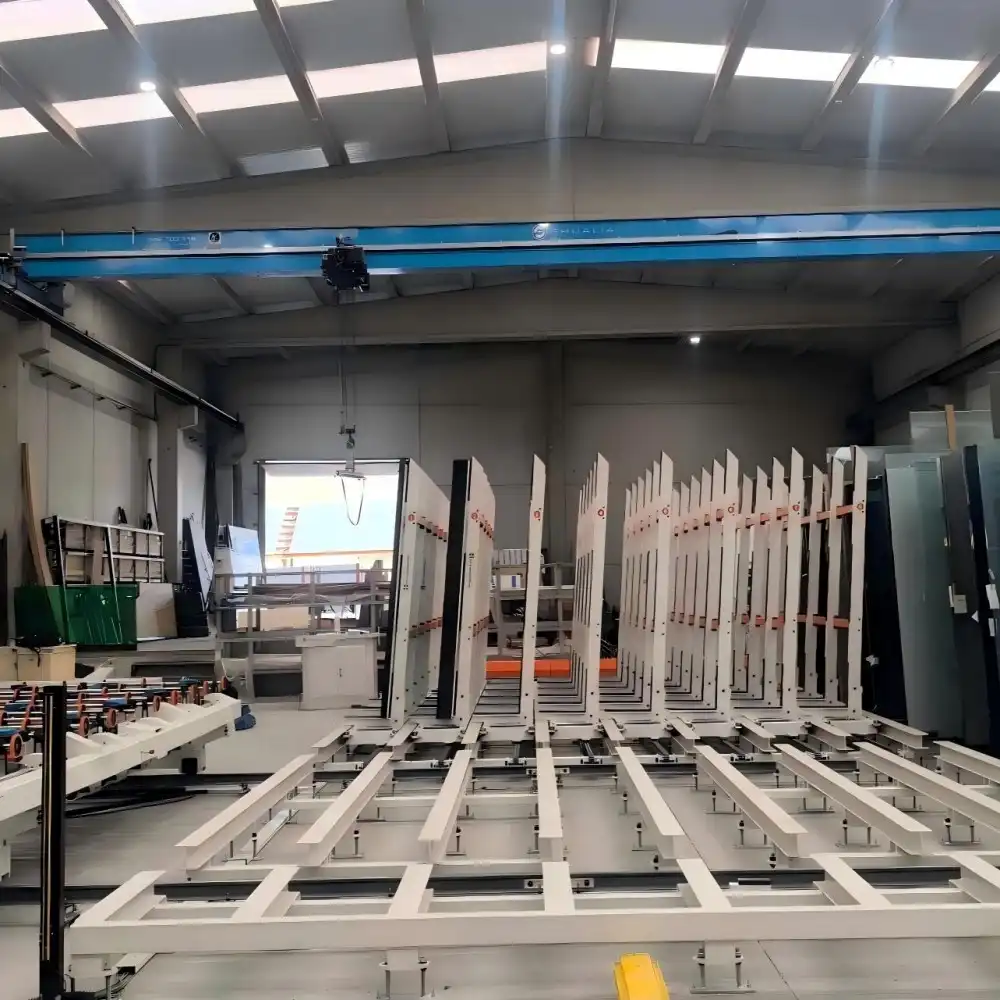
Advanced automation streamlines manual material handling. Remote control systems place glass sheets without humans touching them, improving safety and efficiency. In high-volume manufacture of standardised products, automatic loading decreases cycle times. Continuous production flow eliminates damage and time-consuming human transfer stages with upstream cutting and downstream edging equipment. Air flotation and breaking tables are combined in the CE and ISO9001-certified HSL-SPT3624 type.
Monitoring provides real-time system performance awareness for data-driven improvement. Pressure sensors throughout the table surface communicate maintenance by detecting distribution defects. Compressed air energy meters calculate operational costs and efficiency benefits. Cycle time monitoring finds manufacturing bottlenecks, improving processes. This instrumentation makes passive tools intelligent assets for predictive maintenance and continual development.
Standard performance benchmarking to manufacturer standards assures system functionality. Commissioning criteria, including lifting capacity, positioning accuracy, cycle lengths, and energy use, provide baselines. Operators may not notice gradual performance decline; hence, objective evaluation is needed for fast intervention. Ensure equipment meets production targets via periodic controlled testing that isolates factors and validates system integrity.
Conclusion
Air flotation tables' performance and durability depend on multiple interconnected factors spanning design quality, environmental conditions, maintenance practices, and operational discipline. Recognizing how air pressure stability, structural integrity, component materials, and contamination control influence system effectiveness enables informed equipment selection and proactive management strategies. Durability challenges, including mechanical wear, corrosion, and fouling, require structured preventive maintenance programs that extend service life while minimizing unexpected downtime. Optimization through automation integration, performance monitoring, and continuous improvement delivers competitive advantages in efficiency, quality, and operational costs. Understanding these critical factors empowers production managers, engineering teams, and procurement professionals to make investment decisions that support long-term manufacturing success.
FAQ
1. How often should air flotation tables undergo maintenance inspections?
Maintenance frequency depends on operating intensity and environmental conditions, but general guidelines recommend weekly visual checks, monthly detailed inspections, and quarterly comprehensive reviews. High-production facilities processing abrasive materials may require more frequent attention, while cleaner environments with moderate usage extend intervals. Monitoring performance metrics helps establish optimized schedules tailored to specific operational conditions.
2. What distinguishes air flotation tables from standard conveyor systems?
Air flotation technology eliminates surface contact entirely, preventing scratches and contamination that compromise glass quality. Conventional conveyors require rollers or belts touching material surfaces, creating friction and potential damage points. The non-contact handling approach proves particularly valuable for large architectural glass sheets where even minor surface defects become visible after installation.
3. How can facilities optimize compressed air consumption without compromising performance?
Implementing demand-responsive pressure control reduces air usage during idle periods and light-load conditions. Regular leak detection and repair prevent waste through distribution system defects. Optimizing hole patterns and pressure settings to match actual material dimensions avoids over-specification. Variable speed drive compressors adjust output to instantaneous demand, improving energy efficiency compared to constant-speed units cycling on-off.
Partner with HUASHIL for Advanced Glass Handling Solutions
At HUASHIL, we specialize in engineering air flotation tables that deliver exceptional performance and durability for demanding glass fabrication environments. Our HSL-SPT3624 model handles sheets up to 3660×2440mm with integrated automatic loading, precision air flotation systems, breaking table functionality, and 360-degree remote control mobility—all backed by CE and ISO9001 certifications. With extensive experience serving architectural glass processors, curtain wall fabricators, and furniture manufacturers worldwide, we understand the operational challenges you face and design solutions that enhance productivity while reducing total ownership costs. Our engineering team provides comprehensive application analysis, customized system configuration, and ongoing technical support throughout equipment service life. Whether you're establishing new production lines or upgrading existing capabilities, HUASHIL delivers reliable air flotation table solutions from a trusted manufacturer. Contact our team at salescathy@sdhuashil.com to discuss your specific requirements and discover how our advanced handling technology can transform your glass processing operations.
References
1. Glass Manufacturing Industry Council. "Automated Handling Systems for Large-Format Architectural Glass." Industrial Glass Processing Technology Review, 2022.
2. Bergman, T.L. "Air Cushion Transport Systems: Design Principles and Performance Optimization." Journal of Manufacturing Systems Engineering, 2021.
3. International Association of Glass Fabricators. "Best Practices for Material Handling Equipment Maintenance in Glass Processing Facilities." Technical Standards Publication, 2023.
4. Chen, W. and Martinez, R. "Corrosion Prevention in Industrial Automation Equipment: Material Selection and Protective Coatings." Materials Science in Manufacturing, 2022.
5. European Committee for Standardization. "Safety Requirements for Glass Processing Machinery: Air Flotation and Handling Systems." EN Standards Documentation, 2021.
6. Anderson, P.K. "Energy Efficiency Analysis of Compressed Air Systems in Glass Manufacturing Operations." Industrial Energy Management Quarterly, 2023.