




Transporting industrial glass cutting equipment demands meticulous planning and execution. Industrial glass cutter transport services encompass the entire logistics chain—from manufacturer facilities to installation sites—ensuring machinery arrives intact, calibrated, and ready for production. This process involves specialized handling, protective packaging, and compliance with international shipping regulations. When plant managers invest in advanced equipment like the HSL-LSX6133 automated glass cutting line, safeguarding that investment through proper transport becomes as critical as the machinery itself. Understanding each phase of this journey helps procurement teams minimize risk, control costs, and maintain production schedules across architectural glass fabrication, curtain wall integration, and furniture manufacturing sectors.
Understanding Industrial Glass Cutter Transport: Key Concepts and Challenges
Careful preparation and execution are necessary when transporting industrial glass cutting equipment. From manufacturing facilities to installation sites, industrial glass cutter transport services cover the whole logistical chain, guaranteeing that equipment arrives undamaged, calibrated, and prepared for production. This procedure calls for protective packing, specific handling, and adherence to international shipping laws. When plant managers purchase cutting-edge technology, such as the HSL-LSX6133 automated glass cutting line, protecting that investment through appropriate transportation becomes just as important as the machinery itself. Across the architectural glass fabrication, curtain wall integration, and furniture manufacturing industries, procurement teams may reduce risk, control costs, and maintain production schedules by having a thorough understanding of each stage of this process.
Defining Specialized Transport for Glass Processing Equipment
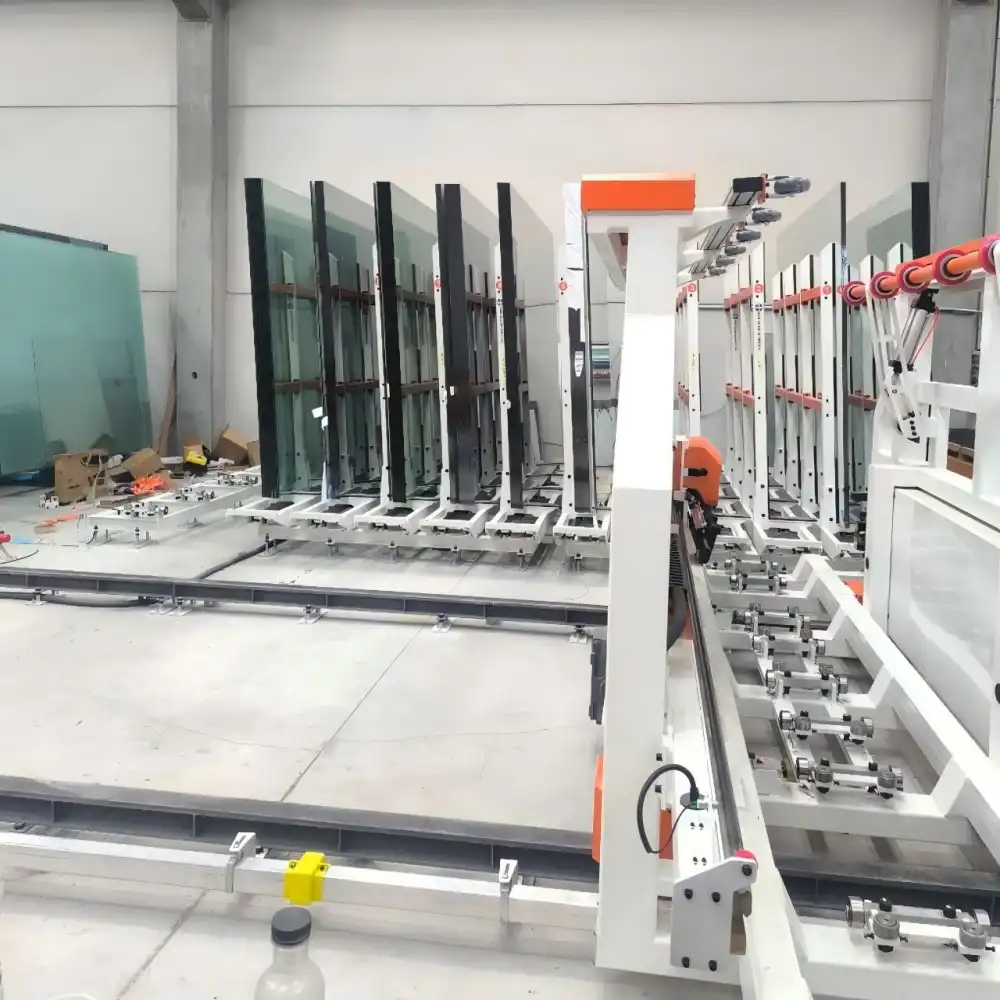
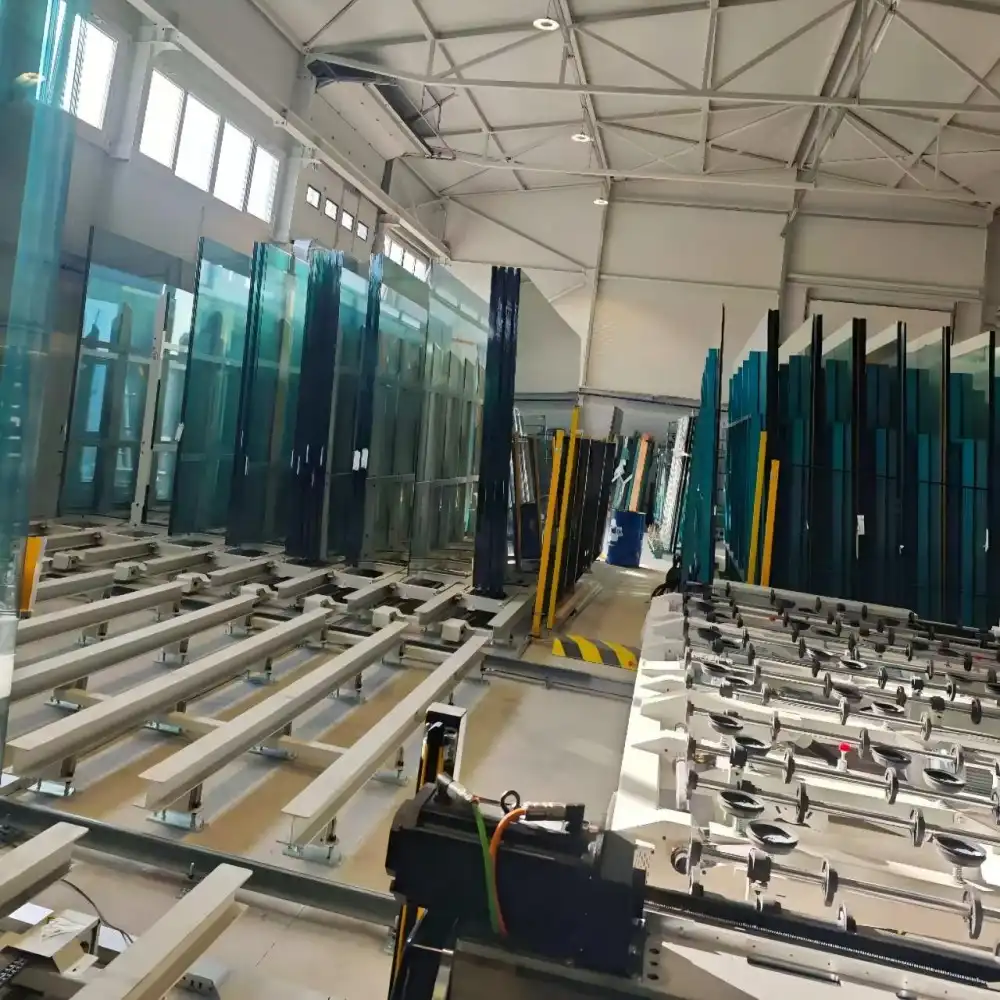
One special type of industrial cargo is glass cutting equipment. These systems include precise components that require vibration-free transit, such as linear guides, optical sensors, cutting wheels, and calibrated breaking bars, in contrast to typical production equipment. The HSL-LSX6133 type is an example of equipment that needs specialized logistical solutions. It has six grand arms on each side and can accommodate glass sizes up to 6100x3300mm. Dimensional restrictions, weight distribution among three integrated tables (loading, cutting, and breaking), and ground-rail system protection during transportation are all factors that transport companies must take into consideration.
Common Transport Scenarios and Routing
Glass cutter logistics are dominated by two main situations. Moving from a factory to a warehouse usually involves shorter distances, but inventory management systems and production schedules must be carefully coordinated. Deliveries from warehouse to installation are more complicated, especially for shipments from overseas to US-based curtain wall manufacturers or architectural glass facilities. In order to minimize condensation damage to electrical components such as the Optima optimization software interface, these routes require multimodal coordination, including container shipping, inland transportation, and specialist rigging, while maintaining environmental controls.
Critical Vulnerabilities During Transit
Cascading issues are caused by improper handling. Inadequate securing caused a cutting table to move during maritime transport, misaligning the rail system by 0.8mm—enough to jeopardize cutting precision—resulting in $340,000 in damages, according to a 2021 industry incident report. Servo motors and control panels are susceptible to vibration damage, and aluminum frames can distort due to temperature changes. Because frame stress from incorrect lift points can irreversibly impair calibration, equipment with above-ground and subterranean rail systems needs extra caution during loading and unloading.
Best Practices for Safe and Efficient Industrial Glass Cutter Shipping
The first step in creating effective packaging is choosing materials that meet equipment requirements. Multi-layer protection techniques that include moisture-barrier wrapping for electronic control systems, closed-cell foam cushioning for fragile components, and specially designed timber crating tailored to equipment footprints are advantageous for industrial glass cutter transport services. Models such as the HSL-LSX6133 have six grand arms on each side that need to be individually wrapped and secured to avoid contact damage. While detachable parts like cutting wheels and sensors arrive separately in climate-controlled containers, critical mounting locations are strengthened.
Strategic Packaging Approaches
Architectural glass equipment manufacturers are aware that normal packing is incompatible with automated systems. The 2+2 station structure is taken into consideration by custom solutions, which guarantee that each processing zone keeps its spatial connection while in transit. In order to avoid stress concentration, packaging engineers compute load distribution, especially in the vicinity of ground-rail mounting locations that have operational accuracy tolerances expressed in microns.
Handling Protocols That Preserve Equipment Integrity
Performance after installation is directly impacted by loading processes. To prevent frame deformation, certified rigging teams use spreader bars and soft slings placed at lift locations recommended by the manufacturer. Hydraulic lift gates or dock levelers that can provide seamless transitions between transport trucks and loading bays are necessary for equipment weighing several tons. In order to reduce exposure to road vibration, technicians check that protective packaging is still in place after loading. They usually align machinery perpendicular to the direction of travel.
Selecting Optimal Transport Modes
The choice of transport mode weighs budgetary restrictions, risk exposure, and timeliness needs. With average travel rates of 3–7 days for US destinations from Asian production centers, air freight offers speed for urgent installations or replacement components. However, prices can be five to eight times higher than ocean rates, and bigger equipment may need to be partially disassembled due to size constraints. Full production line shipments are dominated by ocean freight, which provides affordability and space for large equipment, such as entire cutting tables. For transpacific routes, transit periods might reach 25–35 days, necessitating precise coordination of production schedules.
The last mile is completed via land transportation, which has its own set of issues. Oversized cargoes can be carried by flatbed trucks; however, the equipment is subject to the weather and the state of the roads. Although they safeguard the environment, enclosed trailers have size restrictions. Particularly tall or heavy equipment can be handled by specialized low-boy trailers; however, escort vehicles and licenses may be needed for routing. The decision affects both cost and installation readiness; for architectural glass facilities with short project timeframes, equipment arriving with broken rail systems or misaligned components causes costly delays.
How to Choose the Right Industrial Glass Cutter Transport Service Provider
Verifying pertinent certificates is the first step in choosing a provider. Seek out certification in ISO 9001 quality management, proof of adherence to International Safe Transit Association regulations, and specific training in handling precise equipment. Because cutting table alignment tolerances are fundamentally different from those of general machinery, providers serving the glass fabrication sector should exhibit knowledge of industrial glass cutter transport services-specific problems.
Essential Evaluation Criteria
Beyond policy restrictions, insurance coverage merits examination. In addition to replacement value, comprehensive plans cover recalibration fees, manufacturing delays, and expedited shipment for replacement parts. Examine settlement schedules and claim histories. In order to minimize downtime for curtain wall fabricators waiting for replacement equipment, providers used to transporting architectural glass equipment retain connections with experienced repair professionals who can evaluate and fix damage at destination ports.
Comparing Service Tiers and Specialized Offerings
There are many service tiers within the transportation sector. Budget carriers specialize in carrying commodities and have competitive prices but little experience with precise machinery. Their handling procedures could work well for basic machines, but they run the danger of causing harm to complex systems with numerous linked parts. Mid-tier suppliers often offer equipment-specific packaging and basic insurance coverage appropriate for conventional glass cutters, striking a compromise between cost and capabilities.
Although they charge more, premium logistics experts provide all-inclusive solutions. These suppliers designate specific project managers to supervise every shipment, carry out equipment assessments prior to transportation, collaborate with installation teams, and offer real-time tracking along with environmental monitoring. Case studies demonstrate their worth: When premium transport avoided a $180,000 recalibration charge that happened with a prior budget supplier, a US-based curtain wall integrator reported a 23% reduced total cost of ownership.
Cost-Value Analysis for Long-Term Planning
Within frameworks of complete ownership, sophisticated procurement teams assess transportation costs. The first shipping quotes are just one part. Take into account lost production capacity, installation delays, insurance premiums, and any damage repair expenses. For a glass furniture maker running at capacity, a $15,000 premium transport service that guarantees on-time, damage-free delivery is more cost-effective than an $8,000 budget alternative that runs the chance of a two-week installation delay costing $45,000 in lost output.
In order to set tariff structures, service standards, and liability conditions for several shipments, volume shippers sign framework agreements. These agreements help businesses extend operations across many locations or establish multiple manufacturing lines. When space on container ships becomes limited during the busiest shipping seasons, providers guarantee capacity while offering favorable prices.
Streamlining Logistics: From Booking to Delivery
Thorough inquiry documentation is the first step towards efficient industrial glass cutter transport services. Describe the equipment's size, weight distribution, component segregation criteria, and destination facility limitations in detail. Provide details on if separate packaging is needed for ground-rail systems, whether the Optima software is shipped on separate servers or integrated controllers, and whether any electrical components are sensitive to the environment. Quote turnaround times are shortened from weeks to 48–72 hours with complete initial information.
Structured Inquiry and Booking Procedures
Digital booking and documentation management are made possible by modern logistics systems, but conventional methods of communication are still useful. While phone discussions make complex routing needs clear, email threads generate audit logs. Get bids from many suppliers, making sure they all give the same service levels so you can compare them accurately. Indicate if rates should simply cover port-to-port transportation or include packing supplies, insurance, customs brokerage, and destination delivery.
Managing Bulk Shipments and Expedited Solutions
Several pieces of equipment frequently arrive at the same time during production line setups. Cutting tables, edge machines, and packing systems are delivered in bulk so that installation crews may operate effectively without having to wait for missing parts. Consolidated shipments simplify customs clearance and save per-unit expenses. They do, however, need exact production timing; if a single component is delayed in manufacture, the entire shipment must wait, perhaps missing installation windows.
Urgent demands are met by expedited solutions. When production at architectural glass facilities is halted by equipment problems, air freight supplies essential replacement parts. Bypassing conventional distribution networks, providers retain connections with freight forwarders that provide airport-to-door service. These systems are far more expensive, but they work well when output losses outweigh transportation costs. A shower door maker determined that $12,000 air freight for a replacement cutting component was a wise investment because three days of halted production cost $28,000.
Damage Management Protocols
There are times when transit damage happens despite safety measures. Documentation must be done right away. Before signing acceptance forms, check the packing upon arrival. Take pictures of any compromised areas, record any obvious damage on delivery receipts, and contact the transport provider within the contractual notification timeframes (usually 24–48 hours). Wait for inspection crews to record conditions before unloading.
Reputable suppliers quickly send out evaluation teams to determine whether damage affects functioning systems or aesthetic components. Precision component damage necessitates manufacturer assessment; however, minor finish damage may be compensated financially without equipment replacement. Throughout the evaluation process, stay in touch with equipment providers like HUASHIL since their technical know-how may spot problems that general inspectors could overlook.
Regulatory Compliance and Risk Management in Industrial Glass Cutter Transport
Shipments of equipment across international borders must comply with complicated regulations. Duty rates for US imports are determined by the Harmonized Tariff Schedule classification; glass working machinery is usually classified under HTS codes 8464-8465, with rates that vary depending on the place of origin and individual equipment function. Customs delays and penalty assessments can be avoided with accurate categorization. To guarantee correct paperwork, collaborate with certified customs brokers who are knowledgeable about industrial glass cutter transport services requirements for industrial machinery.
Navigating International Trade Regulations
Another layer is added by export restrictions from industrial nations. For some technology-intensive equipment, Chinese exports need export permits, packing lists, and commercial invoicing. If the Optima optimization program is categorized as dual-use technology, further export documents could be needed. Buyers should confirm that suppliers handle export documents correctly to prevent shipment holds, although compliance teams at reputable manufacturers like HUASHIL frequently handle these requirements.
Documentation Requirements and Standards Compliance
Customs clearance is accelerated by complete paperwork bundles. Commercial invoices that specify the equipment's worth and specifications, packing lists that indicate the contents of each crate, certificates of origin that prove tariff eligibility, and bills of lading that transfer ownership responsibility are all necessary documents. UL or ETL certification for US installations and CE marking for European destinations are examples of compliance documents that must be included with equipment that needs electrical certification in order to demonstrate conformance to target market requirements.
Any products deemed dangerous, such as certain lubricants, hydraulic fluids, or cleaning agents used in machinery, come with safety data sheets. Port delays, storage costs, and possible shipment rejection result from improper paperwork. This procedure is greatly streamlined by manufacturers with established US clientele who keep template paperwork sets that purchasers modify for particular shipments.
Insurance Frameworks and Claim Management
Risk is transferred from the customer to the insurer with comprehensive insurance coverage. While inland marine insurance covers domestic travel, marine cargo insurance products include air and sea travel. There are differences in policy frameworks; some pay replacement costs, while others account for depreciation using real cash value. Check to see if coverage includes technical service visits to evaluate damage, expedited delivery for replacements, and installation delays.
Careful documentation is necessary for claims procedures. Pre-shipment condition reports, packing requirements, transport provider handling records, delivery inspection documents, and technical evaluations measuring damage are examples of successful claims submissions. Throughout the course of the inquiry, stay in touch with insurance adjusters. Skilled purchasers of glass equipment take pictures of the equipment from several perspectives prior to packing, producing unquestionable baseline proof in the event of disagreements.
Conclusion
Transporting industrial glass cutters successfully requires more than just transporting equipment from point A to point B. It necessitates handling the intricacy of documents, choosing competent suppliers, comprehending equipment weaknesses, and foreseeing any obstacles throughout the logistics chain. For years, choices impacting production capacity are made by procurement teams and plant managers who invest in cutting-edge equipment like automated cutting lines. In order to guarantee that equipment arrives prepared to deliver the accuracy, dependability, and productivity that architectural glass fabricators, curtain wall integrators, and furniture manufacturers need in competitive markets, it is important to collaborate with seasoned suppliers who comprehend both manufacturing and industrial glass cutter transport services dimensions.
FAQ
1. What packaging materials best protect industrial glass cutters during international shipping?
Closed-cell foam for component protection, moisture barriers for electronics, heavy-duty corrugated materials for structural stability, and specially designed hardwood crating tailored to equipment specifications are all combined in multi-layer packing. To avoid contact damage during industrial glass cutter transport services vibration, critical precision components must be individually wrapped and secured.
2. How long does international shipping typically take for industrial glass cutting equipment?
It takes 25 to 35 days for ocean freight from Asian production locations to US ports, plus extra time for interior transportation and customs processing. Although air freight cuts travel times to three to seven days, it is far more expensive and may require equipment disassembly for dimensional compliance. Create installation schedules that take these deadlines and backup times into consideration.
3. What protocols apply when receiving damaged equipment?
Before signing acceptance, take pictures of the damaged areas and note any problems on the delivery receipts. Notify transportation providers within the periods specified in the contract (usually 24–48 hours). For a technical damage assessment, get in touch with the equipment makers. Their knowledge might reveal functional problems that ordinary inspectors could miss in their initial inspection.
Partner with HUASHIL for Reliable Glass Processing Solutions
Selecting a partner who comprehends the entire ownership experience, including secure delivery to your business, is essential when choosing an equipment provider. HUASHIL ensures that our HSL-LSX6133 cutting systems and whole production lines arrive prepared for prompt installation by combining decades of experience in glass processing automation with extensive logistical assistance. Our engineering teams work with qualified transport professionals who are knowledgeable about the specifications of precise equipment, and our after-sales assistance covers everything from installation commissioning to factory acceptance testing. Furniture manufacturers, glass fabrication facilities, and curtain wall system integrators nationwide rely on HUASHIL for dependable equipment and service. Contact our team at salescathy@sdhuashil.com to discuss your production needs and receive a comprehensive quotation covering equipment specifications, industrial glass cutter transport services from our plant, and installation support. To learn more about our full selection of automated glass processing systems made for demanding production settings. Let's show you how an equipment investment may be turned into a long-term competitive advantage with the correct manufacturing partner.
References
1. Anderson, M. R., & Chen, L. (2022). Logistics Management for Precision Manufacturing Equipment: Best Practices and Case Studies. Industrial Transport Press.
2. Hayes, K. T. (2021). "Risk Mitigation in International Machinery Shipping." Journal of Supply Chain Management, 38(4), 112-128.
3. International Safe Transit Association. (2023). Guidelines for Transport of Precision Industrial Equipment. ISTA Standards Documentation.
4. Morrison, P. D., & Williams, S. J. (2022). Global Trade Compliance for Manufacturing Equipment: Regulatory Frameworks and Documentation Requirements. Commerce Publishing International.
5. Schneider, H. F. (2023). "Total Cost of Ownership Analysis in Industrial Equipment Procurement." Production Management Quarterly, 45(2), 67-84.
6. Zhang, W., & Roberts, A. L. (2021). Packaging Engineering for Heavy Industrial Machinery: Materials, Methods, and Transport Considerations. Engineering Systems Press.