




When plant managers and production directors ask me what transforms a glass processing operation, I always say clever automation in the cutting workflow. An all in one glass cutting machine removes production bottlenecks and decreases worker reliance by combining cutting, breaking, edge detection, and material handling. This integrated solution outperforms multi-step operations in throughput, material consumption, and dimensional accuracy. Modern machines like the HSL-YTJ3829 can handle glass panels up to 3660×2800mm and 2-19mm thickness, making them ideal for architectural glass manufacturing, automotive, and custom furniture creation. These devices use Optima optimization software to compute the best cutting patterns to save waste and accelerate output. A machine that satisfies technical managers' equipment dependability and procurement teams' total cost of ownership concerns is the result.
Understanding All in One Glass Cutting Machines: Features & Functionality
Defining the Integrated Design Approach
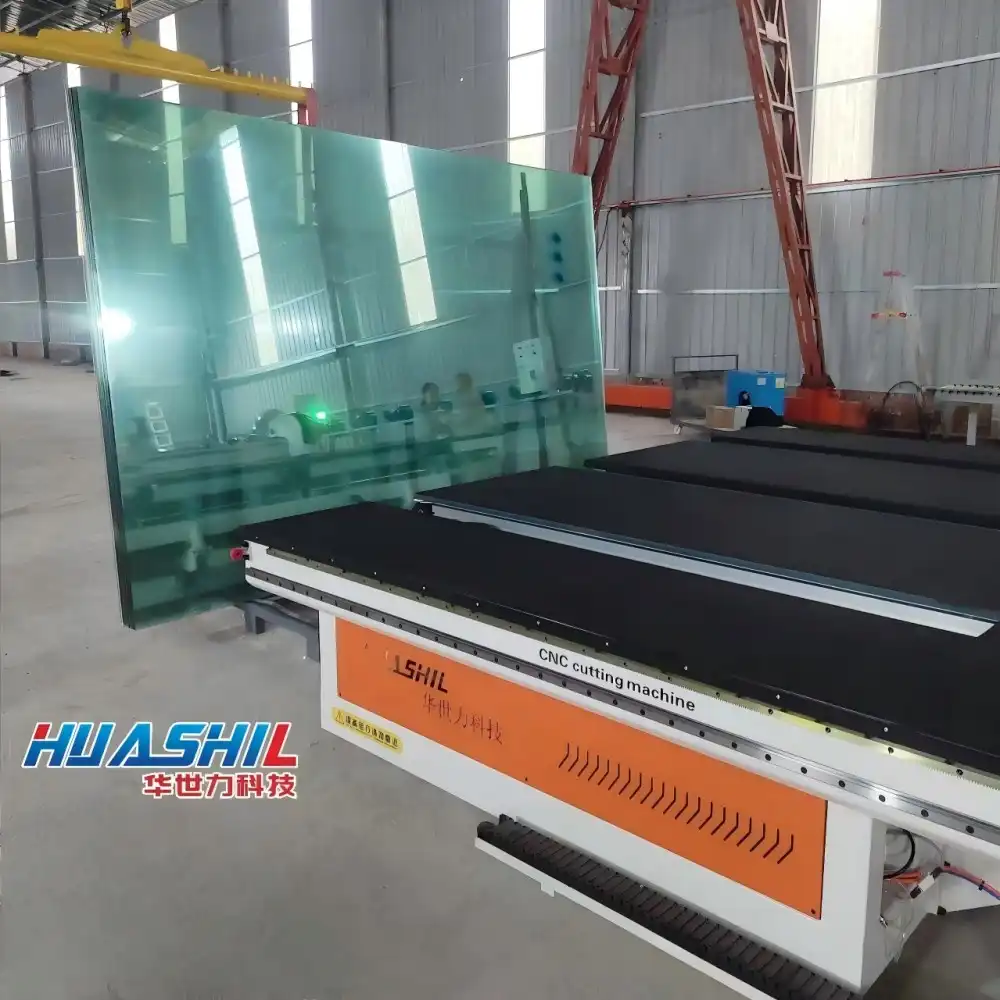
Glass processing equipment has advanced from manual scoring instruments to automated systems. An integrated cutting machine replaces many stations and laborious material transfers. This design decreases handling time, breakage risk, and yields more predictable production. The HSL-YTJ3829 uses automated loading to alleviate the physical strain and safety dangers of manually arranging huge glass sheets. Cutting force is automatically adjusted based on glass thickness to provide clean scores without micro-fractures that affect structural integrity. Automatic edge-finding technology detects glass boundaries to compensate for loading variances and provide exact cut placement even when sheets aren't aligned.
Core Components and Operational Workflow
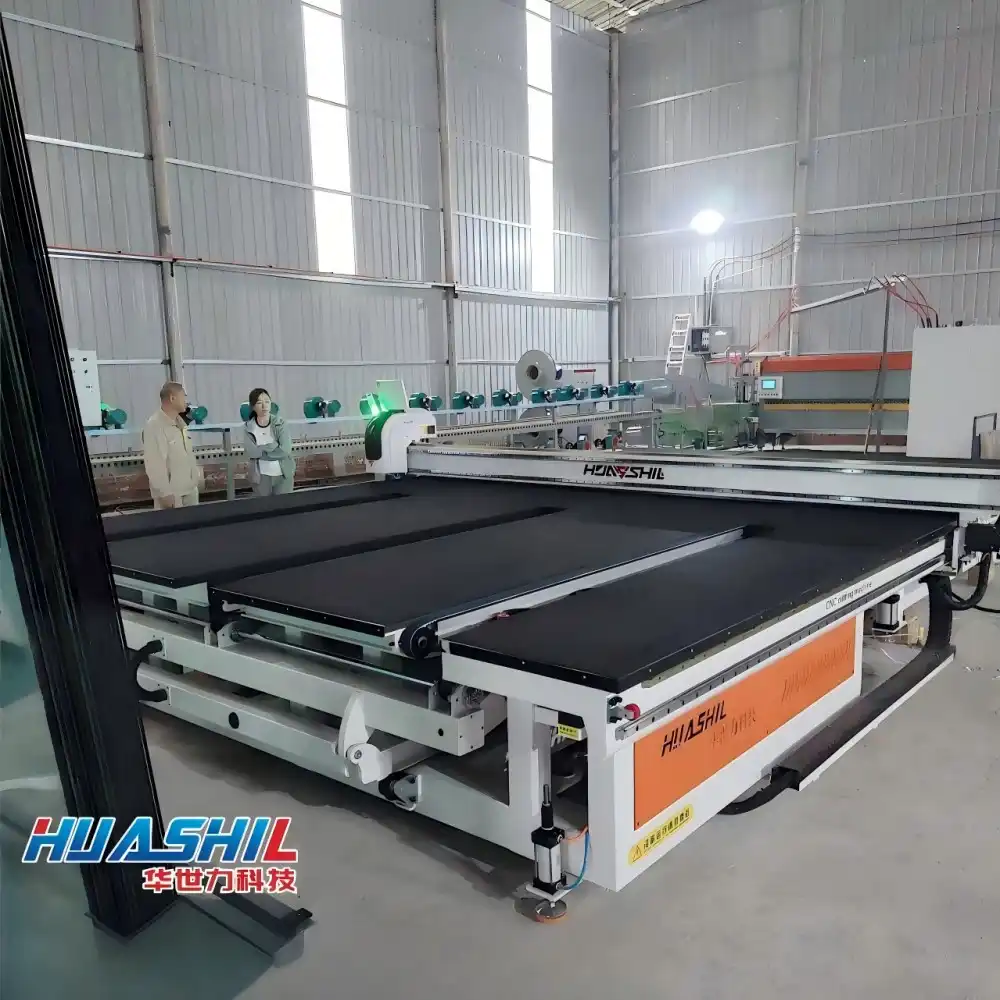
The action begins when glass sheets are put into the air flotation system, a frictionless cushion of strategically placed air jets that allows operators to position heavy glass with minimum effort. Unlike roller-based systems, synchronous belts transport glass smoothly and precisely during the cutting cycle. Optima software evaluates order parameters and creates nesting arrangements to maximize material yield. The cutting head follows these patterns on the glass surface. When scoring is complete, the integrated breaking table uses controlled pressure to separate pieces without chipping edges. The 360-degree remote control walking capability lets workers monitor several machines from a single area and adjust equipment as production needs change without physical pushing or forklift assistance.
Precision Technologies and Control Systems
Industrial glass production requires tenth-millimeter accuracy. This consistency needs coordinated sensor networks and responsive control systems. Pressure transducers measure cutting force in real time, while linear encoders track cutting head location with micron-level accuracy in modern machines. The all in one glass cutting machine automatically adjusts for glass density, surface contaminants, and tool wear using this feedback loop. Technical managers may optimize production schedules using production parameters like cycle durations, material usage rates, and maintenance warnings on the control interface. CE certification and ISO9001 compliance alleviate regulatory and finance issues during capital equipment assessments by demonstrating worldwide safety and quality standards.
Comparing Glass Cutting Machines: Why Choose an All in One Solution?
Efficiency and Accuracy Advantages
Manually switching between measuring, cutting, breaking, and edge-sharpening stations is typical of traditional glass cutting. Damage, placement problems, and manufacturing delays are possible with this fragmented workflow. Integrated systems remove transition points, cutting cycle time by 40-60% over manual operations. Continuous material flow stabilizes production, minimizing WIP and improving scheduling. Automated edge detection and precise servo drives provide dimensional tolerances of ±0.5mm throughout production runs, compared to ±2-3mm for hand cutting. For curtain wall projects, where panels must line up properly during installation, this consistency lowers rework and enhances downstream assembly.
Labor Reduction and Production Timeline Impact
US manufacturing firms struggle to find trained personnel, especially for glass cutting. Automation tackles this issue. One operator may manage an integrated cutting system that replaces three to four manual cutting stations, freeing up staff for quality control, maintenance, and other value-added work. Labor reductions and greater throughput let operations producing 500-1000 square meters of glass daily reach ROI in 18–24 months. Two days replace five days for cutting and breaking, boosting delivery performance and order turnover.
Cost-Benefit Analysis for Decision Makers
Procurement managers assessing capital equipment investments require financial transparency. The cost of ownership includes purchase price, installation, training, energy use, maintenance, and resale value. Integrated cutting systems utilize 20-30% less energy than multi-machine setups because centralized control systems improve motor operation and eliminate duplicate material handling equipment. Fewer mechanical systems require maintenance, decreasing spare parts inventories and technician training. Commercial-grade systems cost $80,000 to $250,000, depending on bed size, automation, and customisation. Flexible payment periods, including milestone-based deposits, support varied financial structures, while Letter of Credit arrangements handle overseas transactions.
Choosing the Right All in One Glass Cutting Machine for Your Business
Aligning Production Volume with Machine Capacity
Matching equipment capabilities to production needs reduces underutilization and capacity restrictions. The HSL-YTJ3829's 3660×2800mm cutting bed fits conventional architectural glass sizes in North American commercial buildings. Curtain wall fabricators handling big lites need gigantic cutting tables, whereas residential window glass processors may find smaller beds cheaper. Machines with 40-60 cuts per hour are suitable for medium-volume operations, whereas high-volume architectural glass factories need 80-100 cuts per hour. To choose correctly sized gear, assess your present production volume and growth predictions throughout the equipment's 10-15 year lifespan.
Integration with Existing Workflows and Software
Technical managers must guarantee that new equipment works with production management systems. Optima optimization software exports cutting patterns in industry-standard formats compatible with most ERP and MES platforms, automating data sharing and eliminating manual entry mistakes when used with an all in one glass cutting machine. Installation should take into account the manufacturing floor layout, power supply, and compressed air availability. The equipment needs 380V three-phase electricity and 6-8 bar compressed air, typical of North American industrial facilities but worth checking during site evaluation. Make room around the machine for loading equipment, completed items staging, and maintenance.
Supplier Reliability and Support Infrastructure
Technical assistance and spares availability are crucial to equipment lifetime. Suppliers' North American service network, spare parts stocking locations, and technical support response times should be considered. HUASHIL's technical documentation and remote diagnostics allow for many issues to be resolved without on-site visits. Mechanical components are covered for 12–24 months, with important subsystems like servo motors and control systems covered longer. Assess real-world support performance with industry and regional customer references. Plan facility expansions around the 3-6-month purchase cycle for whole production lines, which includes factory acceptance testing, shipment, installation, and operator training.
Industry Insights: Trends, Innovations, and Future Outlook
AI and IoT Integration Shaping Modern Equipment
Modern glass cutting equipment uses predictive maintenance algorithms to estimate maintenance needs based on vibration patterns, cutting force trends, and component temperatures. This feature cuts unnecessary downtime by 30-50%, preserving production schedules and avoiding emergency repairs. An IoT connection lets engineering teams remotely monitor various equipment across facilities via dashboards. Some facilities use these systems to optimize cutting pattern efficiency, operator performance, and production bottlenecks that aren't visible at floor level.
Energy Efficiency and Automation Demands
Energy cost management and sustainability promote demand for more efficient processing equipment. Motor systems with variable-frequency drives, LED work illumination, and improved air compressor cycles use less electricity than earlier equipment. For LEED-certified building projects, glass fabricators must demonstrate their manufacturing processes' environmental effect, making energy-efficient equipment a competitive advantage. Beyond cutting, automation now includes loading, robotic piece removal, and integrated quality inspection, enabling completely automated production cells with minimum human interaction.
Long-Term Investment Benefits
Advanced cutting technologies let manufacturers seize new business opportunities beyond efficiency benefits. Smart mirror applications, electrochromic glazing, and beautiful architectural glass demand precision cutting of complicated forms and smaller lot sizes, which flexible CNC-based systems manage better than human processes. Optimized nesting patterns reduce waste and enhance material cost management when glass prices change. Facilities report material usage gains from 75-80% with manual cutting to 88-92% with optimization software, saving money on high-volume production runs.
Buying Guide & Procurement Best Practices
Sourcing Strategies for Industrial Equipment
Glass cutting equipment may be purchased through numerous routes, each with its own benefits. Manufacturing-direct purchases from HUASHIL minimize distributor markups and provide customers with direct access to engineering teams for customisation. Facilities purchasing several computers or requiring major configuration changes benefit from this method. Authorized dealers provide local assistance and demonstration equipment for reluctant production teams to try automated solutions. Online B2B platforms help find suppliers and compare specs. Before making major capital purchases, supplier credentials must be checked.
Warranty, Support, and Maintenance Considerations
After-sales support infrastructure for the all in one glass cutting machine is as important as performance standards for equipment satisfaction. Comprehensive warranties should cover mechanical assembly, electrical components, and software for varied failure periods. Make sure important wear parts like cutting wheels, air bearings, and synchronous belts ship within 48–72 hours to avoid production delays. Operator training for everyday production, maintenance technician training for regular servicing, and engineering-level training for troubleshooting and parameter optimization are crucial. Negotiate for English electrical schematics, pneumatic diagrams, and software user manuals.
Negotiation Tactics and Bulk Purchase Benefits
Procurement managers ordering several pieces of equipment or manufacturing lines have negotiation power. Multi-unit orders sometimes receive 10-15% volume savings, including training, extra parts, and extended warranties. Bundled with base equipment orders, customization demands like loading systems, bed widths, and software features frequently get a better cost. Negotiating milestone payments or deposit percentages might help manage cash flow during facility expansions. Used equipment can save 40-60% on secondary production lines or backup capacity while delivering reliable performance for less demanding applications.
Conclusion
Technical standards, financial constraints, and strategic production goals must be considered while choosing glass cutting automation. Integrated systems like the HSL-YTJ3829 boost efficiency, accuracy, and labor utilization, boosting profits. Engineering teams evaluate technical fit, procurement departments negotiate commercial arrangements, and finance groups approve capital investment. Needs assessment, supplier evaluation, and training and support are essential to successful implementations. Advanced processing technology gives glass fabricators shorter delivery times, better quality consistency, and greater operational flexibility, allowing them to seize market possibilities that less-automated rivals cannot.
FAQ
Q1: How often does an all in one glass cutting machine require maintenance?
Cleaning glass particles from cutting surfaces, adjusting synchronous belt tension, and checking air pressure take 15-20 minutes daily. Weekly maintenance includes linear guide lubrication and cutting wheel check. Monthly maintenance includes calibrating edge-finding sensors, inspecting electrical connections, and updating optimization software. Qualified technicians replace worn parts, evaluate servo drive settings, and recalibrate positioning systems annually. This timetable optimizes performance and extends equipment lifespan beyond 15 years in normal production scenarios.
Q2: Can these machines handle irregular or custom-shaped glass pieces?
Modern CNC cutters excel at complicated forms that defy human operations. CAD files may be imported into Optima to create cutting routes from building designs. System accuracy is constant for circles, arcs, polygons, and freeform curves. Minimum feature size depends on cutting wheel diameter—3-5mm radius curves are possible. Custom shapes take longer to program than rectangular cuts, but they eliminate template-making and manual tracing, speeding up niche applications like beautiful glass and smart mirror manufacture.
Q3: What safety standards should buyers prioritize when purchasing?
European machinery safety guidelines, generally accepted international norms, are certified by CE. Make sure that emergency stop systems fulfill ISO 13850 accessibility and reaction time standards. Interlocked doors should stop machine movement when opened to guard moving parts. Automatic pressure control limits cutting force to prevent glass shattering. Electrical isolation and grounding prevent shocks. Request production safety testing documents and verify operator training covers maintenance lockout/tagout procedures.
Transform Your Glass Processing Operations with HUASHIL Technology
North American glass fabricators benefit from HUASHIL's sophisticated manufacturing and customer service. We understand the production issues faced by architectural glass plants, furniture makers, and curtain wall fabricators as an established all in one glass cutting machine manufacturer. The CE and ISO9001-certified HSL-YTJ3829 model combines precision cutting, intelligent automation, and strong construction. Production directors and engineering managers can organize technical meetings with our experts to analyze your needs and optimize setups. Salescathy@sdhuashil.com can provide specs, pricing, and factory demos.
References
1. Glass Manufacturing Industry Council. (2023). "Automation Technologies in Contemporary Glass Fabrication." Industrial Glass Processing Journal, Vol. 47, pp. 112-128.
2. Peterson, R. & Williams, M. (2022). "Comparative Analysis of Integrated Glass Cutting Systems." Manufacturing Equipment Review, pp. 203-219.
3. American Architectural Manufacturers Association. (2023). "Quality Standards for Architectural Glass Processing Equipment." Technical Bulletin Series, Document AQ-340.
4. Chen, L. & Roberts, D. (2021). "Economic Assessment of Automated Glass Cutting Technologies in North American Markets." Journal of Manufacturing Economics, Vol. 34, No. 2, pp. 87-104.
5. International Glass Processing Federation. (2023). "Safety Requirements and Best Practices for Industrial Glass Cutting Machinery." IGPF Technical Standard 2023-07.
6. Martinez, S. (2022). "Integration Strategies for Glass Processing Automation in Mid-Scale Manufacturing." Production Systems Engineering Quarterly, Vol. 18, pp. 156-173.