




Architectural glass fabrication, curtain wall manufacture, and furniture production have improved using automated glass sheet loaders. Even complex glass sheet loaders often have operational issues that slow operations and diminish production. Production managers, technical supervisors, and procurement teams may make educated equipment selections and optimize facility performance by understanding these typical difficulties and their remedies. We've included troubleshooting and preventative steps to maximize your automated glass handling investment and save costly downtime.
Understanding Common Issues with Glass Sheet Loaders
Suction Cup Failure and Glass Slippage
Vacuum suction discrepancies are common in production facilities handling 2mm to 19mm glass. Material fatigue, glass dust, and shop floor temperature variations degrade suction cups. Safety problems and material waste result when suction strength declines and glass sheets drop during transfer. Worn vacuum pads, congested air ducts, or improper vacuum pressure calibration are usually the reason. Cracks, hardened rubber, and poor grip performance are picked up by regular inspections. These signs can be treated before failure to avoid production disruptions.
Alignment and Positioning Errors
Automated glass sheet loaders may misalign glass sheets on cutting tables or conveyor belts, causing downstream processing mistakes. This is caused by sensor calibration drift, guide rail deterioration, or operator error in glass stack arrangement. Millimeter-level errors compound after cutting and edging. A modern system like the HSL-YTJ3829 uses automated edge-finding to precisely determine sheet boundaries. Recalibration is needed when this feature underperforms. Floor vibration, thermal expansion, and machine leveling also cause alignment issues.
Conveyor Belt Synchronization Problems
Glass sheets move smoothly between loading and processing units on synchronous belts. Debris, belt strain, and motor speed differences can disturb this synchronization. High-volume facilities wear belts faster, especially at connection points and driving pulleys. Belt elasticity and tracking vary with manufacturing temperature. Uneven pressure distribution can scratch or break glass sheets during transfer when belts slide or wander off course.
Air Flotation System Malfunctions
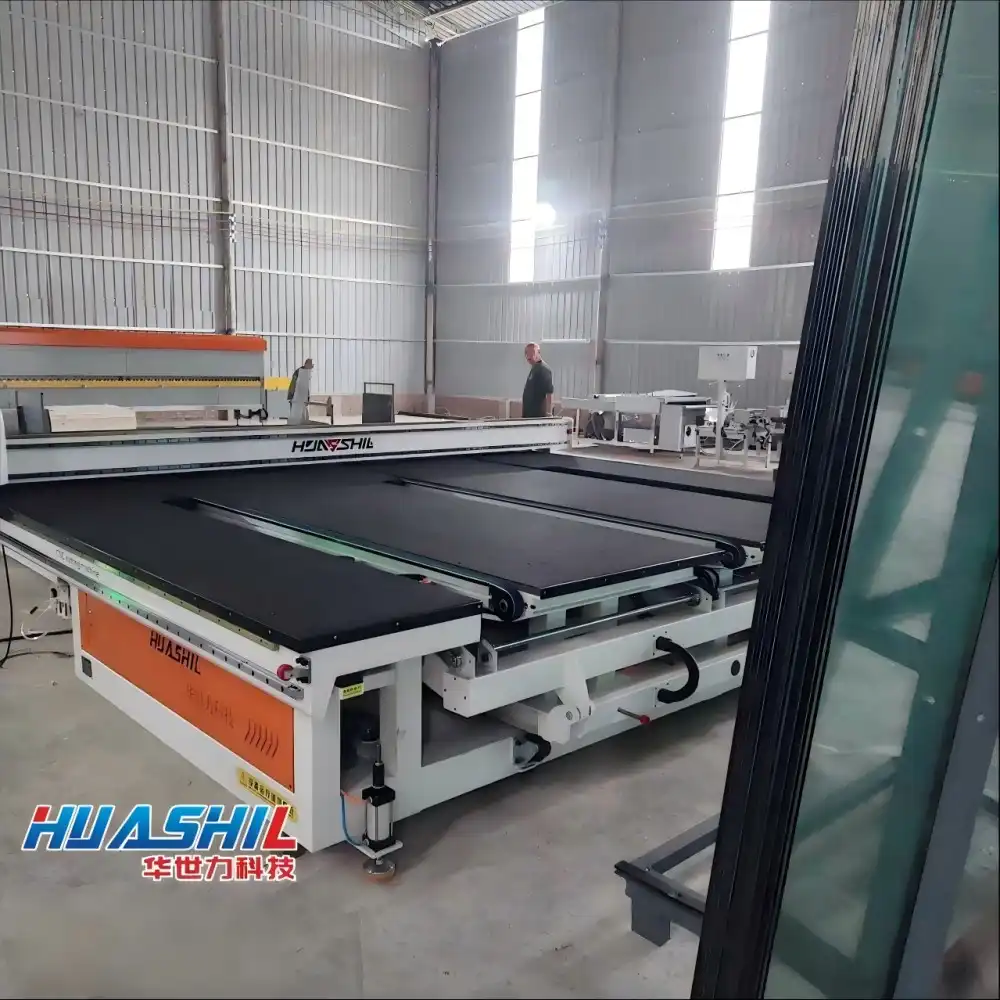
Air flotation lowers friction on loading tables, making fragile glass surfaces easier to handle. Poor air pressure distribution causes glass sheets to drag or tilt during placement. These challenges result from clogged air nozzles, compressor capacity limits, or pressure regulator failures. Dusty conditions enhance air filter saturation, affecting flotation effectiveness. Without proper filtering, particulate matter enters the air channels and eventually reduces essential support zone airflow.
Breaking Table Integration Challenges
Breaking tables and cutting equipment neatly separate scored glass sheets. Failures to coordinate the glass sheet loader movement and the breaking table activation cause incomplete or stress fractures. Integration issues are usually caused by timing sequence faults, sensor communication delays, or software configuration inconsistencies. Facilities updating individual components without system recalibration have compatibility difficulties. The HSL-YTJ3829 model uses integrated control systems and unified Optima optimization software to synchronize loading, cutting, and breaking.
Step-by-Step Solutions and Best Practices
Establishing Preventive Maintenance Protocols
Successful operations use scheduled maintenance rather than reactive fixes. Daily visual examinations reveal weak connections, strange sounds, and wear patterns. We deep-clean vacuum channels, sensor housings, and belt surfaces weekly to eliminate glass particles. Monthly calibration tests assure positioning accuracy and pressure settings meet manufacturer standards. Documentation turns guessing into data-driven maintenance decisions. Suction cup replacement dates, belt tension readings, and calibration changes provide performance baselines that identify issues before they break down. All shift supervisors should have access to digital records to ensure production schedule compliance.
Optimizing Vacuum System Performance
Restoring suction requires thorough component examination. Replace vacuum pads with surface cracks, hardness, or dimensional changes every 3,000 hours or as needed. High-dust settings require weekly air filter cleaning and monthly replacement to maintain compressor performance. Pressure calibration must consider glass thickness. Automatic pressure control changes vacuum strength dependent on sheet thickness between 2mm and 19mm in the HSL-YTJ3829. To ensure accuracy, compare sensor data to manual measurements weekly. For architectural glass, set pressure regulators to 0.6–0.8 MPa as advised by the manufacturer. Check for vacuum hose leaks by listening for air escape noises or adding soapy water and checking for bubbles. Replace compromised hoses and tighten loose connections quickly instead of using makeshift fixes that fail under continued operation.
Calibrating Positioning and Edge Detection
Downstream processing quality and material usage depend on positioning precision. Clean all optical sensors and reflectors with lint-free cloths and authorized solutions before recalibration. Dirt on sensor lenses creates misleading readings and positioning issues. Run the automated edge-finding process using known-size calibration glass sheets. Adjust sensor sensitivity and position thresholds using the control interface to match discovered data to requirements. An easy calibration wizard guides operators through systematic adjustments in Optima software. Precision measuring instruments ensure that mechanical guide rails are parallel. Adjust rail deviations above 0.5mm over the sheet travel distance. Review mounting bolt torque requirements and tighten as appropriate, especially following equipment movement or floor settling.
Maintaining Conveyor Belt Systems
Belt tension should be sufficient to prevent slippage but not excessive to hasten wear. Measure belt deflection at the halfway point between pulleys—correct tension permits 10-15mm under moderate finger pressure. Motor mount or idler pulley tensioning bolts are common adjustment techniques for glass sheet loaders. For equal load distribution, synchronous belt systems need matching tension across all parallel belts. Even with one worn belt, replace them in sets. Speed differences from mixed belt ages limit glass handling accuracy. Clean belt surfaces regularly using authorized glass residue and oil removers without deteriorating belt materials. Check for fraying, missing teeth, and surface cracks that require repair. Strong synchronous belt designs provide the HSL-YTJ3829 long service life in continuous industrial use.
Troubleshooting Air Flotation Systems
A consistent air pressure over the flotation table supports the glass evenly. Place a thin plastic sheet over the table and observe inflation patterns to map pressure distribution. Low-pressure zones suggest nozzle or supply line blockages. Blow compressed air in reverse via discharge apertures to clean air nozzles. Ultrasonic cleaning or chemical dissolving of stubborn obstructions may necessitate nozzle removal. Even one nozzle failure creates localized friction areas that chip glass. Replace them promptly. Ensure compressor capacity matches system air usage. Include all pneumatic components in the CFM calculation and add 20% reserve capacity for performance stability. Pressure variations and equipment failure result from undersized compressors running continuously without recovery time.
Integrating Breaking Table Operations
Sensor location and software parameter tuning are needed for glass sheet loader-to-breaking table coordination. Confirm breaking table location sensors detect the glass sheet arrival on time. Sensor mounting height and angle changes remove ambient and equipment vibration triggers. Adjust the control software dwell time settings to stabilize the glass before breaking pressure. Custom profiles for different glass kinds and thicknesses are possible with the HSL-YTJ3829's Optima software timing sequences. Test programs using sample sheets before production to ensure break quality and placement. The glass sheet loader and breaking table controllers' communication protocols must match. Validate network connections, protocol settings, and firmware compatibility across all interconnected equipment. Conflicting communication standards impede coordinated activities.
Comparing Automated Loaders to Manual Handling Systems
Efficiency and Labor Cost Analysis
Automated glass sheet loaders change production economics from manual handling. Due to tiredness and lifting limitations, manual loading stations require two to four personnel. Automated systems like the HSL-YTJ3829 can handle 3660×2800mm glass dimensions with single-operator supervision, freeing up labor for value-added operations. Architectural glass fabricators report that automated glass sheet loaders boost output by 40-60% and save labor expenditures by 50-70% over three years. Efficiency increases affect the total cost of ownership estimates for capital equipment investments.
Safety and Quality Consistency
Automation advantages like workplace safety are often overlooked. Cuts, strains, and dropped sheets from manual glass handling cause many fabrication facility injuries. Automated glass sheet loaders reduce workers' compensation and insurance claims by removing heavy glass from operators. Automation greatly enhances quality consistency. Cutting precision and material yield are affected by human positioning accuracy. Automation ensures consistent positioning tolerances of ±1mm, while hand placement might vary by 3-5mm even with skilled workers. Precision reduces resource waste and improves product quality.
Scalability for Growing Operations
Manual and automated production capacity increases bring distinct obstacles. Manual scaling needs corresponding personnel expansions, recruiting, training, and space allocation expenditures. Unexpected equipment downtime from staff absences or turnover interrupts production scheduling. Automation scales through software improvement and judicious equipment upgrades. Without extensive facility reconfiguration, the HSL-YTJ3829's 360-degree remote control provides flexible incorporation into increasing production lines. Extended operation hours, not staff multiplication, improve capacity, offering predictable scaling economics.
Conclusion
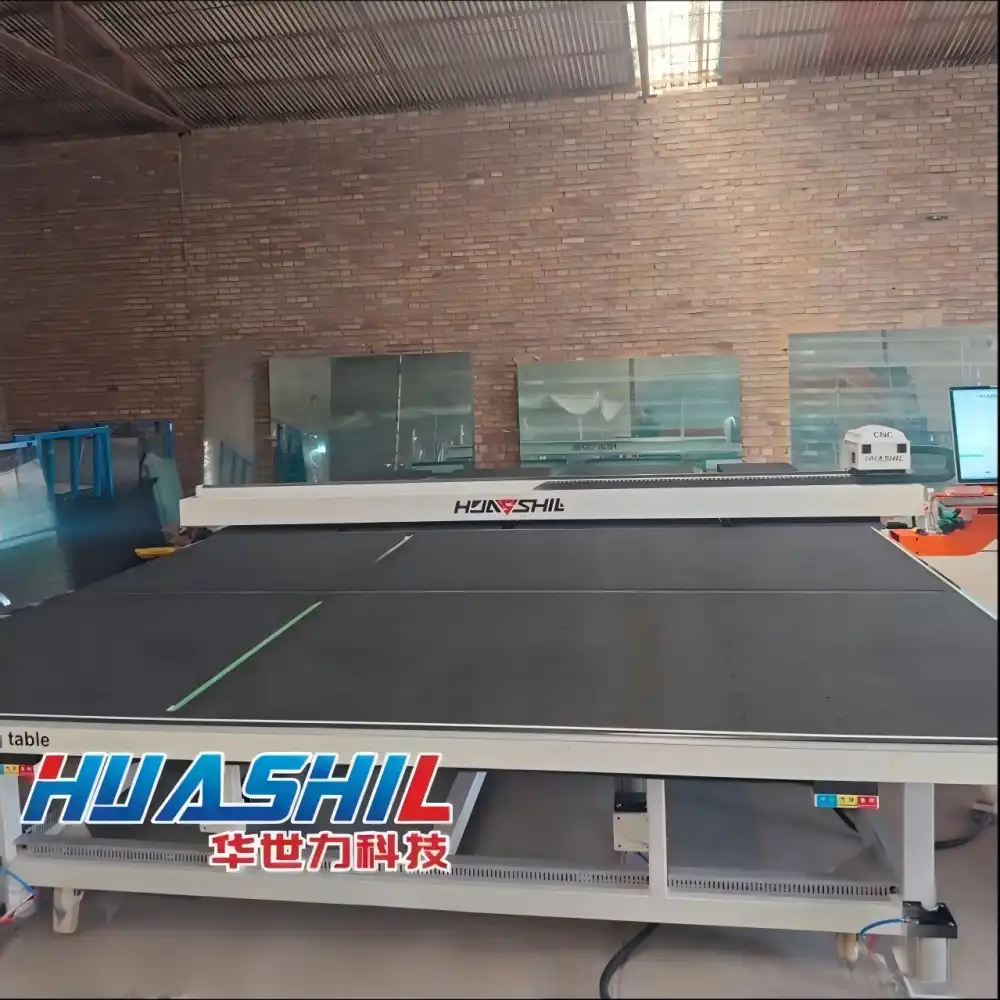
Solving typical glass sheet loader issues needs methodical troubleshooting and preventative maintenance. We've investigated vacuum system optimization, conveyor synchronization, and air flotation maintenance. These practical methods save downtime and increase equipment longevity and productivity. Modern automated glass sheet loaders like the HSL-YTJ3829 increase safety, quality, and operating economies over human handling. Investment in dependable automation technologies with complete support boosts glass production efficiency and positions facilities for competitive market expansion.
FAQ
Q1: What glass thickness range can automated loaders handle effectively?
Advanced automated glass sheet loaders automatically change pressure to handle glass thickness from 2mm to 19mm. Instead of manually calibrating vacuum pressure between production runs with varying glass requirements, the HSL-YTJ3829 automatically identifies sheet thickness.
Q2: How does automatic edge-finding technology improve production accuracy?
Precision sensors find the glass sheet limits before placing it on the cutting tables for automatic edge detection. This method decreases human measuring steps and positioning mistakes from ±5mm to ±1mm in automated systems, enhancing material consumption and cutting precision.
Q3: What certifications should buyers verify when sourcing glass handling equipment?
Quality manufacturers give CE certification and ISO 9001 quality management system verification for European market compliance. These certifications reduce procurement risk and ensure facility safety by verifying that equipment satisfies international safety standards and manufacturing quality controls.
Q4: What is the typical installation timeline for automated glass loading systems?
Single automated glass sheet loader installation takes 3-5 business days for equipment location, electrical connections, pneumatic system integration, and operational calibration. Full production line installations with several machines and unique configurations take 2-3 weeks, depending on facility preparation and integration.
Partner with HUASHIL for Your Automated Glass Loading Solutions
Manufacturing knowledge and prompt customer service enable Shandong Huashil Automation Technology to provide glass sheet loader solutions for your production needs. Our CE and ISO 9001-certified HSL-YTJ3829 model has automated loading, pressure control, edge-finding, air flotation, and synchronized conveyor transport. Our technical team creates tailored automation to boost productivity and save labor costs in architectural glass fabrication, curtain wall production, and furniture manufacture. Ask our procurement professionals at salescathy@sdhuashil.com about your application demands, technical specs, or demonstration. Transparent pricing, detailed documentation, and trustworthy after-sales service help glass sheet loader manufacturers, suppliers, and end-users acquire.
References
1. Glass Manufacturing Industry Council. (2022). Automation Standards for Architectural Glass Fabrication Equipment. Industrial Press.
2. Henderson, M. & Torres, R. (2021). Material Handling Systems in Modern Glass Processing Plants. Journal of Industrial Automation, 18(4), 223-241.
3. National Glass Association. (2023). Safety Guidelines for Automated Glass Handling Equipment. Technical Publication Series.
4. Schmidt, K. (2020). Comparative Analysis of Manual versus Automated Glass Loading Systems. Manufacturing Efficiency Quarterly, 15(2), 67-89.
5. Wang, L. & Chen, Y. (2022). Maintenance Protocols for Vacuum-Based Glass Handling Systems. International Journal of Production Engineering, 29(3), 145-162.
6. Wilson, D. (2023). Cost-Benefit Analysis of Automated Glass Fabrication Technologies. Industrial Equipment Review, 34(1), 112-128.