




When choosing the right machinery for your production environment, understanding the fundamental differences between architectural and automotive glass processing becomes essential. Automated glass processing systems serve diverse applications, but each glass type demands specific configurations to meet distinct quality, safety, and dimensional standards. Architectural glass typically emphasizes large-format precision and aesthetic finishing, while automotive glass requires exceptional optical clarity and compliance with stringent safety regulations. Tailoring your equipment setup to these needs directly influences production efficiency, waste reduction, and your competitive position in the marketplace.
Understanding Glass Types and Their Processing Needs
Material and Structural Differences
Architectural glass usually comes in bigger sizes, with different thicknesses and coverings meant to save energy. It is used for structural purposes like curtain walls, windows, and frames. The material can handle wider differences in size, but it needs to be handled carefully because it is so big. Auto glass, like windshields and side windows, needs to be made with tighter precision and better visual quality. When car glass is laminated and tempered, it has to be able to survive impact forces and keep its clarity under dynamic stress conditions. This affects every step of the processing.
Functional Requirements and Industry Standards
There are different rules that apply to each glass field. Building codes, thermal insulation standards, and safety window rules that are different in each area must be followed by architectural glass. Even stricter rules apply to auto glass, such as the Federal Motor Vehicle Safety Standards in the US, which set limits on how well it resists impact, optical distortion, and penetration. These rules affect the choice of equipment because production lines have to meet quality standards that meet testing protocols and certification bodies.
Processing Tolerance and Equipment Implications
For automotive applications, the level of accuracy needed for measurements is higher than for most architectural projects. Because windshields have many complicated curves and very exact edge profiles, they need cutting and edging equipment that can keep tolerances of less than a millimeter across different glass thicknesses. For architectural uses, tolerance bands are a little less strict but still needed for proper fit and weatherproofing. Knowing these working needs helps procurement pros choose machines that can do the job accurately without spending too much on features that aren't needed.
Core Automated Glass Processing Technologies for Each Glass Type
Cutting Technologies and Panel Size Management
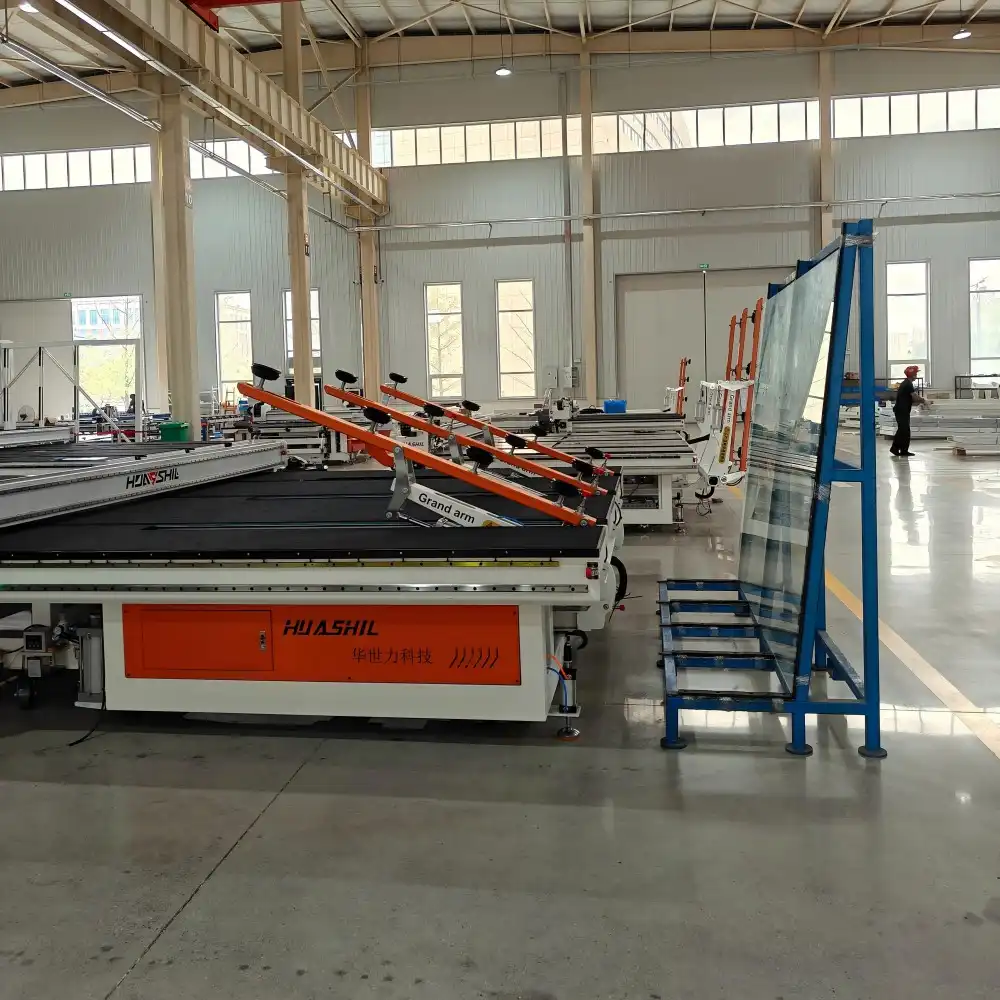
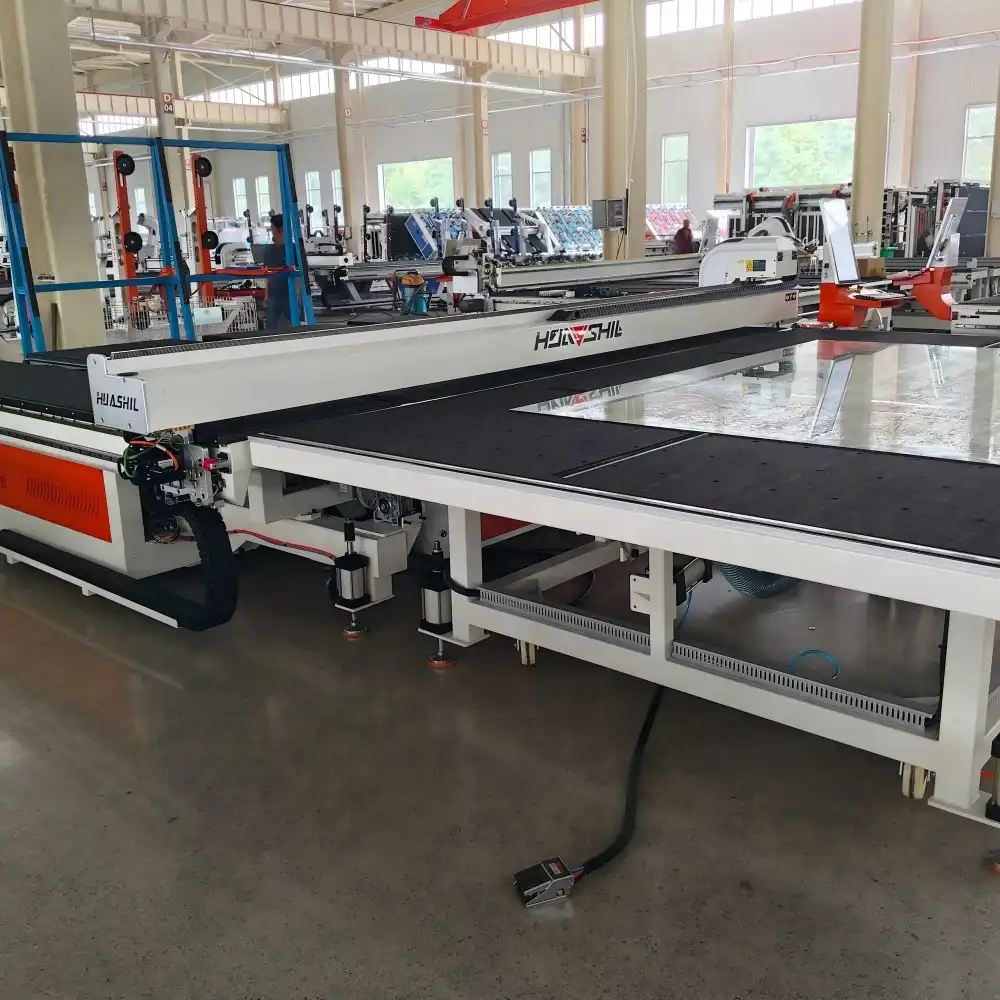
Cutting tools are the most important part of any glass production line. Large panels need to be cut quickly by architectural glass cutting equipment. Models like the HSL-LSX4228 can handle glass sizes up to 4200×2800mm, meeting the needs of curtain wall fabrication and large-scale glazing projects. The three work areas in this system are a loading table for new materials, a cutting table with precise cutting heads, and a breaking table for controlled separation. The setup uses optimization software like Optima, which figures out the best way to cut things so that there is the least amount of trash and the most material output.
Different skills are needed to cut glass for cars. Because windshields and back windows have complicated shapes, they need cutting lines that are controlled by a CNC and work together on multiple axes. The panel sizes are still smaller than those used in architecture, but the shapes are much more complicated. Both industries can benefit from automation, but depending on the shape of the final product, the requirements for programming flexibility and path accuracy are very different.
Edge Finishing Approaches
Edge quality is useful for different types of glass in different ways when processed by an automatic stone processing machinery manufacturer. Architectural glass edge finishing is all about making edges look good and keeping people safe, especially on furniture, shower doors, and walls that have edges that are visible. During the finishing process, sharp edges are taken off, and features are smoothed or beveled to make them look better and feel safer.
Finishing the edges of automotive glass puts strength, protection, and accurate measurements first. After edge work, the hardening process needs edges that are not stressed so that they don't break during heat treatment. The parameters for edge grinding must find a balance between getting rid of sharp points and keeping the necessary size tolerances for the part to fit correctly in the vehicle's body openings. The edge profile, which is usually flat or slightly arris, is very different from the decorative profiles that are common in architecture.
Tempering and Specialized Processing
Different sectors have very different tempering cycles. To meet safety glazing requirements, architectural tempered glass is heated to make it stronger. When it breaks, it falls apart into small, mostly harmless pieces. The process lets the cooling rates vary a bit across the panel's surface, which is useful for very big building lites.
For automotive tempering, very high levels of uniformity are needed. Instead of traditional tempering, windshields go through a laminating process that joins two layers of glass with a polymer layer in the middle. When side and back car glass is tempered, it has to meet exact stress distribution standards to make sure that the pieces break in a way that protects people inside and allows emergency exits. These specific temperature cycles and quality control steps must be taken into account when setting up the equipment.
Configuring Systems: Challenges and Solutions for Architectural and Automotive Glass
Handling Large Architectural Panels Without Damage
Damage to the glass during processing adds a lot to the cost. The weight and flexibility of extra-large glass make it more likely to break on architectural lines that work with big panels. The HSL-LSX4228 solves this problem with a multi-station design that includes four large arms on each side. These arms spread out support so that stress doesn't build up in one place during material transfer. The system's 2+2 station structure can be changed to use either above-ground or underground rail systems. This lets the workflow be changed depending on the limitations of the building and the amount of work that needs to be done.
As part of material handling solutions, vacuum lifting systems with pressure tracking make sure that the whole surface of the panel is gripped evenly. Automated pointing systems cut down on the need for physical work, which means that mistakes made by people are less likely to cause edge chips or surface scratches. These investments in handling infrastructure pay off in a measurable way: less damage happens, and fewer people are needed to move things.
Maintaining Precision in Complex Automotive Shapes
Processing automotive glass faces a number of problems. Modern windshields have shapes that are three-dimensional, which makes cutting and shaping more difficult. Positioning mistakes of even a few hundredths of a millimeter can cause parts to fail fitment checks or make the final car noisy or leaky with water. Modern CNC equipment for processing glass has real-time measurement systems that check the position of the glass before cutting it. This lowers the amount of glass that ends up in the trash because of mistakes in positioning.
Adaptive cutting parameters are another solution that is becoming more popular. Modern control systems use feedback from force sensors and optical measurement systems to change the cutting speed, pressure, and how the tool is engaged. This response makes up for changes in the thickness or features of the material, so the quality of the edges stays the same from one production run to the next. When purchasing machinery, purchasing managers should ask about these adaptable features because they have a direct effect on quality stability and lower the level of operator skill needed for acceptable output.
Predictive Maintenance and Uptime Optimization
Production downtime is a problem for both industries. The machines that work with glass have to work in tough conditions with rough materials and long rounds of operation. Unplanned repair throws off production plans, which leads to higher costs because of lost output capacity and rushed orders for spare parts. With sensor data, intelligent tracking systems can now do predictive maintenance, which means they can find problems before they break down.
Vibration analysis finds worn bearings in motion systems, temperature monitoring finds problems with the cooling system, and power consumption tracking finds issues with the motor or drive. When these diagnostics are built into modern automatic glass cutting lines, they send out repair alerts that let people take action during planned windows of downtime. This makes the tools work better generally and makes it easier to plan for the expected amount of production.
Comparing Automated Systems: Choosing the Right Solution for Your Production Line
Throughput Requirements and Production Volume
Predictions of production volumes have a big impact on the choice of equipment for an automatic stone processing machinery manufacturer. Architectural glass makers who work with the building industry often have to deal with changes in volume that are caused by projects. This means that they need systems that can handle both large quantities of standard products and small batches of custom products. With its optimization software and flexible station layout, equipment like the HSL-LSX4228 can adapt to changing demand patterns without having to be completely rearranged.
When making automotive glass, longer runs of similar parts are common, which means that specialized equipment that works best with certain product groups is preferred. Because of the higher volume, it makes sense to buy special tools and fittings that make switching between car types faster. When production directors look at new equipment, they should make sure that the capabilities of the machines are in line with what they think the volume will be. This way, they can avoid investing too much in capacity that won't be used or too little in capacity that will cause bottlenecks as demand rises.
Integration with Existing Production Infrastructure
Equipment doesn't usually work by itself. Overall output efficiency is affected by how well upstream material handling, downstream quality inspection, and corporate resource planning tools work together. Modern equipment for processing glass has many connection methods and data ports that make it easy to connect to plant management systems. You can see and control operations better when you can get job directions online, report on production status in real time, and feed quality data into statistical process control systems.
Physical unity is just as important. Decisions about how to set up equipment are affected by things like floor space, ceiling heights, and how materials already flow. This is shown by the fact that cutting machines like the HSL-LSX4228 let you choose between above-ground and underground rail systems. Installing rails underground saves floor space and gets rid of trip risks, but the floor needs to be dug up enough. Above-ground systems are easier to set up, but they take up room and can get in the way of material flow. Site-specific reviews done during the equipment design phase keep changes that would cost a lot after installation from having to be made.
Vendor Support and Long-Term Partnership Considerations
Equipment dependability isn't just about the machine itself; it also includes how well the maker can support it. Availability of spare parts, responsiveness of technical help, and application expertise all have a big effect on the ability to keep output going. When you buy something internationally, you have to think about things like time zones, language barriers, and how business is done in different cultures.
The comprehensive support approach that lowers procurement risk is shown by Shandong Huashil Automation Technology Co., Ltd. The company has a lot of experience with automated glass cutting assembly lines and exporting to a wide range of markets. They offer paperwork, training materials, and expert advice to help buyers choose the right configurations and run the equipment well. Managers of engineering and technology who evaluate equipment and have an impact on buying choices should look at the skills of vendors throughout the entire lifecycle of the equipment, not just at the beginning when they are setting the original specifications and prices.
Future Trends and Innovations Impacting Glass Processing for Architecture and Automotive
Smart Manufacturing and Industry 4.0 Integration
Glass processing is changing because of digital transformation. Internet of Things monitors built into production tools send data about how well the machines are working, the quality of the products, and how efficiently the process is running all the time. By using machine learning methods to look at this data, optimization opportunities that humans can't see are found. Before they make scrap, production directors learn about small changes in the process that affect yield, patterns in energy use that point to ways to make things more efficient, and quality trends that show problems starting to form.
Cloud connectivity allows for remote diagnostics and support, which lets equipment makers keep an eye on the health of their machines and offer help before it's needed. This feature is helpful for smaller producers that don't have a lot of technical staff on staff; it's like bringing the manufacturer's support team into the customer's building. The information gathered also helps with efforts to keep getting better by giving solid proof for changing how things are done and showing why investments are worthwhile.
Sustainability and Energy Efficiency Priorities
More and more, environmental factors affect choices about capital tools. Drive systems that use less energy, motion profiles that cut down on unnecessary acceleration cycles, and heat recovery systems that take heat from tempering furnaces and use it again all help to lower operating costs and damage to the environment. Improving optimization software and cutting accuracy can help cut down on glass trash, which is good for both the economy and the environment because it cuts down on the use of raw materials and the cost of removal.
More and more, procurement experts are being asked to show that capital investments have led to better sustainability. As a response, equipment makers give information on how much energy their products use, how long they last, and how much trash they reduce. This helps with green building certification programs and business sustainability reports. As part of the glass industry's efforts to promote recycling and reusing materials, the circular economy creates more possibilities for equipment that makes handling glass cullet and quality sorting easier.
Customization and Flexible Manufacturing Systems
Demand for flexible production skills is driven by market fragmentation. Architectural glass fabricators are making more and more specialized products for niche markets, like smart glass with built-in electronics, decorative patterned glass, and units that are made to order for renovation projects. The production of automotive glass has to keep up with the growing number of vehicle models and shorter production runs that manufacturers are using to target different groups of customers.
This style likes modular equipment designs that let you change the way it's set up without having to replace the whole line. Product changes take less time and cost less money with quick-change tool systems, software-driven process parameter adjustment, and flexible material handling systems. Fabricators can go after higher-margin specialty goods while still being able to make a lot of standard things because they can make small amounts cheaply without sacrificing quality.
Conclusion
To choose the right automated glass processing systems, you need to weigh technical specs, production needs, and long-term working factors that are unique to your application. Even tho architectural and automotive glass processing use some of the same technologies, they need different equipment setups because the materials used, the sizes needed, and government rules are all different. Along with technical and production management, procurement experts must look at the full operating lifecycle of equipment, taking into account things like throughput, precision, flexibility, integration needs, and vendor support. If your company knows about these sector-specific needs, it can make smart capital investments that make it more competitive, improve quality stability, and give you a clear return on your investment.
Frequently Asked Questions
1. What distinguishes architectural from automotive glass processing requirements?
Architectural glass processing focuses on working with large panels, different coatings, and getting nice edge finishes that are suitable for installations that people can see. When making automotive glass, accuracy in measurements, good visual quality, and meeting strict safety standards for impact protection and fragmentation patterns are the most important things. The way the equipment is set up must take these different goals into account by having the right cutting accuracy, handling methods, and quality control tools.
2. How does equipment configuration affect production flexibility?
Configurable systems with flexible designs, software-driven parameter adjustments, and quick-change tools make it easy to switch between different types and sizes of products. The HSL-LSX4228's flexible station structure and optimization software make it possible for makers to handle both large-scale standard production and custom orders without having to spend a lot of time reconfiguring or hiring operators with special skills.
3. What role does optimization software play in glass processing efficiency?
Optimization software like Optima looks at the needs of the job and the materials that are available to figure out the best cutting patterns that produce the most and waste the least. This feature directly lowers the cost of materials, which make up a big part of production costs. The software also arranges cuts in a way that maximizes production flow and cuts down on handling time. This increases output without the need to buy more equipment.
Partner with a Trusted Automated Glass Processing Systems Manufacturer
Huashil has decades of experience in automating glass processing, and they can help you set up the best production solution for your needs. Our HSL-LSX4228 cutting system has advanced Optima optimization software and can be set up in a variety of ways. It gives architectural glass makers, curtain wall system installers, and furniture manufacturers the accuracy and dependability they need. We know the unique problems that procurement managers, production directors, and technical teams face when they look at investments in capital equipment. Our all-around approach includes clear commercial terms for negotiating purchases, detailed technical documentation for engineers to look over, and strong after-sales support to keep your production going. Whether you're setting up a new production line or increasing the capacity of a current one, our application engineers work directly with your team to design setups that meet your budget, space, and throughput needs. Send us an email at salescathy@sdhuashil.com right away to talk about your project needs and find out how HUASHIL's automated glass processing systems can help you improve your business's performance.
References
1. Glass Processing Industry Association (2022). "Standards and Best Practices for Automated Glass Fabrication Systems." Technical Publication Series, Volume 18.
2. Martinez, R. & Chen, L. (2023). "Comparative Analysis of Cutting Technologies in Architectural versus Automotive Glass Manufacturing." Journal of Advanced Manufacturing Technology, 45(3), 287-304.
3. International Glass Review (2023). "Industry 4.0 Integration in Glass Processing: Current State and Future Directions." Annual Industry Report, pp. 112-145.
4. Thompson, J. (2022). "Equipment Selection Criteria for Large-Format Architectural Glass Processing." Building Materials Technology Quarterly, 29(2), 76-89.
5. Automotive Glass Standards Council (2023). "Safety Requirements and Testing Protocols for Automotive Glazing Systems." Technical Specification Document AS-2023-04.
6. Wu, H., Schmidt, P., & Nakamura, K. (2023). "Energy Efficiency and Sustainability in Glass Processing Automation." International Journal of Sustainable Manufacturing, 12(4), 445-468.