




Precision, speed, and regularity are all things that modern manufacturing needs, and automated glass processing easily meets those needs. Modern smart factories now use smart software, automatic glass handling, and advanced CNC glass processing systems to turn raw materials into works of art for architecture, parts for cars, and decorations. This in-depth guide looks at how automation is changing the way glass is made. It will help plant managers and production heads make smart investment choices that increase efficiency and lower costs.
Understanding Modern Glass Manufacturing Equipment
In the last ten years, the glass business has changed a lot. In places where a lot of things need to be made, traditional physical tasks no longer work. Modern glass manufacturing tools now use advanced technologies that do almost everything by themselves, from cutting the glass to packaging it.
Modern systems use both mechanical accuracy and computer intelligence. Complex cutting patterns can be made by high-tech machines that use computer numerical control, and automatic glass assembly lines make sure that many tasks are done smoothly. Production leaders like how these integrated solutions get rid of the bottlenecks that used to slow things down.
Across all businesses, quality control is getting stricter. For architectural glass jobs, the edges must be smooth, and the sizes must be exact. There is no way to deviate from automotive standards. These problems can be solved by smart glass manufacturing systems that can watch and make changes in real time so that thousands of units are all the same.
Core Components of Automated Glass Processing Lines
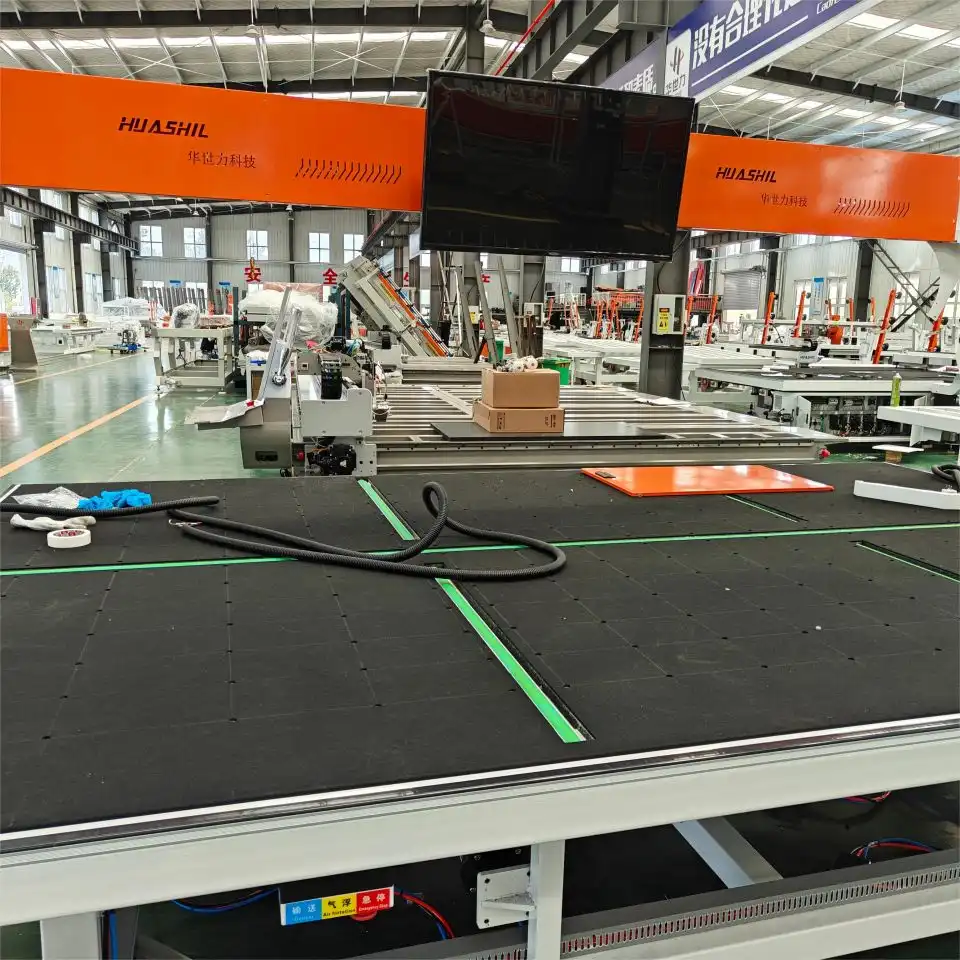
A full production line has many specific stations that all work together. This idea of integration is shown by the HSL-LSX4228 model, which has three separate tables for loading, cutting, and breaking. Each station has a specific job to do and makes sure that materials move smoothly through the whole process.
In automated glass processing, each side of the filling table has four large arms that make it safe to move glass sheets. This setup can hold materials up to 4200x2800mm, making it good for big building panels and furniture parts that are too big to fit on a standard desk. Above- or underground rail systems make it possible to plan a factory layout that works with the limitations of the current infrastructure.
Precision in cutting decides the quality of the finished product. Laser glass engraving and water jet cutting are used in more advanced devices to make patterns that are very complicated. The Optima optimization software figures out the best way to cut things so that there is the least amount of trash and the most use of the material. When compared to human planning methods, production managers say that automated planning cuts waste by 15 to 20 percent.
Breaking stations use controlled force to finish the separation process. Automatic systems make sure that the breaks along the score lines are clean, so there is no edge chipping like there is when work is done by hand. Right after, automated glass edge polishing makes the sides smooth and ready to be installed without any extra work.
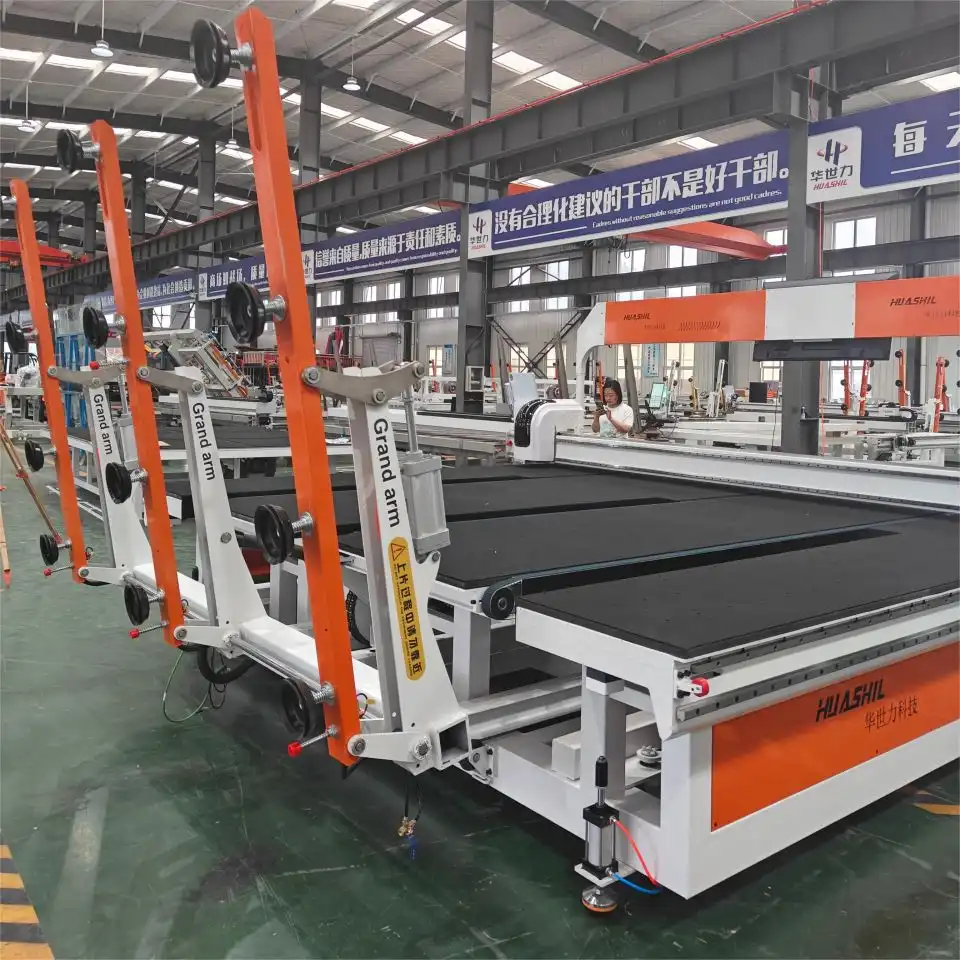
Configuration Flexibility: The 2+2 Station Advantage
Smart plant layouts need to be able to change as production needs do. The 2+2 station configuration is very flexible, letting manufacturers find the best balance between throughput and floor space. Plant managers can change how stations are assigned based on how orders are coming in right now.
This modular method works for both standard production with a lot of units and custom project work. All stations run the same cutting patterns at full speed when handling architectural glass for making windows over and over again. On the other hand, furniture makers who make different kinds of shower doors can benefit from station-specific software that can handle many types of products at once.
Underground rail systems are especially useful in places where overhead cranes are used or where room is limited. The rails move glass sheets through the stages of processing without getting in the way of the movement of materials up and down. Above-ground layouts work well for new building projects that build processing lines from the ground up.
Customization goes beyond just changing the style. Glass automation software lets workers make processing recipes that include parameters for quality inspection, cutting patterns, and edge treatments. Technical managers save these settings so that they can be used right away. This cuts the time it takes to set up between production runs from hours to minutes.
Software Intelligence: Making the Best Use of Every Cut: Complex software makes decisions possible behind the scenes of physical robotics. The Optima software is the result of years of experience in the glass business being turned into precise algorithms. It looks at the needs of the order, the size of the material, and the machine's skills to come up with the best processing order.
Using pattern recognition technology, the best ways to nest things are found. When working on multiple orders at once, the software arranges the pieces so that there is as little waste as possible while still following the quality zones and material grain direction. This information is especially helpful for curtain wall system designers who have to deal with complicated project requirements.
AI is still making great strides in the glass processing field. Modern systems can learn from past production records and find patterns that people might miss. Machine learning algorithms find small connections between things in the world, batches of materials, and the number of defects. Making changes ahead of time keeps quality high even when factors change.
Real-time monitoring makes processes clear at all times. Production leaders can see current throughput, equipment status, and quality data on dashboards. When deviations happen, automated glass inspection systems instantly signal problems, stopping faulty items from moving on to the next station.
Applications Across Industries
The biggest market for automated processing lines is in architectural glass manufacturing plants. For business and residential buildings, these factories make windows, doors, facades, and structural glazing. Reliability is very important because delays in projects caused by broken tools pile up and cost a lot of money.
Curtain wall makers need to have certain skills. A lot of the time, their jobs call for curved glass, tricky angles, and very tight tolerances. Automated glass processing uses CNC glass-making systems that utilize multiple axes of control and accurate measuring tools to solve these problems. Cutting tools and robots that bend glass work together to make the unique shapes that define modern buildings.
Different skills are needed in the furniture and home decor industries. Manufacturers of shower doors need to be able to handle tempered glass quickly and accurately so that hardware can be mounted. Automating the cutting of glass makes sure that the results are the same from batch to batch. Manufacturers of partitions allow them to quickly switch between clear, frosted, and colored glass.
Many of the steps needed to make sintered stone are the same ones needed to make glass. The materials are both pretty flimsy and need the same amount of care when handling them. Manufacturers like tools that can work with both types of materials because it makes the most of their capital investment. Automating the surface treatment of glass and manufactured stone works just as well.
Quality Assurance Through Automation
One of the best things about technology is that it helps find problems. When human inspectors do the same things over and over, they get tired, which makes the results uneven. Automated systems stay alert all the time and hold every piece to the same standards, no matter how much is being made or when the shift starts.
Glass defect detection systems use high-resolution cameras and special lights to find flaws that a normal person would miss. Millions of pictures were used to train algorithms that can tell the difference between acceptable variations and real flaws. Procurement managers like this feature because it cuts down on customer returns and service claims.
Automated glass measurement checks the sizes throughout the whole process. Laser measuring devices make sure that the cuts are accurate to within 0.1 mm, which is what the specifications call for. This level of accuracy is very important for automotive glass use, where a bad fit can put people in danger and make customers unhappy.
Good paperwork just happens on its own. Every piece that is processed gets a digital record that shows how it moved through the production units. This information is used by engineering managers to find ways to make processes better and to show that they are following the rules during customer surveys. When looking into problems in the field, the tracking is very helpful.
Investment Considerations for Decision Makers
To make smart choices about capital expenditures, you need to carefully look at the total cost of ownership. The original purchase price is only one part of the whole. Long-term economics are affected by things like installation costs, operator training, maintenance needs, and the supply of spare parts.
Energy efficiency changes a lot from one generation of equipment to the next. Modern automation for tempering glass uses 30% less energy than older designs because it has heat recovery systems and improved heating processes. When proposals are being looked at, finance teams should figure out these operational savings.
Delivery dates have a big impact on how projects are planned. Single machines are shipped within weeks, which makes it easy to add more capability quickly. From ordering to starting up, fully automated glass production lines take three to six months. As equipment arrives, production directors must make sure that the building is ready and workers are trained on time.
The level of after-sales service is what sets good suppliers apart from average ones. When problems happen, glass coating automation and other complex systems need quick expert help. Consider possible suppliers based on how quickly they can respond, how many spare parts they have, and how skilled their technicians are. Ask current customers in similar businesses for references.
Customization and OEM Capabilities
System designers and specialized manufacturers often need equipment that is set up differently from what is normally used. OEM and ODM support is becoming very important for standing out from the competition. Suppliers that allow flexible engineering teamwork shorten the time it takes to make a product.
Robotic devices for handling glass show how customization can be done. Standard setups work well with flat sheets, but for certain tasks, they may need to handle curved glass or work with coating equipment. Engineers work together to make hand systems and motion profiles that meet each customer's specific needs.
In automated glass processing, automated glass wrapping is another way that you can make it your own. Manufacturers who want to sell their goods abroad need packaging methods that follow the rules for international shipping. It might be important for domestic sellers to be able to quickly switch between different box sizes. Talking about these needs early on makes sure that the end system meets the needs of operations.
When introducing new goods, the ability to make prototypes is important. When furniture makers try out new glass shapes, they need processing tools that are flexible enough to handle different design versions. With quick-turn engineering support, ideas can be brought to market faster than those of rivals whose suppliers are slower to respond.
Making the Investment Decision
Budget approvers need comprehensive information supporting capital expenditure requests. Prepare business cases highlighting projected labor savings, quality improvements, and capacity increases. Production directors should quantify current bottlenecks and demonstrate how automation eliminates constraints.
Site preparation requirements deserve early attention. Heavy machinery needs reinforced flooring, adequate electrical capacity, and proper ventilation. Coordinate with facility management to ensure infrastructure readiness before equipment delivery. This planning prevents costly delays during installation.
Operator training determines how quickly new systems reach full productivity. Comprehensive programs cover routine operation, basic troubleshooting, and preventive maintenance procedures. Investment in workforce development pays dividends through reduced downtime and extended equipment life.
Conclusion
Automated glass processing transforms manufacturing economics through unprecedented precision, efficiency, and consistency. Smart factories leveraging CNC technology, robotic handling, and intelligent software achieve competitive advantages that manual operations cannot match. Whether processing architectural panels, automotive components, or decorative elements, modern systems deliver measurable improvements in quality, throughput, and cost control. Plant managers evaluating automation investments should consider total ownership costs, customization capabilities, and supplier support quality. The transition to intelligent manufacturing represents not merely equipment acquisition but strategic positioning for sustained industry leadership.
Partner with HUASHIL: Your Automated Glass Processing Manufacturer
Shandong Huashil Automation Technology brings decades of automated glass processing equipment expertise to every project. Our engineering team understands the challenges facing plant managers, technical buyers, and procurement supervisors across architectural, automotive, and decorative glass sectors. Contact our specialists at salescathy@sdhuashil.com to discuss your production requirements and discover how our automated solutions drive measurable efficiency improvements.
References
1. Anderson, M. (2022). Precision Manufacturing Systems in the Glass Industry. Industrial Automation Publishing.
2. Chen, L. & Roberts, K. (2023). Smart Factory Integration: Glass Processing Case Studies. Manufacturing Technology Press.
3. European Glass Technology Institute. (2021). Automation Standards and Best Practices for Glass Fabrication. Technical Report Series.
4. Hoffmann, R. (2023). CNC Systems in Modern Glass Manufacturing. Engineering Solutions International.
5. Mitchell, S. (2022). Total Cost of Ownership Analysis for Processing Equipment. Capital Investment Quarterly, 18(3), 45-62.
6. Zhang, W. et al. (2023). Quality Control Automation in Glass Production Environments. Journal of Manufacturing Excellence, 31(2), 112-128.