




High-performance glass processing equipment can improve efficiency and quality without replacing the entire production line. Careful compatibility evaluation, phased installation planning, and modular solutions that operate with existing gear are crucial. Technical teams, suppliers, and operators must coordinate to minimize downtime and maximize throughput during integration. Automated cutting systems and edge grinders streamline operations and enhance productivity when used appropriately. Understanding your present line's capabilities and matching them with equipment requirements provides easy integration, quantifiable ROI, and operational continuity during the upgrade.
Understanding the Challenges in Integrating Advanced Glass Machinery
Strategic planning is needed to integrate new automation technologies into existing production settings. In many facilities, machinery from different eras causes compatibility issues when introducing modern technologies.
Alignment Discrepancies with Legacy Systems
Modern equipment has standardized interfaces, while older manufacturing lines seldom do. We've seen architectural glass fabricators struggle with variable conveyor speeds and new cutting tables. Mismatches hinder progress. Mechanical dimensions are similar: older equipment footprints may not match modern machinery layouts, necessitating bespoke adaptation frameworks that delay installation.
Interface Compatibility and Control System Integration
Software compatibility is another issue. Many older facilities have proprietary control systems that reject newer platforms. We worked with a curtain wall manufacturer whose decade-old PLC controllers couldn't interact with IoT-enabled tempering systems. Signal protocols, voltage requirements, and safety interlocks must match. Interface issues cause unconnected systems that require user intervention between processing steps, negating automation gains.
Workflow Disruption Risks During Installation
Plant managers contemplating equipment improvements worry about production continuity. Downtime during installation affects income, delivery, and customer relations. Phased integration reduces these hazards by permitting partial line operation during upgrades. Installation requires vendor support since technical teams must calibrate equipment and educate operators on new systems. Insufficient preparedness typically causes costly downtime that reduces upgrade advantages.
Evaluating Existing Lines and Preparing for Equipment Upgrade
Assessing your production capabilities and constraints is the first step to integration. Informed equipment selection and execution plan start with this preparation.
Cataloging Current Machinery and Identifying Bottlenecks
Document all high-performance glass processing equipment, including cutting tables, edging machines, washing systems, tempering furnaces, and packing stations. Note processing capacity, maintenance history, and operating limits. We propose measuring cycle times at each stage to find bottlenecks. Despite considerable cutting capability, many glass furniture producers find that polishing activities hinder throughput. Understanding these restrictions helps prioritize equipment modifications that boost production efficiency.
Conducting Compatibility Analysis
Electrical infrastructure must be assessed before equipment selection. Check power capacity, voltage, and facility wiring for increased loads. Software compatibility study checks MES and ERP system compatibility with new equipment. Floor area, ceiling heights, and material handling accessibility are important. Energy efficiency comparisons between existing and future equipment show ongoing costs beyond purchase pricing.
Aligning Integration Goals with Business Objectives
Specific goals for your upgrading. Architectural glass fabricators may prioritize cutting precision for intricate curtain wall projects, whereas shower door makers may favor edge grinding speed. Set quantifiable targets like 30% throughput growth or 50% labor cost reduction. Equipment, installation, training, and efficiency advantages should be factored into ROI estimates. The financial framework drives procurement and justifies capital expenditures to senior management.
Step-by-Step Process to Integrate High-Performance Glass Processing Equipment
New automation requires a systematic approach that balances technological and operational needs. This methodical strategy reduces risks and improves performance for high-performance glass processing equipment.
Equipment Selection and Specification
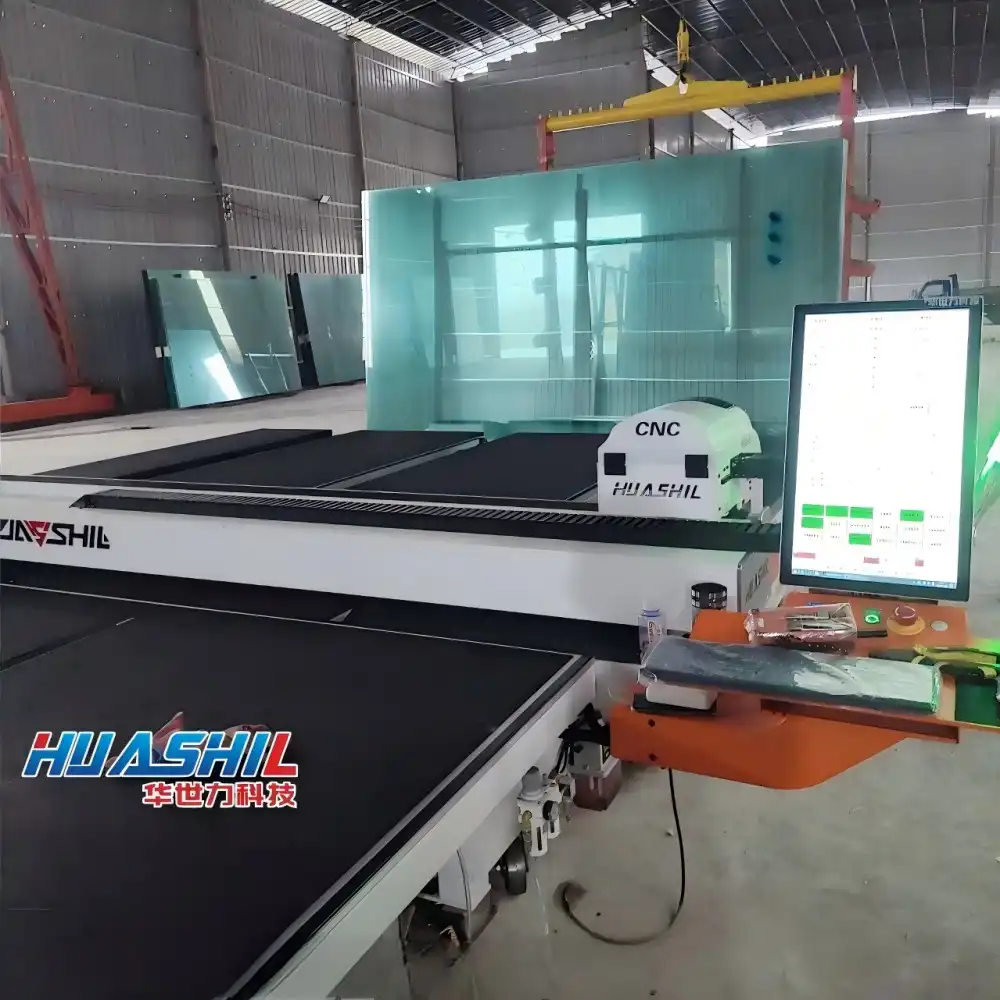
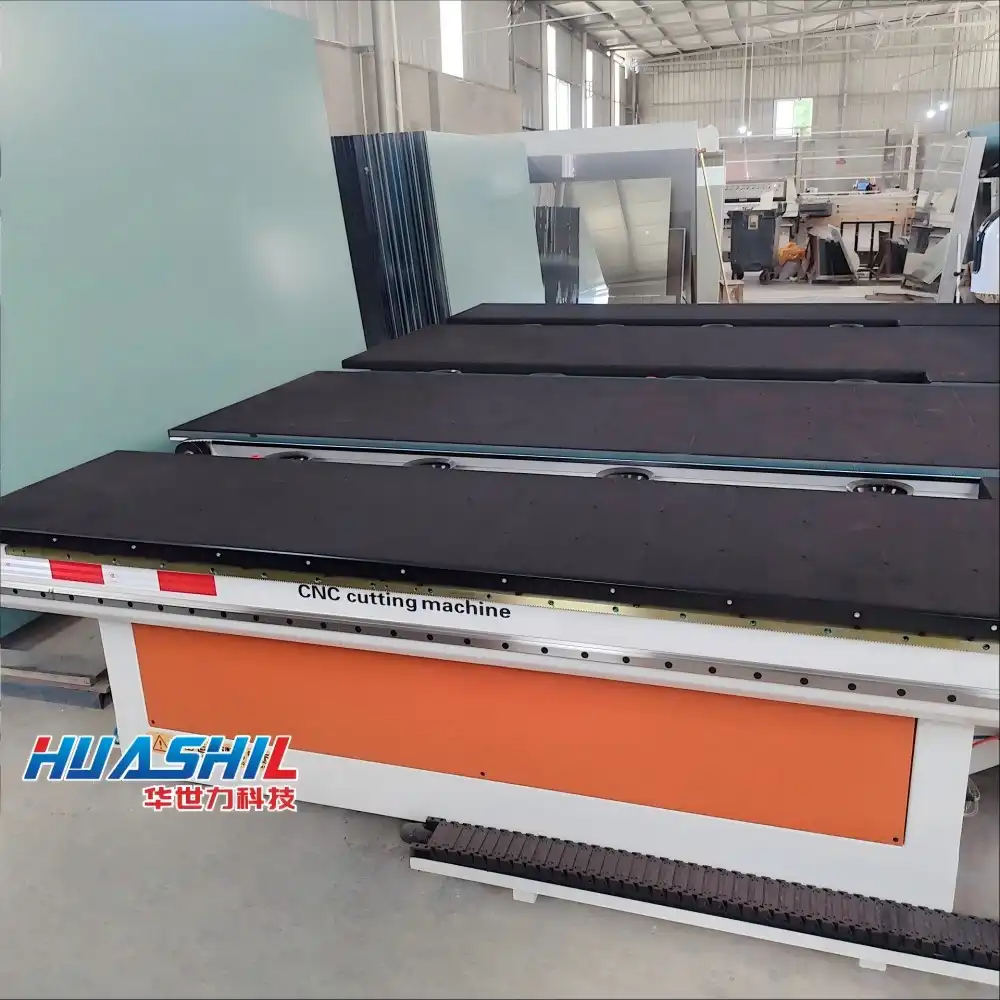
When comparing automated cutting systems, consider production needs and processing capacities. Consider the HSL-YTJ3829 CNC glass cutting assembly line, which can handle glass diameters up to 3660×2800mm and thicknesses from 2-19mm. Optima calculates waste-reducing cutting designs to enhance material consumption. Automated loading, pressure control, edge detecting, and air flotation technologies streamline processes. During production modifications, 360-degree remote control walking gives operational freedom. International quality and safety requirements are met by CE and ISO9001 certifications. Synchronous belt conveying systems move glass between production steps smoothly.
- Precision Automation: Automated loading and edge-finding remove manual positioning mistakes, ensuring dimensional precision throughout thousands of cuts. Architectural glass with strict tolerances for curtain wall installations requires this accuracy.
- Material Optimization: Advanced software optimizes cutting patterns for glass size and order requirements. Waste reduction lowers material costs and promotes sustainability, which appeals to eco-conscious clients.
- Operational Safety: Air flotation systems reduce glass handling during processing, decreasing breakage and operator harm. Remote control capabilities offer safe distance surveillance during cutting operations, addressing worker safety.
- Production Flexibility: Equipment that processes different glass thicknesses and dimensions responds to order needs without line reconfiguration. This adaptability facilitates high-volume standardized production and bespoke projects.
Integration Planning and Coordination
Schedule equipment delivery, installation, and production with comprehensive implementation schedules. Discuss foundation specs, utility connections, and material flow channels with your supplier. Plan control system integration touchpoints with technical teams. When possible, install during low production periods or phase in partial line operation. Many facilities effectively incorporate new cutting equipment while scheduling edge grinding and tempering separately.
Installation, Calibration, and Performance Verification
Professional installers verify safety systems, mechanical assembly, and electrical connections. Calibration improves cutting accuracy, conveyor speeds, and equipment synchronization. Run sample production batches to verify equipment performance—measure dimensional accuracy, edge quality, and cycle times. Compare new equipment output to historical production norms to set quality benchmarks. Record these baseline measures for performance tracking.
Operator Training and Maintenance Protocol Establishment
Operators learn equipment controls, safety, and basic troubleshooting in comprehensive training. Installation practice boosts confidence before actual production. Maintenance programs should include manufacturer-recommended lubrication, calibration, software upgrades, and worn component replacement. Maintain crucial component spares to save maintenance downtime. Operators can swiftly handle production issues with clear documentation and technical assistance.
Leveraging Innovations and Smart Technologies during Integration
Digital technologies that enhance glass manufacturing beyond mechanical limitations are invaluable. These advancements provide facilities with a competitive edge when adopting high-performance glass processing equipment.
Automation and Robotics Applications
Robotic loading methods reduce labor and improve safety by eliminating glass handling. Automatic breakout tables in cutting machines speed up production by automatically separating cut parts. Unlike human processes, robotic edge grinding cells maintain consistent pressure and feed rates for greater edge quality. These automated solutions benefit architectural glass fabricators that produce huge numbers of standardized goods where uniformity and speed define profitability.
IoT-Enabled Predictive Maintenance
Modern sensors continually monitor spindle temperatures, bearing vibrations, hydraulic pressures, and motor currents. Predictive maintenance algorithms use this data to forecast problems before they fail. A furniture glass producer utilizing predictive technology decreased unexpected downtime by 40% by proactively addressing bearing wear. Real-time monitoring allows repair scheduling during planned production breaks rather than emergency failures that impede supply.
Integration with Factory Management Systems
MES solutions offer production tracking, quality documentation, and performance analytics for processing equipment. Operators receive digital work orders at machine interfaces, eliminating error-prone paper methods. ERP systems automatically update inventory, calculate material usage, and track order status with production data. Digital integration gives plant managers real-time visibility into operations, enabling data-driven resource allocation and capacity planning.
Maintenance, Troubleshooting, and Long-Term Performance Optimization
Maintaining equipment performance needs rigorous maintenance and ongoing improvement. Operations efficiency and capital investment protection are achieved using proactive techniques for high-performance glass processing equipment.
Scheduled Maintenance and Preventive Care
Create daily, weekly, and monthly maintenance checklists. Safety systems, lubrication, and sounds and vibrations are checked daily. Belt tension, optical sensor cleaning, and calibration accuracy are checked weekly. Detailed mechanical inspections, software upgrades, and baseline performance testing are performed monthly. Historical records of maintenance actions help detect recurring issues and optimize maintenance intervals.
Common Failure Recognition and Preventive Actions
Understanding common equipment failure modes speeds up troubleshooting. Poor cutting precision frequently implies worn linear guides or loose mechanical components. Dull grinding wheels or coolant contamination might cause edge quality issues. Control system faults sometimes result from electrical noise or poor connections. Training operators to detect and respond to these indicators reduces production interruptions. Contacting equipment providers ensures technical assistance when difficult troubleshooting surpasses internal capabilities.
Continuous Performance Optimization
Analyze production data periodically to find improvements. Watch cutting speed, material yield, failure rates, and energy use. Assess performance against original and industry benchmarks. Consider process changes, operator retraining, or gradual equipment improvements to solve bottlenecks. Many facilities find that software upgrades increase cutting patterns and yield without hardware modifications. The continual improvement attitude maintains competitive advantages as market needs change.
Procurement Considerations and Selecting Trusted Suppliers
Supplier capabilities, support infrastructure, and long-term partnership prospects influence equipment procurement decisions. Strategic procurement reduces integration risks and ensures operational success with high-performance glass processing equipment.
Evaluating Vendor Reliability and Support Infrastructure
Examine potential suppliers' production history, customer references, and industry reputation. Shandong Huashil Automation Technology brings years of manufacturing and export experience to glass processing automation, demonstrating equipment partnership experience. Technical hotline availability, field service response times, and spare parts supply chains should be assessed. International procurement includes understanding warranty conditions across countries and ensuring vendors have enough support infrastructure in your location.
Understanding Total Cost of Ownership
Purchase price is only one equipment investment factor. Calculate ownership costs including installation, operator training, maintenance, energy use, and service life. Consider outright purchase, equipment leasing, or vendor finance. Some providers offer bulk discounts for equipment or line installations. Understanding these financial systems optimizes budget allocation and cash flow. ROI estimates should include productivity gains and labor cost savings.
Customization Capabilities and Integration Support
Equipment customization for your manufacturing needs greatly affects integration success. OEM and ODM suppliers create equipment for specific facilities or production demands. This flexibility is especially useful for curtain wall system integrators who need project-specific processing. Can vendors engineer equipment modifications, control interfaces, or specialized material handling solutions? Technically flexible vendors simplify integration and optimize equipment for your operational environment.
Conclusion
When carefully implemented, modern glass processing automation in existing production systems provides significant competitive benefits. Success involves a thorough assessment of capabilities, equipment selection that matches operational needs, and gradual installation to minimize production disruptions. Modern automation, precise control, and digital communication boost efficiency and quality. Continuous optimization and maintenance preserve equipment investments and boost performance. Expert suppliers that provide full assistance promote easy integration and long-term operational success in architectural, furniture, and decorative glass manufacture.
FAQ
Q1: How long does equipment integration typically take?
Integration timeframes vary greatly by project scope and complexity. Automatic cutting tables take two to four weeks to deliver, install, calibrate, and train operators. Production line integrations with numerous equipment types and considerable customization might take three to six months. This lengthier timetable allows for elaborate planning, phased installation, system testing, and operator familiarization. Effective planning and supplier collaboration reduce these durations and ensure quality.
Q2: What are the most common integration mistakes to avoid?
Procurement teams sometimes overlook compatibility analysis, uncovering interface difficulties during installation. Operator training deficiencies reduce equipment use and raise mistake rates. Insufficient spatial planning hinders material flow, undermining automation. Without proper maintenance planning, equipment degrades and breaks down. Choosing vendors primarily on pricing without considering support infrastructure might be costly when technical difficulties develop. Avoiding these mistakes involves careful planning, vendor selection, and extensive training and maintenance.
Partner with HUASHIL for Seamless Glass Processing Equipment Integration
Upgrading your glass manufacturing capabilities requires a high-performance glass processing equipment provider who understands both technical and operational realities. HUASHIL specializes in automated machinery design, manufacture, and integration for architectural glass, furniture, and curtain wall construction. Precision automation, like automated loading, edge detecting, and optimization software, maximizes material consumption in our CNC glass cutting assembly lines. CE and ISO9001 certifications show our worldwide quality commitment. We offer equipment, installation support, operator training, and quick after-sales service to ensure your investment delivers sustained performance improvements. Contact our technical team at salescathy@sdhuashil.com to discuss your integration requirements and discover customized solutions optimizing your production capabilities.
References
1. Glass Processing Technology Handbook, International Glass Manufacturing Association, 2022, pp. 156-189.
2. Automation Integration Strategies for Glass Fabrication Facilities, Journal of Industrial Manufacturing Systems, Vol. 38, No. 4, 2023, pp. 412-438.
3. Predictive Maintenance in Glass Processing Equipment: Case Studies and Best Practices, Manufacturing Technology Review, 2023, pp. 78-94.
4. Total Cost of Ownership Analysis for Glass Processing Machinery, Industrial Equipment Economics Quarterly, Vol. 15, No. 2, 2022, pp. 203-227.
5. Advanced Glass Cutting Systems: Technical Specifications and Performance Benchmarks, Glass Technology International, 2023, pp. 134-152.
6. Integration Methodologies for Legacy Production Line Upgrades, Industrial Engineering and Process Optimization, Vol. 29, No. 3, 2023, pp. 267-291.