




An automatic double glass processing machine prepares and assembles glass for insulating glass units (IGUs). Each unit has two panes separated by a spacer and sealed around an air- or gas-filled cavity. In practice, the work splits into stages: cutting and breaking sheets, washing, spacer assembly, pressing, gas filling, and sealing. I wrote this guide for plant managers, engineers, and buyers who want a clear view of that chain. Our HSL-LSX5133 handles the first stage, with loading, cutting, and breaking tables for sheets up to 5100*3300 mm.
How an Automatic Double Glass Processing Machine Works in IGU Production
Insulating glass units (IGUs) are made from glass that is prepared and put together by an automatic double glass processing machine. There is a spacer between each unit's two panes, and the panes are sealed around a hole that is filled with air or gas. In real life, the work is broken up into steps: breaking and cutting sheets, washing, putting together spacers, pressing, gas filling, and sealing. This guide was written to help buyers, plant managers, and engineers get a better idea of that chain. The first step is taken care of by our HSL-LSX5133, which has tables for loading, cutting, and breaking sheets up to 5100*3300 mm.
What an IGU Contains and Why Cutting Accuracy Matters
An average IGU has two glass panes, a desiccant-filled spacer frame, a sealed cavity of air or argon, and first- and second-level sealants. In the US, standards like ASTM E2190 are used to judge sealed-unit performance. In Europe, EN 1279 is used. Argon makes up about 0.93% of dry air by volume. It is often used as a fill gas because it doesn't transfer heat as well as air does. It doesn't matter if the panes aren't cut right. When panes are off by a few millimeters, the edges are not straight. Uneven edges make it harder to place spacers and seal the door. The cutting stage is the most important part of the whole unit for me.
The Production Flow from Loading to Sealing
Usually, the IGU process goes like this: loading, cutting, breaking, washing, inspecting, preparing the spacers, filling them with desiccant, putting the frames together, aligning them, pressing, filling them with gas, closing them, and releasing. A line that connects these steps to conveyors works as a whole. With buffer racks and hand transfer, a flexible setup links different machines together. Automation makes it easier to keep an eye on every step, but it doesn't take the place of using the right materials, testing, or maintenance. The HSL-LSX5133 is at the beginning of this list. The tools used for washing, spacers, gas filling, and sealing are all different, so I always ask buyers which steps they already have before suggesting a setup.
Where Skilled Operators Still Matter
Even a well-designed production line requires trained operators to maintain consistent quality and efficiency. When working with an automatic double glass processing machine, operators may need to handle oversized or irregularly shaped glass sheets, verify the correct orientation of Low-E coatings, manage sealant changes, and package finished insulating glass units. Low-E coatings help reduce heat transfer, while ENERGY STAR establishes climate-specific energy performance criteria for qualifying windows. Incorrect coating orientation or assembly may affect the intended thermal performance of the finished product. Operators are also responsible for reviewing cutting layouts, inspecting edge quality after glass breaking, and responding to equipment alarms. During project planning, manufacturers should assess staffing requirements for each shift, including the availability of additional personnel for material handling and quality control. This information can help determine the appropriate level of automation for loading and unloading operations while maintaining production flexibility and product quality.
HSL-LSX5133 Automatic Glass Cutting Line Specifications
Three Tables and Rail Configuration
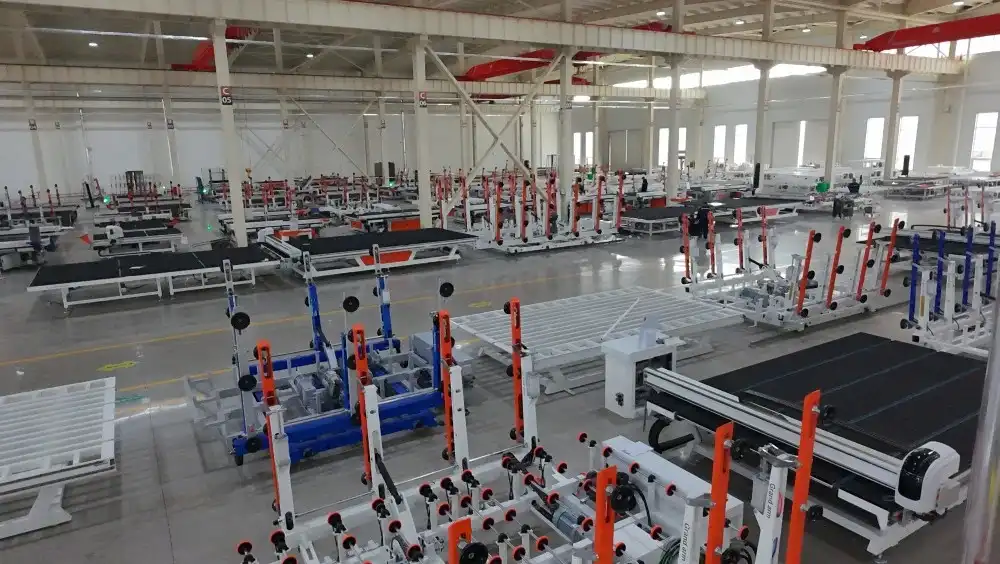
The HSL-LSX5133 has three tables: one for loading, one for cutting, and one for breaking. As you move sheets from the first to the last, each job has its own place, and you don't have to stop and start moving sheets. When the plant floor is set up, the machine may run on a rail that is above or below ground. It works with 2+2 stations, and you can change the setting to fit your needs. Tell us early on if your floor plan will not allow a large footprint. Confirm the rail type before the final layout drawings are made because it affects how the floors are laid out.
Five Grand Arms per Side and Optima Software
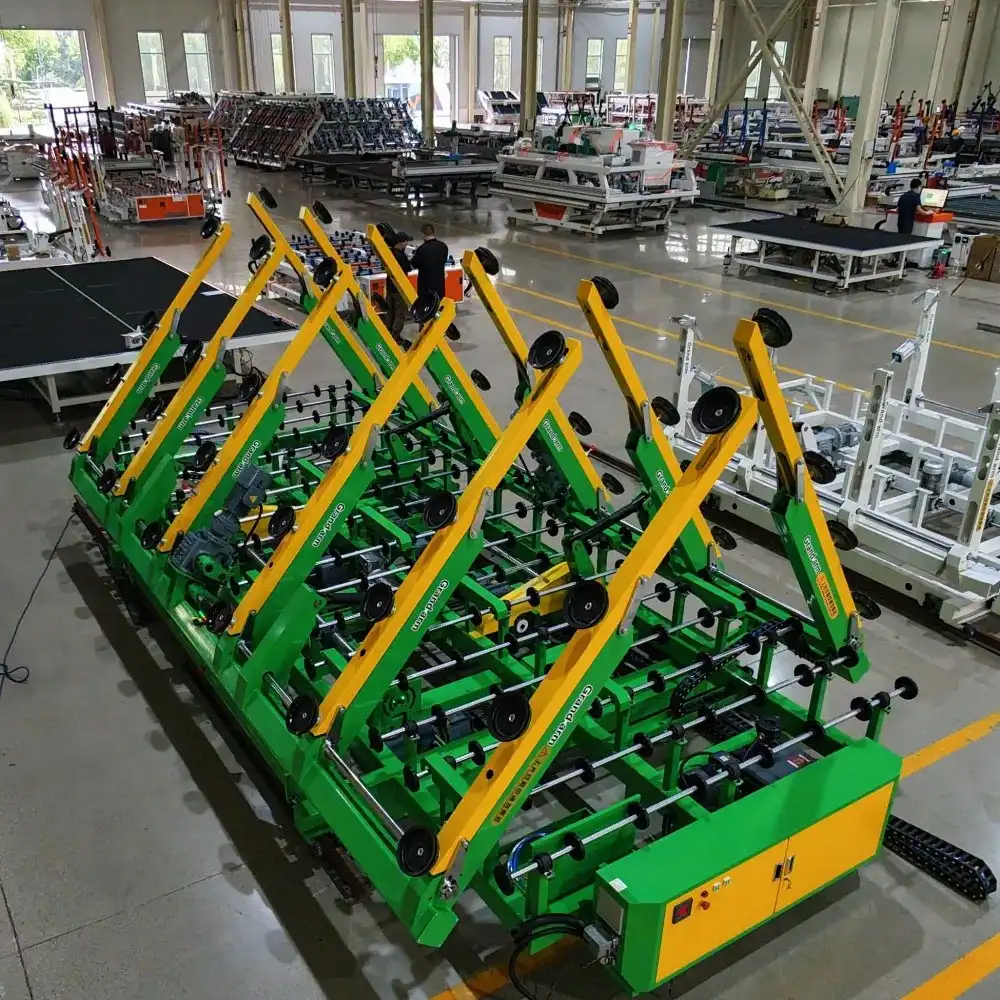
The machine has five large arms on each side. During sheet transfer, these arms share the work of moving the sheets. When sheets are big and heavy, spreading that work out over several arms is important. The Optima program plans the layout for cutting so that orders fit on each sheet and there is less glass left over. IGU makers spend a lot of money on glass, so any savings on scraps help the budget. Planners don't have to draw lines by hand when they use layout software because it does most of the math for them. Customers should bring a sample order list so that our team can talk about how the plans would work for their real sales.
Maximum Glass Size and Application Fit
The HSL-LSX5133 can handle glass that is up to 5100 mm x 3300 mm. Large window and door units, curtain wall panels, and sheets cut down to fit those sizes can all be made from that range. These kinds of automatic glass-breaking tools are also used in the auto, smart mirror, and decorative glass industries. In short, here's what the machine does:
| Item | HSL-LSX5133 |
|---|---|
| Tables | Loading, cutting, breaking |
| Software | Optima |
| Rail | Above or below ground |
| Stations | 2+2, adjustable |
| Arms | Five grand arms per side |
| Max glass size | 5100*3300 mm |
The type and thickness of glass being processed influence the required cutting speed and equipment capabilities, so I recommend documenting these specifications before ordering an automatic double glass processing machine.
Selecting, Costing, and Maintaining Your Equipment
Automatic Versus Semi-Automatic Equipment
Plants that get a lot of repeat orders, have trouble finding workers, and have strict quality standards should use automatic equipment. For small amounts, jobs with a lot of different parts, or companies that are just starting to do IGU work, semi-automatic tools can still make sense. I think you should compare them based on the tested output and the sizes of your glasses, not just the quoted speed. Make sure you look at the range of glass sizes and thicknesses, the needs of the utility, and the software links to ERP or MES systems. You should also ask for written output numbers for mixed orders, since size changes and rush jobs are part of real production days. When the size changes every few minutes, a machine that looks fast on a brochure can move more slowly.
Total Cost of Ownership and Procurement Terms
One line in the budget is all that it costs to buy something. You also need to pay for shipping, security, import taxes, installation, floor prep, operator training, spare parts, consumables, and upkeep. Prices change depending on the level of automation, the capacity, the size of the glass, and the software integration. That's why I suggest getting a quote that is based on your needs and includes details like scope, delivery, acceptance, warranty, and payment terms. For international orders, it is common to have a Letter of Credit or a deposit plus the full payment. It usually only takes a few weeks for acceptance of a single machine. Tech review, site checks, and funding sign-off can make full lines take three to six months. A list of items in a quote helps finance teams accept it more quickly.
Installation, Maintenance, and Supplier Support
Installation usually includes making sure the layout is correct, setting up the utilities, positioning, connecting the power, setting up the software, calibrating it, trial cutting, training, and acceptance testing. Every day, you need to clean the surfaces that touch the glass, check the sensors, and look over the rails and moving parts. Make a list of spare parts before the delivery, because one small part can stop a whole shift. Shandong Huashil Automation Technology Co., LTD does research and development, production, and sales of automatic mechanical tools. They have been making and exporting products for many years. As you look at different providers, make sure you ask for videos, references for installation, written warranty terms, wait times for spare parts, and a named expert contact. Following the start-up, keep an eye on the scrap rate, downtime, and units per shift.
Conclusion
An automatic double glass processing machine controls the steps that turn raw sheets into sealed, insulating units, which helps make IGUs. This article showed that accurate cutting is the first step in placing spacers and closing them. Skilled workers are still needed to handle packing, Low-E orientation, and glass that is too big. The HSL-LSX5133 has Optima software, two+2 stations that can be adjusted, five grand arms on each side, and a maximum glass size of 5100*3300 mm for the front end. Before buying, people should compare fully automatic and partially automatic choices by testing the output on their own glass. They should then make a budget for the total cost of ownership, which should include setup, training, spare parts, and regular upkeep. Careful checks of the specifications and the suppliers lower the project risk.
FAQ
1. What does the HSL-LSX5133 do in IGU production?
With its loading, cutting, and breaking tables, it can cut and break glass sheets up to 5100 x 3300 mm. Some machines in the line do the washing, putting together the spacers, filling with gas, and sealing.
2. Can the rail and station layout be changed?
Yes. The machine can use a rail that is above or below ground, and the 2+2 stations can be set up to fit your needs. Talk to our team about your choice before the layout drawings are finalized.
3. What should I send to request a quotation?
Send your glass sizes, widths, daily output goal, floor plan, list of services that are available, and the country where the glass will be sent. Then we can confirm the configuration and give you a quote on the scope, delivery, and payment terms.
Contact HUASHIL for an Automatic Double Glass Processing Machine Supplier Quote
People from plant management, engineering teams, and buying teams are welcome to contact HUASHIL. We are an automatic double glass processing machine supplier with years of experience in both production and export. We can look at the sizes of your glasses, your output goals, and the layout of your floor, and then suggest a configuration. Send your information to salescathy@sdhuashil.com to learn more about our products. When we get back to you, our team will give you advice on the specifications and a project-based quote.
References
1. ASTM International, ASTM E2190 Standard Specification for Insulating Glass Unit Performance and Evaluation, 2019
2. ASTM International, ASTM C1036 Standard Specification for Flat Glass, 2021
3. U.S. Environmental Protection Agency, ENERGY STAR Program Requirements for Residential Windows, Doors, and Skylights Version 7.0, 2022
4. National Fenestration Rating Council, NFRC 100 Procedure for Determining Fenestration Product U-factors, 2020
5. CRC Handbook of Chemistry and Physics, 101st Edition, 2020
6. European Committee for Standardization, EN 1279-1 Glass in Building: Insulating Glass Units, Part 1, 2018