




The five numbers to confirm before you order a glass cutting line are maximum sheet size, glass thickness range, required capacity, cutting accuracy, and total investment. I recommend writing each figure down and testing it with your supplier before you sign anything. These numbers let plant managers, engineers, and buyers compare quotes on the same basis. A glass cutting line differs from a single CNC cutting machine because it links loading, cutting, and breaking into one flow. Below, I walk through each figure and show how our HSL-LSX5133 fits the checks.
Number One: Maximum Glass Sheet Size and Usable Cutting Area
Nominal Size Versus Usable Area
Start with the largest sheet you want to use. Ask each seller to give you three different numbers: the table's size, its largest load capacity, and its cutting area. Because of clamps, trim allowances, and positioning, they don't always match. The biggest piece of glass that our HSL-LSX5133 can handle is 5100 × 3300 mm. Check that number against the stock sizes your float glass source sends, and think about what you might want to add in the next few years. Fill in the quote with the approved size.
Three Tables and a Steady Loading Flow
The HSL-LSX5133 has three tables: one for loading, one for cutting, and one for breaking. Each stage can work on a different sheet because it has its own table. This way, the cutting table doesn't have to wait while workers load or unload glass. When you compare a glass cutting line to a single CNC machine, this is the first thing you should look at. To see how a sheet is loaded, cut, and broken, ask the seller to show you. Chips and scratches are also less likely to happen when the item is handled less.
Rail Choice and Factory Footprint
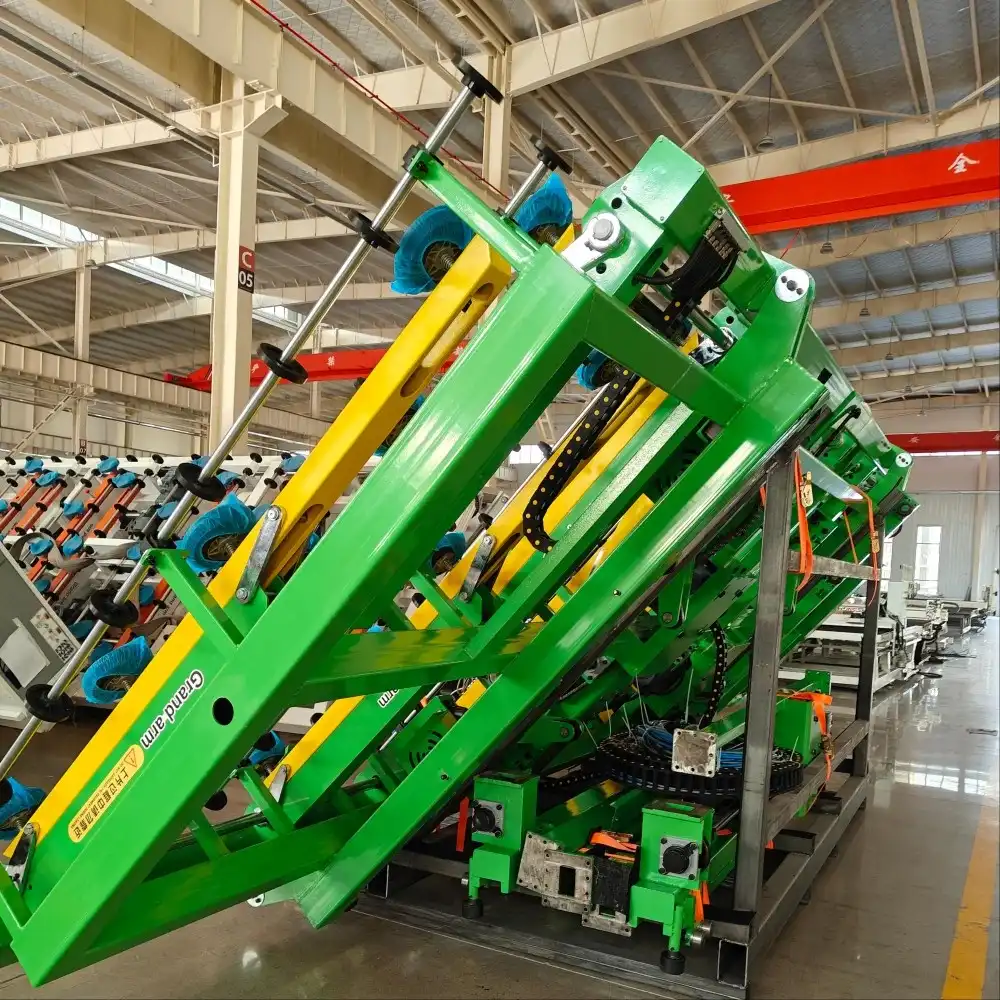
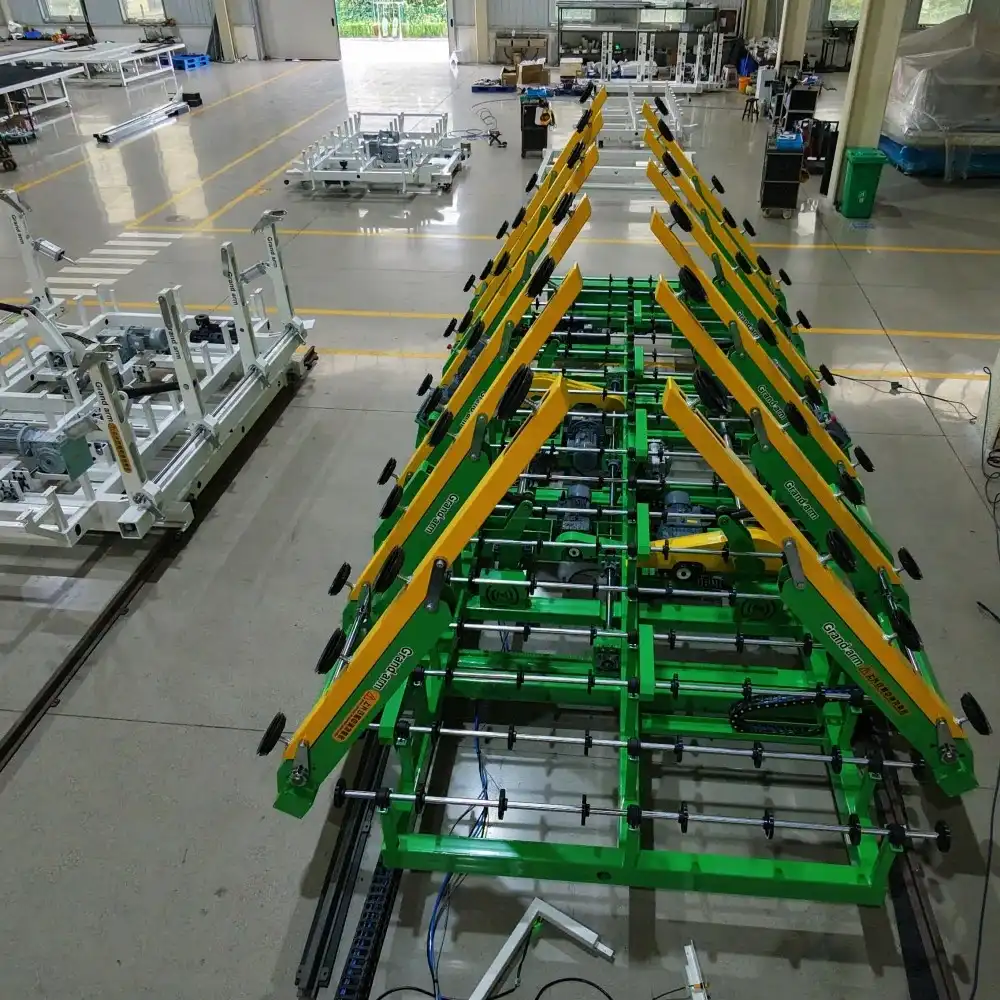
The HSL-LSX5133 has 5 stations and a train that can go above or below ground. The stations can be set up to fit your needs. There are five big arms on each side. An underground rail needs to be buried, so check your floor conditions early on. Find out how much room there is for the three tables, the glass racks, the forklift or crane paths, the operator's access, and the space for maintenance. Send us a plant drawing before the final layout is set in stone. A crowded layout slows down work and poses safety risks.
Number Two: Glass Thickness Range and Material Compatibility
How Thickness Changes Cutting and Handling
It is easy for thin glass to break and bend. Heavy glass needs to be cut with more force, moved more carefully, and handled more strongly. Each change affects the choice of wheels and the speed of output. ASTM C1036 and other flat glass standards set the thicknesses and tolerances, so use them when you list your range. Give your provider the sheets that are the lightest, the biggest, and the thickness that makes up the most of your order. And then ask for a written range for the exact model. Make sure it's correct by cutting a sample on your own glass.
Coated, Low-E, and Laminated Glass
According to the Efficient Windows Collaborative, Low-E glass features a thin coating that helps reduce heat transfer by limiting thermal radiation. Some insulating glass manufacturers remove the coating near the glass edges before sealing, a process known as edge deletion, so buyers should confirm whether their glass cutting line needs to accommodate this additional production step. Laminated glass also requires specialized handling because cutting involves separating the glass layers and the interlayer material. Since coated and laminated glass behave differently from standard clear float glass, buyers should request sample testing before placing an order. It is also important to inform suppliers about the specific coatings used and verify how the equipment and handling processes protect coated surfaces from scratches or other damage during production.
Wheels, Spare Parts, and Application Mix
Cutting wheels need to be replaced every so often, so think of them as an ongoing cost. The HSL-LSX5133 can cut architectural glass, auto glass, smart mirror glass, and artistic glass. Depending on the type of glass being used, the cutting settings may need to be changed. Find out how much extra parts cost and how long it takes to ship them. Find out how your plant in the US can get technical support for it. You should also find out how long a wheel lasts on your width mix, as that number affects the monthly cost of running the business.
Number Three: Required Production Capacity
Turn Orders Into a Daily Target
Starting with your daily demand in square meters, divide it by the number of working hours and the amount of time you expect the machine to be up and running. To give you an idea, 4,000 square meters split into two 8-hour shifts with 85% uptime needs about 294 square meters per hour. In two years, the line won't seem so small if you add the growth that you expect. Tell each supplier this goal, the size of sheets you usually use, and how you like to cut them. Every supplier can give you a fair quote if they use your orders to make a goal.
Why Advertised Speed Can Mislead
There is only one step used to measure cutting speed. Real output is also affected by how long it takes to load, the thickness of the glass, the complexity of the pattern, breaking, removing scrap, and human help. A line that cuts fast but has to wait for loading doesn't do as much as its ads say it will. Test the plant with your own glass and patterns to make sure it meets your standards. Keep track of cycle time, output, downtime, scrap, and recut numbers. The finance and purchasing teams can stand by the numbers they get from tested results. It's more useful to look at an hour of production than a page of specs.
Comparing Machine Types and Station Settings
A standard CNC cutting machine works best for smaller jobs with easier workflows. It takes less work to load and break glass with a robotic glass cutting line. The HSL-LSX5133 has 2+2 stations that can be set up so that the arrangement works for the different types of products you have. It has tables for loading, cutting, and breaking. Find out from each supplier which stations work together and which ones have to wait. Then, compare their answers to your daily goal. It's a common mistake to choose a line based only on its cutting speed, since a loading bottleneck can cancel out that benefit.
Number Four: Cutting Accuracy, Repeatability, and Scrap Rate
Define Accuracy by the Final Product
A single advertised tolerance value is not enough to evaluate the performance of a glass cutting line. Buyers should ask suppliers to specify cutting accuracy, positioning accuracy, repeatability, squareness, and edge quality, then assess how each parameter relates to their intended glass products. ASTM E2190 establishes performance evaluation requirements for insulating glass units, highlighting the importance of reliable manufacturing processes, although it does not directly define cutting tolerances for individual glass panes. Consistent pane dimensions and accurate cutting are important for subsequent insulating glass assembly. Similarly, furniture glass and shower door panels often require additional edge processing, making initial cut quality essential for efficient downstream operations. Rather than relying solely on published equipment specifications, buyers should request measured test results using their actual glass types, dimensions, and production requirements to verify cutting performance under realistic operating conditions.
Optima Software and Material Use
The HSL-LSX5133 can be used with the Optima software for tuning. This kind of software sets up cutting patterns on each sheet, takes care of scraps, and plans the job order, which cuts down on waste when orders come in different sizes. Before you buy it, make sure you know what file types it can read, how it will connect to your CAD or ERP system, and who will train your users. Many buyers find that the machine is ready, but the data is not. Bring a sample order list to the show so that the software can load it right in front of you.
Common Causes of Scrap and How to Track Them
Most mistakes in cuts are caused by worn wheels, bad balance, the wrong pressure, and program bugs. Every week, look at the list of scrap and divide the number of damaged or recut square meters by the total number of square meters. It's more likely that maintenance is to blame for a rising rate than poor operator skill. Request from the seller a repair plan, a guide on how to change the wheels, and a method for leveling the vehicle. Your engineering manager can quickly find the cause of a problem if you keep the paperwork clear. This also keeps small problems from becoming expensive ones.
Number Five: Total Investment, Operating Cost, and Expected ROI
Look Beyond the Purchase Price
Price is on one line of a longer list. Count up the costs of shipping and duties, setting up and starting up, training, software, spare parts, electricity, compressed air, maintenance, labor, and downtime. This total cost of ownership method was first written about by Lisa Ellram in the International Journal of Purchasing and Materials Management in 1993. It is still used by purchasing teams today. Also, confirm the delivery date and the terms of the warranty. A Letter of Credit or a deposit plus final payment is often used for international sales, so make sure you agree to those terms early on.
Build a Simple ROI Estimate
Figure out the yearly gain from more output, less waste, less redo, and more order capacity. Take away the yearly cost of running the business, which includes wheels, power, repairs, and service. To get an idea of how long it will take to get back the investment, divide it by the net yearly gain. The assumptions should be written down, and you should use your own plant numbers. The finance team will question them. The same steps can be used on new, used, and refurbished computers.
Put the Five Numbers Into One Requirement Sheet
Add up all five numbers that have to do with utilities, factory structure, software needs, delivery site, and installation conditions. Each goal should be given a weight, like capacity, accuracy, service response, and price. Then, each seller should be scored in the same way. Back up your final choice with written performance commitments, layout drawings, a training plan, a list of spare parts, and sample tests. For big projects, engineering, purchasing, and finance can stay on the same page with the help of a short tender kit that includes milestones, specifications, and acceptance standards. We can help you put these papers together.
Conclusion
The five numbers help buyers figure out how good a glass cutting line is. What the line can handle is based on the largest sheet size and the area that can be used. The range of thicknesses and the fit of the materials determine whether the output stays the same across goods. Your order demand and tested results should tell you how much space you have, not the advertised speed. How well the line works for the finished product can be seen in its accuracy, consistency, and scrap rate. How well the line works with software affects how much material is used. The total cost of the investment includes setup, training, parts, running costs, and the return on investment. When put together on one requirement sheet and checked by cutting samples and accepting them, these numbers lower the risk of procurement and make it possible to compare suppliers fairly.
FAQ: Glass Cutting Line Procurement Questions
1. What is the difference between a glass cutting line and a standard cutting machine?
A normal cutting machine does mostly cutting. A glass cutting line connects loading, cutting, and breaking, just like the HSL-LSX5133's three tables do, so sheets move with fewer steps that need to be done by hand.
2. What affects the price of a glass cutting line?
The price depends on the maximum glass size, how the station is set up, the type of rail, the software, and any extra features that are chosen. You should also compare delivery, training, installation, and spare parts.
3. Why does tested output matter more than advertised speed?
Advertised speed doesn't take into account loading, stopping, or downtime. If you try it on your own glass and patterns, you can see what the result will be.
4. What should I send a supplier for an accurate quotation?
Send the largest sheet size, a range of thicknesses, the daily output goal, the accuracy and scrap requirements, the tools and software needs, the shipping location, and your expectations for after the sale.
Request a Glass Cutting Line Configuration and Quotation
Are you ready to make a quote out of your five numbers? Please email them to salescathy@sdhuashil.com, and HUASHIL will help you set up the HSL-LSX5133 glass cutting line with three tables, Optima software, a selectable rail, and two plus two stations. As a glass cutting line manufacturer in Shandong with a lot of experience, we offer after-sales service for export orders.
References
1. ASTM International, Standard Specification for Flat Glass (C1036), 2021
2. ASTM International, Standard Specification for Insulating Glass Unit Performance and Evaluation (E2190), 2019
3. ASTM International, Standard Specification for Laminated Architectural Flat Glass (C1172), 2019
4. Efficient Windows Collaborative, Window Technologies: Low-E Coatings, 2023
5. International Journal of Purchasing and Materials Management, Total Cost of Ownership: Elements and Implementation, 1993
6. Glass Association of North America, GANA Glazing Manual, 2010