




An automatic glass cutting line is a cutting-edge manufacturing system that automates the loading, cutting, and breaking of glass sheets for efficient production. These systems use modern CNC technology, optimisation software, and mechanical automation to improve productivity and quality consistency for architectural, automotive, and furniture glass applications. This complete reference covers the technology, benefits, selection and buying techniques for plant managers, technical directors and procurement teams looking for scalable glass processing solutions that decrease labour dependence while enhancing output accuracy.
Understanding Automatic Glass Cutting Lines: How They Work and Key Features?
Modern automation of glass cutting has come a long way from the hand scoring and breaking techniques. Behind the scenes, a complex orchestration of mechanical systems, software smarts, and safety standards combine to ensure consistent accuracy across manufacturing runs.
What is an Automatic Glass Cutting Line?
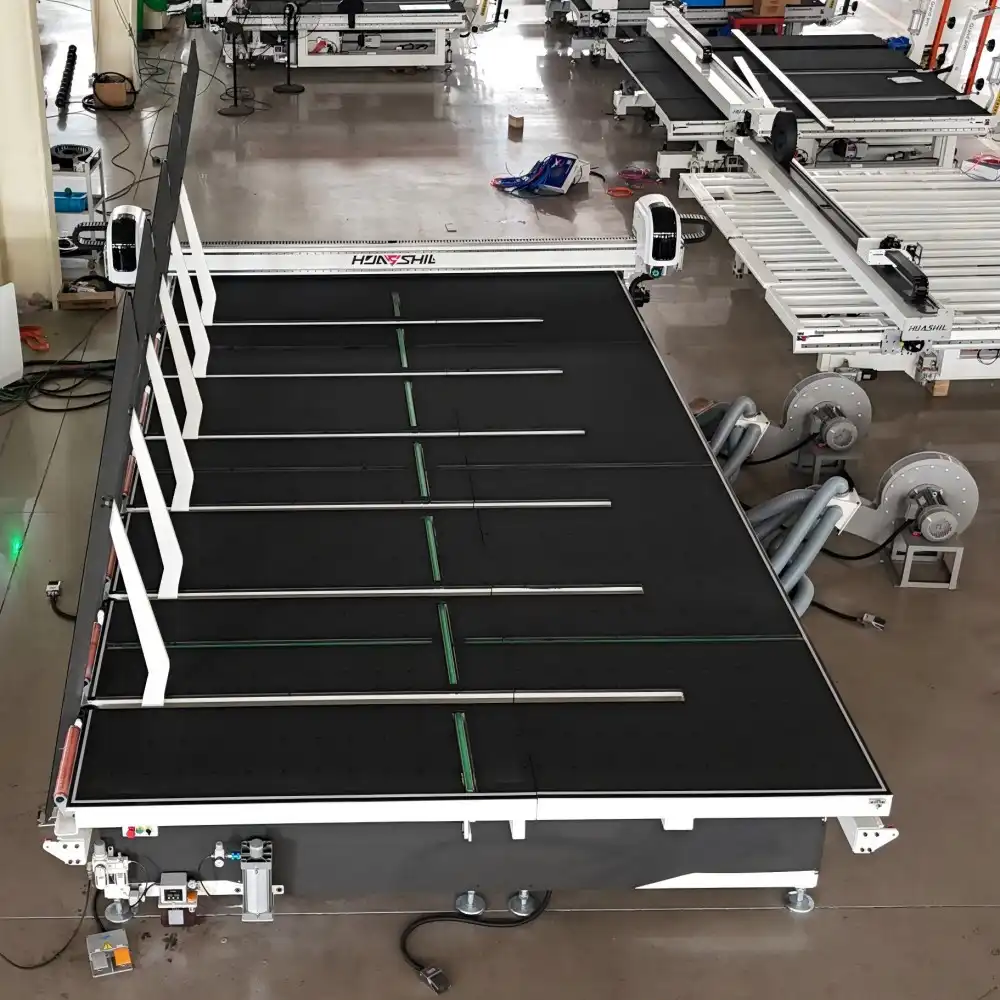
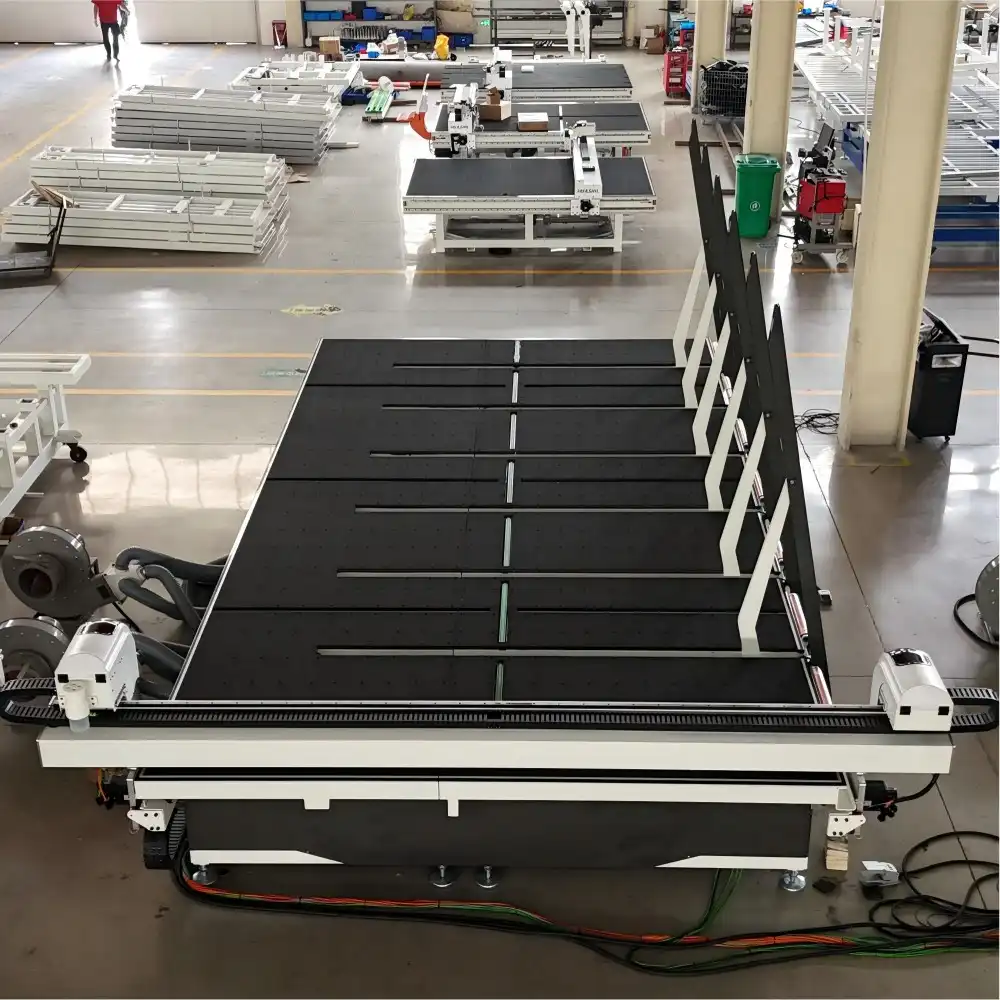
The automated cutting system is composed of three connected workstations that accomplish the whole workflow of the glass production. The raw glass sheets are loaded on the loading table and perfectly aligned for cutting. The cutting table contains CNC-controlled diamond or carbide cutting wheels that move along optimised cutting routes. The breaking table applies a measured amount of pressure to score lines to produce neatly severed individual pieces. The semi-automatic equipment requires an operator to take some kind of action between operations. Fully automated lines provide a continuous flow of material with very little human participation.
One such combination of all three functional tables with Optima optimisation software is the HSL-LSX3829 model that determines cutting patterns to maximise material yield. This specific setup is capable of handling glass sheets up to 3660×2800mm and is appropriate for big architectural panels and curtain wall components.
Core Components and Operational Flow
The mechanical base is an above-ground or below-ground rail system that directs the flow of glass from station to station. The 2+2 station setup can handle several sheets at the same time, tripling throughput vs single-station configurations. Three big arms on each side enable steady glass handling and distribute weight equally on large panels to minimise bending or stress fractures while in transit.
The operational flow starts with the raw glass entering the loading station. Sensors identify the sheet dimensions and surface orientation. The positioning system places the glass exactly on the cutting table, and then CNC-controlled cutting heads move along pre-programmed pathways, which are produced by optimisation software. Once scored, the glass is sent to the breaking station, where pneumatic or mechanical breaking devices apply specific pressure. The finished parts are then sent for quality inspection or further edge processing.
Key Features That Define Performance
Multi-thickness compatibility is still important for producers that supply different markets. The advanced systems can handle glass from 2mm ornamental panels up to 19mm architectural glazing without human adjustment. The energy-saving designs use servo motors and variable-frequency drives, which decrease power consumption while not in use yet retain fast acceleration.
Integrated safety measures include light curtain technology that stops operation when an obstacle is detected, strategically placed emergency stop controls at key access points, and automated edge detection that avoids damage to the cutting wheel from accidental contact with metal frames or loading tables. In addition to protecting the operator, these features help to reduce unexpected downtime from equipment damage.
Benefits of Using Automatic Glass Cutting Lines for Glass Manufacturers
The use of the automated cutting technique results in real gains on several operational aspects. Such advantages are useful to understand in order to justify capital expenditure and support ROI predictions in procurement conversations.
Enhanced Production Throughput and Labour Efficiency
Glass processing is conducted on an automatic glass cutting line with automated equipment at speeds of 120 sheets or more each eight-hour shift, depending on complexity and size. This is an increase of three to four times compared to hand-cutting procedures. Manufacturers may divert skilled people to quality control, maintenance, or secondary processing operations where the contribution of human judgement is of more value by reducing the amount of labour required. This is especially true in plants that run numerous shifts. Automated lines work the same regardless of the tiredness level of the operator, which plays a major role in reducing the loss of human productivity.
Improved Cutting Accuracy and Material Yield
The position precision of the whole cutting table is guaranteed by the CNC-controlled cutting heads within ±0.3 mm. This accuracy delivers the dimensional coherence required for architectural installations where tolerance stack-up impacts assembly fit. Systems such as the HSL-LSX3829 come with Optima software that analyses order requirements and develops nesting patterns to minimise scrap. Manufacturers claim material yield gains of 8-15% above manual layout approaches, which directly reduces raw material costs.
Operational Cost Reduction and Waste Minimisation
Automated cutting not only saves material but also minimises breakage rates in processing. Manual scoring might cause inconsistent application of pressure that can create microcracks that cause spontaneous breaking in handling or tempering. Automated systems, calibrated for the glass thickness and type, deliver a uniform force, resulting in cleaner breaks and fewer rejected pieces. Besides, the reduced energy consumption in comparison with traditional hydraulic systems results in reduced operating costs and is especially relevant in view of the volatile energy prices impacting the competitiveness of industry.
Safety Improvements and Regulatory Compliance
This decreases the danger of occupational damage from repetitive motion activities and sharp edges, since the operator will have less direct contact with the cutting equipment. Enclosed production areas incorporate glass shards and cutting fluid mist to improve air quality and minimise housekeeping needs. These safety modifications are designed to meet OSHA regulations in the U.S., and help show due diligence in liability audits or insurance inspections.
Comparing Automatic Glass Cutting Lines: Making the Right Choice
To choose the right cutting automation, you need to carefully assess your production objectives, financial limitations, and ability to integrate with your current equipment.
Automatic vs. Semi-Automatic vs. Manual Systems
Glass loading, cutting, breaking, and unloading are totally automated with no human interaction between steps. Semi-automatic systems usually need the user to load the sheets, but they do the cutting and breaking for you. Manual cutting is totally operator-skill dependent, employing handheld scribes or tabletop cutters. Each method is suitable for various sizes of production and budgets.
Full automation is most beneficial in plants with a daily processing of over 500 m² owing to reductions in labour and throughput needs. Semi-automatic systems may offer appropriate efficiency at reduced capital cost for mid-sized companies generating 200-500 square metres. Manual techniques are only useful for speciality businesses that make bespoke forms in low numbers for whom the time to set up for automation is more than the time to cut.
Critical Selection Factors for Decision Makers
The accuracy of cutting directly affects the success of subsequent processing. The more tightly specified the incoming glass dimensions are, the more reliable the tempering process is. Edge grinding equipment functions more effectively when processing uniformly cut parts. Proper glass machinery maintenance also helps ensure stable cutting performance and reduces unexpected downtime during production. On the manufacturing flexibility side, also included is compatibility with different kinds of glass, such as low-E coated glass, laminated assembly, and patterned ornamental glass.
The ability to integrate with current production management systems influences operational visibility and quality traceability. Contemporary cutting lines are equipped with data export features that may be fed into production tracking systems, providing real-time tracking of equipment utilisation and yield measures. Budgeting is not only about the cost of the equipment but also installation, operator training and continuous maintenance. A total cost of ownership calculation over a five-year operation term gives a fair comparison of equipment choices.
2026 Market Highlights and Product Capabilities
The latest cutting lines aim at software intelligence and modular expandability. This trend is shown by the HSL-LSX3829 setup with Optima software, providing cloud access for remote diagnostics and performance optimisation. The stations may be configured in a variety of ways, allowing manufacturers to design systems for particular workflow needs, whether that means peak throughput or handling atypical glass sizes. OEM and ODM support allows integrators to request specific features or branding aspects when buying for resale or inclusion in bigger production systems.
Maintenance, Troubleshooting, and Safety Guidelines
Systematic maintenance techniques and sufficient troubleshooting skills when operational problems occur help sustain peak equipment uptime.
Routine Maintenance Best Practices
Daily maintenance includes cleaning the surfaces of the cutting tables to remove glass residue that might damage following sheets, checking the sharpness of the cutting wheels and replacing any wheels that exhibit noticeable wear, and checking that all safety interlocks are functioning properly. Weekly procedures include lubrication of rail systems and bearing assemblies as per manufacturer requirements, verifying pneumatic system pressure levels, and examining error reports kept in the control system.
Monthly calibration maintains accuracy. This may involve checking the precision of the cutting head location using laser measuring equipment, checking the uniformity of the breaking pressure over the width of the table, and upgrading the software to the latest versions that may include performance enhancements or problem corrections. Companies such as Shandong Huashil Automation Technology offer thorough maintenance schedules and technical documentation to facilitate these procedures.
Common Troubleshooting Strategies
Worn cutting wheels, too high or too low pressure settings, or dirt on the glass surfaces are the usual causes of quality concerns with the cut. Operators should check the quality of the wheel for any rough edges or incomplete scoring and make sure the cutting pressure is within the parameters for the thickness of the glass, and that glass cleaning systems remove all debris before cutting. Frequent breakdowns may suggest pneumatic pressure differences or mechanical misalignment of braking arms to be checked using a pressure gauge and mechanical examination.
Software mistakes or communication failures between control systems and mechanical components need methodical diagnostic procedures. Error codes on operator interfaces help offer first troubleshooting advice. When the problems are beyond the technical skills of their own team, a manufacturer with full after-sales assistance is a manufacturer’s best friend. Developing ties with equipment providers that have spare parts inventories and remote diagnostic support helps to reduce production interruptions.
Safety Protocols and Operator Training
Operators get comprehensive training in regular operating procedures, emergency shutdown procedures, and basic troubleshooting approaches. Training programmes should stress the correct use of personal protective equipment such as safety glasses and cut-resistant gloves while doing maintenance and hearing protection in high-noise conditions. Lock-out/tag-out procedures are used to avoid inadvertent start-up of equipment during maintenance operations.
Regular safety audits are carried out to uncover possible dangers before they cause an incident. The assessments look at guard integrity, emergency stop operation and correct placement of warning labels. Proper glass machinery maintenance practices are also reviewed during these checks to ensure equipment remains in safe operating condition. Documenting training completion and safety audit findings provides evidence of compliance with regulations and helps efforts toward continual improvement.
Conclusion
Automated glass cutting technology transforms manufacturing operations through precision, efficiency, and consistency that manual methods cannot match. Understanding system components, operational benefits, selection criteria, maintenance requirements, and procurement strategies empowers plant managers and technical directors to make confident investment decisions. The integration of advanced software like Optima with robust mechanical systems exemplified by the HSL-LSX3829 model delivers measurable improvements in material yield, labour productivity, and product quality. Partnering with established manufacturers offering comprehensive technical support and reliable spare parts availability ensures sustained competitive advantage in demanding markets.
FAQ
1. What types of glass can automatic cutting lines process?
Automated systems handle standard float glass, low-E coated architectural glass, laminated safety glass, patterned decorative glass, and tempered glass blanks before heat treatment. Glass thickness typically ranges from 2mm to 19mm, though specialised systems accommodate thicker structural glazing. Coated glass requires software settings that account for coating hardness affecting cutting wheel pressure. Always verify specific glass type compatibility with equipment manufacturers during procurement discussions.
2. How often does an automatic glass cutting line require maintenance?
Daily maintenance tasks take approximately 30 minutes and focus on cleaning and visual inspection. Weekly lubrication and system checks require 1-2 hours. Monthly calibration procedures and comprehensive inspections demand 4-6 hours of skilled technician time. Annual major maintenance including complete system calibration, replacement of wear items, and software updates typically requires one full production day. Following manufacturer-recommended schedules maximises equipment lifespan and maintains cutting accuracy.
3. Can automatic glass cutting lines integrate with existing factory management systems?
Modern cutting systems offer data connectivity through Ethernet, OPC-UA protocols, and cloud-based interfaces. These connections enable real-time production monitoring, automated order download from ERP systems, and quality data export to traceability databases. Integration capabilities vary by manufacturer and control system generation, so discuss specific requirements during equipment selection to ensure compatibility with your existing infrastructure.
Partner with HUASHIL for Advanced Glass Cutting Solutions
Manufacturers seeking reliable automatic glass cutting line technology backed by proven expertise find valuable partnership opportunities with Shandong Huashil Automation Technology. Our HSL-LSX3829 system combines precision engineering, intelligent Optima software, and flexible configuration options supporting diverse production requirements. As an experienced automatic glass cutting line manufacturer, we deliver comprehensive technical support, readily available spare parts, and customisation capabilities that address unique operational challenges.
Whether upgrading legacy equipment or establishing new production capacity, our team provides detailed technical consultation, ROI analysis support, and post-installation training, ensuring smooth technology adoption. Contact our specialists at salescathy@sdhuashil.com to discuss your specific requirements, schedule live demonstrations at our facility, or request detailed technical specifications. Discover how automated cutting technology enhances productivity, reduces operational costs, and positions your operation for sustained competitive advantage in demanding glass manufacturing markets.
References
1. Glass Manufacturing Industry Council. (2023). Automation Technologies in Modern Glass Fabrication. Industrial Press.
2. Peterson, R. & Miller, T. (2022). Precision Cutting Systems: Engineering and Applications. Manufacturing Technology Publishers.
3. International Association of Glass Processors. (2024). Equipment Selection Guide for Glass Manufacturing Operations. Technical Report Series.
4. Hammond, D. (2023). Industrial Automation: ROI Analysis and Implementation Strategies. Business Press International.
5. Society of Glass Technology. (2022). Safety Standards and Best Practices in Automated Glass Processing. Industry Guidelines Publication.
6. Williams, K. & Chen, L. (2024). Digital Manufacturing Systems: Integration and Optimisation. Advanced Manufacturing Review, Volume 18.