




In order to solve important operating problems, companies that make architectural glass, curtain wall fabrication, furniture, and sintered stone are switching to more modern glass cut-out machine systems. Modern automatic cutting equipment makes it easier to make things, get the right measurements, and use less labor, all while lowering running costs and material waste. Putting money into well-thought-out machines with smart software controls and safety-approved designs helps businesses meet strict quality standards, adapt their operations to changing needs, and stay competitive in tough global markets where speed and consistency are key to making money.
Understanding the Technology Behind Advanced Glass Cut-Out Machines
Core Operational Principles and Machine Variations
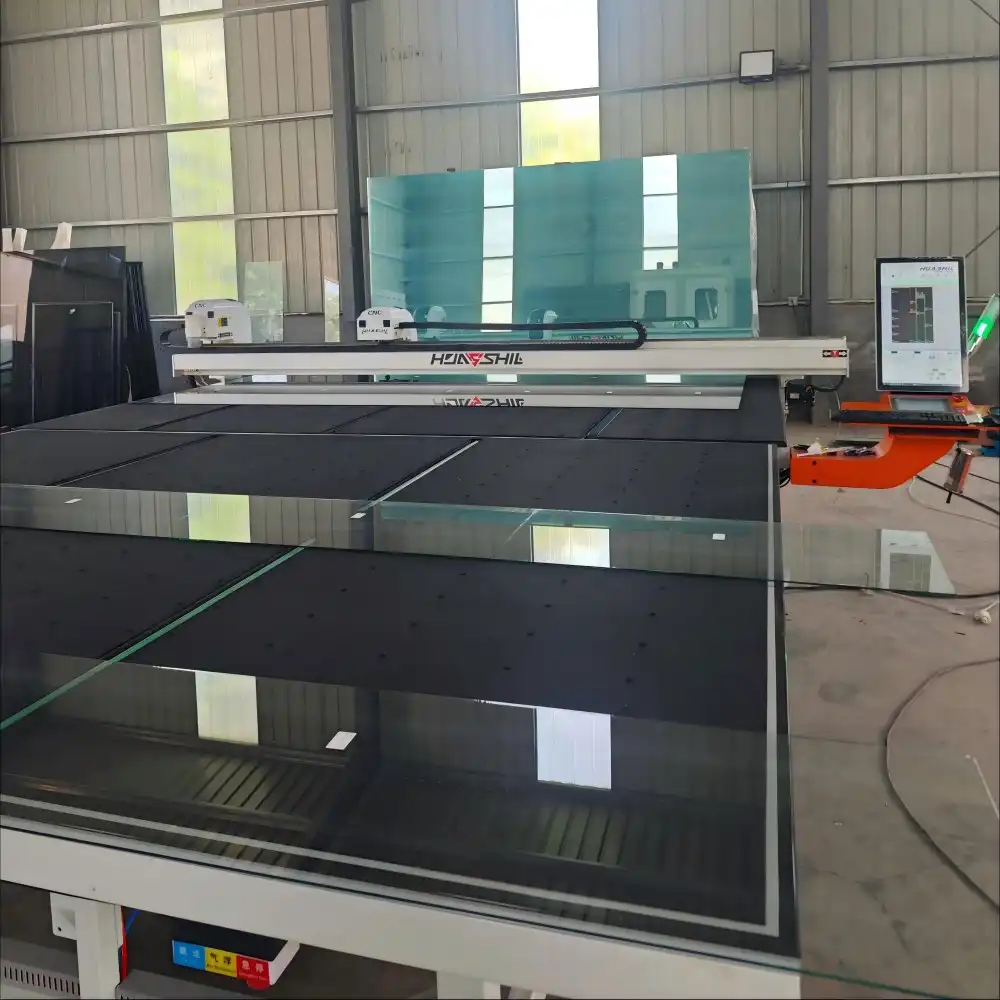
Automated glass cutting systems of today use both mechanical accuracy and programmable logic controllers to consistently cut in complex patterns. Instead of manual scoring tools or simple bridge cutters, more advanced models use servo-driven positioning systems and vacuum-based material handling to accurately move large glass sheets up to 2700×2100mm. The HSL-YTJ2721 model is a good example of this change. It uses Optima optimization software to find stacking plans that get the most out of the raw materials while also taking the least amount of time to set up between production runs.
Some types of equipment include manual scoring tables that are good for small workshops, semi-automated bridge cuts that work faster, and fully automated production lines that have loading conveyors, edge recognition sensors, and the ability to be controlled from afar. Laser-based systems offer non-contact cutting for specific tasks, but mechanical scoring is still the most common way to process building glass because it is cheaper and has been shown to work reliably across thickness ranges of 2 to 19 mm.
Integrated Software and Control Systems
Modern cutting machines have intelligence built in. Optimization software looks at the details of an order and creates efficient cutting sequences that cut offcut waste by 8–15% compared to manual planning. These systems connect directly to CNC control units so that blade positioning, cutting pressure changes, and material progress can all be coordinated without any help from a user. Real-time monitoring dashboards show production numbers, let you know when maintenance is due, and keep track of quality data to help with ISO 9001-compliant process paperwork.
Modern machines have automatic edge-finding sensors that can place a glass sheet within a tolerance of ±0.5mm. This takes into account differences in where the materials are placed and gets rid of the need for manual alignment steps. Pressure control systems change the cutting force dynamically based on the thickness of the glass. This keeps thin substrates from getting micro-fractures and makes sure that thicker materials get all the way through the scoring. Air flotation tables lower friction when moving materials, which lets one person handle big sheets that used to need two-person teams.
Energy Efficiency and Safety Engineering
Modern equipment designs put operational efficiency first by using variable-frequency drive motors that change how much power they use based on the load. This cuts electricity use by 20–30% compared to systems that use constant speeds. Suction cup conveyance systems spread the holding force across multiple contact points. This keeps the grip safe during high-speed moves and prevents damage to the surface.
Safety certifications, like CE compliance, require features like emergency stop systems, light curtain barriers, and automatic blade retraction protocols that stop the machine when someone enters a safety zone. These designed safety features keep workers safe while keeping production going. They meet the needs of both safety rules at work and uptime goals that are important for making money in manufacturing.
Why Traditional Methods Are Being Replaced: Limitations and Evolution
Accuracy and Throughput Constraints
Hand-held tools and the operator's judgment are usually used for manual glass cutting, which can only achieve 2mm in size tolerances, which is not good enough for modern building codes that need 0.5mm accuracy. Skilled craftsmen using traditional scoring wheels can only make about 15 to 20 cuts an hour on large format sheets, which limits the number of panels they can process each day to 120 to 150. These limits on throughput cause bottlenecks in facilities that work with project-based clients who need 500 or more customized units delivered in a short amount of time. A glass cut-outs machine eliminates these constraints by automating scoring, breaking, and measurement verification, delivering consistent ±0.2mm accuracy at speeds exceeding 60 sheets per hour, directly addressing the throughput and precision demands of modern architectural and interior glass fabrication.
Labor dependence adds variation because cutting accuracy drops as operators get tired during long production shifts. It takes 6 to 12 months of training to get new workers as skilled as experienced makers, which makes succession planning harder as the workforce's demographics change. Material waste rates of 12–18% make these problems even worse, cutting into profit margins on competitive bids where prices are based on the idea that materials will be used most efficiently.
Automated systems get around these problems by using constant mechanical execution that keeps a range of ±0.3mm across ongoing multi-shift operation. With single-operator control, production rates rise to 60–80 cuts per hour, doubling output capacity while cutting labor costs per unit by 55–65%. Optimization algorithms cut down on waste to 4-7%, which directly raises the project's profitability by recovering material costs.
Documented Performance Improvements
A medium-sized curtain wall fabricator who works on commercial building projects recorded what occurred when automatic bridge cutters were installed. Daily panel production increased from 180 to 520, while the number of panels discarded due to size issues decreased from 4.2% to 0.8%. Two manufacturing workers were reassigned to value-added duties, including quality inspection and packing. The whole plant became more efficient without additional staff. Due to decreased waste, faster output, and lower rework costs, the ROI approached breakeven after 18 months.
Furniture glass firms that create shower doors and wall panels find comparable advantages, particularly in operations with many orders and frequent setup changes. Automated loading and software-driven pattern recognition reduce product specifications changeover times from 25 to 5 minutes. This allows for cheaper small-batch production than human techniques, which were unprofitable due to setup time.
Factors Influencing the Choice of Advanced Glass Cut-Out Machines
Precision Capabilities and Technical Specifications
Matching the capabilities of equipment to production needs is the first step in making decisions about what to buy. Facilities that work with normal window glass focus on cutting speed and the amount of material they can handle, while facilities that work with decorative glass focus on precise placement and the ability to use specialized tools. The maximum processing dimensions of a machine determine its usefulness. For example, the HSL-YTJ2721 can handle 2700×2100mm pieces of jumbo architectural glass that are popular in commercial buildings, which is bigger than what home window fabricators need for smaller formats.
It's also important that the tools can work with a wide range of thicknesses, since most architectural and furniture glass uses 2mm to 19mm glass. Businesses that work with thinner mirror glass or thicker structural glazing need to make sure that the pressure control systems and blade specifications are right for the type of glass they are working with. Long-term usefulness is affected by how flexible the software is. Systems that support CAD file imports and custom nesting methods can change to changing product lines without having to buy new equipment.
Total Cost of Ownership Analysis
The purchase price only makes up 40–50% of the total costs of owning the item for ten years. The rest comes from installation, training, maintenance, and replacement parts. A full analysis compares the energy usage specs because differences of 3 to 5 kW in operating power demand add up to big changes in electricity costs over many years. Uptime is affected by how often parts need to be replaced and when they need to be maintained. For example, equipment with 200-hour service intervals has fewer production interruptions than systems that need to be adjusted every week.
The infrastructure for after-sales help decides how smoothly operations can continue when there are technical problems. Suppliers with regional service networks and well-stocked spare parts inventories can solve problems faster than suppliers who need to ship parts from other countries. Mechanical parts are covered by warranties for 12 to 24 months, and software is supported for 36 months or more. This lowers the risk during the equipment integration and production ramp-up phases. These things are very important when making procurement decisions, because the costs of unplanned downtime add up quickly in project environments where time is of the essence.
Scalability and Customization Options
When new firms open or facilities expand, they examine how a glass cut outs machine supports phased capacity expansion. Start with entry-level automated systems with a single table that can be controlled and loaded by hand before going on to fully automated production lines. Modular designs that may be extended with robotic loading systems, automated packaging stations, or multi-head cutting setups safeguard the original investment and enable incremental improvements in capabilities as order volume grows.
OEM and ODM customisation helps integrators build turnkey processing lines for particular needs. Manufacturers with flexible conveyor integration, specialized software programming for unique cutting patterns, and mechanical adjustments for non-standard material dimensions may provide customized solutions for operational processes. Leasing and delayed payment arrangements assist in managing cash flow when purchasing capital equipment. Mid-sized facilities must balance investment objectives; thus, this is crucial.
Ensuring Long-Term Efficiency and Safety: Maintenance and Troubleshooting
Routine Care and Service Protocols
Schedules for preventive repair keep equipment working well and increase the life of its parts. Every day, tasks like checking the vacuum seal's integrity, cleaning the air flotation table's surfaces, and making sure the cutting wheel is sharp are done. Lubricating the linear guide rails and bearing assemblies once a week keeps them from wearing out too quickly, and doing a monthly calibration check makes sure that the positioning accuracy stays within the tolerances that were set.
Replacement schedules for parts usually say that the cutting wheel needs to be replaced every 40 to 60 hours of use, depending on the thickness and hardness of the glass being processed. Every 500 hours, vacuum pumps are serviced so that the suction force stays the same across all conveyor systems. Sticking to the manufacturer's suggested plans helps keep unplanned breakdowns to a minimum, and keeping detailed maintenance logs can help with guarantee claims and show that the quality management system is being followed.
Common Issues and Resolution Strategies
Most operational issues are caused by improper setup or transfer of materials, not mechanical issues. Most glass scoring is incomplete due to inappropriate pressure settings for the thickness being processed. This may be rectified by altering pneumatic system regulators per the specification tables. Positioning issues may indicate a misaligned sensor or dirty optical lens. Clean and recalibrate as instructed in the technical service instructions to repair this.
Facilities should establish partnerships with certified service providers before issues arise. They may be immediately summoned for aid with more than operator-level repairs. Having extra cutting wheels, suction cups, and sensor units enables you to replace them without waiting for supplier orders. Full operator training in normal operation and first-level maintenance helps production teams address minor issues on their own, reducing service calls and expenses.
Safety Standards and Operator Protocols
CE-marked equipment follows European safety standards for mechanical design and electromagnetic compatibility. Safety interlocks, emergency stop reaction times, and barrier systems should be tested regularly to ensure compliance and safeguard humans. The procedure for designed safety measures requires safety glasses, cut-resistant gloves while changing blades, and hearing protection in regions with noise levels above 85 dB.
Structured training programs on safe operating methods, maintenance lockout-tagout, and emergency response reduce accidents. Training completion and refresher courses demonstrate workplace safety. Operational competence boosts productivity and equipment life.
Future Trends and Strategic Insights for Glass Cut Outs Technology
Artificial Intelligence and Predictive Systems
The new AI integration uses historical production data to discover the optimal cutting sequences and adjust nesting patterns depending on stock levels and order priority. Machine learning systems analyze vibration, power utilization, and cycle time to determine repairs. Workers learn about issues before they occur. Data-driven predictive features reduce unplanned downtime by 30–40% and maximize spare parts inventories.
Computer vision systems being developed will automate quality inspection, discover surface faults, non-conformance with measurements, and cutting abnormalities at high production rates, and increase edge detection. Integrating enterprise resource planning systems lets material availability and urgent orders affect the production schedule in real time without human modifications.
On-Demand Manufacturing and Supply Chain Agility
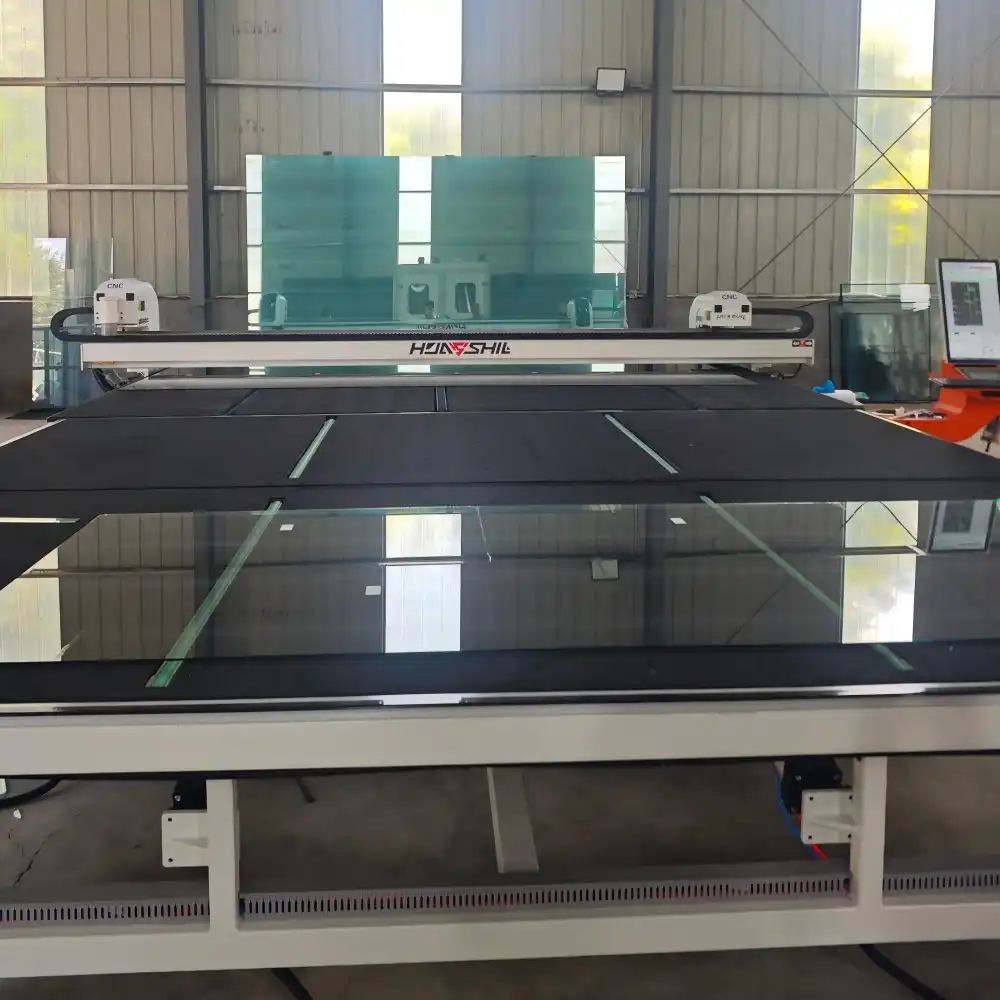
Modern automation allows regional facilities to create customized items near their installation using a glass cut outs machine. Transportation expenses and delivery times decrease. Minimum order quantities, which forced people to retain a lot of inventory, are no longer required with affordable small-batch equipment. This allows construction projects to plan just-in-time delivery. You stand out in marketplaces where tight timeframes influence purchase decisions with this answer.
Cloud-connected equipment that distributes production data across several locations may load balance, quality benchmark, and centralize process optimization. Manufacturers with numerous sites might transfer orders to locations with appropriate space to maximize asset usage and satisfy supply commitments amid changing demand or localized issues.
Strategic Technology Adoption
Plant managers and production directors should consider three to five years of operations when buying new technology, taking present and prospective capacity demands into consideration. Early use of automation systems that can be upgraded with software and modular hardware lets organizations react to changing market demands. By partnering with equipment vendors who commit to product development and technical support, you may add new features without replacing all your equipment.
Industry fairs like Glasstech Asia and regional trade shows allow you to test new technologies and compare suppliers in a hands-on environment. When paired with reference site visits to facilities employing candidate equipment in production, these direct assessments enhance procurement confidence and expose operational concerns beyond specification sheets.
Conclusion
Investing in advanced glass cut-out machine technology pays off in a number of ways, including higher output capacity, more accurate measurements, less waste, and less reliance on labor. In price-sensitive markets, makers can meet strict quality standards while keeping costs low by using equipment that combines mechanical accuracy with smart software control. A thorough analysis of technical skills, total ownership costs, and supplier support infrastructure helps make purchasing decisions that match the choice of tools with operational needs and long-term growth goals. When factories use modern automation, they can take advantage of new manufacturing trends like on-demand output, remote operations, and AI-enhanced process optimization, which will give them a competitive edge in the glass fabrication market as they change.
FAQ
1. What thickness range can advanced automated glass cutting equipment process?
Modern automatic systems can usually handle glass that is between 2 mm and 19 mm thick. This includes most architectural window glass, furniture glass, shower enclosures, and decorative panels. Specialized heavy-duty setups make it possible to go up to 25 mm for structural glass uses. Checking the exact specs of the equipment makes sure that it will work with your material profile, since pressure control systems and cutting head designs work best for certain thickness ranges.
2. How quickly does investment in automated cutting equipment achieve a return?
Payback times are usually between 14 and 30 months, but can be longer or shorter depending on production volume, labor rates, and material costs. Facilities that handle 400 or more panels every day usually get their money back faster because they save money on trash reduction, higher output, and lower labor costs per unit. For full ROI calculations, you should include things like how much energy is used, how much it costs to maintain, and the rate at which the capacity is actually being used, not just the theoretical maximum output.
3. What after-sales support proves most critical for operational continuity?
How quickly you can fix a broken part depends on how many spare parts are available, so it's important that the supplier's inventory is close by. Technical help that can be reached by phone, video chat, or on-site service speeds up the solving of problems. In-house teams can do regular maintenance with the help of thorough operator training and detailed maintenance paperwork. This cuts down on the need for outside service calls and keeps equipment running at its best throughout its operational lifecycle.
Partner with HUASHIL for Your Glass Processing Automation Needs
Shandong Huashil Automation Technology offers precisely designed glass cut outs machine options backed by a lot of experience making machines and installing them around the world. The HSL-YTJ2721 model from HUASHIL combines advanced features like automatic loading, intelligent edge detection, and Optima optimization software with a mechanical design that has been proven to work well. This model helps facilities increase productivity while still meeting CE and ISO 9001 standards. We offer full support, including equipment selection consultation, installation supervision, operator training, and ongoing technical assistance, as a reputable glass cut-out machine manufacturer serving architectural glass fabricators, curtain wall integrators, and furniture manufacturers worldwide. You can email our team at salescathy@sdhuashil.com to talk about your specific processing needs, set up a trial, or ask for full technical specs and quotes that are made to fit your needs.
References
1. Glass Processing Industry Association. "Automation Impact on Glass Fabrication Efficiency: A Comparative Study of Manual and Automated Systems." Journal of Glass Technology, 2022.
2. Manufacturing Technology Research Institute. "Total Cost of Ownership Analysis for Industrial Glass Cutting Equipment: A Ten-Year Lifecycle Study." Industrial Automation Quarterly, 2023.
3. International Building Glass Standards Committee. "Precision Requirements for Architectural Glass in Modern Construction Applications." Construction Materials Standards Review, 2021.
4. Advanced Manufacturing Systems Council. "Predictive Maintenance and AI Integration in Glass Processing Equipment: Current State and Future Trends." Automation Technology Report, 2023.
5. Occupational Safety and Equipment Standards Board. "Safety Engineering Requirements for Automated Glass Processing Machinery: CE Compliance Guidelines." Industrial Safety Standards Manual, 2022.
6. Global Glass Manufacturing Federation. "Energy Efficiency Benchmarks and Best Practices in Automated Glass Cutting Systems." Sustainable Manufacturing Review, 2023.