




High-performance glass processing equipment offers a strategic investment for firms that are looking to increase their production throughput and quality consistency. Such high-tech solutions merge automation technology with precise engineering to provide improved cutting precision, decreased operating costs, and safer working conditions. Today’s glass processors—whether making architectural glass, automotive glass, or decorative glass—are under growing pressure to satisfy even tighter tolerances while remaining competitive on price. The right equipment for your production needs can help you expand sustainably by optimizing productivity, reducing waste, and ensuring consistent product quality, which will help you stay competitive in the market.
Understanding High-Performance Glass Processing Equipment
Glass processing equipment is gear used to cut, shape, edge, and polish glass items with high accuracy and speed. Unlike traditional manual methods, these machines optimize all stages of the production process using CNC controls, digital monitoring, and sophisticated sensors. Advanced processing equipment is essentially an automated workflow that takes raw glass sheets and converts them into custom-configured products, with little human error and maximum productivity.
Core Components and System Architecture
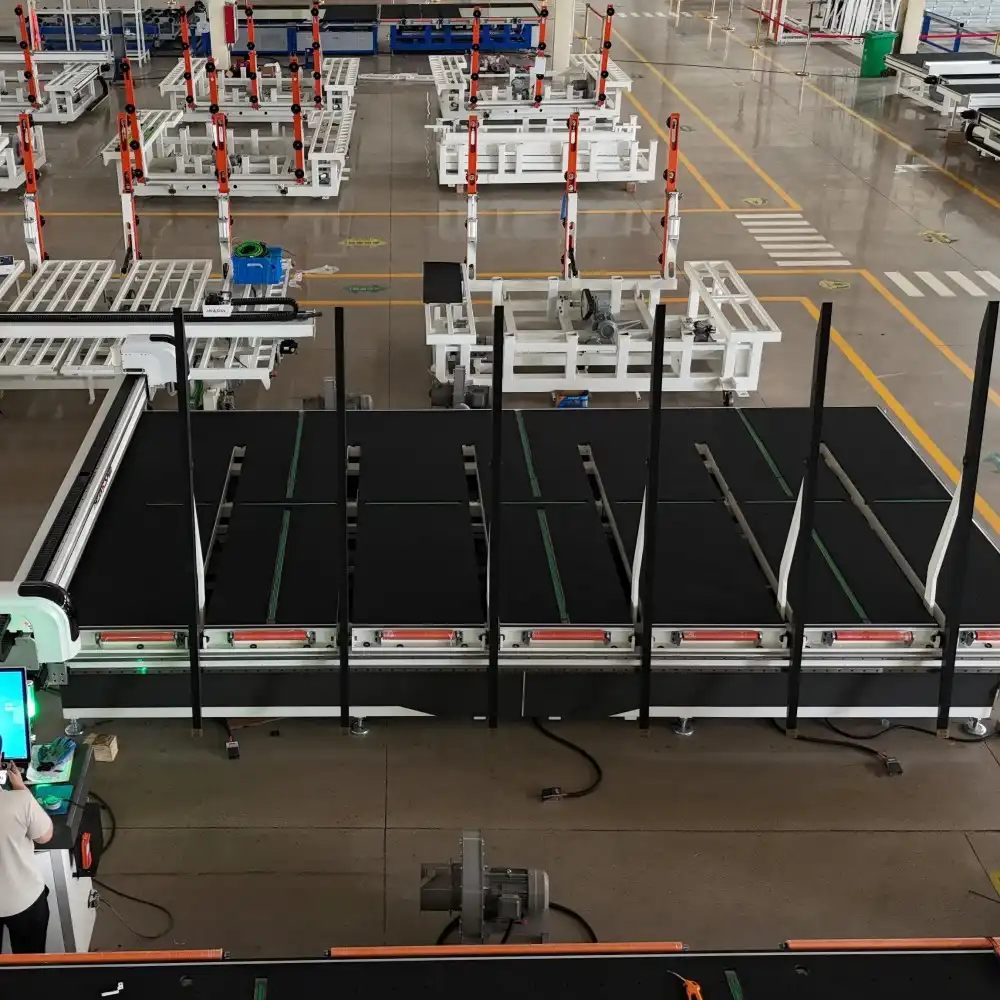
Modern glass processing systems incorporate many functional modules into manufacturing lines. The automatic loading systems securely handle huge glass panels, thus avoiding the danger of human material handling. Tables with diamond-tipped tools cut complicated patterns that are designed using optimization software, such as Optima, to determine the most effective cutting layouts and minimize material waste. Air flotation systems float glass sheets on air beds that cushion them, reducing surface damage when they are positioned and moved. Breaking tables allow for accurate separation of scored glass fragments. Synchronous belt conveyors allow for seamless material movement between stages of processing.
Automation Technologies Driving Performance
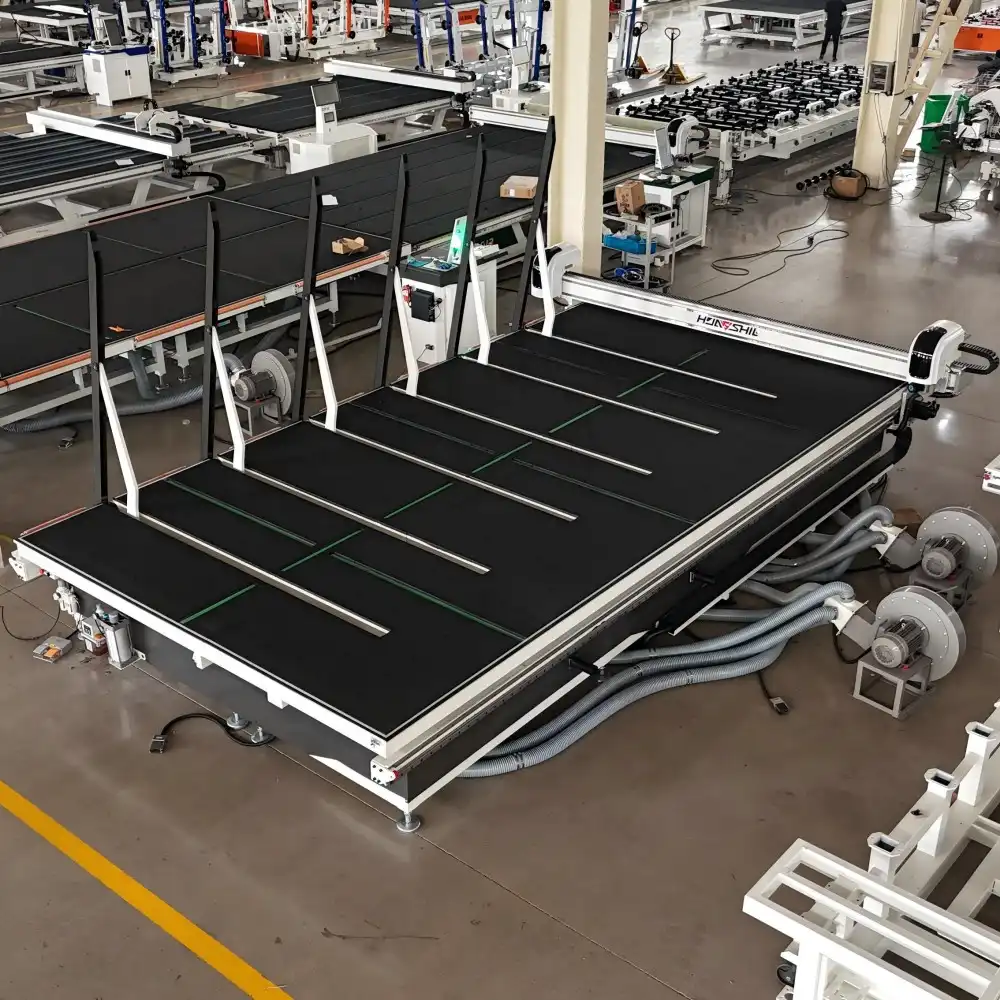
HSL-YTJ3829 is a modern automation solution that needs to be competitive in production. This CNC glass cutting assembly machine allows maximum glass sizes of 36602800 mm with a thickness of 2-19 mm, flexible across architectural, furnishing, and automotive applications. The automatic pressure control adjusts the cutting power to the thickness and kind of the glass to produce clean scores without chipping. Automatic edge-detecting sensors accurately identify glass edges so that it is possible to place the glass accurately, whatever size the sheet size being used. The 360-degree remote control walking feature enables workers to direct equipment from the best view positions, improving efficiency and safety on the job site.
Advantages of Using High-Performance Glass Processing Equipment
Such equipment represents an investment in sophisticated glass processing that provides tangible operational advantages that affect profitability and competitive positioning. Automation helps to reduce cycle times and includes quality control measures that are uniform and consistent. It also increases production efficiency. Automated loading, cutting, and breaking tasks may take the place of many human processes, leading to huge labor cost savings for manufacturers. Better accuracy means fewer faulty goods, decreasing material waste and rework costs that eat into margins.
Enhanced Production Efficiency and Throughput
Automated systems using high-performance glass processing equipment can handle a lot more glass in a shift than human processes. Continuous workflow design prevents bottlenecks between processing steps, ensuring a continual rhythm of output. Optimization software determines the best cutting patterns before any physical labor starts, getting the most out of every sheet of glass. This computer technique discovers nested patterns that typical human planning would ignore, salvaging material that would otherwise become garbage. Plant managers handling high-volume operations notice throughput gains of 40-60% when moving from manual to automated processing lines.
Superior Quality Consistency and Precision
High-performance equipment maintains precise tolerances throughout production runs, critical for architectural and automotive glass applications where standards permit limited deviation. CNC-controlled cutting tools move along a programmed path with a repeatability of hundredths of a millimeter and may achieve an edge quality and dimensional precision that is impossible to match by hand. Automatic pressure control systems modulate the cutting power in real time to avoid inadequate scoring resulting in uneven breaks and excessive pressure leading to micro-fissures. The air flotation technology protects glass surfaces during handling, maintaining optical purity and preventing scratches that affect aesthetic appeal or structural integrity.
Long-Term Cost Savings and ROI
While initial capital expenditure for automated equipment surpasses human tooling expenses, total cost of ownership assessments favor sophisticated machinery over multi-year operating horizons. Reduced labor needs minimize continuing pay expenditures, and better yield rates decrease raw material consumption per completed product. Energy-efficient designs lower utility expenses compared to earlier equipment generations. Certification standards like CE and ISO9001 establish conformity with safety and quality norms, minimizing liability risks and insurance prices. Technical managers reviewing procurement choices often predict payback times of 24-36 months for high-performance equipment in medium to large-scale operations.
Key Considerations When Choosing Glass Processing Equipment
The selection of suitable glass processing gear should be based on a comprehensive consideration of the production needs, technical capabilities, and budgetary restraints. Procurement managers have to ensure equipment integration with existing facility infrastructure and workflow patterns while getting the performance specs right and staying below budget.
Assessing Production Volume and Product Complexity
Knowing what is needed to produce now and the volume of growth expected helps determine the right equipment choice. In the case of large-volume, standardized architectural glass production, complete automation with integrated cutting, edging, and packing processes is of value. In a CNC operation, the ability to easily modify programs and deal with different material requirements may be of primary importance for bespoke furniture glass or speciality ornamental work. The HSL-YTJ3829 is designed to work with glass sizes up to 3660×2800 mm, making it suitable for huge architectural panels or smaller furniture parts, providing flexibility in mixed production situations that developing companies sometimes need.
Evaluating Automation Levels and Integration Capabilities
Automation of equipment ranges from semi-automated, where the operator must intervene between operations, to completely automated lines, which operate with little or no monitoring. Plant managers should determine if the increased expenses of autonomous loading, pressure control, and edge-finding capabilities are warranted by labor availability and volume of output when selecting high-performance glass processing equipment. The IoT connection allows integration with facility management systems to monitor production in real-time and arrange preventive maintenance, therefore eliminating unexpected downtime that impacts delivery schedules and client obligations.
Analyzing Total Cost of Ownership
The scope of financial analysis should extend beyond the purchase price to include installation costs, operator training needs, maintenance costs, energy use, and expected service life. Procurement managers partnering with finance departments should create scenarios that compare equipment possibilities across five to 10-year time frames. Considerations include availability of replacement parts, vendor support responsiveness, and warranty coverage conditions. If the manufacturer has CE and ISO9001 certificates, they follow certain quality standards. This means that the failure rate is lower and the equipment lasts longer, which improves the total cost of ownership metrics.
Ensuring Customization and Scalability Options
Facility expansions should include equipment that may be customized for OEM and ODM to include operations planning or production diversification. Modular system designs enable capacity expansions incrementally without replacing whole manufacturing lines. Technical managers will want to examine long-term equipment plans to see whether or not suppliers can offer technical assistance for bespoke tooling, specialized cutting configurations, or integration with proprietary material handling systems specific to their facilities.
Top High-Performance Glass Processing Equipment Types and Technology Trends
Glass Processing Equipment Scene: The scene of glass processing equipment includes several types of machines for different fabrication purposes. Keeping abreast of new technologies ensures that procurement selections include advances that provide competitive advantages via greater efficiency, dependability, and operational flexibility.
CNC Glass Cutting Systems
Computer- and numerically controlled cutting tables provide the basis for automated operations in glass production. These devices cut complicated patterns, which are designed by specialized software, to maximize the use of material. A nice example of this technology is Optima optimisation software that computes optimum cutting patterns to save waste when processing mixed order batches. Synchronous belt conveyors glide glass sheets across cutting zones, keeping them accurately positioned throughout multi-axis tool movement. The combination of breaking tables and cutting systems permits a clean separation of the scored glass fragments, thereby avoiding the need for hand-breaking operations and the fear of breakage and operator damage.
Automated Edging and Polishing Lines
Edge processing equipment converts the edges of raw-cut glass into polished surfaces that satisfy aesthetic and safety standards. Straight-line edgers are used on architectural glass, such as windows and curtain wall glass, while shape edgers are used to make curved profiles, such as furniture and ornamental applications. Polishing stations carry out incremental abrasive treatments that produce optically clean edges or specified final textures. Automated systems use measurement sensors to compare edge geometry to programmed standards, rejecting nonconforming parts before they go on to downstream processing or packing steps.
Emerging Smart Manufacturing Technologies
Recent advancements include the use of artificial intelligence and machine learning algorithms for analyzing production data to continually optimize operational parameters. IoT connection also provides remote monitoring of equipment health data and alerts maintenance staff to growing problems before they lead to breakdowns. Predictive maintenance algorithms examine vibration patterns, temperature changes, and power usage anomalies to schedule treatments during scheduled downtime rather than reacting to unanticipated failures. These solutions cut maintenance costs and increase the availability of equipment, hence immediately increasing production capacity without capital expenditures in new equipment.
Trusted Brands and Suppliers in the Glass Processing Industry
Cooperation with well-known manufacturers guarantees availability of dependable equipment, full technical support, and quick after-sales service, which are vital for the smooth running of the manufacturing process. Established vendors exhibit their knowledge through years of business experience, established installation bases, and verified client satisfaction.
Evaluating Manufacturer Credentials and Track Record
Shandong HUASHIL Automation Technology Co., Ltd. is a company that combines technical competence with production excellence and worldwide market experience. HUASHIL is a high-tech firm that is engaged in the research, development, and production of automated glass processing equipment, providing high-performance glass processing equipment for various industrial applications. HUASHIL serves global architectural glass fabricators, curtain wall integrators, furniture makers, and sintered stone processors. Advanced production processes and strict quality control systems assure steady performance according to worldwide standards, confirmed by CE and ISO9001 certifications.
After-Sales Support and Service Infrastructure
The premium equipment vendors have reliable vendor support, unlike commodity providers. Full after-sales services include installation support, operator training, preventative maintenance scheduling, and timely provision of replacement parts. This also directly affects the uptime of equipment. The timeliness of technical assistance is crucial, especially during the initial commissioning periods and regarding operational difficulties that affect production schedules. Procurement managers should check that suppliers have the service capabilities to fulfill their needs (e.g., field technician availability, remote diagnostic assistance, and parts inventory locations) so that they can respond quickly in emergency circumstances.
Flexible Procurement and Customization Options
The leading manufacturers are able to customize both the commercial terms and the technological solution to meet a wide variety of client needs. Deposit plus final payment or letter of credit are payment forms that fit distinct financial planning techniques. OEM and ODM projects provide the opportunity to include customer-specific features, bespoke tooling configurations, or specialised software interfaces that meet unique manufacturing processes. Suppliers of site inspections, production line design consultancy, and phased implementation plans to minimize disturbance to continuing operations are a boon for engineering managers considering facility renovations.
Conclusion
Selecting high-performance glass processing equipment represents a strategic decision impacting production capacity, product quality, operational costs, and competitive positioning. Advanced systems like the HSL-YTJ3829 CNC cutting line deliver automation capabilities that reduce labor dependency, improve material utilization, and maintain precision consistency across production runs. Thorough evaluation of production requirements, equipment specifications, vendor credentials, and total cost of ownership ensures procurement decisions align with operational objectives and financial constraints. Partnering with established manufacturers offering comprehensive technical support and flexible customization options positions businesses to adapt to evolving market demands while maximizing return on capital investments.
FAQ
1. How does automation impact production efficiency in glass processing?
Automated glass processing systems increase throughput by 40-60% compared to manual operations through continuous workflow designs, eliminating bottlenecks between processing stages. Optimization software calculates efficient cutting layouts, maximizing yield from each glass sheet, while automatic loading and conveying functions reduce material handling time. CNC precision ensures consistent quality, reducing defective products and rework requirements.
2. What factors determine the ROI timeline for glass processing equipment?
Return on investment calculations depend on production volume, labor cost differentials, material waste reduction, energy efficiency gains, and maintenance expenses. Medium to large-scale operations typically achieve payback within 24-36 months through combined savings from reduced labor requirements, improved yield rates, and lower defect-related costs. Accurate ROI modeling requires comprehensive total cost of ownership analysis over five- to ten-year operational horizons.
3. Can existing production lines integrate with new automated equipment?
Most modern glass processing equipment offers flexible integration capabilities, accommodating phased automation implementations. Modular system designs allow incremental capacity additions without replacing entire production lines. Technical assessments by equipment suppliers evaluate facility infrastructure compatibility, workflow modifications, and potential bottlenecks, ensuring smooth integration with minimal disruption to ongoing operations.
Partner with HUASHIL for Advanced Glass Processing Solutions.
HUASHIL delivers comprehensive glass processing automation backed by extensive engineering expertise and proven global manufacturing experience. Our HSL-YTJ3829 CNC cutting assembly line exemplifies commitment to innovation, integrating automatic loading, intelligent pressure control, edge-finding precision, and air flotation technology within CE- and ISO9001-certified systems. As a dedicated high-performance glass processing equipment manufacturer, we provide customized solutions addressing unique production challenges across architectural glass fabrication, furniture manufacturing, and decorative glass applications throughout the United States market.
Our technical teams collaborate with plant managers, engineering directors, and procurement professionals to design optimized production lines matching specific capacity requirements and budget parameters. Comprehensive after-sales support includes installation supervision, operator training programs, preventive maintenance scheduling, and responsive technical assistance, ensuring sustained equipment performance. Contact our procurement specialists at salescathy@sdhuashil.com to schedule facility assessments, request detailed quotations, or arrange live equipment demonstrations. Let HUASHIL's proven automation technologies elevate your glass processing capabilities and competitive market positioning.
References
1. Glass Manufacturing Industry Council. "Automation Technologies in Modern Glass Fabrication: Performance Benchmarks and Implementation Guidelines." Industrial Glass Technology Review, 2023.
2. American Architectural Manufacturers Association. "Quality Standards and Equipment Specifications for Architectural Glass Processing." AAMA Technical Standards Publication, 2022.
3. International Journal of Advanced Manufacturing Technology. "CNC Control Systems in Glass Cutting Applications: Precision Analysis and Optimization Strategies." Volume 118, 2023.
4. National Glass Association. "Total Cost of Ownership Analysis for Glass Processing Equipment: A Guide for Procurement Professionals." NGA Industry Report, 2023.
5. Society of Manufacturing Engineers. "Predictive Maintenance Technologies in Glass Processing Operations: Implementation Case Studies. "SME Technical Paper Series, 2022.
6. Journal of Materials Processing Technology. "Automation Integration and Production Efficiency in Glass Fabrication Plants: Comparative Performance Studies." Volume 312, 2023.