




The automatic glass loading machine has become a cornerstone of modern photovoltaic (PV) production, transforming how manufacturers handle delicate glass substrates with speed and accuracy. As solar panel demand surges globally, PV facilities increasingly rely on automated glass handling systems to maintain competitive throughput while reducing labor costs and breakage rates. These sophisticated machines integrate seamlessly with cutting and processing equipment, enabling manufacturers to achieve consistent quality across thousands of units daily. Understanding current trends in automated loading technology helps plant managers and procurement directors make informed decisions that enhance production efficiency, minimize operational risks, and position their facilities for sustainable growth in the rapidly evolving renewable energy sector.
Evolution and Emerging Trends in Automatic Glass Loading Machines for PV Production
From Manual Handling to Intelligent Automation
Factory floors used to be dominated by manual glass handling in PV manufacturing, which required teams of workers to precisely move and place delicate substrates. This method had built-in inefficiencies, including erratic placement precision, frequent breakage, and high labor costs that reduced business margins. Throughput potential was limited by semi-automatic methods, which provided incremental gains but still required significant human control. As manufacturers realized the competitive need for accuracy and speed in solar panel production, the transition to fully automatic glass loading machines started.
Integration of Advanced Sensors and Robotics
Glass size, orientation, and surface flaws may be detected in milliseconds by modern automatic glass loading machines using vision systems and proximity sensors. Compared to manual or semi-automatic processes, robotic arms with adaptive grip technology significantly lower breaking rates by adjusting pressure based on glass thickness and fragility. These sensor-driven systems provide coordinated production flows that save idle time by communicating with downstream processing machinery and upstream cutting tables. Prominent PV manufacturers claim substantial gains in substrate placement accuracy that directly affect final panel quality, coupled with throughput increases of 30–40% following the use of sensor-integrated automatic glass loading machines.
AI-Driven Optimization and Predictive Maintenance
Optimization software like Optima, which evaluates production data to improve loading sequences, modify cycle durations, and anticipate maintenance requirements prior to equipment breakdowns, is now powered by artificial intelligence. Without the need for manual reprogramming, machine learning algorithms constantly increase efficiency by seeing trends in glass handling that human operators might miss. By warning technical teams of wear patterns in robotic parts, rail systems, or suction cups, predictive maintenance capabilities minimize unscheduled downtime. By enabling facilities to attain operational excellence and prolong equipment lifespan through proactive servicing, these AI-enhanced solutions represent the cutting edge of PV production automation.
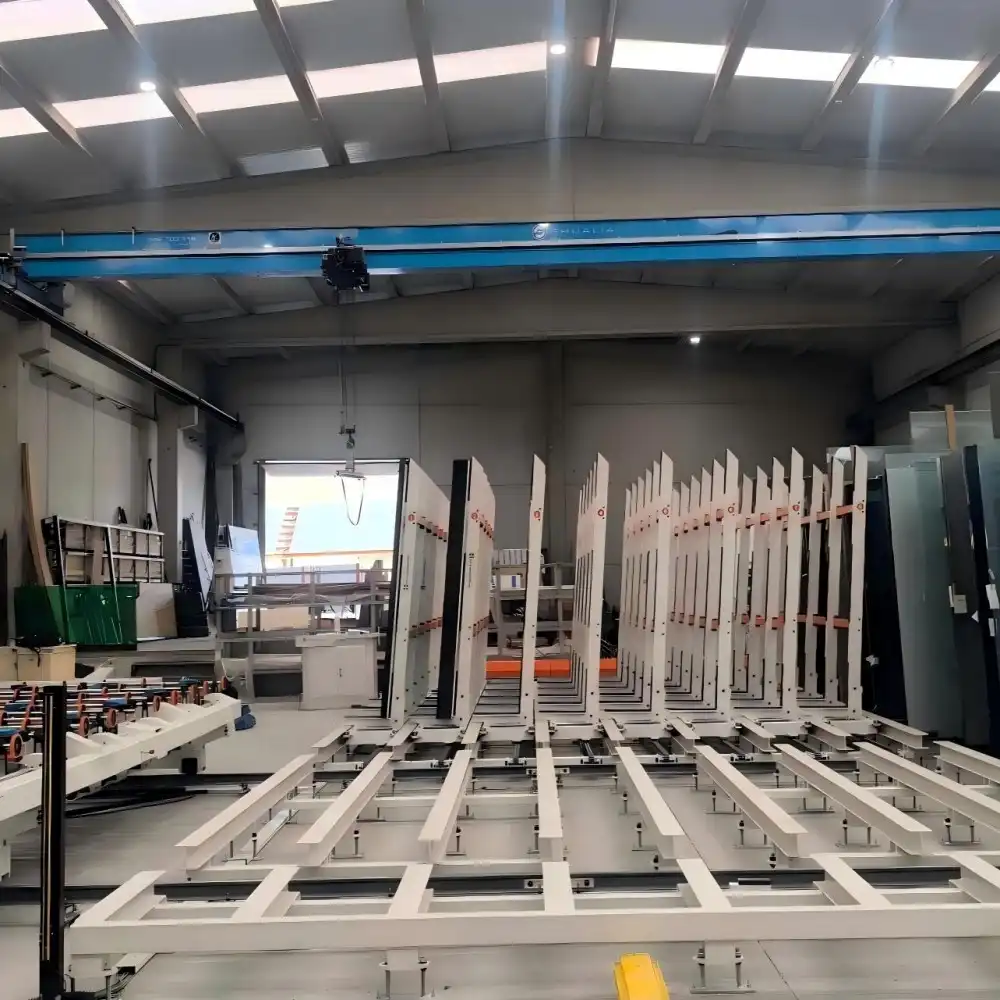
Core Features and Performance Metrics of Modern Automatic Glass Loading Machines
High-Capacity Precision Handling Systems
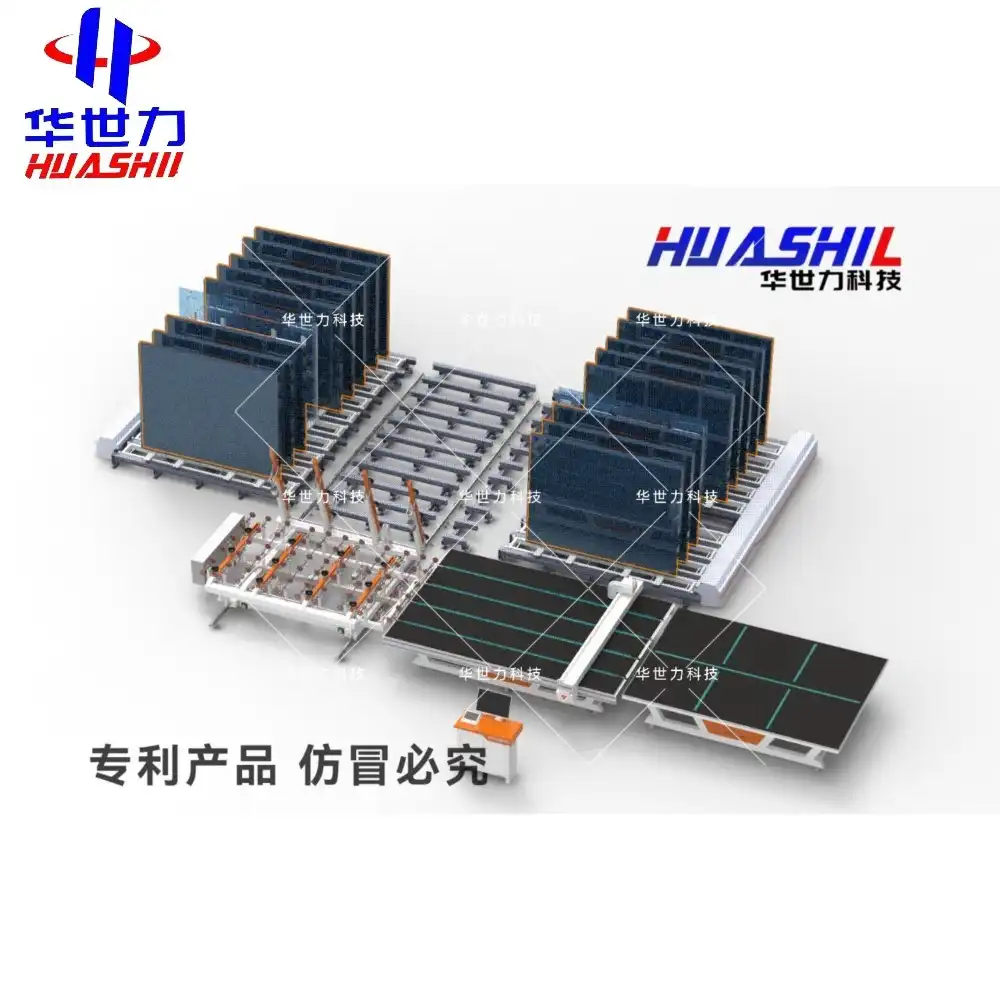
Modern automatic glass loading machines made for photovoltaic applications manage large substrate dimensions with exceptional precision. This capacity is demonstrated by the HUASHIL HSL-LSX4228 model, which can accommodate glass sheets up to 4200×2800mm—enough for large-format solar panels, which are becoming more and more popular in utility-scale installations. The four arms on each side of this machine equally disperse load pressures, avoiding stress concentrations that can result in microfractures. Three synchronized tables—loading, cutting, and breaking stations—are used by the system to guarantee uninterrupted operation free from bottlenecks. Higher daily output volumes while upholding the strict quality standards demanded by PV manufacturers are strongly correlated with such capacity and accuracy.
Flexible Configuration and Rail Systems
In PV production settings, adaptive rail designs provide major operational benefits. Facility managers may tailor installation according to current floor plans and production line geometries using above-ground and subterranean rail alternatives. When production priorities change between different panel sizes or substrate types, operators may alter loading sequences thanks to the 2+2 station design's versatile workflow changes. Facilities that serve a variety of client demands or are switching between production runs find this adaptability particularly useful. Because they eliminate the need for expensive production line redesigns when manufacturing needs change, engineering managers value these flexible systems.
Integration Capabilities and IoT Readiness
High-end automatic glass loading machines are distinguished from entry-level versions by their seamless connection with the current PV production infrastructure. In order to maximize line performance, modern machines exchange real-time production data with downstream coating or lamination stations and upstream glass cutting equipment via industrial protocols. Without being physically present on the manufacturing floor, technical personnel may evaluate machine status, modify parameters, and diagnose problems thanks to IoT connection. Manufacturers running several sites or those collaborating with equipment suppliers for continuous technical assistance and performance optimization find this link very beneficial.
Comparing Automatic Glass Loading Machines: Choosing the Best Fit for Your PV Facility
Evaluating Automation Levels and Cost-Effectiveness
When choosing between completely automatic, semi-automatic, and manual glass handling technologies, plant managers must make important choices. Although the initial capital costs of manual systems are lower, manpower, breakage, and limited throughput result in significant continuing expenditures. For facilities with modest production volumes or financial restrictions, semi-automatic equipment provides minor efficiency increases while maintaining some operator reliance. The HSL-LSX4228 is an example of a fully automatic glass loading machine that maximizes long-term value through labor savings, constant quality, and throughput capacity that grows with need. Automation is routinely preferred by total cost of ownership evaluations for operations that manufacture more than 5,000 glass substrates per month.
Key choice considerations across automation levels are highlighted in the comparison that follows:
Manual Loading Systems generally process 15–20 pieces per hour, need 3–4 workers per shift, and reach placement precision of ±2mm. Due to uneven handling, breakage rates are between two and three percent, and these systems have little connection with automated manufacturing lines.
Semi-Automatic Solutions enhance throughput to 30–40 items per hour, improve positioning precision to ±1mm, and reduce human needs to 1-2 per shift. Basic communication protocols allow for modest integration with cutting and processing equipment, and breakage rates drop to 1-1.5%.
Fully Automatic Systems during regular production need little monitoring, provide positioning accuracy of at least ±0.5mm, and, depending on design, may produce 60–80 pieces per hour. Comprehensive integration capabilities coordinate activities throughout whole manufacturing lines, and breakage rates are less than 0.5%.
Automation expenditures are especially appealing for facilities contemplating capacity expansions or servicing quality-sensitive industries where substrate flaws directly affect customer satisfaction and warranty claims, since these performance disparities compound over production years.
Capacity Matching and Customization Options
Underutilization and bottleneck situations are avoided by matching machine capacity to real production demands. While producers servicing a variety of industries need flexible systems that can handle a range of substrate requirements, facilities that produce standardized panel sizes benefit from equipment tuned for those particular dimensions. Beyond glass dimensions, customization possibilities include climate-controlled loading conditions for materials sensitive to moisture, specific grasping mechanisms for textured or coated substrates, and reinforced frame constructions for buildings at high seismic risk. Partnerships between OEMs and ODMs allow equipment providers to create customized solutions that tackle particular production problems, giving them a competitive edge through process optimization that is not possible with generic machinery.
Maintenance, Safety, and Operational Best Practices for Automatic Glass Loading Machines
Routine Inspection and Preventive Maintenance Schedules
Disciplined maintenance procedures are necessary for automatic glass loading machines to operate sustainably. Before production shifts start, daily checks should confirm sensor operation, rail alignment, and suction cup integrity. Lubricating moving parts, monitoring pneumatic pressure levels, and cleaning optical sensors that gather dust in manufacturing settings are all part of weekly maintenance. Before performance deteriorates, monthly thorough evaluations check for wear on structural components, confirm calibration correctness, and replace consumable parts like suction cups and filter elements. These precautions increase the longevity of equipment while reducing unscheduled downtime that interferes with delivery obligations and production schedules.
Safety Protocols and Operator Training
Several safety features are included in automatic glass loading machines, such as pressure-sensitive floor mats surrounding moving parts, emergency stop buttons, and light curtains that cease operations when disrupted. These features shield users from glass breakage accidents, collision dangers, and pinch points. Thorough operator training guarantees that staff members comprehend correct loading techniques, identify warning signs, and react correctly to fault scenarios. Frequent safety exercises help operators become familiar with shutdown processes and reinforce emergency protocols. Workplace incident rates are considerably reduced in facilities that engage in comprehensive safety training and uphold strict enforcement of protective standards. Additionally, operator trust is increased, which improves overall production efficiency.
Energy Efficiency and Operational Optimization
In PV production plants, energy consumption is a significant continuing expense. In order to save electricity costs during periods of lower output, modern automatic glass loading machines use variable-speed motors that modify power usage based on real load needs. Regenerative braking systems replenish facility electrical systems with power by capturing kinetic energy during deceleration cycles. By minimizing pointless motions, optimized motion profiles save energy usage and mechanical wear. The financial argument for automation investments is strengthened when production managers keeping an eye on total cost of ownership discover that energy-efficient equipment designs produce quantifiable utility cost reductions that supplement labor and breakage savings.
Procurement Guide: How to Buy and Source Automatic Glass Loading Machines for PV Production
Evaluating Supplier Credentials and After-Sales Support
Just as important as selecting the appropriate machine specifications is picking reputable equipment vendors. Manufacturers should examine customer references from comparable facility types, evaluate supplier experience in PV manufacturing applications, and confirm technical support capabilities, such as response times and spare parts availability. International vendors must exhibit proficiency with customs paperwork and offer precise shipment dates that coincide with facility installation timetables. Careful consideration should be given to warranty terms; full coverage should include labor, parts, and performance warranties that last at least 12 to 18 months after installation. Compared to suppliers that supply equipment without continuing support obligations, those who offer on-site commissioning, operator training, and periodic maintenance services offer substantially higher long-term value.
Financial Planning and Payment Terms
Purchasing capital equipment necessitates rigorous financial planning that is in line with corporate approval procedures and cash flow realities. A 30–40% deposit is normally required upon order confirmation, followed by a 50–60% payment prior to shipment and a final 10% payment following installation approval testing. Letter of credit agreements increase banking costs and documentation requirements, but they offer security for both parties in foreign transactions. Although overall expenses are higher than direct purchase over the course of equipment lifespan, lease-buy arrangements provide options for institutions looking to protect working capital. In order to accurately calculate the total cost of ownership and support capital approval requests, finance departments value thorough cost breakdowns that separate equipment price from installation, training, and warranty extensions.
Technical Specifications and Acceptance Criteria
Measurable performance standards, such as throughput rates, positioning accuracy, breakage rates, and uptime percentages, should be included in procurement contracts. Before final payment releases, acceptance testing procedures confirm that equipment satisfies these requirements under real-world production settings. Electrical schematics, pneumatic diagrams, PLC programming information, and maintenance manuals in the relevant languages should all be included in the technical documentation requirements. Explicit written agreement on dimensions, features, and performance parameters is necessary for customization specifications for facilities that need customized configurations. In addition to protecting buyers, clear acceptance criteria give suppliers clear goals, minimize post-installation conflicts, and guarantee that equipment delivers the anticipated value from the start of production.
Conclusion
PV glass handling's move toward intelligent automation is a reflection of larger industrial trends that prioritize sustainability, accuracy, and efficiency. With sensor technology, AI optimization, and adaptable setups, modern automatic glass loading machines allow manufacturers to satisfy the growing demand for solar panels while keeping costs under control and upholding quality standards. Technical requirements must be balanced with supplier dependability, budgetary constraints, and long-term support capabilities for procurement to be successful. Facilities that invest in cutting-edge automatic glass loading machines get a competitive edge in markets that are becoming more and more characterized by operational excellence and agility as PV output expands internationally.
FAQ
1. What capacity automatic glass loading machine suits large-scale PV production?
High-capacity automatic glass loading machines that can handle glass dimensions of 4200×2800mm or more are advantageous for large-scale PV plants processing more than 10,000 substrates each month. Production bottlenecks are avoided by equipment with several robotic arms, synchronized multi-table arrangements, and throughput rates more than 60 items per hour. Planned expansion should be taken into consideration when choosing capacity, providing for 20–30% overhead above existing demand to support growth without having to replace equipment too soon.
2. How do automated systems improve safety compared to manual loading?
Automatic glass loading machines eliminate repetitive lifting and carrying duties that lead to operator fatigue and damage. Accident hazards are decreased by enclosed operation zones, emergency stops, and integrated safety sensors. Glass breaking accidents that put adjacent personnel in danger are avoided by using consistent handling pressure. Automation-transitioning facilities indicate a 60–70% decrease in handling-related workplace mishaps.
3. Are energy-efficient automated loading options available?
Compared to earlier automation designs, modern automatic glass loading machines use 25–35% less energy because to variable-speed motors, regenerative braking, and better motion profiles. While standby modes reduce consumption during production pauses, IoT connection allows for the monitoring and modification of power use trends. Energy efficiency features can result in excellent payback times through utility savings, but they also add 5-8% to the initial equipment expenses.
Partner with HUASHIL for Advanced Glass Handling Solutions
PV producers looking for dependable, high-performing automatic glass loading machines may benefit from HUASHIL's decades of automation experience. Our HSL-LSX4228 model offers constant quality and throughput while meeting a variety of production needs thanks to its precise engineering and adaptable configuration choices. In order to keep your production lines running smoothly, we offer complete assistance that includes technical consulting, personalized system design, on-site installation, and prompt after-sales service. Globally, manufacturing facilities rely on HUASHIL equipment to meet their most challenging glass processing needs.
To discuss your unique production needs and obtain comprehensive specifications for our automatic glass loading machine systems, get in touch with our technical team at salescathy@sdhuashil.com. As a reputable provider with a track record of success in architectural glass, curtain wall, and PV applications, we provide solutions that maximize your manufacturing processes while offering outstanding value. To view our whole equipment portfolio and learn how our automation technologies can revolutionize your production capacity.
References
1. Chen, L., & Wang, H. (2023). "Automation Technologies in Photovoltaic Manufacturing: Current Status and Future Directions." Renewable Energy Systems Journal, 45(3), 287-304.
2. International Energy Agency. (2024). "Solar PV Manufacturing Capacity and Technology Trends 2024." IEA Publications, Paris.
3. Kumar, R., & Schneider, M. (2023). "Precision Handling Systems for Large-Format Glass in Solar Applications." Journal of Manufacturing Processes and Equipment, 18(2), 156-173.
4. National Renewable Energy Laboratory. (2023). "Best Practices in PV Module Manufacturing: Process Optimization and Quality Control." NREL Technical Report NREL/TP-5900-84621.
5. Schmidt, J., et al. (2024). "Cost-Benefit Analysis of Automation in Solar Panel Production Facilities." Solar Energy Materials and Solar Cells, 251, 112-128.
6. Zhang, Y., & Liu, X. (2023). "Safety and Efficiency Improvements Through Automated Glass Handling in Clean Room Manufacturing Environments." Industrial Safety and Systems Engineering, 29(4), 445-462.