




When you're investing in industrial machinery that shapes your business's future, understanding professional glass processing equipment becomes essential. This machinery transforms raw glass sheets into precision-engineered products that power industries from construction to automotive manufacturing. As production demands intensify and quality standards tighten, choosing the right equipment directly impacts your operational efficiency, product consistency, and ultimately, your competitive position in the marketplace. This comprehensive guide walks you through everything procurement professionals need to know about modern glass cutting and processing systems, helping you make informed decisions that align with both immediate production needs and long-term business objectives.
Understanding Glass Processing Equipment: An Essential Overview
Defining Modern Glass Processing Machinery
A complex class of industrial gear, modern glass processing equipment is made to precisely cut, shape, edge, and polish glass products. Today's automated systems use computer-controlled cutting mechanisms, conveyor systems, and sophisticated software that coordinates intricate production sequences, in contrast to traditional manual instruments. From complex automobile components demanding tolerances within fractions of a millimeter to architectural glass panels larger than five meters, these machines can handle it all.
These systems' fundamental idea is to combine digital control with mechanical accuracy. While breaking mechanisms employ calibrated pressure to split glass along score lines, cutting tables use diamond-tipped wheels driven by servo motors that follow predetermined patterns. By automating material handling, loading and unloading stations save labor costs and the possibility of damage during processing stage transitions.
Key Applications Across Industries
Glass processing technology is used in a variety of industries with different needs. These methods are essential to the production of uniform window panels, curtain wall components, and ornamental features that adhere to stringent construction requirements by architectural glass fabricators. In order to ensure correct fit and safety compliance, the car industry needs technology that can produce side windows and windshields with accurate dimensions and curves.
For bespoke glass tabletops, shower enclosures, and partition systems, furniture makers and interior designers are increasingly using sophisticated production lines. Another important application area for special-shaped mirrors is the smart mirror business, where remarkable edge quality and dimensional precision are required. Equipment selection is influenced by the particular problems that each application presents with relation to material thickness, cutting complexity, and throughput requirements.
Advantages of Professional-Grade Systems
Purchasing professional equipment offers quantifiable advantages over just functionality. Modern CNC systems retain precision within 0.1mm throughout large-size materials, guaranteeing constant product quality that is unmatched by hand processing. Precision is still crucial. Because fewer items fail quality inspection and need to be reworked, this accuracy immediately results in lower waste rates.
By reducing direct worker contact with heavy glass sheets and jagged edges, automation improves workplace safety while drastically reducing labor requirements. When compared to manual techniques, glass processing technology production speed rises significantly. Automated lines may handle dozens of items each hour, but traditional methods can only produce a handful. Controlled waste management systems and energy-efficient designs that save operating costs while satisfying ever-tougher sustainability regulations boost environmental compliance.
Key Considerations When Choosing Glass Processing Equipment
Assessing Machine Capabilities and Automation Levels
The first step in choosing the right equipment is to honestly assess your production needs. Glass dimensions are a crucial factor to take into account; equipment needs to be precise across your whole size range while accommodating your largest usual workpiece. The HUASHIL HSL-LSX5133 model demonstrates how contemporary systems handle large-format architectural and automotive glass production requirements. It is intended for a maximum glass size of 5100 x 3300 mm.
The degree of automation varies greatly among different types of equipment. While fully automated manufacturing lines handle materials from raw sheet intake to completed product output with no human participation, semi-automated systems need operator interaction for loading, unloading, or quality inspections. Your choice should take into account whether scalable automation offers more long-term value than buying several independent machines, weighing existing production volumes against projected expansion.
Evaluating Technical Specifications and Performance Metrics
Return on investment is directly impacted by production capacity. Choose equipment rated for 20–30% over that baseline to handle peak demand times without bottlenecks after calculating your necessary throughput based on current order volumes plus acceptable growth estimates. Overall production is influenced by cutting speed, breaking accuracy, and station changeover time.
Software capabilities should be carefully considered. By determining the most effective cutting patterns from available glass sheets, optimization tools like Optima minimize material waste. This feature results in significant cost savings over the equipment's lifetime. When managing several machines, integration capabilities are important because systems that use compatible control protocols make data collection for process improvement projects and production line management easier.
Supplier Credibility and Support Infrastructure
Purchasing equipment entails large capital expenditures that require trustworthy supplier relationships. Assess manufacturers according to their installed client base, technical proficiency, and industry experience. Businesses with years of manufacturing and export experience, such as Shandong Huashil Automation Technology, show the stability and expertise required to support sophisticated industrial gear.
Infrastructure for after-sales assistance is essential when unforeseen problems occur. Because production downtime costs far outweigh expedited shipping rates, make sure spare parts are consistently available with realistic delivery schedules. Rapid response times should be offered by technical support channels, ideally with remote diagnostic tools that may fix several problems without requiring on-site service visits. Beyond the original purchase price, installation help, training programs, and warranty terms all contribute to the overall cost of ownership.
Innovations and Efficiency in Modern Glass Processing Machinery
Automation Integration and Smart Manufacturing
Using advanced automated technology, modern glass production has adopted Industry 4.0 concepts. Robotic handling solutions improve workplace safety and material flow uniformity by doing away with the need to manually move large glass sheets. These robotic arms, like the five grand arms built into sophisticated cutting equipment on each side, place materials in a repeatable manner that is not conceivable with human labor, with precision stone processing machine wholesale.
Real-time production monitoring is made possible by IoT connection, which enables plant managers to monitor equipment performance, spot potential maintenance issues before they arise, and gather production data for ongoing improvement projects. When transitioning between different production lines, smart controls reduce setup time by automatically adjusting cutting parameters depending on the kind and thickness of glass. Technical support personnel may solve issues without physically visiting the site thanks to remote diagnostics capabilities, which reduces downtime and related expenses.
Energy Efficiency and Sustainable Operations
Energy consumption reduction is given top priority in modern equipment designs using a variety of techniques. Instead of operating always at maximum power, variable frequency drives modify motor speeds to correspond with real workload needs. In inspection areas, energy-intensive conventional lighting is replaced by LED lighting. Cutting patterns that are optimized reduce waste, which lowers the cost of raw materials and disposal.
Water usage has significantly decreased since cooling systems have evolved to recirculate water instead of employing once-through designs. Dust collection and filter systems improve worker air quality while guaranteeing adherence to environmental requirements by capturing particles produced during cutting and grinding activities. These sustainable features improve financial returns and help corporate environmental responsibility programs by producing operational savings that add up over the course of equipment lifespans.
Performance Optimization Through Best Practices
It takes more than just the apparatus itself to maximize equipment efficacy. Thorough operator training guarantees that staff members comprehend how to operate machines correctly, identify early indicators of mechanical problems, and adhere to protocols that avoid typical mistakes that result in material waste or equipment damage. Teams stay up to speed with software upgrades and new features as manufacturers improve systems through ongoing skill development.
Programs for preventive maintenance increase the lifespan of equipment and preserve consistent performance. Frequent cleaning keeps glass dust from building up and interfering with moving parts and sensors. While regular calibration preserves cutting precision, scheduled maintenance lessens wear on mechanical systems. Data-driven process optimization examines production records to find areas for improvement, such as changing station layouts to cut down on material handling time or modifying cutting speeds for particular types of glass.
Top Glass Processing Equipment Solutions in 2026
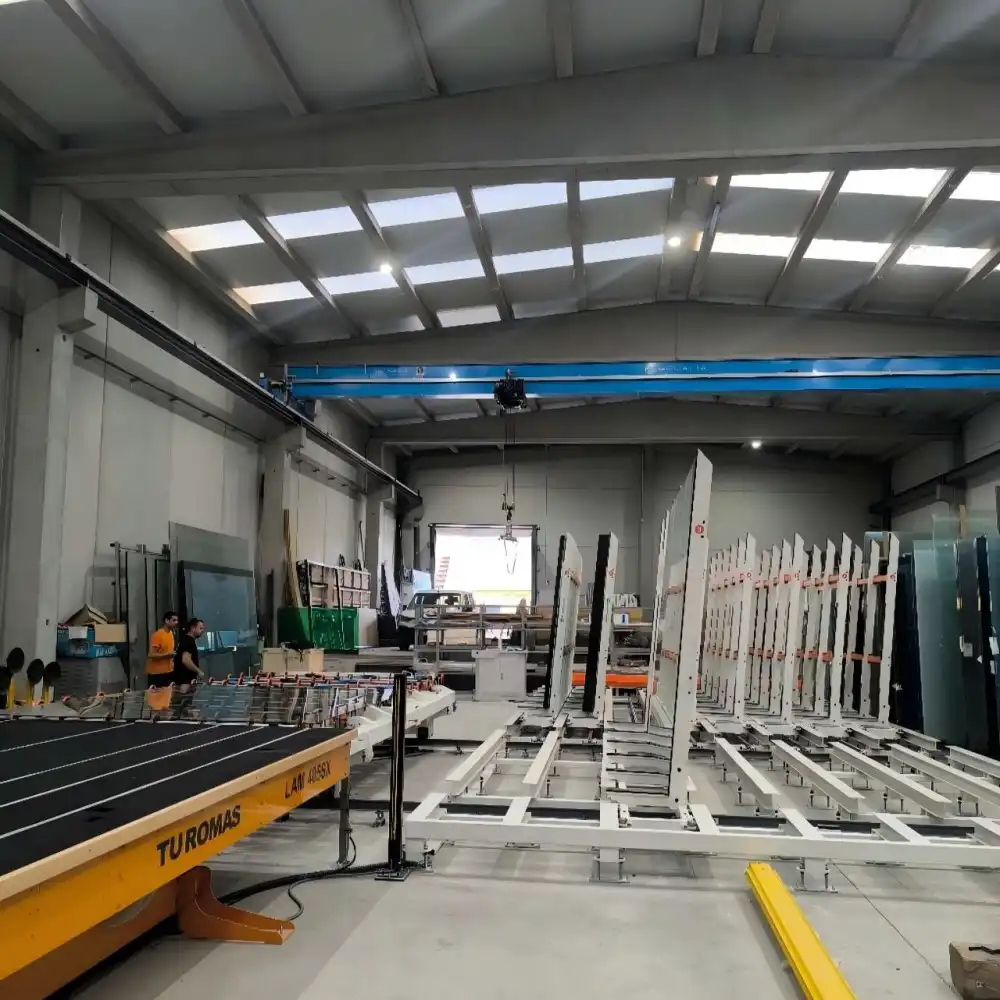
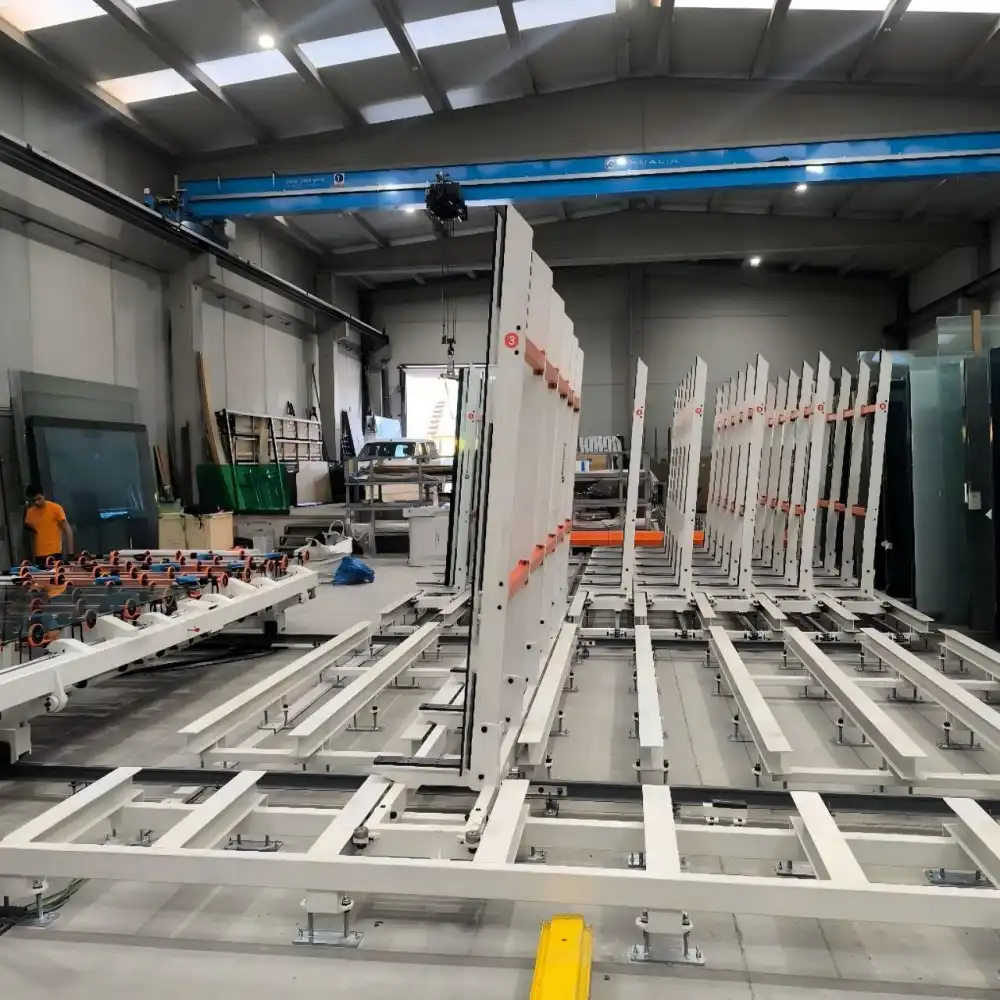
Cutting technology has advanced significantly, and CNC-controlled systems are currently the industry standard for glass fabricators. This category is best represented by the HUASHIL HSL-LSX5133, which has a three-table design with specialized loading, cutting, and breaking stations to optimize workflow. This separation maximizes throughput by enabling simultaneous activities, such as loading the next sheet and removing completed items as the cutting table processes one piece. With configurable settings that support a variety of workflow patterns, the system's 2+2 station layout offers flexibility for various production requirements. Materials are precisely guided between stations via rail systems, which come in both above-ground and underground versions. Intelligent nesting algorithms that decrease waste by determining the most effective cutting configurations from available material are made possible by integration with Optima optimization software. These sophisticated cutting lines are ideal for medium-sized to large fabrication businesses that make furniture, automobile parts, or architectural glass. Such equipment may be used for projects that require enormous curtain wall panels or wide interior partitions since it can handle gigantic sheets up to 5100 x 3300 mm. When compared to manual or semi-automated alternatives, these automated lines significantly reduce labor costs and enhance quality for facilities that produce 50 to 200 glass pieces every day.
Precision Edging and Finishing Equipment
The final product's look and structural integrity are greatly impacted by edge quality. Modern edging machines use many grinding wheels with increasingly finer abrasives to produce clean, chipping-resistant edges that satisfy aesthetic requirements for visible applications. Shape edging systems maintain uniform edge profiles across intricate geometries by handling curved components used for automobile glass and ornamental architecture parts.
Automated edging lines include cleaning systems, polishing stages, loading mechanisms, and grinding stations in continuous processes. Before items move on to further stages, quality inspection systems that use cameras and sensors confirm edge finish, identifying flaws early when the expense of fixing them is still low. Manufacturers who produce high-volume standard products—where consistency is more important than flexibility—benefit most from these systems.
Integrated Multi-Function Processing Lines
Cutting, edging, cleaning, and occasionally tempering or laminating capabilities are all combined into comprehensive manufacturing systems on whole production lines. By eliminating the need to move materials between different equipment, these integrated systems save labor costs and breakage hazards while increasing output. Production schedules and quality data are managed throughout the whole process by centralized control systems, which also coordinate all stations.
Fabricators may set up lines according to their own product mix and volume needs thanks to customization possibilities. As a firm expands, modular designs preserve original investments and offer scalability through gradual development. Although these comprehensive glass processing equipment systems need large capital expenditures, they provide the highest levels of efficiency for facilities with limited floor area that operate at high production volumes.
Buying Guide and Procurement Tips for Global B2B Clients
Comparing Supplier Categories and Equipment Options
Procurement teams can determine the optimal relationship structure by having a thorough understanding of supplier categories. Manufacturers of original equipment, such as HUASHIL, provide the most direct access to engineering assistance and the most in-depth technical understanding when designing and building machinery. Distributors increase markup charges but offer local presence and possibly quicker parts delivery. Reconditioned systems or equipment from earlier generations may be priced competitively by authorized resellers.
The newest technology, complete warranties, and the longest possible service life are all provided by new equipment. Although refurbished equipment may have shorter warranties, maybe outdated control systems, and an undetermined remaining operational lifespan, it is initially less expensive. When evaluating choices, compute the total cost of ownership, taking into account anticipated maintenance costs, productivity variations, and replacement schedules. While high-volume operations that need maximum uptime usually benefit from new systems, projects with restricted budgets but lower production demands could justify reconditioned equipment.
Essential Certifications and Compliance Requirements
Certain performance and safety requirements must be met by industrial equipment used in U.S. markets. Compliance with internationally recognized European safety standards is shown by CE certification. For component safety, electrical systems must adhere to UL or comparable standards. Make sure that the equipment paperwork has the appropriate electrical schematics, safety protocols, and maintenance schedules needed for regulatory compliance and insurance coverage.
Environmental certifications show sustainable operations and ethical production methods. Certification for ISO 9001 quality management shows that vendors uphold uniform production standards. A dedication to reducing environmental effect is demonstrated by ISO 14001 environmental management certification. These certifications lower procurement risk by offering assurance in supplier dependability and equipment quality.
Evaluating Logistics and Installation Capabilities
Purchasing equipment internationally involves intricate logistics that require cautious planning. To guarantee that machinery reaches unharmed and on time, evaluate the export experience, packing quality, and shipping arrangements of suppliers. Installation services are crucial because skilled technicians who are knowledgeable about the particular equipment install systems correctly, calibrate controls precisely, and efficiently educate operators, preventing issues that might not surface until production starts.
For foreign transactions, payment arrangements usually include letters of credit or deposit mechanisms. Establish precise acceptance criteria that specify when the last payment is due, often following equipment installation, calibration verification, and successful production runs that show correct operation. Incorporate clauses that resolve flaws found during commissioning to guarantee that suppliers stay on board until you get acceptable performance.
Conclusion
The productivity, product quality, and competitive positioning of your facility are all impacted by the strategic choice you make when choosing professional glass processing equipment. From comprehending key equipment capabilities to assessing supplier partnerships, the factors covered in this guide provide procurement managers with frameworks for making well-informed investment decisions. The HUASHIL HSL-LSX5133 and other contemporary automated systems show how technology advancements provide quantifiable benefits through accuracy, productivity, and integrated process optimization. Success necessitates matching equipment capabilities to your unique production needs and collaborating with seasoned manufacturers that provide all-encompassing assistance throughout the equipment lifespan. Years of dependable operation and ongoing productivity increases are the results of the time spent on careful assessment and supplier screening.
FAQ
1. What maintenance does glass processing equipment require?
Frequent maintenance increases the lifespan of glass processing equipment and maintains its functionality. Glass dust that might impede accuracy is removed from sensors, tracks, and moving parts by daily cleaning. Friction and wear are decreased by lubricating bearings, slides, and mechanical connections once a week. Cutting accuracy is checked every month to make sure it stays within specifications and to make minor modifications before major drift happens. Every year, skilled experts conduct thorough checks to find components that are getting close to their wear limitations. This allows for scheduled replacement before unplanned failures impede production. Keeping thorough maintenance records makes it easier to see trends and improve service plans.
2. How do I select the right equipment for my production volume?
Equipment capacity should be matched to your real throughput needs plus realistic growth forecasts. Determine the number of items handled per shift, taking into account both present orders and future growth. While integrated production lines justify their higher costs for facilities processing more than 100 pieces per day, single-machine systems are appropriate for operations processing less than 50 pieces each day. When assessing machine specs, take into account glass size ranges, thickness variations, and form complexity to make sure the equipment can handle your most demanding goods without restriction.
3. Can small and medium enterprises benefit from automation?
Through scalable solutions, automation benefits businesses of all sizes. Without the significant investment needed for complete production lines, entry-level semi-automated equipment increases consistency and lowers manpower needs. As production quantities increase, modular systems enable gradual automation enhancements, safeguarding original investments and offering growth opportunities. These technologies are accessible and advantageous for operations at any scale since even little automation advances result in quantifiable efficiency gains, quality improvements, and labor cost savings that add up significantly over time.
Partner with HUASHIL for Your Glass Processing Equipment Needs
Making the appropriate connection with a provider of glass processing equipment is the first step towards improving your glass production skills. With proven solutions for architectural, automotive, and decorative glass manufacturers worldwide, HUASHIL offers a wealth of knowledge in automated machinery design, manufacturing, and international export. With dependable technology, adaptable setups, and affordable prices, our HSL-LSX5133 cutting system and extensive product line meet a variety of industrial needs. Technical support teams guarantee that your investment yields the anticipated returns by offering prompt help from the first consultation through installation and continuous operation. Speak with our experts about your particular needs and see how our machinery solutions fit your production objectives. For comprehensive specs, virtual demonstrations, or site visits that demonstrate our equipment's capabilities in person, contact salescathy@sdhuashil.com.
References
1. Glass Manufacturing Industry Council. "Standards and Best Practices for Automated Glass Processing Systems." Industrial Glass Technology Journal, 2023.
2. Morrison, James R. "Advances in CNC Glass Cutting Technology: Efficiency and Precision Improvements." Manufacturing Automation Review, Vol. 18, No. 3, 2024.
3. International Association of Glass Processors. "Procurement Guidelines for Industrial Glass Fabrication Equipment." Technical Publication Series, 2023.
4. Chen, Wei and Anderson, Mark. "Energy Efficiency in Modern Glass Processing: Comparative Analysis of Contemporary Systems." Journal of Sustainable Manufacturing, 2024.
5. North American Glass Processing Association. "Safety Standards and Compliance Requirements for Automated Glass Machinery." Industry Guidelines Manual, 2023.
6. Roberts, Elizabeth. "Total Cost of Ownership Analysis for Glass Processing Equipment Investments." B2B Industrial Procurement Quarterly, Spring 2024.
