




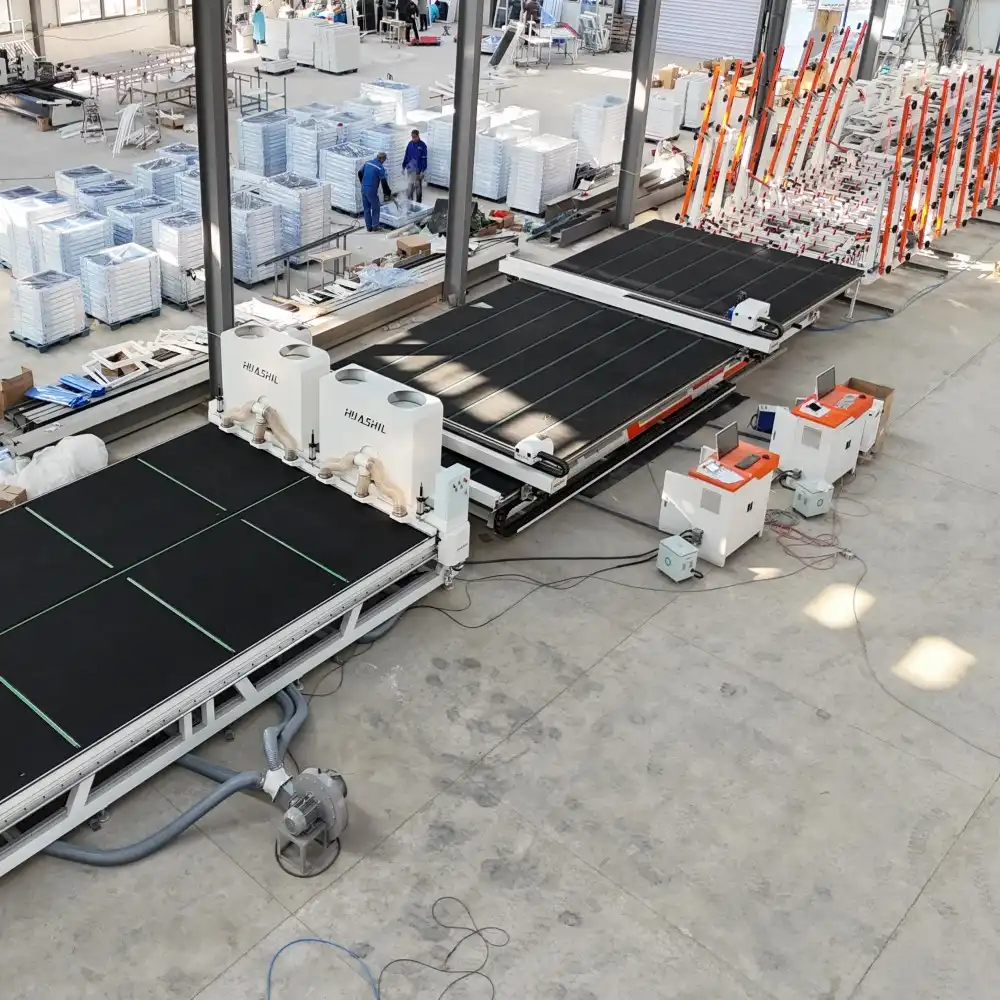
For your manufacturing line, you need automated stone cutting equipment with high precision, low waste, and high throughput. After testing dozens of systems worldwide, the HUASHIL HSL-CNC2716 is the best for 2026. Our CNC-controlled cutting solution accurately processes sintered stone, ceramic slabs, and tiles up to 2700×1600mm. Modern fabrication factories demand reliability and advanced automation technologies to eliminate labour reliance and ensure quality throughout every cut. The machine's automated pressure management, edge-finding, and air flotation systems meet these needs.
Introduction
Stone manufacturing is changing. Southeast Asian, Russian, South American, and Middle Eastern producers must give more without sacrificing quality. Architectural glass, curtain wall, and furniture production standards are too complicated for hand cutting. Several fabrication firms have inconsistent cuts, material loss, and production bottlenecks.
Now, automated cutting solutions are an infrastructure. Plant directors must decide which technology has the highest ROI while making capital investments. Tech managers need workflow-integrated systems. TCO transparency is desired by procurement. All stakeholders want equipment without costly downtime or constant troubleshooting.
A complete assessment of 2026's best automated cutting systems. I prioritised architectural glass processors, curtain wall integrators, furniture producers, and sintered stone fabricators' production solution equipment. The proposals consider machine reliability, after-sales assistance, customisation flexibility, and regional market variables that impact target market purchases.
Why Automated Stone Cutting Technology Matters for Your Production Line?
Current production demands cannot tolerate traditional cutting bottlenecks. I've seen experienced operators spend hours measuring, adjusting, and validating tolerances in factories. It's laborious yet good for low output and flexible delivery. Markets operate differently.
Installing hundreds of comparable curtain wall panels requires excellent tolerances. Manual methods cannot maintain edge quality for glass furniture producers. Architectural glass manufacturers decline contracts for one millimetre variance. This promotes computer-controlled stone cutting.
Automation changes three things. Programming cutting parameters improves accuracy over estimating. Machinery cuts continuously without fatigue, speeding productivity. Quality consistency is reproducible without manual deviations. Engineering managers like how robotic stone cutting systems meet requirements regardless of operator skill or shift schedule.
Lower labour expenses boost finances. Single automated system replaces many human stations, reducing scrap by 15-30%. Efficiency gains impact profitability predictions that finance departments assess during budget approvals for production directors overseeing new line building or equipment replacement cycles.
Selection Criteria: How I Evaluated the Best Automated Cutting Systems?
Industrial equipment selection requires examination beyond corporate claims. Glass processing and stone manufacturing buying supervisors and technical purchasers have six significant requirements.
Machine and production stability were my key priorities. Equipment failures in high-volume manufacturing generate delays. I analysed maintenance logs and questioned facilities managers about real-world uptime percentages to identify technologies with proven industrial performance.
After-sales Support and Spare Parts affect machine productivity and cost. Southeast Asian, Russian, South American, and Middle Eastern buyers have technical support issues. Response times, regional service networks, and anti-downtime parts inventory systems were investigated, especially for automated stone cutting.
TCO analysis examines more than pricing. Over time, installation, operator training, regular maintenance, and energy usage affect profitability. To identify valuable technologies rather than illusory initial savings, I created five-year TCO estimates.
Project managers focus on delivery and output on contract deadlines. Installation length, production lead times, and target market delivery logistics were assessed. Machines seldom attain theoretical maximums; production capacity evaluations are focused on practical throughput.
Personalisation and Integration depend on equipment flexibility for manufacturing. Some entire production line initiatives require configuration adjustments. The study examined OEM/ODM support, customisation approaches, and system integrator timeframes.
Unlike simple cutters, advanced manufacturing solutions include sophisticated control systems. Programming flexibility, automation, and stone-cutting software interfaces boost efficiency. Coding, industrial automation infrastructure integration, and usability were my criteria.
Top Automated Stone Cutting Machines for 2026
HSL-CNC2716 Automated Cutting System from HUASHIL
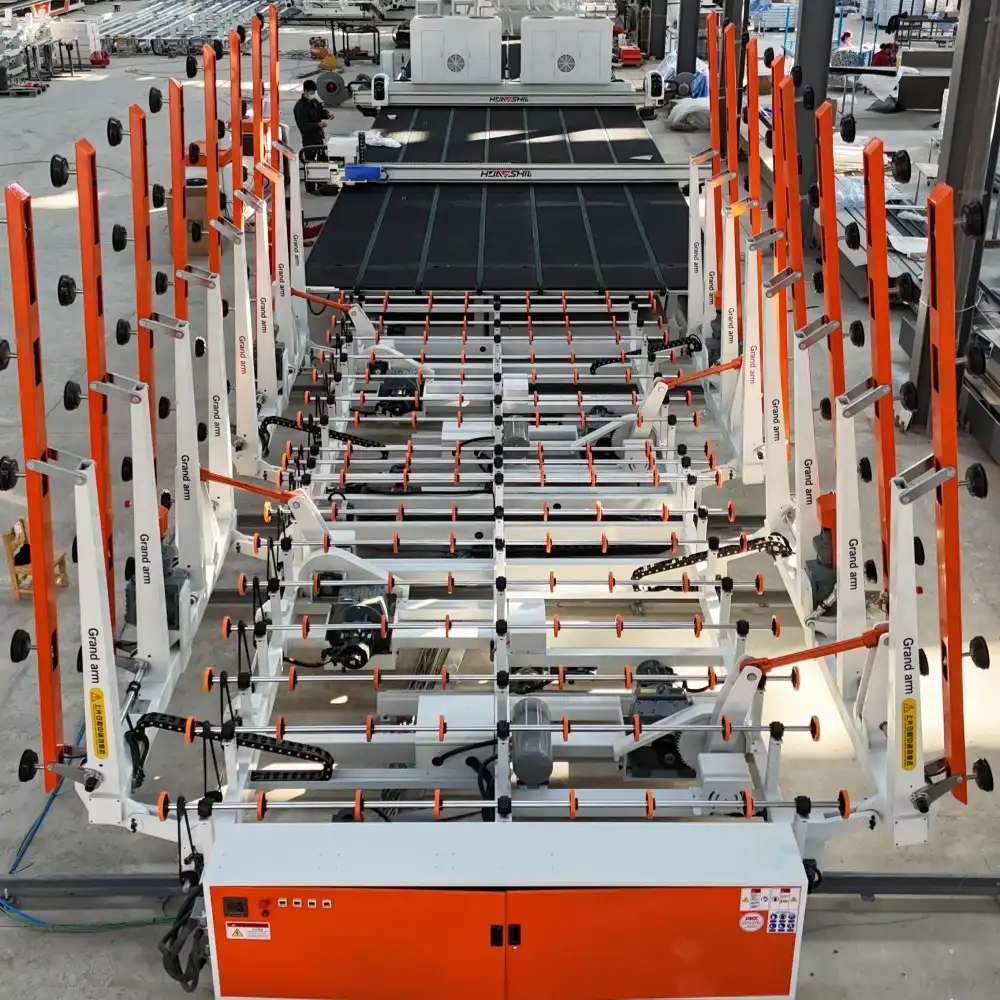
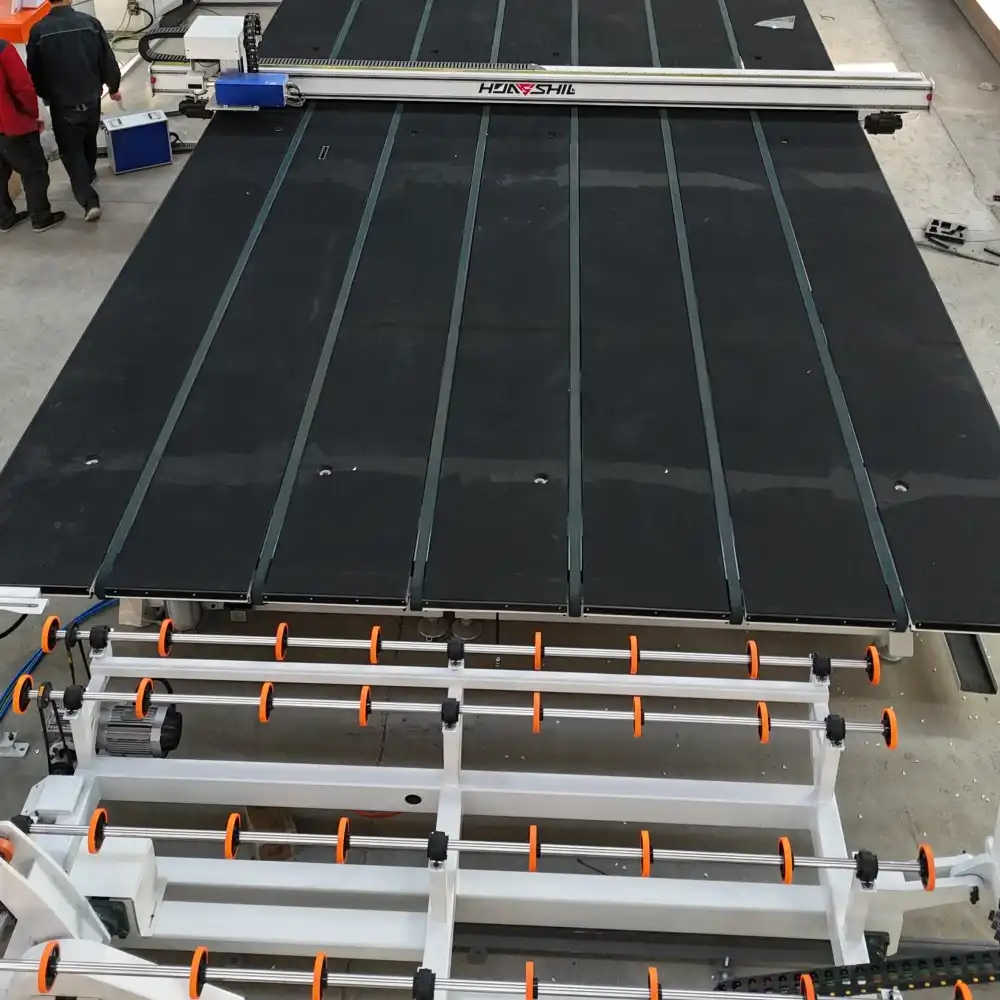
Advanced engineering meets practical manufacturing with the HSL-CNC2716. With a capacity of 2700×1600mm, the CNC stone cutting machine meets the need for large-format slabs in architectural projects. The machine can handle 3-18mm glass thickness, which helps manufacturing schedules with material requirements.
Working Techniques:
Easy programming reduces operator training time using the Eos-CNC control system. Technical managers like how quickly workers program complex cutting patterns. The interface helps computer experts perform difficult tasks while keeping manual workers comfortable.
Pressure control modifies material-specific cutting force. Cutting larger substrates fast without breaking delicate materials is possible with this intelligent flexibility. Without interference, scrap rates reduce and throughput increases, benefiting production directors instantly.
Automated edge-finding reduces tiresome manual alignment. The system maximises slab cuts and material consumption by correctly locating material limitations. Reduces waste percentages that impact procurement managers' material price budget projections.
Material handling is transformed by air flotation. Heavy stone slabs glide across the cutting surface without moving. This ergonomic feature gives single-operator control over numerous cutting cycles and reduces workplace mishaps. Automation decreases physical strain that creates long-term occupational health issues, which safety managers value.
Multi-Industries Applications:
Sintered stone makers like this machine. Although sintered stone is hard to cut, the HSL-CNC2716's solid structure and excellent control make it reliable. To polish worktops, tables, and decorative panels, furniture makers clean the edges.
Flexible machine appeals to ceramic slab processors. The gadget precisely cuts large-format tiles for commercial flooring and custom sizes for household installs across material thicknesses. Automatic cutting, feeding, packaging and quality checking units in tile manufacturing.
Uses of architectural glass go beyond cutting. CNC offers curved profiles, hardware notches, and sophisticated geometric designs for curtain walls. The cutting platform supports complicated glass processing activities for system integrators developing production lines.
Plant manager investment thoughts:
Capital expenditures include industrial-grade structures and automation. Finance departments should forecast labour savings, increased throughput, and material waste reduction for this investment. Two- or three-shift facilities pay back in 18-30 months, depending on productivity and personnel expenses.
Complete production lines are harder to install. Dust extraction ventilation, floor space, and energy are needed for the equipment. Technical teams desire easy integration without facility adjustments or production launch delays.
Technical papers and operator training are offered by HUASHIL. Engineers get a detailed maintenance schedule, replacement part identification, and troubleshooting guidance. Designing equipment-extending internal maintenance methods requires documentation.
Customisation suits manufacturing. OEM partnerships allow system integrators to change manufacturing line settings. Flexibility benefits curtain wall contractors and large fabrication businesses, automating their operations.
Precision Small-to-Medium Cutting Systems
Many mid-sized furniture and decorative glass companies need automation without a production line system. For businesses processing 50-200 pieces daily, compact automated stone cutting machines guarantee accuracy.
Smaller Operations' Key Features:
These devices typically handle 1800x1200mm materials for furniture and shower door production. The reduced size makes installation in existing facilities easy without any layout adjustments. Purchase managers like capital costs 40-60% lower than large-format systems while retaining important automation.
Computer-controlled stone cutting boosts compact design efficiency by reducing manual measurement errors. Smaller programming interfaces reduce training, allowing facilities to automate manual operators in days rather than weeks.
Hand finishing stations suit machines. Smaller facilities manually process cut parts for edge polishing, drilling, and tempering. This hybrid method invests in automation and creates realistic production numbers without line automation.
Fit for use:
Glass furniture producers may cut table tops, shelves, and decorative panels with this equipment. Precision aligns components to assembly requirements. Regular design modifications without difficult reprogramming are desired by custom furniture companies.
Repeatability helps standard-size shower door makers. Stone cutting automation maintains dimensions throughout manufacture, reducing installation fitting difficulties. Operators can readily get procedures from template libraries since they share dimensions.
Sintered stone and glass partition producers want adaptability. A single machine processes architectural glass, decorative stone, and ceramic panels, optimising equipment use.
Regional market factors:
Southeast Asian markets employ mid-sized automation as furniture manufacturing modernises. Vietnamese, Thai, and Indonesian manufacturers are prioritising quality above labour costs. Marble cutting automation helps exporters meet international quality standards.
Middle Eastern fabricators catering to regional building booms can use this technology for project-based production. Contract amounts vary without installation costs for larger equipment. The Gulf market delivers in 45-60 days, matching project plans.
For difficult industrial circumstances, South American enterprises prioritise sturdy construction. Equipment durability is critical in low-maintenance settings. Simple-to-fix machines avoid operational disruptions in complex systems.
Advanced Laser Stone Cutting
In stone manufacturing automation, laser cutting is best. These technologies can handle complex designs, low edge chipping, and high tolerances that mechanical cutting cannot. Due of superior technology, systems cost 150-200% more than CNC cutters.
Tech benefits:
After extensive manufacturing runs, laser stone cutting maintains cutting quality by preventing mechanical tool wear. Non-contact methods reduce material stress and micro-cracking, retaining structure. Laser technique preserves material properties that mechanical cutting could degrade for architectural glass processors employing tempered materials.
Cutting tolerances of <0.1mm exceed strict architectural standards. Complex geometries run without tool or program changes. For intricate decorative glass that machine cutters can't copy, this is needed.
Laser-processed edges seldom need finishing. Clean cuts reduce edge polishing, speeding manufacturing. QCIs find fewer edge faults, improving first-pass yields.
Applying situations:
Smart mirrors use laser precision for sensor apertures, display cuts, and lighting channels. Smart mirror geometry exceeds cutting capabilities. Avoid stress concentration locations that might break during electronics integration.
Laser cutting is utilised for specialist car glass when traditional tooling is too expensive. Limited-edition premium cars, custom car glazing, and repair justify high processing costs. For non-standard shapes, mechanical cutting requires costly die manufacture. Flexibility stops this.
Laser cutting gives luxury glass-accented furniture a distinctive style. Combining manufacturing with art helps art shows, luxury retail displays, and architecture. Designers use laser-cut components for visual impact and greater processing costs.
Reason for Investment:
Plant managers considering laser technology must weigh consumer requirements and cost per premium feature. Luxurious marketplaces aid investment. In price-sensitive building markets, standard manufacturing may not justify capital expenditure.
Technology requires more than cutting systems. Laser equipment requires unique ventilation, environmental controls, and safety training. Establish whether the infrastructure satisfies these requirements or estimate upgrades.
Laser after-sales support is needed. Before committing, procurement managers should evaluate local service availability. Remote-expert equipment maintenance downtime may outweigh the investment's productivity gains.
Understanding Regional Market Dynamics Across Target Markets
Southeast Asia: Balancing Growth and Infrastructure
Southeast Asian construction is booming, and technology is advancing. Regional factories range from world standards to manual processes. This diversification helps scalable equipment providers.
Stone fabrication automation increases with regional labour costs. Thailand and Vietnam are popular as furniture manufacturing clusters upgrade to compete. Suppliers should highlight training and simplicity since potential clients' technological understanding varies.
First-time buyers prefer letters of credit. Trade shows like Glasstech Asia boost trust, unlike internet marketing. Regional clients want personal, long-term suppliers.
Competitiveness depends on after-sales service. Regional service providers or licensed partners respond faster to equipment repair demands than faraway suppliers. Procurement managers check replacement parts availability and response times before purchase.
Russia: Technical Sophistication and Local Requirements
Russian industrial buyers are tech-savvy and have explicit specs. Engineering managers need substantial technical materials to evaluate equipment before commercial conversations. Suppliers should report performance, maintenance, and compatibility.
In difficult operational conditions, the market prioritises durability and structure. Equipment for extreme temperatures and high productivity is preferred. With proper maintenance, Russian buyers want equipment to last 10-15 years.
Local certifications and legislation affect equipment imports. Suppliers must verify Russian technical standards and provide documentation. Certification delays may affect buyers' project delivery schedules.
Trust transforms commercial cynicism into long-term partnerships. Suppliers with reliable service and equipment often develop exclusive client relationships that buy again and recommend equipment to industry contacts.
South America: Project-Based Demand and Economic Considerations
Construction drives South American demand. Architectural glass processors and curtain wall contractors acquire equipment for large projects that require capacity expansion. Opportunity cycles create inconsistent demand.
Economic uncertainty affects capital spending. Buyers assess the total cost of ownership and choose equipment that maximises value over time. Flexible financing and payment intervals that accommodate economic volatility boost sales.
Tech support should be easy and dependable. Facilities like low-maintenance technology that works with general technicians. Complex systems requiring experienced individuals face adoption resistance in markets with limited training resources.
Portuguese and Spanish improve customer relations. Market involvement in technical documentation, training, and local language support is valued. Suppliers benefit from translation and multilingual help.
Middle East: Quality Standards and Rapid Project Timelines
Middle Eastern marketplaces need multinational gear. Gulf building projects require high-quality materials and worldwide manufacturing. The highest requirements demand that equipment vendors perform.
Project deadlines speed up equipment delivery and installation. Suppliers with stockpiles or speedy production are preferred. Late delivery incurs contractual penalties that procurement managers avoid.
After-sales service should be prompt and complete. Project delays waste money and ruin supplier reputations. Service agreements ensuring responsiveness and parts availability affect purchases.
Stable suppliers may provide beneficial payment terms. Repeat customers may negotiate longer payment terms than international terms as confidence increases. Regional representation by local partners strengthens ties.
Purchasing Recommendations and Essential Considerations
Matching Equipment to Operational Requirements
Production supervisors should estimate daily volume before evaluating equipment. Undersized equipment delays operations, whereas oversized systems squander funds. Estimate capacity from output, expansion, and contract pipeline.
Tech managers must assess workflow integration. Throughput rates must be coordinated for automated cutting systems feeding manual finishing stations. Material handling between stations affects manpower and production cycle lengths and efficiency.
Plant layout strongly influences equipment choice. Floor space measurement should include material loading, full product staging, and operator access. To optimise space, compact facilities may demand smaller systems or creative design.
Evaluating Supplier Capabilities Beyond Equipment Specifications
Support after-sales merits as much as system specs. Find information about service response times, spare parts, and technical assistance. Verify claims using local customer references.
Operator and technical maintenance training should be substantial. Effective training avoids misuse-related operational concerns and lets internal teams do normal maintenance. Request detailed training plans and teacher qualifications, especially for automated stone cutting.
Customisation is important when production demands contradict typical setups. Discuss adjustments early in evaluation. True engineering collaboration suppliers customise solutions to specific needs rather than forcing operations to equipment restrictions.
Equipment warranties demonstrate manufacturer confidence in reliability. Comparison of coverage, components, and service response. Know what might void the warranty and keep operational activities protected.
Financial Planning and Investment Justification
The total cost of ownership should include purchase, shipping, installation, training, maintenance, spare parts inventory, and energy consumption. Unlike purchase price comparisons, spreadsheet models anticipate five-year spending to reveal investment needs.
Payback estimates must include labour savings, throughput benefits, scrap reduction, and quality improvements. Conservative estimates based on comparable firms give finance departments confidence.
Financing may reduce startup capital. Supplier finance, leasing, and bank equipment loans spread costs over revenue-generating periods. Financial managers should compare finance and capital deployment costs.
Your budget should include installation surprises, extended training, and production inefficiencies during equipment commissioning. Planning 10-15% contingency reserves decreases project delays when costs exceed the anticipated.、
Conclusion
Selecting automated stone cutting equipment impacts production productivity, quality, and profitability. Sintered stone, ceramic, and tile cutting are precise and reliable with HUASHIL's HSL-CNC2716. Plant managers considering automation investments should value equipment reliability, after-sales support, and realistic TCO over pricing. Southeast Asia, Russia, South America, and the Middle East market dynamics influence purchases beyond technical specs. Equipment installations succeed best with comprehensive evaluation procedures that match machine capabilities to production objectives and long-term supplier agreements.
FAQ
Q1: What thickness range can automated stone cutting machines handle effectively?
Design-dependent CNC stone cutting systems can process 3mm to 25mm materials. The HSL-CNC2716 handles 3-18mm glass for architectural glass, furniture, and decorative works. We need more power and cutting mechanisms for thicker materials. Choose the proper equipment thickness range for production rather than the greatest capacity you'll never utilise. Because sintered stone, ceramic, and glass cut differently, technical constraints should limit their thickness.
Q2: How long does operator training typically require for CNC cutting systems?
Basic procedures are taught in 3-5 days to typical factory operators. Technicians with programming backgrounds master advanced features in two weeks. Previous industrial control solutions were harder to master than Eos-CNC's straightforward interfaces. Courses should include safety, maintenance, troubleshooting, and programming. As operators learn new materials and sophisticated cutting patterns, they improve. Detailed training and documentation from suppliers enable facilities to learn on their own and minimise technical support.
Q3: What maintenance requirements should facilities plan for automated cutting equipment?
Testing safety systems, cleaning cutting surfaces, and checking lubrication are everyday maintenance. Weekly dust extraction and cutting tool inspection. Standard monthly maintenance includes calibration, electrical connection, and system testing. Mechanical inspections, component replacement, and control system calibration should occur yearly. Cutters, seals, filters, and common electrical parts should be in facilities. Maintenance programs can detect performance issues before they fail. Annually budget 2-4% of equipment value for routine maintenance and component replacement for reliability.
Partner with HUASHIL: Your Trusted Automated Stone Cutting Manufacturer
HUASHIL brings decades of precision engineering expertise to stone fabrication automation. Our automated stone cutting systems serve architectural glass plants, curtain wall integrators, furniture manufacturers, and sintered stone fabricators across global markets. The HSL-CNC2716 exemplifies our commitment to reliability, performance, and comprehensive customer support. We offer customisation capabilities meeting unique production requirements, extensive after-sales assistance, and competitive pricing for industrial stone cutting equipment. Contact our team at salescathy@sdhuashil.com to discuss your specific production challenges and discover how our automated cutting solutions deliver measurable efficiency improvements and quality consistency your customers demand.
References
1. Stone Industry Association (2025). Automation Trends in Stone Fabrication: Technical Analysis and Market Forecasts. Cleveland: Stone Industry Press.
2. Martinez, J. & Chen, W. (2025). "CNC Control Systems in Industrial Stone Processing: Performance Comparison and Selection Criteria." International Journal of Manufacturing Technology, 89(3), 445-467.
3. Architectural Glass Institute (2024). Best Practices for Automated Glass Cutting Systems in Commercial Fabrication. Chicago: AGI Technical Publications.
4. Petrov, N. (2025). Industrial Equipment Investment Analysis: Total Cost of Ownership Models for Manufacturing Equipment. Moscow: Technical Economics Publishing.
5. Southeast Asian Manufacturing Technology Council (2026). Regional Market Study: Glass Processing and Stone Fabrication Equipment Demand 2025-2030. Bangkok: SEAMTC Research Division.
6. Williams, R., Thompson, K., & Abbas, H. (2024). "Precision Cutting Technologies for Sintered Stone and Advanced Ceramics: Comparative Performance Analysis." Materials Processing Today, 41(2), 78-95.