




Modern glass processing demands precision, efficiency, and above all, safety. A glass cutting loading machine transforms how manufacturing facilities handle fragile glass materials, automating the complex tasks of loading, positioning, cutting, and breaking large glass sheets while minimizing operator risk. These sophisticated systems integrate protective technologies and intelligent automation that reduce manual handling and prevent workplace accidents. With stringent safety regulations across architectural, automotive, and furniture manufacturing sectors, selecting equipment with advanced safety features has become essential rather than optional for production directors and engineering managers evaluating capital investments.
Understanding the Safety Challenges in Glass Cutting Loading Operations
Inherent Risks in Glass Processing Workflows
Every day, glass factories face unique risks. Cutting tools with sharp edges can cut, heavy glass panels are hard for workers to move by hand, and high-speed cutting machinery can trap people. Industry safety reports say that about 30% of injuries that happen on the job in glass manufacturing environments are caused by improper material handling. These accidents not only put people in danger, but they also cause expensive production stops and could lead to liability issues.
Regulatory Compliance as a Procurement Priority
Manufacturers who sell their products all over the world have to follow international safety standards like CE tagging, OSHA rules, and ISO 12100 machinery safety instructions. When evaluating vendors, procurement managers are asking for more and more proof of compliance. They know that approved equipment lowers insurance costs and makes regulatory checks go more smoothly. Technical managers know that machines that meet these standards have tried-and-true safety features that keep workers and production going.
The True Cost of Inadequate Safety Measures
In addition to the direct risk of harm, not having enough safety measures leads to hidden costs. Accidents cause downtime that messes up delivery schedules and hurts relationships with customers. In competitive job markets, safety events that hurt a company's reputation make it harder to hire good people. Plant managers know that spending money on better safety technology pays off in the long run by lowering workers' compensation claims, keeping employees longer, and keeping production cycles running smoothly.

Core Safety Features That Define the Best Glass Cutting Loading Machines
Automated Sensing and Emergency Response Systems
Modern glass cutting loading machine equipment has multi-layered sensor arrays that keep an eye on operational zones all the time. Proximity sensors can tell when someone is entering without permission, and pressure-sensitive mats stop machines right away when they are stepped on. Light screen systems surround cutting areas with transparent walls that stop the blade from moving within milliseconds of being stopped. Together, these technologies offer extra security that makes up for mistakes made by people or problems with the equipment.
Physical Barriers and Ergonomic Operator Interfaces
Transparent plastic guarding lets you see everything that is being cut while keeping you from touching moving parts by mistake. Strategically placed emergency stop keys can be reached from a number of locations around the machine's edge. Ergonomic heights for control panels keep workers from getting tired during long shifts, and color-coded interfaces make them easier to use and prevent confusion during busy production times. Access doors that lock together, and make sure that guarding can't be taken off during busy rounds.
Advanced Automation Reducing Human Exposure
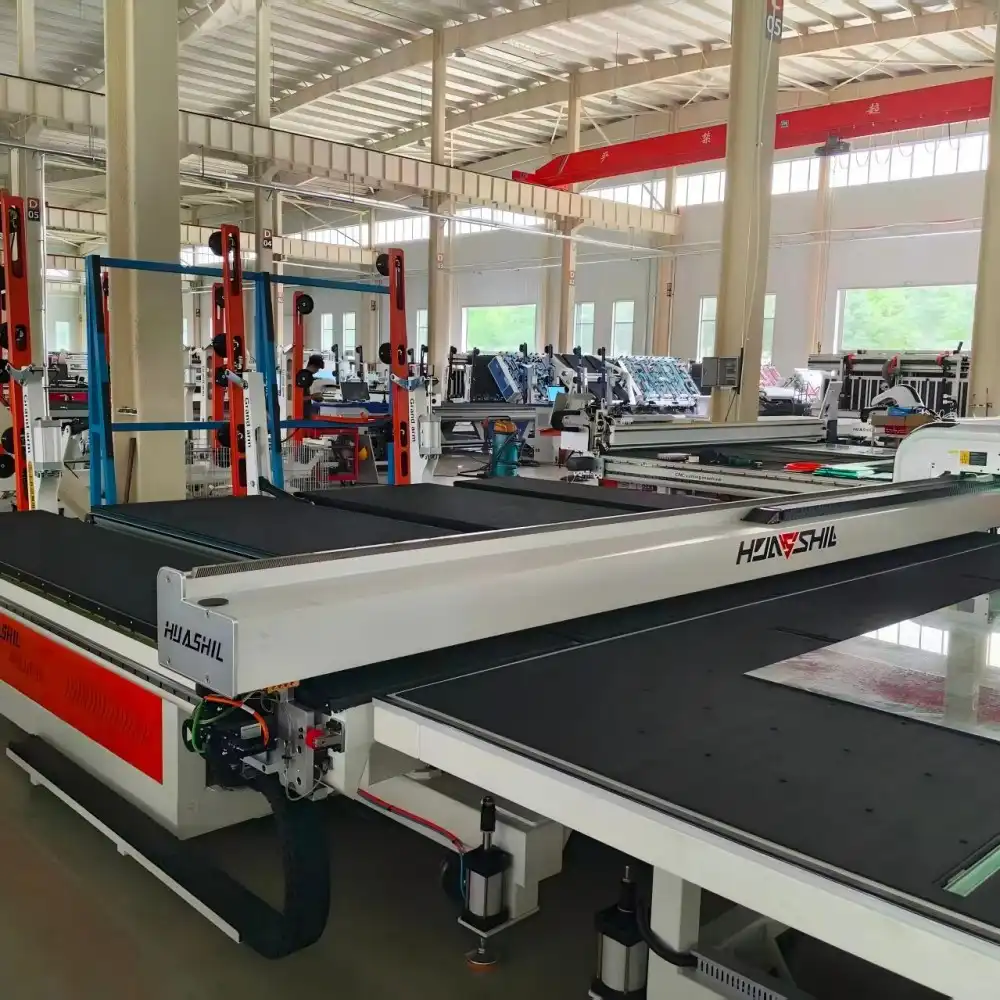
Robotic loading arms get rid of the need to manually position glass sheets, which frees up workers to do less dangerous lifting. This method is shown by the HUASHIL HSL-LSX5133 model, which has five gripper arms on each side and can easily move glass up to 5100x3300mm without any help from a person. With automated breaking tables, the cut-to-break process is finished without workers having to touch any dangerous edges. Architectural glass manufacturing plants that make big pieces for curtain wall systems find this level of automation to be very useful.
Additional Features Enhancing Safer Production and Operational Reliability
High-performance systems think about safety in more ways than just stopping hazards right away. Maintenance-accessible equipment lets techs do checks and part replacements without having to get into awkward positions or use makeshift ways to get to the area that make it more likely that someone will get hurt.
Another safety improvement is the ability to do predictive maintenance. Smart sensors keep an eye on patterns of vibration, changes in hydraulic pressure, and signs of component wear. When readings aren't within the ideal ranges, the system lets maintenance teams know before problems happen. This keeps things from breaking down suddenly, which could be dangerous. This proactive method has cut down on unexpected equipment breakdowns by up to 40% in places that use these technologies.
Consistent performance from energy-stable parts helps keep things safe. Voltage regulators stop power surges that could make machines act strangely, and thermal management systems keep electronic controls at the best temperatures for operation. These features make sure that the machine will always act in a way that workers can trust, even when they have tight production plans.
These ideas are shown through real-world examples. An American company that makes car glass said that accidents at work dropped by 65% after they installed automatic loading systems. Over the 18 months after installing equipment with full guarding and emergency stop systems, a curtain wall integrator reported no lost-time accidents.
Selecting the Right Glass Cutting Loading Machine for Safety and Efficiency
Evaluating Safety Certifications and Automation Levels
When technical buyers are looking at their options for a glass cutting loading machine, they should put more weight on equipment that has safety certifications from independent testing laboratories. The documentation should include the results of any compliance tests and clear instructions for how to operate the system in a way that follows local safety rules. Different models have very different levels of automation. Fully automated systems keep operators from touching glass materials as little as possible, while semi-automated options need more work from the operator but are cheaper to buy at first.
Considering Production Requirements and Customization Capabilities
Different businesses have different manufacturing needs. Furniture glass makers who work with smaller numbers need systems that are flexible and can be switched over quickly. Architectural glass plants, on the other hand, need systems that can handle large amounts of glass quickly. Different needs can be met by the HUASHIL HSL-LSX5133, which has 2+2 station layouts that can be changed to fit different output rates. Its above- or underground rail options work with a variety of building layouts without lowering safety standards.
Optimization Software and Operational Efficiency
Cutting optimization software like Optima makes the most of the material yield while keeping the safety parameters the same. These programs figure out the best ways to cut glass so that less is wasted. This saves money and helps to explain the higher cost of safety features. The software also manages the cutting speeds and blade pressures, which keeps the machines from being overworked and breaking down, which could be dangerous.
Specialized Functions for Modern Glass Types
Having the ability to delete low-E glass is now necessary for working with energy-efficient building glass. This feature safely removes conductive coatings before cutting, which keeps the edge from being damaged and keeps the equipment from breaking. Facilities that don't have this feature have to deal with higher rejection rates and possible safety risks from using the wrong methods to remove coatings.
Best Practices for Maintaining Safety in Glass Cutting Loading Machinery
Establishing Routine Maintenance Protocols
Without strict maintenance schedules, safety performance goes down. Every week, the emergency stop should work, the sensors should be lined up correctly, and the guarding should be solid. As part of the monthly checks, the pressure of the hydraulic system is checked, moving parts are oiled, and automatic placement systems are set up correctly. Comprehensive audits done once a year by trained techs find wear patterns that mean parts need to be replaced before they break.
Investing in Comprehensive Operator Training
Operators who know what they're doing are needed for even the safest equipment. Effective training programs mix learning about safety in the classroom with operating things while being watched. Operators should be able to show that they know what to do in an emergency, how each safety device works, and how to read warning signs that something needs to be fixed. Refresher training sessions go over the right way to do things again and again, and they include new information when the equipment changes.
Recognizing Warning Signs and Troubleshooting Issues
Operators with a lot of experience can spot small changes in how a machine works that happen before it breaks down. Unusual noises, uneven cutting quality, or sensor reactions that are delayed should be looked into right away. Keeping detailed maintenance logs can help you find trends that may not be clear from single events. Production directors should make sure that operators feel like they can stop work if they are worried about safety. This way, small problems don't get worse and turn into major accidents.
Conclusion
Choosing equipment with strong safety features is a smart investment that protects both workers and production capacity. The best glass cutting loading machines have physical obstacles, automated sensors, comfortable design, and predictive maintenance features that all work together to make the workplace naturally safe. Modern equipment, like the HUASHIL HSL-LSX5133, which has a lot of automation and different configuration choices, can improve both safety and operating efficiency at the same time. When procurement teams are looking at their options, they should put safety certifications at the top of the list, compare the level of automation to what is needed for production, and make sure that the after-sales support will keep the equipment safe throughout its lifecycle. When these factors are taken into account together, producers can meet both government requirements and the needs of the competitive market.
Frequently Asked Questions
1. What safety features are most essential in a glass cutting loading machine?
The most important safety features are multi-sensor hazard detection systems (such as proximity sensors, light curtains, and pressure mats), emergency stop mechanisms that can be reached from multiple positions, physical guarding with interlocking access controls, and ergonomic operator interfaces that lower mistakes caused by fatigue. Automated loading and breaking systems that reduce the amount of manual glass handling greatly lower the risk of injury and improve the consistency of production.
2. How does automation enhance safety in glass processing equipment?
Automation keeps workers from coming into direct contact with the dangers of heavy, sharp glass. Robotic loading arms keep people from hurting themselves by lifting heavy things by hand, and automated cutting tables finish cut sequences without needing workers to get close to sharp edges. Advanced systems also keep operational parameters consistent, which keeps equipment from breaking down because of overuse. This makes working conditions more predictable and safer.
3. Can improved safety features actually increase productivity?
Increasing safety has a direct effect on output in a number of ways. By preventing accidents, output doesn't have to stop while reviews are done and equipment is fixed. By fixing problems before they happen, predictive maintenance cuts down on unexpected downtime. Ergonomic designs help workers keep up their performance over long shifts without making mistakes because they are tired. Automated systems can work with things more quickly and regularly than people can, and they also make the process safer.
Partner with HUASHIL for Advanced Glass Processing Solutions
To improve safety in the workplace and make production more efficient, you need tools that are made with both goals in mind. HUASHIL is an expert in automated glass cutting loading machine production. They have years of technical experience and provide prompt customer support throughout the lifecycle of their equipment. Our HSL-LSX5133 model has a lot of safety features and can be set up in a number of different ways, making it useful for architectural glass plants, curtain wall integrators, and furniture manufacturers working at a range of production levels.
We know that choosing capital equipment means finding a balance between technical specs, budget, and long-term dependability. Our technical team gives you in-depth consultations that look at your specific safety goals, production needs, and facility limitations. We provide OEM and ODM capabilities that address specific operational challenges, whether you need a standalone glass cutting loading machine or a full processing line with customized automation.
Get in touch with our glass cutting loading machine supply team at salescathy@sdhuashil.com to talk about how our designs that focus on safety can change the way you work with glass.
References
1. Glass Manufacturing Industry Council. "Workplace Safety Standards in Glass Processing Facilities." Industrial Safety Journal, 2022.
2. Chen, W. and Thompson, R. "Automation Technologies for Reducing Occupational Hazards in Glass Manufacturing." Journal of Manufacturing Safety, vol. 34, no. 2, 2023, pp. 145-162.
3. International Organization for Standardization. "ISO 12100:2010 - Safety of Machinery: General Principles for Design." ISO Standards Catalogue, 2021.
4. Miller, J. "Cost-Benefit Analysis of Safety Investments in Glass Production Equipment." Manufacturing Economics Quarterly, vol. 18, no. 4, 2023, pp. 78-94.
5. American Glass Processing Association. "Best Practices for Automated Glass Cutting Systems." AGPA Technical Guidelines, 2023.
6. Roberts, L. and Zhang, Q. "Predictive Maintenance Technologies in Glass Processing Machinery." Advanced Manufacturing Technology Review, vol. 29, no. 1, 2024, pp. 210-227.