




Choosing a fast speed glass cutting machine requires evaluating your production volume, glass thickness range, automation level, cutting accuracy, software integration capabilities, after-sales support, and total cost of ownership. The ideal machine should match your specific glass types—from architectural panels to automotive windshields—while offering reliable performance and scalable automation. Prioritizing machines with proven track records, internationally recognized certifications, and robust warranty coverage ensures long-term production stability and minimizes unexpected downtime.
Introduction
Modern manufacturing can't do without fast-speed glass cutting machines, which offer unmatched accuracy and efficiency that are necessary in competitive production settings. As the need for architectural glass, auto parts, and decorative glass keeps growing around the world, manufacturers are under more and more pressure to keep quality high while producing more glass.
The goal of this guide is to help procurement managers, engineers, distributors, and OEM clients make smart buying choices by breaking down important factors like business costs, technology types, and levels of automation. To help you figure out how to choose the right tools, we've put together advice from experts in the field and real-life production situations. By learning about machine features, market trends, and the best ways to buy things, readers will be able to choose equipment that fits their budget and production needs, which will ultimately lead to higher productivity and better quality products.
Understanding Fast Speed Glass Cutting Machines and Their Role in Production
Modern fast speed glass cutting machines use high-tech features like CNC control systems, automatic loading mechanisms, and precision cutting heads to make fast, accurate cuts that are necessary for streamlining the glass production process. With these machines, simple tasks that used to be done by hand have been turned into complex automated workflows that can handle hundreds of square meters per shift.
Key Features That Define Performance
High-performance cutting tools can usually work at speeds of more than 100 meters per minute and still cut accurately within 0.2 mm limits. Optimization software like Optima runs on complex control interfaces that look at the sizes of glass sheets and figure out the best ways to cut them. This saves up to 15% of the material that would have been wasted if planning were done by hand. Built-in safety features improve operator comfort. For example, air flotation systems make it easy to place heavy glass sheets, and a 360-degree remote control keeps workers at a safe distance during cutting sequences.
Measurable Production Benefits
Manufacturers can get more done, make cuts that are more consistent, save energy, and make less waste when they use automated cutting solutions. This has a direct effect on product quality and operational efficiency. A curtain wall fabricator who works with jumbo glass panels said that switching from semi-automatic to fully automated cutting lines cut labor costs by 40% and increased daily output by 25%. The gains come from getting rid of measurement mistakes made by hand, cutting down on edge chipping, and speeding up the change between cutting patterns.
This helps you understand how cutting-edge technology fits into today's manufacturing processes and why companies need to keep adopting new technologies to stay competitive.
Core Criteria for Choosing the Right Fast Speed Glass Cutting Machine
The best fast speed glass cutting machine for you will depend on how much glass you need to cut, how complicated the cuts need to be, and how fast you need to get them done. The conditions for making things are very different. For example, a furniture company that makes shower doors has very different needs than a car glass provider that has to meet OEM standards.
Production Capacity and Automation Level
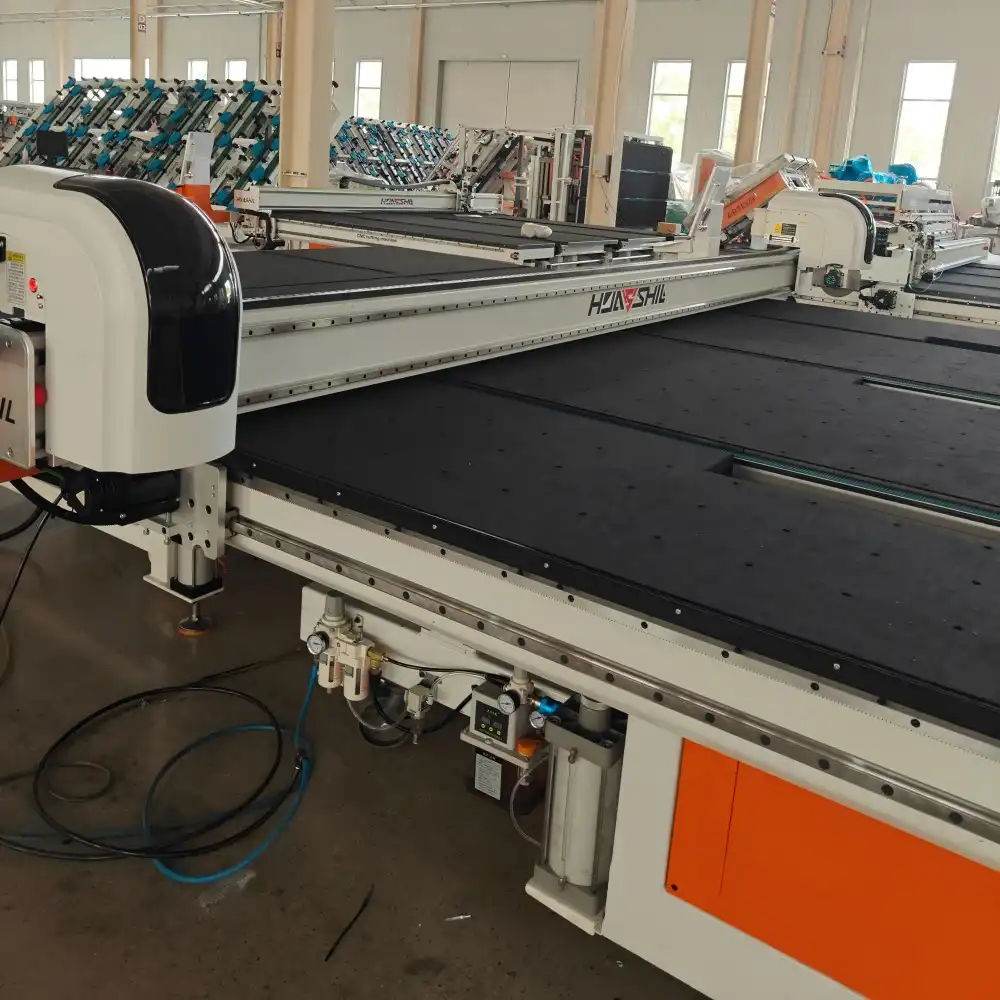
Machine speed, accuracy, and the level of automation are all important factors that balance the costs of investments with the benefits of operations. When figuring out capacity, you need to look at both the largest glass measurements and the range of thicknesses. The HSL-YTJ3826 model is an example of equipment made for large-format building uses. It can handle glass sizes up to 3660x2440mm and thicknesses from 2 to 19 mm. With its automatic loading system, you don't have to move panels that are too big by hand, and its automatic pressure control changes the cutting force based on the thickness of the glass to avoid stress cracks.
Automatic edge-finding equipment cuts down on setup time by figuring out the position of the glass without any help from the user. This is especially helpful when working with mixed batches of different sizes. A synchronous belt conveyor keeps the feed rates steady so that there are no quality problems caused by vibrations as the material moves from one cutting station to the next.
Technology Selection and Long-Term Value
Whether you choose CNC-controlled mechanical cutting or laser systems, it should depend on the needs of your product and your ability to maintain it. Standard float glass is easy to work with for mechanical cutting heads with diamond or carbide wheels, and they are still cost-effective for large-scale processes. Laser cutting is better for cutting glass with complicated shapes and other types of glass, but it usually costs more up front and needs special training for the user.
Reliable support services and using less energy are big parts of long-term ROI because they cut down on downtime and operational costs. Machines that are approved to ISO9001 and CE standards show that the company is dedicated to safety and quality management systems. When figuring out the total cost of ownership, you should think about how much electricity it uses, how easy it is to get replacement parts, and how long it takes for technical support to respond. A breaking table built into the cutting line speeds up work by combining scoring and breaking on one platform. This gets rid of the need for material transfer steps that slow down production and risk damage.
This organized way of setting goals for purchases makes sure that buyers get a machine that works perfectly with their production surroundings and their budget.
Comparing Fast Speed Glass Cutting Machines: Market Solutions and Industry Leaders
There have been a lot of changes in the market for fast speed glass cutting machines. Modern options are different from older ones because they are automated and use software. Knowing these differences helps buying teams compare things in a way that meets output goals.
Efficiency Gains Over Traditional Methods
Cutting by hand usually rests on the skill of the person doing it and simple straightedge guides, which slow down the process and make it harder to repeat. Workers spend a lot of time measuring, marking, and moving glass, and the accuracy of their cuts depends on how skilled they are. Automated systems get rid of these factors by using programmable cutting paths saved in optimization software to make sure that all thousands of pieces have the same effects. Production data from architectural glass plants show that automatic lines use 92–96% of the material they use, while human operations only use 78–85%. This means that large orders can save a lot of money.
Leading Models and Innovation Highlights
Modern automatic cutting tables have a lot of high-tech features that work together to make them more useful. Air floating systems use cushions of compressed air to support glass sheets on a smooth surface. This makes it easy for workers to place panels that weigh up to 500 kg. This technology cuts down on injuries at work and makes it possible to get everything exactly lined up before cutting starts.
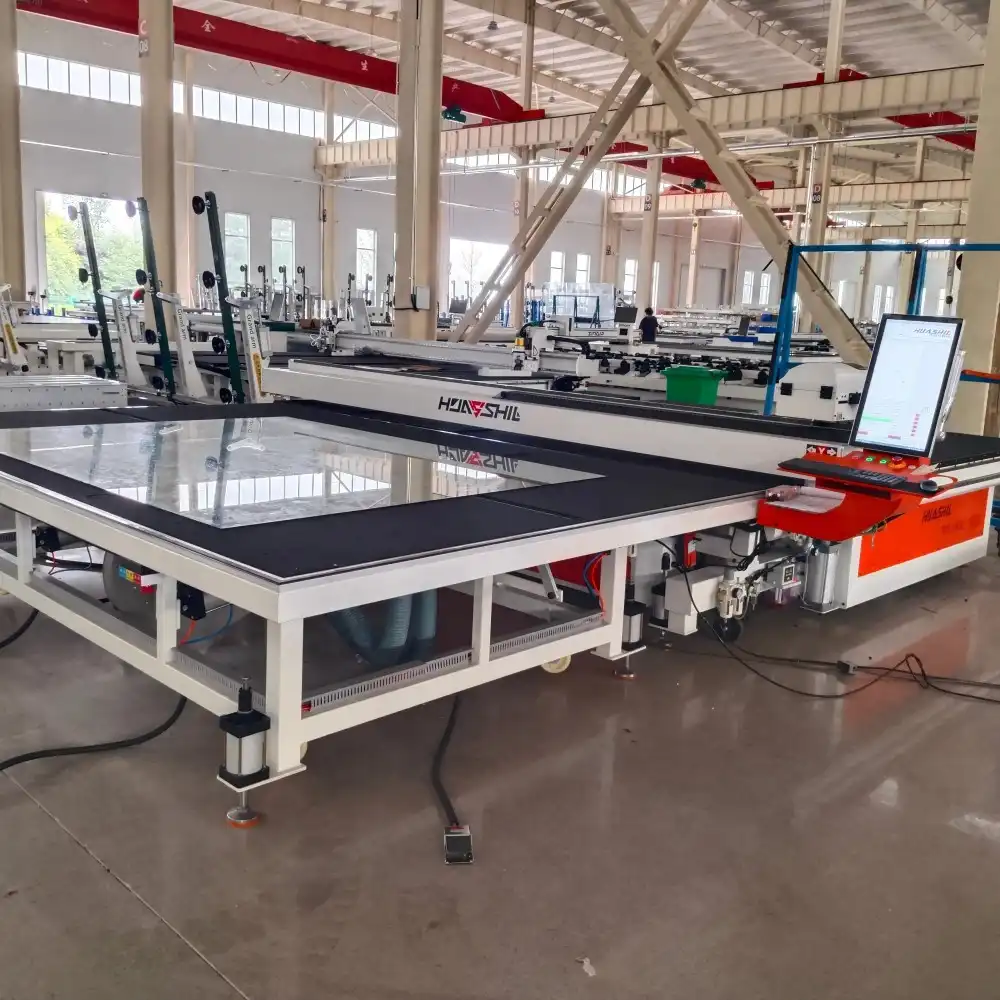
Technicians can direct machine movements, start cutting routines, and check on progress from safe distances using wireless remote controls. The ability to walk around 360 degrees is especially useful in large facilities where operators are in charge of many machines at once. When combined with automatic loading systems that get glass from storage racks, these features make it possible to cut standard patterns without turning on any lights.
Investment Analysis
Prices for industrial glass cutting tools vary a lot depending on how automated they are and how much glass they can cut. Starting at about $15,000 to $25,000, entry-level semi-automatic tables are good for small furniture shops. Fully automated production lines that load, cut, break, and sort items cost between $80,000 and $250,000. With a footprint of 5550×4925mm, the HSL-YTJ3826 model needs to be carefully planned into factory space. However, its built-in breaking table makes tasks that would normally take up multiple workstations easier to do at once.
Compared to older hydraulic systems, energy-efficient models with servo motors and variable frequency drives use 20–30% less electricity. This can save a lot of money for businesses that work multiple shifts. When figuring out how much something is worth, keep in mind that machines with higher specifications usually have better parts, like precise linear guides, heavy-duty cutting heads, and industrial-grade control systems, that make them last longer and keep their accuracy over years of heavy use.
Procurement Best Practices for Fast Speed Glass Cutting Machines
To get high-precision fast speed glass cutting machines, you need to work with respected suppliers and authorized sellers. This will help you get quality equipment and reliable service after the sale. The process of choosing a vendor should take into account both technical requirements and the seller's ability to provide assistance and infrastructure.
Supplier Evaluation and Due Diligence
Business-to-business customers should thoroughly vet vendors. Check the manufacturer's production history. Shandong Huashil Automation Technology Co., Ltd. has extensive experience developing and manufacturing automated machinery, demonstrating its engineering depth for complex equipment. Request a facility certification, a list of satisfied customers, and proof of previous work in similar production settings.
Customer reviews and seller reputation might tell you more about a product's real-world performance than the company's claims. Trade shows like GlassBuild America and Glasstech Asia feature equipment demonstrations, side-by-side comparisons, and talks. These locations also make plant visits easy for purchasing teams to inspect production quality control and parts inventory systems.
Logistics and Commercial Terms
Shipping dates must be arranged when purchasing in bulk, particularly when conducting business internationally. Shipping massive automated equipment requires specialised freight management, customs clearance, and on-site installation. Make sure costs include shipping, setup, user training, and the first set of additional parts. Industrial equipment orders need a 30–40% deposit. The balance is payable before shipping or commissioning the equipment.
Warranty and maintenance programs vary widely across vendors. A 12-to-24-month parts warranty that specifies which parts are covered and service call response time is part of full coverage. Maintenance with preventative inspection programs, priority parts delivery, and remote diagnostics assistance may reduce unexpected downtime expenses.
Customization Options
When normal setups don't meet specific needs, you should look into options for personalized or OEM machines that are made to fit those needs. When working with solid stone, for example, processing glass may need different cutting heads and different pressure settings than when working with regular glass. OEM and ODM suppliers can change the size of machines, connect them to existing production management systems, or make custom loading mechanisms for materials that don't come in standard formats.
If you want to save money on acquisition costs without sacrificing performance, practical advice on buying used machines or leasing options can help. However, buyers should carefully consider remaining service life, available spare parts, and upgrade pathways when considering pre-owned equipment.
Practical Tips to Maximize Your Glass Cutting Machine's Speed and Safety
For fast-speed glass cutting machines to work at their best, speed increases must be combined with strict quality control and safety rules. For even the most high-tech equipment to deliver the promised efficiency gains, it needs to be properly operated and maintained.
Operational Best Practices
First, use optimisation tools to build up effective cutting procedures. Optima processes incoming orders, arranges numerous parts on stock sheets, and creates cutting routines that minimise tool travel. Operators should frequently update the program with precise material characteristics, including glass thickness, quality grade, and edge needs, to apply the proper cutting settings. Grouping comparable glass types in production schedules reduces setup time and improves automated loading systems.
How items are transported affects speed and quality. Dirt and dust are less likely to harm glass edges in clean workspaces. Replace cutting wheel parts regularly before they wear out. Dull wheels provide harsher score lines, increasing blade breakage risk. The air flotation device requires clean, dry compressed air. Oil or moisture in the air reduces float effectiveness and marks glass.
Maintenance Routines for Long-Term Reliability
Service mechanical, electrical, and control system elements regularly to maximise performance. Check the cutting wheel, moving parts, and safety interlocks daily. Weekly maintenance includes cleaning the linear guide rails, checking the synchronous belt tension, and checking the pneumatic system pressure regulators.
The monthly maintenance procedure checks servo motor performance, backs up the control system, and calibrates edge-finding sensors. Annual maintenance checks should involve a comprehensive electrical system examination, replacement of worn-out parts nearing their end of life, and software upgrades to repair issues or provide new features.
Workplace Safety Standards
Safety steps and standards for protective tools in the workplace are necessary to keep workers safe and increase uptime. Using a remote control keeps people safe while the machine cuts, and emergency stop buttons placed at multiple access points let the machine be turned off right away. Even when working with automatic equipment, operators should wear safety glasses. In places where multiple tools are running at the same time, they should also wear hearing protection.
Some common practical problems are glass slipping while cutting, breaking patterns that aren't always the same, and differences in edge quality. To fix these problems, you should usually check the air flotation pressure, make sure the cutting wheel is sharp, and make sure that the material specs in the control software match the properties of the glass. Keeping specific production logs helps find trends when quality problems arise, so changes can be made before the number of defects goes up.
Conclusion
It's important to find the right fast speed glass cutting machine by weighing technical specs, production needs, and long-term costs. Successful buying teams set clear goals for capacity, figure out how much automation is needed for their specific products, and work with well-known providers that offer a wide range of support services. Automated filling, optimization software, and built-in breaking tables are some of the advanced features that equipment with these features offers. These features increase productivity and support the initial investment by lowering labor costs and better material utilization. Putting internationally certified machines with good track records at the top of your list reduces risk and sets your facility up for a competitive edge in markets that need high-quality glass fabrication.
Frequently Asked Questions
1. What production volume justifies automated cutting equipment?
Businesses that process more than 500 square meters of glass every week usually get their money back on automated systems within 18 to 24 months by cutting down on waste and labor. Smaller shops that work with custom orders that have a lot of changes to the sizes may benefit from semi-automatic tables that keep their freedom while making the cuts more accurate.
2. How are mechanical cutting and laser cutting different?
Standard float glass can be cut mechanically with diamond wheels, which have lower costs and are easier to maintain. Laser systems are great for cutting glass with complicated curves and special types of glass, like low-iron or coated glass, but they cost more and need special training to use. Advanced motorized cutting tables are the best way to get the best results in most building and furniture projects.
3. What affects cutting accuracy the most?
Accuracy depends on how rigid the machine is, how good the cutting head is, and how precise the control system is. Tighter tolerances are kept by equipment that is mounted on heavy steel frames with precision linear guides rather than on construction that isn't as strong. Over time, accuracy is kept up by keeping cutting wheels in good shape and making sure automatic edge-finding systems are properly calibrated.
Partner with HUASHIL for Advanced Glass Cutting Solutions
Architectural designers, car suppliers, and furniture makers all over the world trust HUASHIL's precision-engineered fast speed glass cutting machine equipment. Our HSL-YTJ3826 model is built to last and has smart features like automatic loading, pressure control, and Optima optimization software to help you get the most out of your production and materials. Our machines meet world quality standards and are a great deal. They are certified by ISO9001 and CE.
No matter if you're adding new production lines or improving old ones, our engineering team can help you find options that are perfect for your glassworking needs. We keep a large stock of spare parts and a network of technical support staff to keep your downtime to a minimum and protect your investment. Get in touch with our experts at salescathy@sdhuashil.com to talk about your production goals and get a detailed quote.
References
1. Chen, L., & Wang, M. (2023). Automation Technologies in Modern Glass Processing: Performance Analysis and Industry Applications. International Journal of Advanced Manufacturing Technology, 127(4), 1823-1841.
2. Glass Magazine Editorial Staff. (2024). Equipment Buyer's Guide: Cutting and Breaking Systems for Flat Glass Fabrication. Glass Magazine, Annual Buyer's Guide Edition.
3. Industrial Automation Research Group. (2023). Total Cost of Ownership Models for Glass Processing Equipment: A Comparative Study. Manufacturing Systems Engineering Quarterly, 18(2), 67-89.
4. Martinez, R., & Thompson, K. (2024). Safety Standards and Best Practices for Automated Glass Cutting Operations. Occupational Safety in Manufacturing Industries, 31(1), 112-128.
5. National Glass Association. (2023). Glass Fabrication Equipment: Technology Trends and Procurement Guidelines. NGA Technical Publication Series, Volume 15.
6. Zhang, H., Liu, Y., & Anderson, P. (2024). Energy Efficiency and Sustainability in Industrial Glass Cutting: Technology Assessment and Environmental Impact. Journal of Cleaner Production, 392, 136247-136261.