




When evaluating options for high-volume glass manufacturing operations, the HSL-YTJ3829 glass sheet loader stands out as an exceptional solution. This automated system combines intelligent loading capabilities with precision control, delivering the efficiency and reliability that modern architectural glass and curtain wall fabricators demand. Its advanced automation features directly address the challenges plant managers face daily.
Introduction
Any high-volume glass fabrication plant's material handling bottleneck is obvious. Production directors throughout Southeast Asia, Russia, South America, and the Middle East tell me their biggest issue is safely and rapidly loading raw glass sheets onto their processing lines. Manual loading requires too many hours and poses safety and quality issues. Modern glass sheet handling systems changed everything.
The architectural glass industry has changed drastically. Curtain wall system integrators require equipment capable of processing 3660×2800mm panels at high throughput rates, justifying capital expenditure. Furniture makers of glass shower doors and partitions need automation that cuts labor costs without sacrificing precision. Advanced glass sheet loader automation becomes essential here.
We analyze equipment with measurable ROI for technical managers evaluating requirements, procurement supervisors negotiating commercial conditions, and finance teams authorizing capital expenditures. Real-world priorities include production consistency, total cost of ownership, after-sales service, full production line integration, and customization flexibility.
Why Automated Loading Systems Matter for Your Production Line?
Manual glass handling causes many problems that affect your bottom line. Emerging market labor expenses rise as workplace safety standards tighten. Due to the physical demands and injury dangers of glass handling, production facilities have lost employees. Manual loading adds variability to downstream processing quality beyond human error.
Automated glass sheet loading equipment solves these problems. From 2mm ornamental glass to 19mm architectural panels, they handle delicate materials precisely. The air flotation method saves costly rejections due to surface damage. Automation allows plant managers to measure throughput increases of 40-60%, labor cost reductions of 50%, and defect rates below 1%.
Expansion of production capacity boosts the business case. Recruitment, training, and retention of additional workers for a second shift with manual loading are difficult in tight labor markets. Automated systems improve operational hours without expense increases. Engineering managers like how new glass sheet loader systems easily interface with cutting tables and downstream edging equipment to automate production.
Selection Criteria: What Makes a Loading System "Best" for High-Volume Operations?
Choosing the right glass sheet loader system requires evaluating multiple technical and commercial factors. Through extensive consultation with purchasing supervisors and production directors, we've identified the criteria that truly matter:
Technical Performance Metrics
Processing power is key. The system must reliably handle your maximum glass size. The 3660×2800mm capacity meets most architectural glass criteria for curtain wall constructions. Glass cutting thickness (2-19mm) should cover your product mix without numerous equipment. Cycle time affects throughput—look for 60-90 second automatic loading processes.
Pay attention to precision needs. Manual measuring errors are eliminated by automatic edge detection before cutting. Glass sheet placement accuracy of ±0.5mm ensures consistency across thousands of daily cycles. The smooth synchronous belt conveying method prevents tempered glass micro-cracks.
Operational Efficiency Features
Engineers favor automatic pressure control that adjusts to glass thicknesses without manual modification. Air flotation devices protect glass sheets and minimize motor loads by reducing friction. The 360-degree remote control lets operators manage loading from optimal angles, enhancing safety and efficiency.
Integration skills are crucial. Your production management systems should work effortlessly with Optima optimization software. Glass sheet stacking and unstacking must match upstream storage and downstream processing. Interoperability is essential for curtain wall integrators buying whole production lines.
Commercial and Support Considerations
Ownership costs far more than the purchase price. Estimate installation, operator training, and maintenance costs. Uptime is affected by spare parts availability—idle equipment ruins production schedules. Check that your supplier has inventories in Southeast Asia, Russia, South America, or the Middle East.
Certification criteria vary by market. CE marking ensures EU standard conformity, increasingly necessary in non-EU markets. ISO9001 accreditation shows reliable production quality management systems. Some tender documents for Middle Eastern markets require these certificates.
Professional suppliers differ from transactional vendors in warranty and after-sales service. Standard warranties should last 12 months with clear response timeframes. Phone, email, and video help must accommodate your time zone and language.
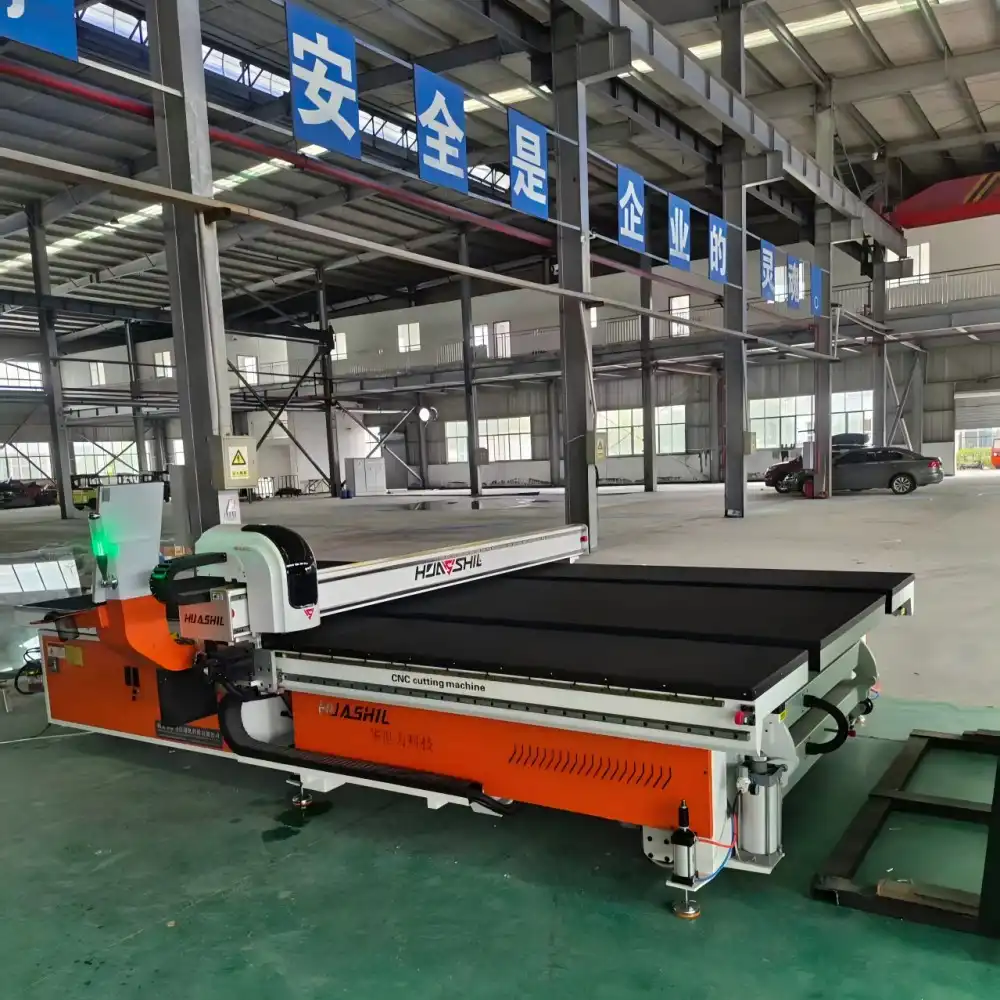
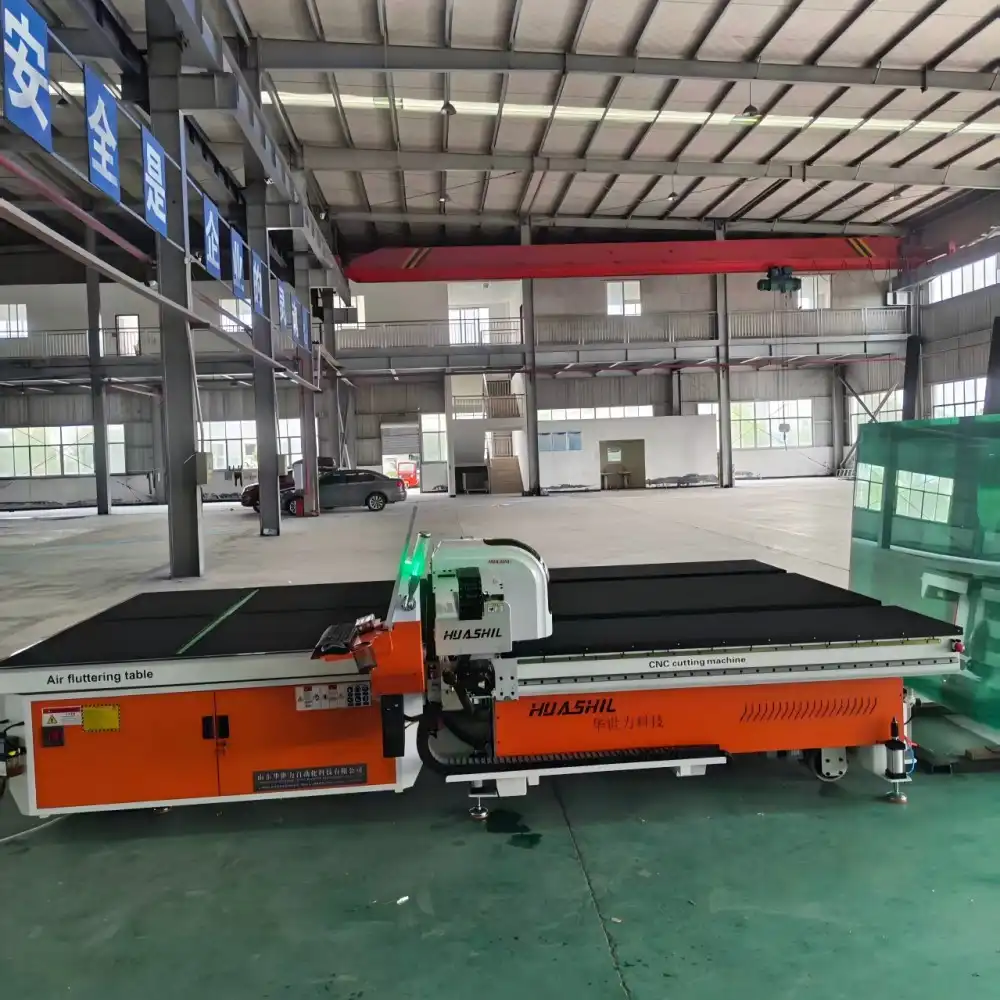
Featured Solution: HSL-YTJ3829 Automated Glass Sheet Loading System
Comprehensive Technical Specifications and Capabilities
The HSL-YTJ3829 represents current best practices in glass sheet loader robot design, specifically engineered for high-volume processing environments. This system handles maximum glass dimensions of 3660×2800mm, positioning it perfectly for architectural glass plants and curtain wall fabricators processing large-format panels. The thickness range of 2-19mm covers the complete spectrum from thin decorative glass through heavy-duty architectural applications.
Advanced Automation Features
The automatic loading sequence eliminates manual intervention. Operators simply stack raw glass sheets in the input position, and the system manages everything thereafter. Automatic pressure control sensors detect glass thickness and adjust vacuum suction accordingly—preventing both insufficient grip and excessive force that damages surfaces. This intelligent adaptation maintains consistent performance whether you're processing 3mm shower door glass or 15mm architectural panels.
Edge detection technology deserves special mention. The automatic edge-finding system uses optical sensors to locate glass boundaries precisely, compensating for minor variations in sheet size. This capability proves invaluable when processing glass from multiple suppliers with slightly different dimensional tolerances. Your cutting patterns align perfectly regardless of source material variations.
The air flotation system creates a thin cushion between the glass surfaces and the transport bed. This nearly frictionless movement prevents scratching and reduces the motor power required for positioning. For furniture manufacturers producing high-end glass tabletops, this surface protection directly reduces rejection rates and rework costs.
Control Systems and Software Integration
Optima optimization software manages the entire glass sheet loading process through an intuitive interface. Production supervisors configure loading sequences, adjust timing parameters, and monitor system status from a central touchscreen. The 360-degree remote control adds operational flexibility, allowing operators to manage loading from wherever they can best observe material flow.
The breaking table integration represents thoughtful design. After cutting, the system facilitates controlled separation of glass pieces, eliminating the manual handling step that often damages edges. This integrated approach reduces touches per piece—a key metric for quality-conscious operations.
Glass sheet loader control systems store recipes for different product types. Switch from 6mm furniture glass to 12mm architectural panels with a simple menu selection. All pressure, speed, and positioning parameters adjust automatically. This recipe management capability significantly reduces changeover time between production runs.
Mechanical Construction and Reliability
Industrial-grade components ensure an investment-worthy lifespan. Synchronous belt conveying uses strengthened timing belts for continuous duty cycles. IP54-protected bearings, guides, and actuators resist dust and moisture in glass manufacture.
Frame is heavy-duty steel with vibration-dampening mounting. Stability ensures positioning accuracy during fast acceleration and deceleration. The 5mm steel plate foundation, preventing load flexing, will please engineering managers assessing equipment specs.
Safety meets international machinery directives. Emergency stop buttons are scattered over the system. Active optical guards stop movement when operators are detected. These elements are requirements for plant managers in states with strict workplace safety laws.
Performance Metrics and ROI Considerations
Glass sheets can be processed 400-500 every eight-hour shift, depending on size and thickness. The productivity gain is obvious when compared to manual loading of 200-250 sheets with two personnel. Labor cost savings usually pay for themselves in 18–24 months.
Efficiency goes beyond speed for glass sheet loaders. Regular positioning reduces downstream processing mistakes. Perfect cutting patterns every cycle prolong blade life and reduce material waste. Secondary benefits add value that simple throughput calculations miss.
Minimal maintenance is required. The glass sheet loader maintenance schedule requires belt tension checks quarterly and lubrication every 500 hours. Component accessibility allows most basic services without tools. This serviceability gives operational peace of mind in markets with long technical support response times.
Customization and Integration Options
Customize your production line with the HSL-YTJ3829. Your storage needs determine the glass sheet stacking capacity from 1000kg to 3000kg. Match conveyor lengths to facility layout. Our engineers create unique edging, washing, and packaging interfaces for curtain wall integrators buying whole processing lines.
OEM and ODM serve system integrators. Clients can receive branded solutions with private labeling. With tight delivery timeframes in construction bidding, 60-90-day prototype development supports project timetables.
Automatic cutting pattern download from upstream production planning systems is possible with Optima software. Industry 4.0 principles are spreading through manufacturing, making glass sheet loader integration more crucial.
Regional Market Considerations: Optimizing Equipment Selection for Your Location
Southeast Asia: Balancing Cost and Capability
Construction surges in Vietnam, Thailand, Indonesia, and the Philippines support Southeast Asian glass processing growth. Urbanization drives architectural glass demand, while exports boost furniture production. Local purchasing supervisors weigh equipment cost against capabilities to find the best price-performance ratio.
Tropical areas demand attention to humidity and temperature. Protection from moisture is essential for electrical components. Control cabinet cooling systems minimize overheating during long production runs in non-air-conditioned buildings. IP54-rated HSL-YTJ3829 construction handles environmental issues.
In dispersed markets, after-sales service infrastructure is crucial. Make sure your supplier has spare parts in Singapore or Bangkok, logistics hubs. Video call technical help works well when site visits aren't possible. As the regional language, training programs should incorporate extensive English documentation.
Russia: Emphasizing Durability and Winter Operation
Russian glass processors operate under challenging conditions, with temperature extremes affecting equipment performance. Winter heating and summer cooling create thermal cycling that stresses components. Production directors prioritize robust mechanical construction and reliable operation across wide temperature ranges.
Import logistics and customs procedures require careful planning. Work with suppliers experienced in Russian certification requirements and familiar with customs documentation. Payment terms often involve letters of credit, protecting both parties in international transactions. Delivery timelines should account for distance and potential shipping delays.
Local technical support availability remains limited compared to Western Europe. Choose equipment with straightforward maintenance procedures that your existing technical staff can manage. Comprehensive spare parts kits at installation reduce downtime risks. Some Russian manufacturers prefer purchasing additional backup components with initial equipment orders.
South America: Navigating Import Regulations and Local Preferences
South American markets—particularly Brazil, Argentina, Colombia, and Chile—present unique considerations. Import duties and taxes significantly affect total landed costs. Procurement managers must calculate these additional expenses when comparing suppliers. Some equipment categories qualify for reduced duty rates under regional trade agreements; verify eligibility before finalizing purchase orders.
Electrical specifications vary by country. Brazil predominantly uses 220V/60Hz, while Argentina uses 220V/50Hz. Ensure your glass sheet loader system electrical design matches local standards, avoiding costly modifications after delivery. Voltage stability in some regions requires consideration; equipment should tolerate ±10% voltage fluctuations without performance degradation.
After-sales support networks in South America remain underdeveloped. Partner with suppliers who work through established local distributors capable of providing technical assistance. Language capabilities matter—technical documentation and training in Spanish or Portuguese facilitates operator adoption and reduces errors.
Middle East: Meeting Specifications and Project Timelines
Middle Eastern glass processors work on large architectural projects in the UAE, Saudi Arabia, Qatar, and Oman. These markets focus on large-format glass handling equipment for high-rise curtain walls and architectural embellishments. Technical requirements follow worldwide standards, frequently requiring CE certification.
Project-based buying rules this market. Glass processors bid on large building projects and buy equipment for specialized projects. Procurement managers need suppliers who can satisfy tight installation deadlines. The HSL-YTJ3829's 12-16 week delivery time fits most project schedules when ordered early.
The deposit at order, shipment payment, and commissioning payment are common milestone payments. For larger transactions, letters of credit are typical. Financial management teams value structured payment supplier experience.
High technical support expectations. Middle Eastern clients anticipate fast after-sales assistance and site visits. Clear warranty conditions and support contact processes before signing agreements. Some contracts require on-site commissioning and operator training.
Purchasing Recommendations and Implementation Considerations
Evaluating Your Specific Requirements
Begin by analyzing your production volume projections over the equipment's expected 10-15 year lifespan. The HSL-YTJ3829 suits operations processing 50-200+ glass sheets daily. Lower volumes might justify simpler semi-automated solutions; higher volumes could require dual-system redundancy to eliminate single-point-of-failure risks.
Assess your product mix carefully. If 80%+ of your volume falls within a narrower size range, optimize for that sweet spot. The flexibility to handle occasional large-format jobs provides valuable capacity, but don't overpay for capabilities rarely used. Conversely, if you regularly process highly variable sizes, the automatic adjustment features justify premium pricing.
Integration requirements deserve thorough evaluation. Purchasing a standalone glass sheet loader makes sense for operations with existing cutting tables. Facilities building complete new production lines should consider integrated packages where the supplier coordinates interfaces between loading, cutting, breaking, and downstream equipment.
Financial Justification and ROI Calculation
Develop comprehensive ROI models before presenting capital expenditure requests to finance management. Calculate direct labor savings based on current staffing costs versus post-automation requirements. Include workers' compensation insurance reductions when eliminating manual heavy lifting. Factor in productivity gains from increased throughput and extended operational hours.
Don't overlook quality-related savings. Reduced breakage rates and fewer edge chips decrease material waste. Improved positioning accuracy reduces cutting errors and downstream rework. These quality improvements often equal or exceed direct labor savings but frequently get overlooked in financial analysis.
Consider financing options. Many suppliers offer leasing arrangements or deferred payment plans that preserve working capital. The monthly cost of financing often runs less than the monthly labor savings, creating positive cash flow from day one. This financial engineering helps procurement managers gain budget approval for projects that might otherwise face resistance.
Implementation Planning and Success Factors
Successful equipment installation requires proper preparation. Verify floor loading capacity meets equipment weight requirements—the HSL-YTJ3829 weighs approximately 3500kg fully loaded. Confirm electrical service capacity and location match equipment specifications. Plan material flow pathways, ensuring adequate clearance for glass handling.
Operator training significantly impacts adoption success. Schedule training during equipment commissioning, but plan follow-up sessions 30-60 days post-installation. By then, operators have encountered real production scenarios and can ask informed questions. Video training materials allow refresher training for new employees without vendor site visits.
Establish clear maintenance protocols from the start. Designate specific personnel responsible for routine maintenance tasks. Stock critical spare parts based on supplier recommendations—typically including vacuum cups, sensors, and control components. Preventive maintenance schedules prevent the equipment degradation that leads to unexpected downtime.
Industry Trends and Summary
The glass processing industry continues embracing automation driven by labor cost pressures and quality demands. Glass sheet loader automation technology evolves toward greater intelligence, with AI-powered systems that optimize loading sequences dynamically. Integration with factory-wide management systems enables the data visibility that modern manufacturers require. For production directors planning long-term competitive positioning, investing in advanced automation isn't optional—it's essential for survival. The HSL-YTJ3829 represents current best practices while providing the upgrade pathways necessary for future capability expansion.
Conclusion
Selecting the best glass sheet loader design for high-volume processing demands careful evaluation of technical capabilities, commercial factors, and regional market considerations. The HSL-YTJ3829 automated loading system delivers the performance characteristics that plant managers require: reliable operation, consistent quality, and measurable ROI. Its advanced features address the specific challenges faced by architectural glass fabricators, curtain wall integrators, and furniture manufacturers across global markets. By partnering with experienced suppliers who understand your industry requirements, you position your operation for competitive success in increasingly automated manufacturing environments.
FAQ
Q1: What glass thickness range can automated loading systems handle?
The HSL-YTJ3829 processes glass from 2mm through 19mm thickness. The automatic pressure control system adjusts vacuum suction based on detected thickness. Thinner glass receives gentler handling pressure, while thicker architectural panels get a stronger grip force. This automatic adaptation eliminates the manual adjustments required with older equipment, reducing changeover time between different product runs.
Q2: How does automatic edge finding improve cutting accuracy?
Glass sheets rarely sit perfectly square on loading surfaces after manual stacking. Even a 2-3mm positional variation causes cutting pattern misalignment. Optical sensors detect actual glass edges regardless of placement angle. The system then adjusts positioning coordinates before cutting begins. This edge detection eliminates the accumulated error that occurs when cutting hundreds of sheets, reducing material waste and improving downstream processing quality.
Q3: What maintenance requirements should we expect with automated glass handling equipment?
The glass sheet loader maintenance schedule includes lubrication every 500 operating hours, belt tension verification quarterly, and vacuum system filter cleaning monthly. Most routine maintenance takes 30-45 minutes and doesn't require specialized tools. Component accessibility allows your existing maintenance staff to handle routine service. Critical wear items like vacuum cups typically require replacement annually based on usage intensity. We provide maintenance training during installation and commissioning.
Partner with HUASHIL for Your Glass Sheet Loader Requirements
Shandong Huashil Automation Technology has equipped glass processing facilities throughout Southeast Asia, Russia, South America, and the Middle East with production solutions that deliver measurable results. Our HSL-YTJ3829 glass sheet loader combines proven reliability with the advanced features high-volume operations demand. As an established glass sheet loader manufacturer, we support your success with comprehensive after-sales service, readily available spare parts, and technical expertise gained through years of production experience. Contact our team at salescathy@sdhuashil.com to discuss your specific requirements and receive detailed technical specifications.
References
1. Glass Manufacturing Industry Council (2023). Automation Technologies in Architectural Glass Processing: Industry Best Practices and ROI Analysis. Industrial Manufacturing Press.
2. Peterson, M. & Chen, L. (2022). Material Handling Systems for Fragile Sheet Products: Engineering Design Principles. Journal of Manufacturing Automation, Vol. 48, Issue 3, pp. 127-145.
3. International Glass Processing Equipment Association (2023). Global Market Analysis: Automated Loading Systems 2023-2028. Frankfurt: IGPEA Publications.
4. Rahman, K. (2022). Total Cost of Ownership Models for Glass Processing Equipment: A Comparative Study. Production Management Quarterly, Vol. 34, No. 2, pp. 89-106.
5. European Committee for Standardization (2023). Safety Requirements for Glass Processing Machinery: EN 12543 Compliance Guidelines. Brussels: CEN Technical Standards.
6. Wu, J. & Kovacs, T. (2023). Optimization Software Integration in Automated Glass Cutting Lines: Case Studies from High-Volume Manufacturing. Automation Today, Spring 2023, pp. 56-71.