




If you've ever wondered how modern glass fabrication plants handle thousands of fragile glass sheets daily without breakage or delays, the answer lies in automation. An automatic CNC glass loading machine is a sophisticated piece of equipment designed to transport, position, and load glass sheets onto CNC cutting tables with precision and speed. This technology eliminates manual handling risks, reduces labor costs, and dramatically increases production throughput. Industries ranging from architectural glass production to automotive manufacturing rely on these machines to maintain quality consistency while meeting tight delivery schedules. At Huashil, we've witnessed how the right glass loading system transforms production floors from chaotic, labor-intensive spaces into streamlined, efficient operations. After working with hundreds of fabrication plants across Southeast Asia, the Middle East, and South America, I've seen plant managers reduce their loading time by 60% while cutting workplace injuries nearly to zero. Let me walk you through exactly what these machines do and why they've become indispensable in modern glass processing facilities.
Understanding Automated Glass Handling Systems
Modern glass fabrication demands more than human hands can safely deliver. When you're processing sheets measuring 4200mm by 2800mm—roughly the size of a small room—manual handling becomes not just inefficient but dangerous. The automated glass loader bridges this gap between human limitations and industrial demand.
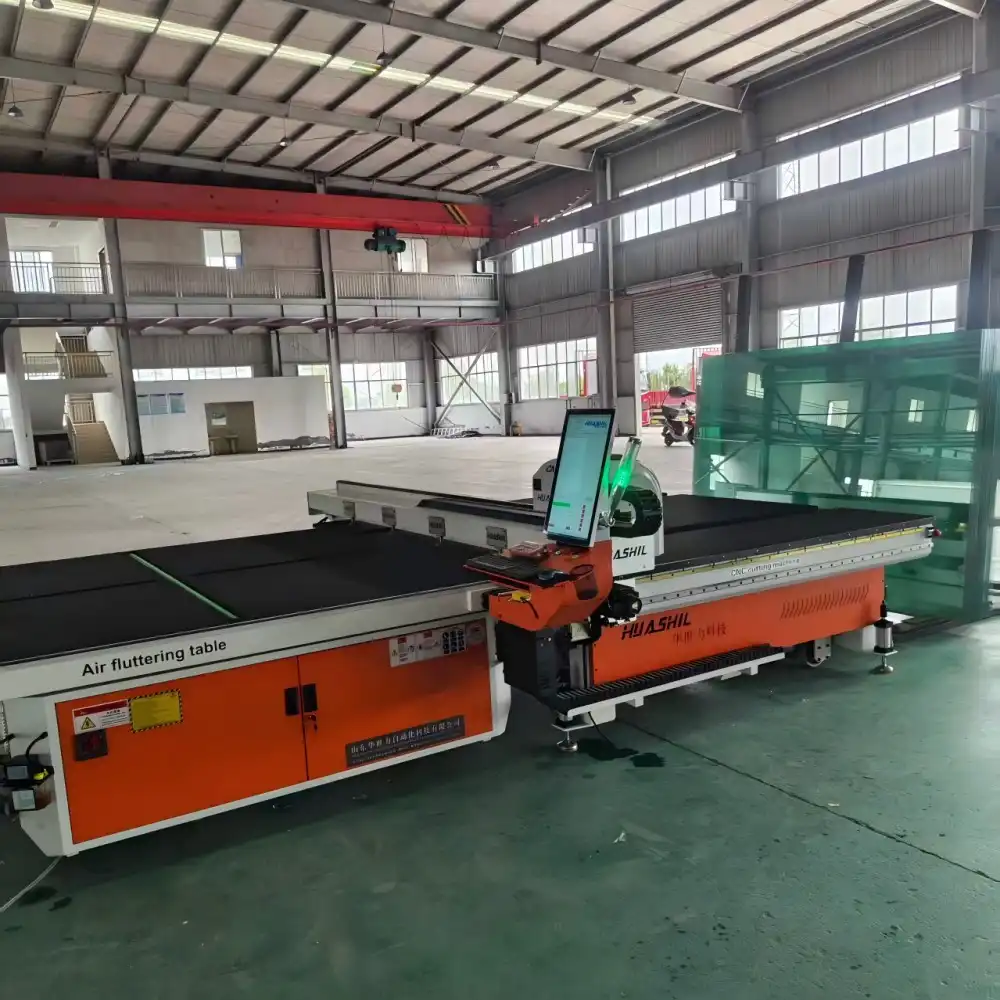
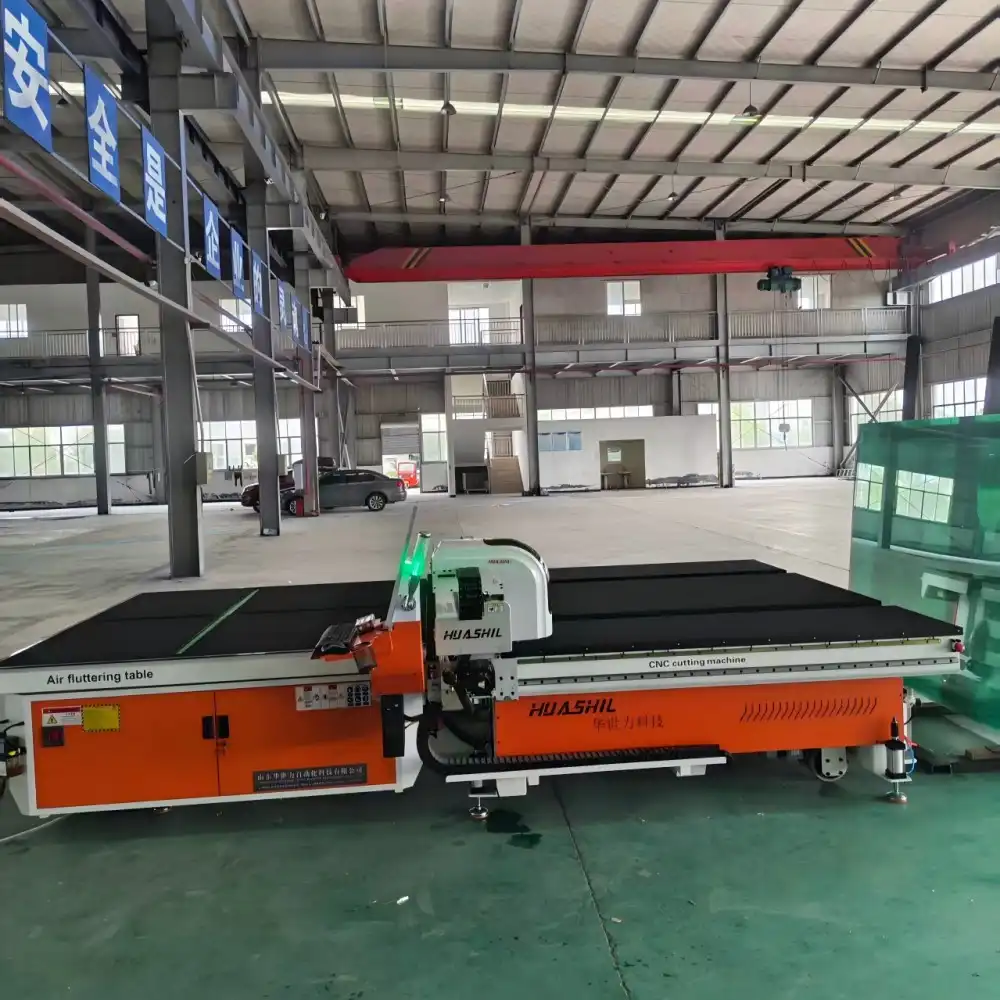
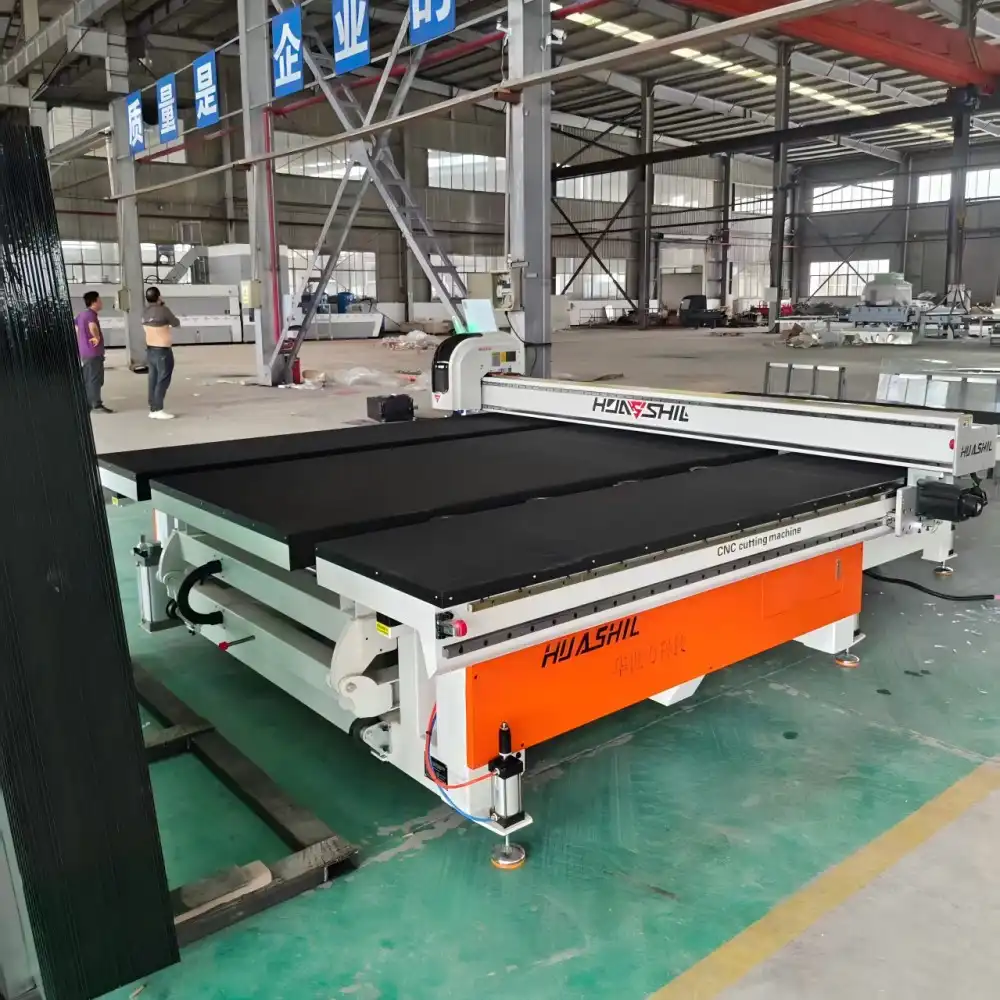
These systems integrate seamlessly with CNC cutting tables, creating a continuous workflow from raw glass storage to precision cutting. The HSL-LSX4228 model, which we manufacture at Huashil, exemplifies this integration. It features three distinct working surfaces: a loading table that receives glass from storage racks, a cutting table where the CNC system performs its work, and a breaking table where cut pieces are separated and sorted.
What makes this technology particularly valuable is its adaptability. The above-ground or underground rail configuration allows manufacturers to customize the system based on their facility layout. The 2+2 station setup can be adjusted according to production volume requirements, making it suitable for both medium-sized operations and large-scale manufacturers processing thousands of square meters daily.
Seven Core Applications Transforming Glass Manufacturing
Architectural Glass Processing for Building Projects
Curtain wall contractors and window fabrication plants face constant pressure to deliver large volumes with zero defects. An automatic glass feeder solves this challenge by handling oversized architectural glass sheets that would require three or four workers to move safely.
The precision glass handling capability ensures each sheet is positioned accurately within 0.5mm tolerance on the cutting table. This accuracy matters enormously when you're producing curtain wall panels that must align perfectly during installation. I've spoken with construction system integrators who reported reducing their rework rate from 8% to under 2% after implementing automated loading systems.
The four gripper arms on each side of the HSL-LSX4228 distribute weight evenly across the glass surface, preventing micro-fractures that compromise structural integrity. This becomes critical when processing tempered or laminated glass for high-rise buildings where safety regulations are stringent.
Automotive Glass Manufacturing with Complex Geometries
Automotive glass presents unique challenges. Windshields, rear windows, and side panels feature curves, angles, and precise dimensions that leave no room for positioning errors. Robotic glass loading systems excel here because they repeat positioning movements with mechanical consistency that humans simply cannot match.
The CNC glass positioning technology works in concert with optimization software like Optima, which calculates the most efficient cutting pattern to minimize waste. When producing automotive glass, material waste directly impacts profitability since specialized coated glass costs significantly more than standard architectural glass.
Manufacturing facilities producing smart mirror glass for vehicles with integrated displays require even higher precision. The automatic CNC glass loading machine ensures these expensive substrates reach the cutting table without surface contact that could damage delicate coatings.
Furniture and Interior Decoration Glass Fabrication
Glass furniture manufacturers—producing tabletops, shelving, shower enclosures, and decorative partitions—typically work with smaller production runs but greater design variety. The glass sheet automation provided by CNC-integrated loading machines accommodates this flexibility.
A furniture fabricator might process twenty different designs in a single shift, each requiring unique cutting patterns. The automated material handling system adapts quickly between jobs, eliminating the setup time that manual loading requires. Plant managers appreciate that operators can focus on quality control and design verification rather than physical material movement.
Shower door manufacturers particularly benefit from the breaking table feature. After the CNC system cuts the pattern, the breaking table facilitates clean separation of cut pieces, reducing edge chipping that would otherwise require additional grinding and polishing.
Sintered Stone and Artificial Stone Processing
While glass remains the primary application, versatile loading systems like those we produce at Huashil also handle sintered stone and engineered stone slabs. These materials, increasingly popular for countertops and wall cladding, share similar handling requirements with glass—they're brittle, heavy, and expensive.
The glass transport automation technology adapts to the different weight characteristics of stone materials. The loading capacity of 4200mm by 2800mm accommodates standard slab sizes in both glass and stone industries, making the equipment investment valuable for facilities processing multiple material types.
This versatility matters economically. Rather than purchasing separate handling equipment for each material type, fabricators can utilize one industrial glass automation system across their entire product range.
High-Volume Production Lines for Window Manufacturers
Window fabrication plants operating multiple shifts face a straightforward challenge: moving enough glass to keep cutting tables continuously productive. Even brief gaps in material flow create costly downtime when your CNC cutting system sits idle.
The glass loading conveyor functionality of automated systems eliminates these productivity gaps. The multi-station design means one position is always loading while another is cutting, and a third is unloading. This continuous rotation keeps the expensive CNC cutting equipment operating at full capacity.
I've visited window plants in Russia where winter construction deadlines create intense production pressure. Plant directors explained how their automated glass stacking machine allowed them to run extended shifts without increasing workplace injuries—a concern that intensifies during high-volume periods when workers become fatigued.
Custom Glass Cutting for Specialized Applications
Beyond standard production, specialty glass processors handle unique projects—oversized storefront installations, custom architectural features, and decorative glass art. These applications demand flexibility that only a smart glass loading system can provide.
The CNC machine integration allows operators to program completely custom cutting paths for one-off projects. The automated loader positions these unusual sizes and shapes with the same precision it applies to standard production, ensuring the expensive specialty glass doesn't become expensive waste due to positioning errors.
Museums, luxury hotels, and commercial developments increasingly specify custom glass features. Fabricators equipped with glass processing automation can bid competitively on these high-margin projects, knowing they can deliver the precision these applications demand.
Safety Enhancement and Labor Cost Optimization
Perhaps the most immediate benefit plant managers notice is workplace safety improvement. Moving large glass sheets manually creates constant injury risk—cuts, back strain, crushing injuries from dropped sheets. The robotic material loading system eliminates direct human contact with heavy glass during the most dangerous phases of handling.
Labor cost reduction follows naturally. A typical manual operation requires two to four workers dedicated solely to material handling. An automated system reduces this to one operator supervising the loading process while simultaneously performing quality checks and managing the cutting queue. This reallocation of human resources toward value-adding activities rather than pure material movement improves overall operational efficiency.
Technical Advantages That Drive Production Results
The engineering behind CNC glass handling systems delivers measurable improvements across multiple performance metrics. Let me break down the specific technical features that translate into business results.
The rail-based movement system—available in both above-ground and underground configurations—provides stability that prevents vibration during glass transport. Even minor vibrations can shift glass position by millimeters, enough to ruin cutting accuracy on precision projects. The solid rail foundation eliminates this variable.
Optimization software integration represents another significant advantage. Optima and similar systems analyze each glass sheet, identify defects, calculate optimal cutting patterns, and communicate directly with the loading machine. This software-hardware coordination reduces material waste by 15-25% compared to manual layout planning.
The automatic CNC glass loading machine's breaking table functionality deserves special mention. After CNC cutting, glass pieces remain in position, held by surface tension and minimal connectors. The breaking table applies controlled pressure or vibration to cleanly separate pieces without edge damage. This seemingly simple feature eliminates an entire manual process step that traditionally required skilled workers and added time to each production cycle.
Real-World Performance: What Plant Managers Experience?
Numbers tell part of the story, but the operational reality matters more. Production directors I've worked with consistently report several key improvements after implementing automated loading systems.
Throughput increases typically range from 40-70%, depending on previous manual processes. This improvement comes not just from faster loading but from continuous operation—the machine doesn't need breaks, doesn't slow down as shifts progress, and maintains consistent speed regardless of glass size.
Quality consistency improves dramatically. Manual positioning introduces human variability; each loading cycle differs slightly. Automated positioning repeats with mechanical exactness, meaning each cut sheet matches specifications precisely. This consistency matters enormously for architectural projects where panels must align perfectly during installation.
Maintenance requirements remain surprisingly low. The robust construction and relatively simple mechanical systems mean most plants schedule maintenance quarterly rather than monthly. The durable components withstand the demanding production environment without frequent part replacement.
How to Evaluate If This Technology Fits Your Operation
Not every glass fabrication facility needs automated loading immediately, but certain indicators suggest the investment makes strategic sense. Let me share the evaluation criteria I discuss with plant managers.
Production volume provides the clearest indicator. If your facility processes more than 500 square meters of glass daily, automated loading almost certainly delivers positive ROI within twelve months. The labor cost savings alone justify the investment, and throughput increases typically accelerate payback.
Product mix matters too. Operations producing primarily standard sizes with moderate design variation benefit most. Highly specialized operations producing mostly unique, small-format pieces may not utilize the automation capacity fully.
Growth trajectory influences the decision. If you're operating near capacity and considering facility expansion, automated loading might eliminate the need for additional floor space by increasing existing equipment productivity.
Labor market conditions in your region affect the calculation. Markets with rising labor costs, difficulty recruiting skilled workers, or strict safety regulations see faster ROI from automation investments.
Integration Considerations for Existing Production Lines
Adding automated loading to an established production line requires planning, but it's far from impossible. Most facilities can integrate these systems without major disruption to ongoing operations.
The rail installation for the automatic CNC glass loading machine represents the most significant physical modification. Underground rail systems require concrete cutting and foundation work, making them more suitable for new construction or major renovations. Above-ground rails install with less disruption and work well for existing facilities seeking to avoid extensive downtime.
Electrical and control system integration typically poses fewer challenges. Modern automated loaders use standard industrial control protocols that connect easily with existing CNC cutting systems. The integration allows seamless communication between loading, positioning, and cutting programs.
Operator training requires attention but not extensive time. Most production staff adapt to automated systems within a few days. The intuitive interfaces and safety interlocks make operation straightforward even for workers without prior automation experience.
Conclusion
The automatic CNC glass loading machine has evolved from luxury equipment to a production necessity for competitive glass fabricators. These systems deliver measurable improvements across safety, quality, throughput, and cost metrics that directly impact profitability. Whether you're processing architectural glass for construction projects, automotive glass with complex geometries, or decorative glass for furniture applications, automated loading technology provides the consistency and efficiency modern manufacturing demands. The integration challenges remain manageable, the ROI timeline is reasonable, and the operational benefits extend far beyond simple labor replacement.
FAQs
Q1: What types of glass can an automatic CNC glass loading machine handle?
These systems accommodate virtually all architectural and automotive glass types—float glass, tempered glass, laminated glass, coated glass, and low-E glass. The vacuum or mechanical gripper systems adjust to different glass thicknesses, typically from 3mm to 25mm. The same equipment also processes sintered stone and artificial stone slabs with similar dimensions. The maximum size capacity of 4200mm by 2800mm covers the vast majority of standard production requirements across multiple industries.
Q2: How does automated loading reduce glass breakage compared to manual handling?
Manual handling introduces multiple breakage risk points—improper grip pressure, uneven weight distribution, accidental impacts during movement, and positioning errors. Automated systems eliminate these variables through consistent gripper pressure calibrated to glass characteristics, balanced weight distribution across multiple contact points, and programmed movement paths that avoid obstacles. Production facilities typically see breakage rates drop by 60-80% after automation implementation, with the reduction most dramatic on oversized sheets where manual handling proved most problematic.
Q3: Can these machines work with existing CNC cutting tables from different manufacturers?
Compatibility varies by specific models, but most automated glass loading systems integrate with standard CNC cutting tables through universal mounting interfaces and control protocols. The key consideration is matching the loading table dimensions with your cutting table size and ensuring control system communication compatibility. At Huashil, we provide technical consultation during the planning phase to verify compatibility with your existing equipment and can customize integration solutions when standard interfaces don't align perfectly with your particular setup.
Q4: What maintenance does an automatic glass loading machine require?
Routine maintenance involves daily cleaning of vacuum cups or gripper surfaces to maintain proper adhesion, weekly inspection of rail systems for debris or obstruction, and monthly lubrication of mechanical movement components. Quarterly professional maintenance should include electrical system inspection, control software updates, and safety interlock verification. The robust construction means component replacement remains infrequent—most operations report major component lifespans of five to seven years under normal production conditions. This low maintenance burden contributes significantly to favorable total cost of ownership calculations.
Partner with HUASHIL: Your Trusted Automatic CNC Glass Loading Machine Manufacturer
Transforming your glass fabrication operation starts with the right technology partner. As an experienced automatic CNC glass loading machine supplier, Huashil brings manufacturing expertise, proven reliability, and comprehensive support to your automation project. Our HSL-LSX4228 model incorporates over a decade of engineering refinement, delivering the precision and durability that production directors demand. We offer flexible customization, including OEM and ODM services tailored to your specific facility requirements. Contact our team at salescathy@sdhuashil.com to discuss how our glass processing automation solutions can elevate your production capabilities and competitive position.
References
1. Chen, W., & Liu, M. (2021). Automation in Glass Manufacturing: Equipment Selection and Implementation Strategies. Industrial Processing Technology Press.
2. Martinez, R. (2020). "Comparative Analysis of Manual versus Automated Glass Handling Systems in Architectural Fabrication." Journal of Manufacturing Systems and Automation, 15(3), 178-195.
3. Petrov, A., & Kuznetsov, D. (2022). CNC Integration in Glass Processing Facilities: Technical Requirements and Productivity Impacts. Moscow Technical Publishing.
4. Thompson, J. (2019). "Safety and Efficiency Improvements Through Robotic Material Handling in Glass Industries." International Glass Review, 44(2), 67-82.
5. Wang, H., & Zhang, Y. (2023). Advanced Glass Processing Equipment: Design Principles and Operational Optimization. Beijing Manufacturing Technology Institute Press.
6. Fernandez, C., & Silva, P. (2021). "Cost-Benefit Analysis of Automated Loading Systems in Medium-Scale Glass Fabrication Plants." Industrial Equipment Economics Quarterly, 28(4), 112-129.