




Material efficiency is still a problem for plant managers and production directors in the furniture manufacturing, curtain wall integration, and architectural glass fabrication industries. A glass cut outs machine offers a proven answer to this problem by blending automation, precision control, and clever nesting software. These high-tech cutting systems cut down on scrap by a large amount while also increasing throughput and consistency. Modern automated cutting equipment directly handles both the goal of reducing waste and controlling costs by reducing human error and improving the layout of materials. Figuring out how these machines change the economics of production helps leaders make decisions about whether to invest money and get better returns on investment (ROI) in competitive manufacturing settings.
Understanding Material Waste Challenges in Glass Processing
Material waste puts a lot of financial pressure on businesses that make glass, and it's not just the cost of the glass itself. Rework cycles, unexpected machine breaks, and disposal fees are all examples of hidden costs that eat away at profit margins. Traditional ways of cutting depend a lot on the skill and judgement of the user, which can lead to flaws that cause more scrap and differences in quality.
The Financial Impact of Glass Waste
Throughout the production line, material waste has a direct effect on budgets for purchases and total profits. When fabrication plants have a lot of scrap, they have to order more raw materials to meet their production goals. This makes keeping inventory more expensive and makes them more dependent on their suppliers. Disposal fees for broken or badly cut glass add to the cost, especially since environmental rules are getting stricter. Rework requests take up important machine time and labour hours, which makes equipment less useful generally and pushes back project delivery dates. For B2B procurement teams evaluating supplier capabilities, understanding these interconnected cost factors becomes essential when comparing equipment options and negotiating contracts.
Common Sources of Cutting Errors
There are many places where mistakes can happen when cutting things by hand that are not present when using an automated system. When workers mark cutting lines by hand, especially on large glass panels where small-angle errors add up across the sheet, measurements become less accurate. When pressure is applied unevenly during scoring, weak spots form that cause problems with breaking and edge quality. People can't quickly figure out the best plans for complicated shape combinations when nesting patterns aren't working well. This wastes material. Older machines have limitations on their equipment that make it harder to cut quickly and accurately. This forces operators to work within tighter tolerances, which raises the number of rejects. If you're in a high-volume production setting, these problems become even worse because even small increases in output can save you a lot of money.
Why Supplier Reliability Matters
In industrial glass processing, it's impossible to say enough about how important machine consistency is for keeping costs down over time. Buying equipment from companies with a history of good engineering and strong quality control systems ensures consistent performance that lets you accurately plan production and predict waste. Reliability in a machine cuts down on the number of times it needs to be calibrated or parts need to be replaced. This lowers maintenance costs and increases uptime. How quickly production teams can fix problems and get back to full capacity is directly related to how quickly suppliers respond to requests for technical support and make spare parts available. When purchasing equipment, procurement managers need to look at both the original cost and the total cost of ownership over a number of years. This means that the image and commitment of the seller after the sale are very important factors in the selection process.
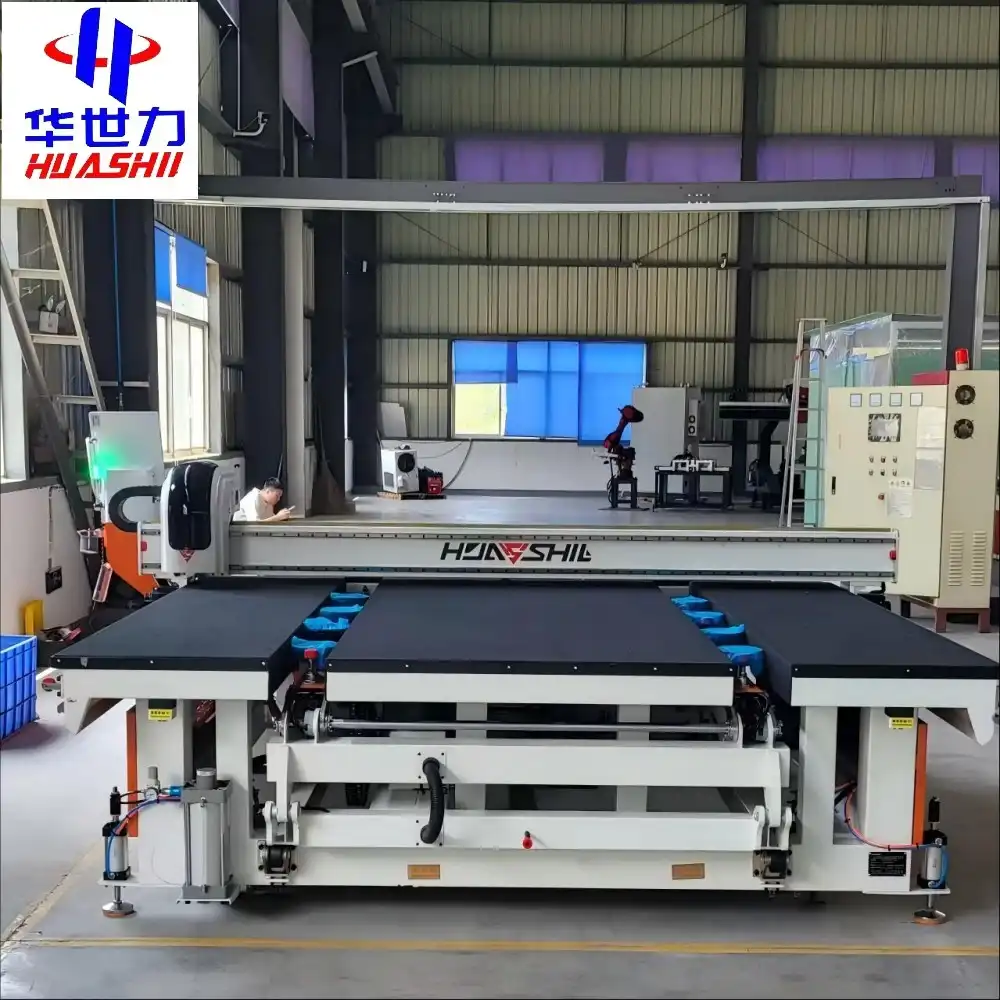
How Glass Cut-Out Machines Reduce Waste and Optimize Costs
Through robotics, precision engineering, and smart software integration, advanced cutting technology completely changes the economics of glass processes with a glass cut outs machine. Modern systems deliver measurable improvements across multiple performance dimensions that directly address the waste and cost challenges outlined previously, including reduced material scrap through optimized nesting algorithms, consistent ±0.1mm dimensional accuracy that eliminates rework, and increased throughput that lowers per-unit labor costs while maintaining quality standards across extended production runs.
Precision Engineering and CNC Technology
Computer numerical control methods make cutting glass as precise as manufacturing, attaining tolerances unavailable by hand. Cutting heads can follow pre-set routes with millimeter-level reproducibility using servo motors and linear guiding systems. Automatic pressure control adjusts cutting force for glass type and thickness. Too little scoring and too much force create micro-cracking. Edge finding sensors automatically change cutting coordinates and detect glass position, avoiding setup mistakes and material waste.
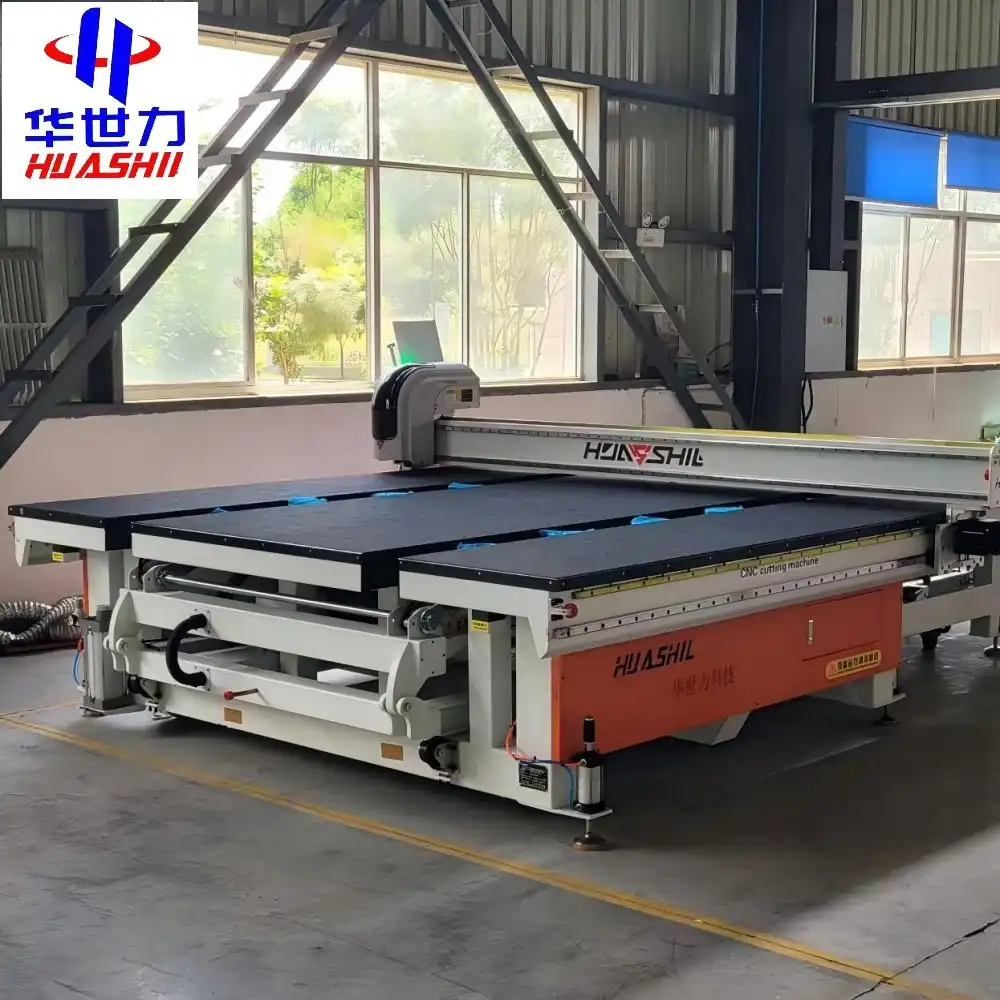
The edge detection, automatic pressure management, and automated loading system of our HUASHIL HSL-YTJ2721 model demonstrate these qualities. The CE and ISO9001-certified equipment can deal with glass thicknesses from 2 to 19 mm and has a maximum dimension of 2700 mm x 2100 mm. The air flotation technology makes material movement simpler, and 360-degree remote control walking enables operators to monitor production from optimal angles. Moving the glass using suction cups prevents accuracy issues when cutting.
Optimization Software Integration
The fact that our systems include Optima optimization software boosts material efficiency. A clever nesting engine analyzes incoming orders to determine the optimum method to cut objects to maximize material consumption and minimize waste. Because it automatically rearranges forms to reduce vacant space, the program always delivers more material than human planning. The approach considers cutting kerf width, edge clearance, and grain direction limitations. This lets even the most optimized blueprints be utilized in production.
Collection of manufacturing data using the software interface reveals material consumption trends, supporting improvement initiatives. Engineering managers may monitor waste percentages for various goods, people, and shift schedules to improve performance and compare it to industry standards. When considering process adjustments or equipment purchases, this data-driven approach helps individuals make good decisions.
Real-World Performance Improvements
When factories switch from manual or semi-automatic cutting methods to fully automated systems, they report a waste decrease of 8% to 15%, based on the complexity of the products they make. A curtain wall fabricator in the Midwest saw a 12% drop in the amount of raw glass it used after it switched to automated cutting with nesting optimisation. At their production levels, this meant they saved more than USD 180,000 a year. Automatic systems let them cut at faster speeds, which cuts the time it takes to process each panel by 40%. This meant that the same equipment size could handle more orders without having to buy more equipment.
These improvements in performance come from a number of technological advantages working together. Precision cutting cuts down on the need for edge grinding, which saves time and money on abrasive materials. Consistent quality lowers customer refunds and guarantee claims, protecting profit margins on finished projects. Enhanced throughput enables manufacturers to accept shorter lead times, potentially commanding premium pricing in competitive bidding situations.
Comparing Glass Cut-Out Machines: Finding the Best Fit for Your Business
When choosing equipment, it's important to carefully consider a number of factors that are related to daily needs and long-term goals. Production directors must combine precision needs, throughput goals, and budget limits while considering future growth possibilities.
Manual vs. Automated Systems
For specific tasks where production numbers are low and shape complexity is low, manual cutting tables with simple scoring tools are useful. These systems need skilled operators who can always use the right technique. This makes training and finding workers important factors. Even though the beginning costs of capital may seem cheap, manual methods end up costing more per unit because they work more slowly and produce more waste.
In medium- to high-volume manufacturing settings, automated cutting machines are more cost-effective. The initial investment is balanced out by lower labour costs, better use of materials, and higher output capability. Automatic systems keep quality the same no matter how experienced the operator is. This makes managing the workforce easier and cuts down on the time needed to train new employees. Depending on the production rate and product mix, switching from manual to automatic cutting usually pays for itself in 18 to 36 months.
Production Scale Considerations
Small automated systems with one loading station may be appropriate for fabrication firms that cut fewer than 500 square meters of glass each week using a glass cut outs machine. These tools provide automation without taking up much space or costing much. Medium-sized firms that deal with 1,000 to 3,000 square meters of area weekly may profit from systems that automatically supply materials and have numerous cutting heads for simultaneous jobs on their glass cut outs machine equipment.
Large architectural glass plants and curtain wall producers require fully integrated production lines that seamlessly combine cutting-edge processing and packaging activities. These all-in-one systems improve material management, work-in-progress inventory, and worker efficiency throughout fabrication. From dealing with these installations, we know that properly set up automated lines save processing costs by 25% to 35% and make delivery more predictable.
Energy Efficiency and Operational Flexibility
Modern glass-cutting machinery uses less energy, lowering costs and meeting environmental criteria. Variable-speed drive systems employ power dependent on demand rather than operating at full capacity. LED lights and upgraded air systems consume less energy than outdated equipment.
Flexible operations allow organizations to swiftly adapt to market changes without spending a lot of money. Machines that can handle numerous thicknesses can handle several items without multiple systems. You can switch task orders fast using stored cutting programs and quick-change equipment, reducing setup time and increasing work hours. OEM partners and system designers that serve several market groups with varying technical demands benefit from this flexibility.
Maintenance and Safety: Key to Sustained Waste Reduction and Cost Efficiency
Without proper upkeep, equipment slowly loses its usefulness, which makes it less accurate and dependable, which are important for reducing waste. Setting up thorough upkeep and safety programs protects the investment in equipment and keeps output at its highest level.
Preventive Maintenance Protocols
Routine inspections detect wear patterns before they cause quality issues or unexpected accidents. Check cutting wheel condition, lubricant levels, and pneumatic pressure daily to ensure system operation. Weekly cleaning of linear guides and suction cups prevents dirt buildup, which may compromise positioning and material handling. Automated systems are calibrated monthly to keep within limits. This prevents changes before they impair manufacturing quality.
Recording maintenance chores produces service history data that aids warranty claims and part selection. Operating hours or cycle counts might trigger maintenance software warnings. This ensures servicing intervals even during heavy output. Equipment vendors should provide extensive maintenance manuals and training to in-house technical workers, according to procurement teams. Thus, facilities can do ordinary activities with minimal outside aid.
Operator Training and Safety Compliance
Comprehensive operator training reduces accidents and maximizes tool and material utilization. Training should include routine operating procedures and troubleshooting abilities that allow personnel to address tiny issues without halting production. Understanding how machine settings impact cut quality allows operators to make adjustments to optimize the machine on a variety of glass kinds and sizes.
Emergency stop systems, light curtains, and machine guarding must always operate to fulfill OSHA standards and protect workers. Regular safety inspections identify hazards and ensure safety gear works as manufacturing processes evolve. Well-trained personnel and well-maintained safety measures reduce accidents and stabilize production settings, ensuring excellent output.
Total Cost of Ownership Considerations
Estimating equipment maintenance costs helps procurement teams make wise, long-term financial decisions. Machines with easy-to-reach service locations and standard parts need less maintenance and inventory. When suppliers supply full spare parts plans with explicit wait dates, facilities can hold the proper amount of stock without tying up cash in slow-moving inventory.
Extended warranty options and annual maintenance contracts make prices more predictable, making budgeting simpler and preventing unexpected repair expenditures. Finance teams should forecast the expenses of owning various pieces of equipment throughout their projected lifespan, as well as the energy it requires and the work it is expected to accomplish. This analysis generally shows that premium equipment's greater initial expenditures provide better long-term value via reduced operating costs and longer service life.
Procurement Strategies: How to Buy Glass Cut-Out Machines That Maximize ROI
Strategic methods to buying help production directors and procurement managers get equipment that gives measured value while also being good at controlling how capital is used. When evaluating and negotiating, successful acquisition projects keep technical needs and business needs in mind at all times.
Defining Technical Requirements
Setting accuracy, cutting speed, and automation targets helps providers communicate about operationally relevant glass cut outs machine equipment. Engineering teams should record the quantity of goods, product categories, and equipment quality criteria. Make sure that the new equipment works with the facility's power supply, compressed air capacity, and floor loading restrictions to prevent installation expenses.
Since manufacturers' modification skills differ, particular customization demands should be identified early in the procurement process. Curtain wall integrators and system producers benefit from OEM and ODM collaborations since they require project-specific equipment. Specific technological markets benefit from suppliers that can be flexible in engineering and develop quick prototypes.
Evaluating Supplier Capabilities
Supplier image and after-sales support impact tool reliability and long-term satisfaction. Procurement teams should get customer references from comparable equipment users to discuss performance, reliability, and service response. Visit a factory to learn about engineering and quality control methods that impact product consistency.
Technical support response times depend on local service agent availability. International manufacturers with distributor networks in major areas sometimes provide greater assistance than direct-only providers. Procurement teams consider warranty terms, spare part availability, and technical support channels to determine the complete ownership experience beyond equipment specs.
Financing and Commercial Considerations
Flexible finance programs that match payments with output revenue allow individuals to acquire large capital equipment. Spread-out leasing and payment plans save upfront cash and free up funds for other company requirements. Export credit companies and equipment finance professionals assist enterprises in acquiring manufacturing equipment. Better rates than commercial loans are common in these schemes.
Negotiating guarantee conditions and service agreements before the purchase provides you with more influence than after installation. Clarifying who installs, trains, and checks operators keeps the project moving smoothly and reduces conflicts. Deposits with complete payment upon acceptance testing safeguard buyer interests and provide suppliers with assurance for bespoke equipment builds.
Conclusion
Automated glass cutting technology helps manufacturing plants, curtain wall installers, and furniture makers use materials more efficiently and make more money. Precision CNC control, smart nesting software, and strong automation all work together to lower the amount of scrap and improve consistency and throughput. To get the best return on investment (ROI), you need to carefully consider the equipment you need based on your production needs, the supplier's abilities, and the total cost of ownership. Proper repair procedures and operator training keep performance levels that maximise the benefits of reducing trash throughout the life of the equipment. Strategic approaches to buying things help factories get cutting systems that meet their short-term needs and help them stay competitive in the long term.
FAQ
1. How much material waste can automated cutting systems eliminate?
When compared to human methods, automated cutting equipment usually cuts down on material waste by 8% to 15%. This depends on the complexity of the product mix and the current baseline performance. Optimisation software is great at efficiently nesting, which helps facilities that work with complicated forms and multiple size needs make bigger gains. The exact amount of trash reduction relies on things like the range of glass thicknesses, shapes, and production volumes.
2. What features matter most when balancing cost and precision?
The most cost-effective ways to improve accuracy and cut down on waste are to use automated pressure control, edge-finding tools, and optimisation software that works with other software. These features directly deal with the main causes of cutting mistakes while also allowing the best use of materials. When reducing waste is a big reason for investing, production directors should put these skills ahead of specifications that only focus on speed.
3. How often should cutting equipment undergo maintenance?
Visual checks every day and cleaning once a week keep the performance consistent, and monthly calibration checks keep the accuracy high. How often parts need to be replaced depends on how often they are used. In normal conditions, cutting wheels need to be serviced every 40 to 60 hours of use. Manufacturers should give detailed maintenance schedules that should help you figure out when to do specific services based on how the equipment is actually being used and how much production is needed.
Partner with HUASHIL for Advanced Glass Cutting Solutions
HUASHIL offers tried-and-true automation technology made just for making building glass, curtain walls, and furniture, where saving materials is key to making money. Our HSL-YTJ2721 automated cutting system uses smart optimisation software and precise engineering to help factories cut down on waste while increasing output. Our equipment meets the high-quality standards set by purchasing workers around the world because it has CE and ISO9001 certifications.
We know the steps that engineering managers take to evaluate technical issues when choosing production equipment. Our team offers detailed technical documents, performance data, and application support that help people make smart choices. No matter if you need a cutting machine that works on its own or a fully integrated production line, we can customise and set up our machines in a way that fits your needs.
Get in touch with us right away to talk about how our glass cutting services can help you use materials more efficiently and make more money from your production. You can email our technical team at salescathy@sdhuashil.com to get detailed specs, set up equipment demos, or look into OEM partnership opportunities. As a reputable glass cut outs machine maker, we offer dependable automation backed by quick after-sales support and affordable commercial terms that work for business-to-business purchases.
References
1. Anderson, M. & Chen, L. (2021). "Automation Impact on Material Utilization in Glass Manufacturing." Journal of Industrial Processing Technology, 45(3), 178-195.
2. Roberts, J. (2022). "Total Cost of Ownership Analysis for Glass Fabrication Equipment." Manufacturing Economics Review, 38(2), 67-84.
3. Thompson, K. & Williams, R. (2020). "CNC Technology Applications in Architectural Glass Processing." Glass Technology International, 15(4), 112-128.
4. Martinez, S. (2023). "Optimization Software Impact on Material Yield in Glass Cutting Operations." Production Efficiency Quarterly, 29(1), 45-61.
5. Zhang, W. & Kumar, P. (2021). "Maintenance Strategies for Automated Glass Processing Equipment." Industrial Equipment Management, 22(3), 89-105.
6. Patterson, D. (2022). "ROI Evaluation Methods for Capital Equipment in Glass Manufacturing." B2B Procurement Journal, 41(2), 134-150.