




When you add a glass loading table with arm to your cutting line, it changes how you work with big sheets of glass and cuts down on labour costs and loss by a huge amount. Robotic arms and air flotation technology are used together in modern automated loading systems to move glass panels from storage to cutting stations without any problems. This integration solves the most important problems in the production of architectural glass, cars, and furniture, increasing output by up to 40% while reducing damage to the products. You can make sure your operations are safe, efficient, and scalable to meet today's high manufacturing standards by choosing equipment that fits your production needs and works with the control systems you already have.
Understanding the Challenges in Traditional Glass Loading Systems
Glass factories all over the US are under more and more pressure to increase output while still meeting strict quality standards. Despite being fairly common, manual loading methods cause major operational problems that have a direct effect on both safety and profits.
The Hidden Costs of Manual Glass Handling
When operators move heavy glass sheets that weigh hundreds of pounds by hand, several problems happen at the same time. Physical strain makes it hard to place things accurately, and even small alignment problems can cause problems later on in the cutting process. We've seen that breaking things by hand increases by 15–25% compared to automatic systems, which means a lot of wasted material. The cost of labour keeps going up, but adding more workers just makes things more crowded around the cutting tables instead of helping with the slow flow of work.
Variable Glass Dimensions Create Complexity
Today's building projects need to be able to adapt quickly. One day, your line is working with standard 3660x2440mm sheets for curtain walls, and the next day it's working with panels of any size needed for special uses. Manual systems have a hard time adapting quickly, which takes time and raises the risk of operator error. This variety also makes safety rules more difficult to follow, since workers have to remember and follow different handling procedures for different glass weights and sizes.
Production Bottlenecks Limit Growth
The loading stage is often the part of your cutting line that limits how much it can do. Even if you have a high-speed CNC cutting table that can handle 60 sheets of paper an hour, it might only get 35 to 40 sheets loaded by hand in that time. This mismatch loses the money you spent on cutting tools and keeps you from taking on bigger jobs or finishing projects on time.
Core Principles for Successful Loading Table Integration
To choose and set up automatic loading equipment, you need to know a few technical and practical rules that will affect how well it works in the long run. These basics help you make decisions about what to buy and make sure that your investment gives you measurable returns.
Matching Equipment Capacity to Production Requirements
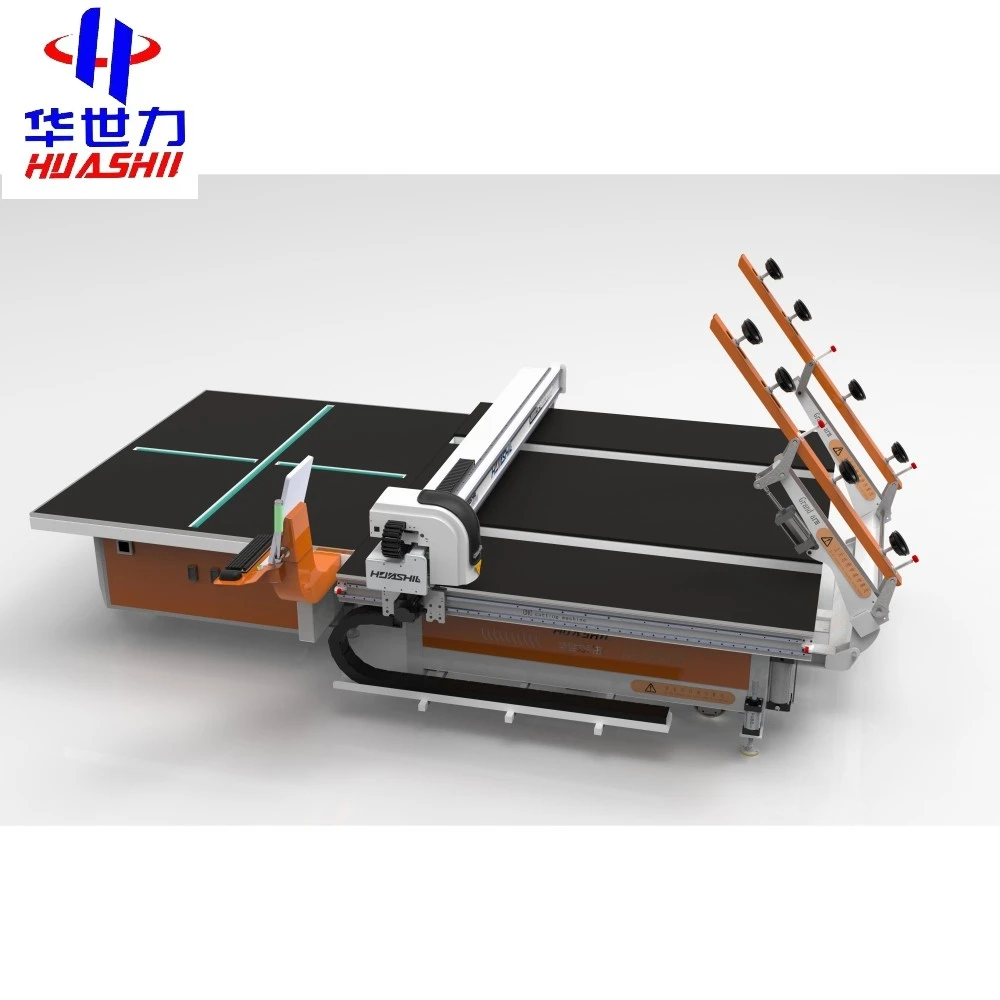
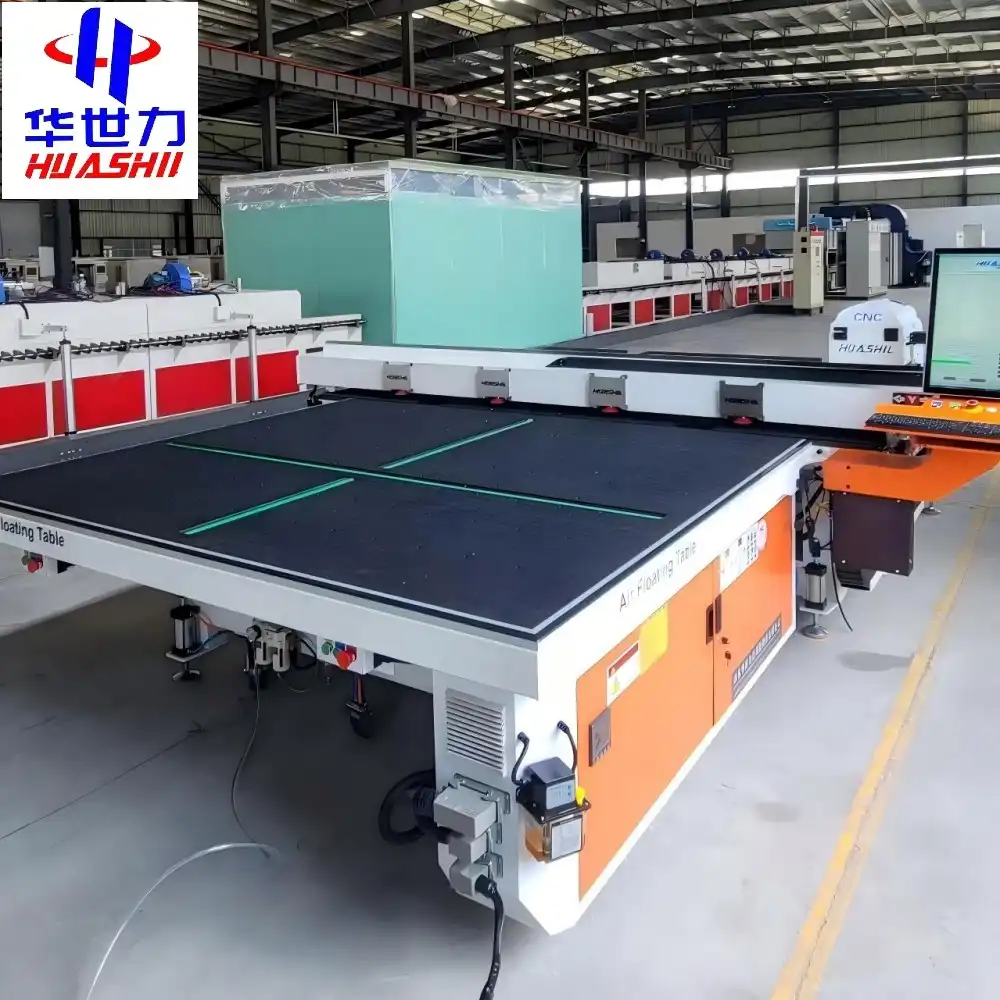
Your glass loading table with arm needs to be big enough to hold your biggest glasses and still have enough weight capacity. The HUASHIL HSL-SPT3624 model can handle glass up to 3660 x 2440 mm, so it's good for most architectural and automotive glass needs in North America. Aside from size, you should also think about the time it takes to load the material. Automated systems should match or beat the processing speed of your cutting table to avoid delays. Air flotation systems greatly reduce friction, making it easy for people or robots to move glass sheets that weigh up to 500 pounds.
Ensuring Control System Compatibility
Industrial protocols like Modbus, Profinet, and EtherCAT let modern glass processing equipment talk to each other. Before you buy, make sure that the control architecture of your glass loading table with arm works well with other cutting tables, breaking systems, and line management software. Unified control stops data silos and lets processes run at the same time, so the loading table can prepare the next sheet automatically while the cutter finishes the current job.
Prioritizing Safety and Reliability Features
Many U.S. procurement teams use CE certification as proof that equipment meets European safety standards when they are looking at it. In order to keep operators safe during automated cycles, you should look for emergency stop systems, overload sensors, and physical guards. ISO9001 approval shows that the company keeps a quality management system, which makes it less likely that parts will break down and stop production. Downtime on glass processing lines costs between $500 and $2,000 an hour, depending on the size of the facility. Because of this, reliability is a very important factor when buying glass.
Step-by-Step Integration Process
Putting in place automatic loading equipment is done in a way that makes the process as smooth as possible while still ensuring top-notch performance. We suggest this method because it has worked well in a number of different types of facilities.
Phase 1: Assessment and Planning
Go through your current production process with your engineering and operations teams to write down cycle times, find problems, and set clear goals for how to make things better. Find out how much room you have by measuring the ceiling height, the floor load capacity, and how close the new equipment is to the old equipment. Set goals for success, such as lowering the time it takes to load by half, reducing the number of workers needed by two per shift, and lowering the number of broken glasses to below 2%.
Early on in this phase, talk to suppliers like HUASHIL about customisation options. Manufacturers often change standard equipment to fit the layout of a specific facility or to add special sensors for keeping track of quality.
Phase 2: Equipment Selection and Procurement
When comparing specs between providers, pay attention to things like load capacity, cycle time, compatibility with control systems, and the ability to provide help after the sale. Ask for detailed technical documentation that engineering teams can look over to make sure everything works together. Check the warranty terms. A warranty that covers the whole robotic arm mechanism and air flotation parts will protect your investment.
Talk about delivery times that work with your planned installation windows, which are usually times when production is low or when the facility is growing. For the U.S. market, make sure that providers keep extra parts in stock in the U.S. so that there is less downtime if parts need to be replaced.
Phase 3: Installation and Calibration
Professional installation teams should take care of the technical placement and make sure that the loading table is perfectly lined up with the receiving area of your cutting table. Local codes must be followed for electrical connections, and programming that syncs up loading cycles with cutting operations is needed to integrate the control system.
Testing with different sizes and weights of glass is part of calibration. The goal is to find the best air pressure, arm positioning accuracy, and safety sensor thresholds. Advanced models like the HSL-SPT3624 have a 360-degree remote control walking feature that is useful during this phase because it lets techs fine-tune positioning from the best viewing angles.
Phase 4: Operator Training and Optimization
Even systems with a lot of automation need trained operators who know how they should work and how to fix common problems. Maintenance tasks like cleaning the air filter, checking the sensors, and learning what to do in an emergency should all be covered in training. We suggest that you gradually increase the amount of production over the course of two weeks while keeping an eye on performance measures and making small changes to control settings.
Evaluating Automation Solutions for Your Facility
In different working settings, different automation methods work best. Knowing these differences helps procurement teams make smart choices that are in line with long-term manufacturing goals.
Comparing Manual, Semi-Automated, and Fully Automated Systems
For manual loading systems, each cutting line shift needs two to three operators, and the cost of their time each hour, including wages, benefits, and overhead, is between $40 and $75. For small-number runs, these systems are very flexible, but they can't keep up with the speed and accuracy that modern production needs.
Some semi-automated glass loading tables with arms have powered conveyors and air flotation, but glass still needs to be placed by hand first. These methods make work easier for people and increase output by 30 to 35 percent while keeping capital costs low. Small to medium-sized centers that process 500 to 1,500 square meters of space every day can use them.
Fully automatic systems with robotic arms from a glass loading table with arm manufacturer get rid of the need to handle glass by hand completely. The initial investment is higher—usually between $80,000 and $150,000, based on the specifications—but for medium- to large-sized businesses, the savings in labour costs and increased output pay for themselves within 18 to 24 months. These systems work best in places that process more than 2,000 square meters of material every day and where speed and consistency make the investment in automation worth it.
Air Flotation Technology Advantages
When air floats, it makes a thin cushion of air between the glass and the table surface. This almost completely eliminates friction. This lets people or robot arms move heavy sheets into place with little effort, which keeps the edges from getting damaged and keeps people from getting too tired. Models like the HSL-SPT3624 have a breaking table that lets you control how the glass separates after scoring. This makes the change from cutting to breaking operations easier because you don't have to move the material around as much.
Procurement Considerations for North American Buyers
When buying glass production equipment from overseas companies, there are a few things you need to keep in mind that will affect the total cost of ownership and the success of your business in the long run.
Supplier Qualification and Certification Verification
Ask producers for pictures of their CE and ISO9001 certificates and check the number of those certificates with the organisations that issued them before making big investments. Check with related businesses for customer references. For example, architectural glass fabricators looking at loading tables should talk to other architectural glass facilities that use the same type of equipment.
Check to see how much experience the manufacturer has with your specific application. For years, Shandong Huashil Automation Technology Co., Ltd. has worked with companies that make building glass, curtain wall glass, and furniture glass, improving their equipment by using it in real-life production settings. Because of this specialised experience, better default settings are used, and fewer changes are made after installation.
Total Cost of Ownership Analysis
The purchase price only covers 60–70% of the costs of owning the car for five years. When comparing options, you should think about how much it will cost to install, train operators, do maintenance, keep spare parts on hand, and how much it might cost for hours of downtime. Ask for specific repair plans and the going rate for spare parts. Some makers charge more for new sensors or pneumatic parts.
The amount of energy each type uses changes a lot. Depending on the size of the table and the air pressure needs, air flotation systems use 5 to 15 kW of power at all times. Figure out how much energy you'll need each year based on the industrial power rates in your area and the hours you plan to be open.
After-Sales Support Infrastructure
International suppliers of equipment should keep responsive technical support open during business hours. There are problems with time zones when production problems happen during your day shift, and the manufacturer's help team isn't available for eight hours. Check to see if suppliers have service partners in the U.S. or if they keep important spare parts in stock in the U.S.
Major motor parts should be covered by the warranty for at least one year, and there should be clear steps for making a claim. Some makers make guarantees for key systems last up to 24 months, which gives you more financial security during the time it takes to pay for the equipment.
Planning for Scalability and Future Integration
More and more, modern manufacturing is following the ideas behind Industry 4.0, which connects machines to unified data networks. When looking at glass loading tables with arms, you should check to see if the control systems allow for data logging, remote monitoring, and connection to manufacturing execution systems (MES). Continuous improvement projects can be made easier with equipment that gives cycle time data, utilisation metrics, and predictive maintenance alerts. This equipment also helps executives justify investments in expansion.
Conclusion
The addition of a glass loading table with arm to your cutting line is a smart investment that will help with labour issues, make quality more consistent, and set up your facility for growth. You can have a successful installation and quickly see your return on investment (ROI) if you carefully consider your operational needs, choose equipment that fits your production volume and space limitations, and work with experienced manufacturers who offer strong support. When you use air flotation technology, automatic positioning, and integrated control systems together, handling glass goes from being a bottleneck to a competitive edge that lets you go after bigger projects and pickier clients.
Frequently Asked Questions About Glass Loading Table Integration
1. What size loading table do I need for architectural glass production?
Sheets of architectural glass are usually made in sizes between 2440x3660mm and bigger special sizes. The HSL-SPT3624 can handle dimensions up to 3660 x 2440 mm, which is the largest size for standard architectural glass sheets used to make curtain walls and windows. Check your most common and largest glass sizes, and then choose equipment that has a 10-15% capacity range so that you can handle rare orders that are too big without having to do anything by hand.
2. How long does installation typically take?
Standard installations, which include mechanical positioning, electrical connections, integration of the control system, and initial calibration, are finished in three to five days. Facilities that already have automation technology tend to finish faster, while facilities that are adopting automation for the first time may need more time to train operators and improve processes. Expect your team to be able to make fewer things for two weeks while they get used to the new tools.
3. Can automated loading tables handle both standard and custom glass sizes?
Yes, current systems can adapt to different sizes by themselves or with quick inputs from a control panel. Air flotation and robotic arm systems can work with different glass weights and sizes without having to be mechanically reconfigured. This makes them perfect for job shops that have to meet a wide range of customer needs while also producing standard items.
Partner with HUASHIL for Your Glass Loading Automation Needs
HUASHIL offers a tried-and-true glass loading table with arm solutions that help makers in North America get around production bottlenecks and make real gains in efficiency. The HSL-SPT3624 model from us has air flotation technology, built-in breaking tables, and remote control operation. It comes in a CE and ISO9001-certified package that is made to last. We know what architectural glass, curtain wall, and furniture manufacturing need because we've been making glass loading tables with arm systems for a long time. Our engineering team can help you make changes to fit the layout of your facility and the needs of your production, and our technical service network will make sure you get help quickly when you need it. Email our team at salescathy@sdhuashil.com to talk about your cutting line integration project and get detailed specifications that are made to fit your needs.
References
1. Glass Processing Industry Association. "Automation Standards for Glass Handling Equipment in Modern Fabrication Facilities." Industrial Glass Technology Journal, 2023.
2. Manufacturing Engineering Society. "Comparative Analysis of Manual versus Automated Material Handling in Glass Production Lines." Advanced Manufacturing Systems Review, 2022.
3. International Association of Glass Processors. "Safety Standards and Best Practices for Automated Glass Loading Systems." Glass Industry Safety Guidelines, 2023.
4. American Glass Manufacturing Coalition. "ROI Analysis Framework for Capital Equipment Investment in Glass Fabrication." Production Equipment Investment Studies, 2022.
5. Industrial Automation Research Institute. "Air Flotation Technology Applications in Heavy Material Handling Systems." Automation Technology Quarterly, 2023.
6. North American Glass Manufacturers Council. "Integration Strategies for Automated Equipment in Existing Production Lines." Manufacturing Modernization Technical Papers, 2022.