




A mobile glass cutter makes production much more efficient by cutting precisely, cutting down on setup time, and reducing the amount of material that is wasted. Automated mobile glass cutting systems, on the other hand, are more flexible for on-site activities and different glass sizes while still cutting accurately within ±0.1mm. In architectural glass fabrication, curtain wall manufacturing, and furniture production, these machines make work easier by using advanced software optimisation, automatic edge detection, and quick repositioning features that are not possible with older methods.
Understanding Mobile Glass Cutters and Their Role in Production Efficiency
What Defines Modern Mobile Glass Cutting Systems
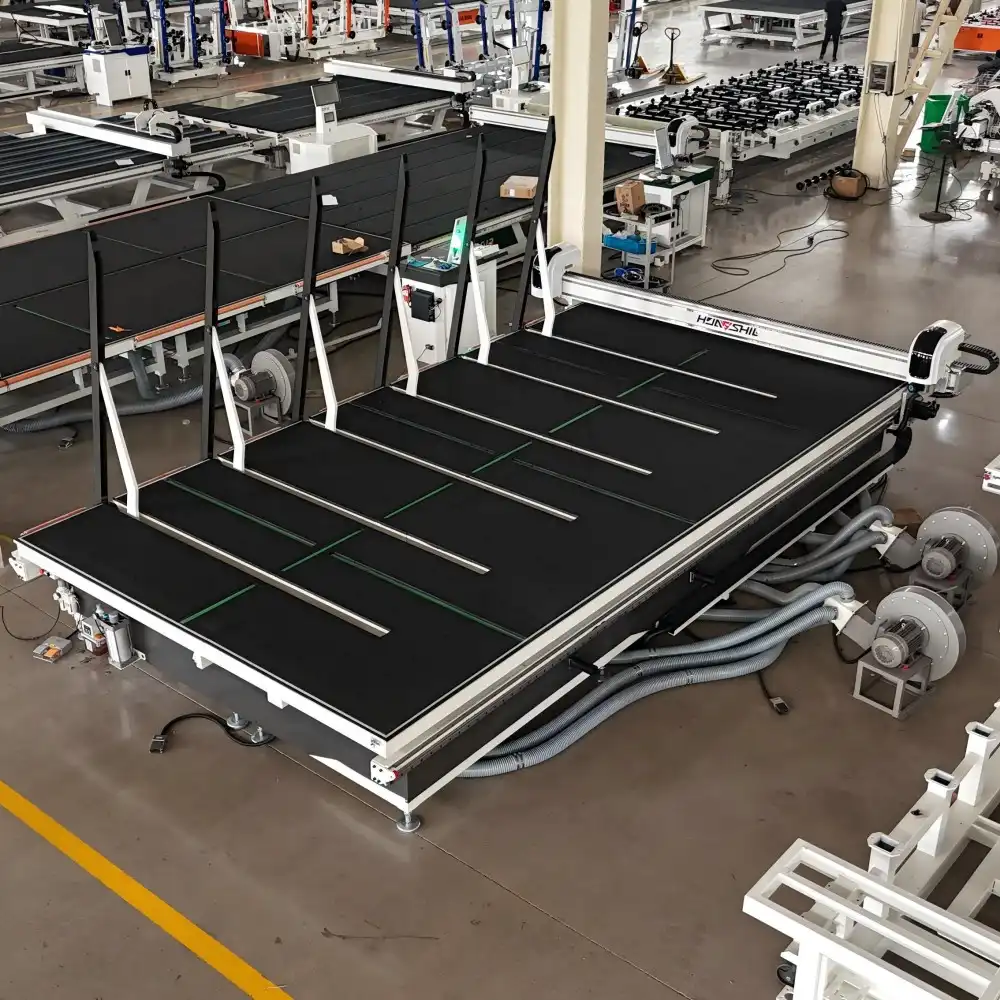
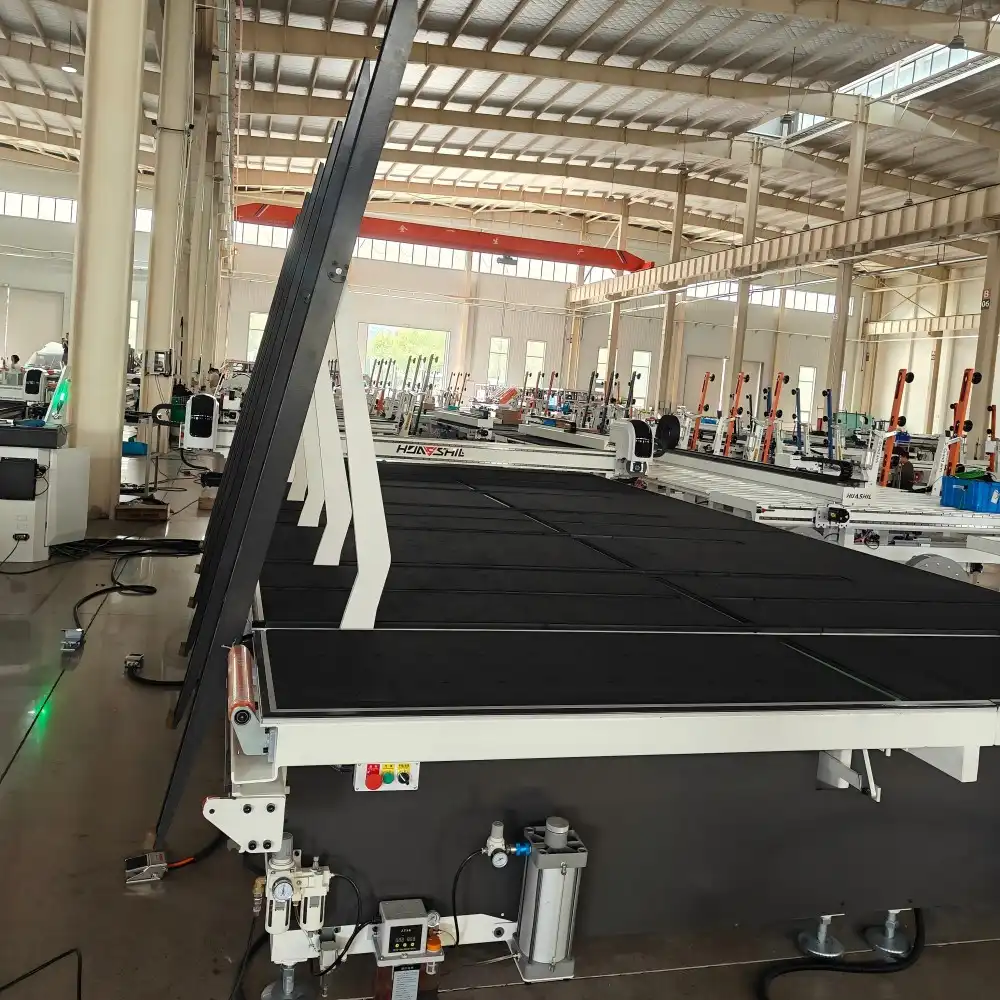
Handheld tools are no longer the only way to cut glass automatically in the modern world. Industrial mobile glass cutting tools are portable and have CNC precision, so makers can cut big pieces of glass up to 2700x2100mm right at the production sites. These systems use optimisation software, such as Optima, to figure out the best cutting patterns for each piece of material before they are actually cut. This makes a big difference in reducing waste compared to manual layout methods.
The most important thing about these machines is that they can handle glass thicknesses from 2 mm to 19 mm without having to be adjusted by hand between jobs. Automatic pressure control systems change the cutting force based on the qualities of the material, and air float tables make placement easier by reducing friction. This mix gets rid of the guesswork that comes with regular cutting stations and makes sure that all production batches get the same results.
Key Technical Features That Drive Efficiency
A single operator can control multiple cutting sequences from a safe distance using remote control and 360-degree walking systems. Automatic edge-finding technology finds the edges of the glass and changes the cutting lines in real time, so there are no more measurement mistakes that happen when placing by hand. Because of these features, cycle times are shorter. What used to take 15 minutes to set up and measure now takes less than three minutes.
Safety rules are still very important. If a product has a CE or ISO9001 approval, it means that it meets international standards for everything from electricity safety to noise levels during operation. To keep the ±0.1mm accuracy needed for architectural glass applications, regular maintenance includes checking the blades, making sure the pressure calibration is correct, and updating the software.
Challenges in Traditional Glass Cutting Methods and How Mobile Glass Cutters Solve Them
Limitations of Conventional Cutting Approaches
There are three major problems with traditional glass cutting machines. Due to limitations on portability, big glass sheets have to be moved to the cutting area, which raises the risk of breaking them while being moved. When measuring and scoring by hand, mistakes can happen. Variance rates in the industry are between 0.5 mm and 2 mm, even among experienced operators. Cutting speeds are slower because the steps—measure, mark, score, and snap—can't be done at the same time, so there is time between stages of production.
Facilities that use mobile glass cutter tools often get inconsistent results. Cutting precision goes down immediately with operator tiredness over eight-hour shifts. Changes in temperature can make glass more or less brittle, but old methods don't have ways to adapt and make up for this. When all of these factors are added together, failure rates can hit 8–12% in high-volume production settings. This means that a lot of money is lost on materials and labour.
How Automation Resolves Core Production Obstacles
With their built-in technology, automated mobile cutting devices can deal with these problems. With better mobility, equipment can go to storage areas for materials, so glass doesn't have to be moved in dangerous ways. Ergonomic designs that can be controlled from a distance lower physical stress and keep workers' performance consistent across shifts. Modern blade technology, especially diamond-coated cutting wheels, ensures consistent scoring depth even when the glass composition is different.
Production companies that use automatic mobile cutting say they see real gains. When a curtain wall maker in Texas switched from manual methods to CNC-controlled mobile cutting, they saw a 34% drop in the amount of waste. The number of mistakes they made dropped from 9.4% to 2.1%, and the cycle time per square metre went from 8.2 minutes to 5.1 minutes. These numbers show that accurate technology has a direct effect on both quality and output.
Critical Factors When Choosing a Mobile Glass Cutter for Your Production Needs
Matching Equipment Specifications to Production Requirements
Selecting appropriate cutting equipment begins with analysing production parameters. Facilities processing primarily 6mm architectural glass have different requirements than those handling 15mm furniture applications. Maximum glass size capacity determines whether equipment can accommodate your largest standard panels—a 2700×2100mm capacity suits most North American architectural projects, but may constrain custom curtain wall work.
Cutting precision specifications must align with application tolerances. Shower door manufacturing typically requires ±0.3mm accuracy, while low-iron architectural glass for facades demands ±0.1mm precision to ensure proper fit during installation. Operator skill levels influence interface complexity needs—facilities with experienced technical staff may prefer advanced programming options, whereas operations with high turnover benefit from simplified touchscreen controls.
Evaluating Technology and Support Infrastructure
Blade technology significantly impacts operational costs and cutting quality. Tungsten carbide wheels suit standard float glass applications but wear rapidly on low-iron or textured surfaces. Diamond-coated variants maintain consistent performance across diverse glass types, reducing blade replacement frequency from weekly to monthly intervals. This difference matters when calculating the total cost of ownership—though diamond blades cost 40% more initially, their extended lifespan delivers 60% lower annual blade expenses.
Accessory availability prevents production disruptions. Replacement cutting wheels, pressure sensors, and edge-finding components should ship within 48 hours domestically. Technical support responsiveness directly affects downtime costs—equipment failures in high-volume facilities can cost $1,200 to $3,000 per hour in lost production. Manufacturers offering remote diagnostics and video troubleshooting substantially reduce mean time to repair compared to those requiring on-site service visits.
Software Integration and Workflow Compatibility
Optimisation software for mobile glass cutters transforms raw cutting requirements into efficient production sequences. Optima software analyses panel dimensions against order specifications, arranging cuts to maximise yield from each glass sheet. This algorithmic approach consistently achieves 92-96% material utilisation compared to 78-85% with manual layout planning. The efficiency gain becomes substantial across thousands of square meters—a difference that impacts both material costs and waste disposal expenses.
Workflow compatibility extends beyond cutting operations. Systems that integrate with existing enterprise resource planning platforms enable seamless data flow from order entry through production scheduling to quality verification. This connectivity eliminates manual data entry errors and provides real-time production status visibility that plant managers need for accurate delivery commitments.
How Mobile Glass Cutters Improve Production Efficiency: Analysis and Metrics
Quantifiable Speed and Accuracy Improvements
Cutting speed acceleration represents the most visible efficiency gain. Automated systems complete complex cutting patterns at 40-60 meters per minute compared to 8-12 meters per minute for skilled manual operators. This four to seven-fold speed increase directly multiplies throughput capacity without proportional labour cost increases. A single automated station effectively replaces three to four manual cutting tables while occupying similar floor space.
Precision improvements reduce downstream rework substantially. When architectural glass panels fit within ±0.1mm tolerance, installation proceeds without field modifications that consume expensive on-site labour. Furniture manufacturers report assembly time reductions of 20-25% when components arrive with consistent dimensional accuracy. These secondary efficiency gains often exceed the direct cutting speed improvements in total production cost impact.
Material Waste Reduction and Quality Consistency
Material waste reduction delivers immediate bottom-line benefits. Advanced nesting algorithms in optimisation software arrange multiple pieces to minimise scrap generation. Production data from architectural glass facilities shows waste percentages dropping from 15-18% with manual methods to 4-6% with optimised automated cutting. On annual glass purchases of $2 million, this efficiency represents $180,000 to $280,000 in recovered material value.
Quality consistency extends beyond dimensional accuracy to include edge quality uniformity. Automated pressure control maintains optimal scoring force regardless of operator attention levels or fatigue. This consistency reduces edge chipping incidents that require time-consuming rework or panel rejection. Shower door manufacturers particularly value this reliability, as visible edge defects cannot be concealed and result in complete panel loss.
Operational Downtime Minimisation
Simplified maintenance procedures reduce non-productive time substantially. Blade replacement on automated systems typically requires five to eight minutes compared to 15-20 minutes for manual tool changes across multiple cutting stations. Diagnostic systems provide advance warning of pressure calibration drift or component wear, enabling scheduled maintenance during planned downtime rather than unexpected production interruptions.
Ergonomic design contributions to sustained productivity often go undervalued. Operators controlling cutting processes remotely avoid repetitive bending, lifting, and precise hand movements that cause fatigue-related errors. Facilities report 30-40% reductions in operator discomfort complaints and associated productivity losses after implementing remote-controlled mobile cutting systems. This human factors improvement maintains consistent output quality throughout full production shifts.
Scalability Across Production Environments
Adaptability across different production volumes provides strategic flexibility. The same mobile cutting platform serves small custom furniture shops processing 50 square meters daily and large architectural glass plants handling 500 square meters per shift. Parametric programming allows rapid changeover between job specifications—switching from 8mm clear glass panels to 12mm low-iron sheets requires only software selection rather than mechanical adjustments.
Environmental adaptability matters in diverse manufacturing settings. Systems operating in temperature-controlled clean rooms for smart mirror production function equally well in industrial warehouse environments with wider temperature ranges. This versatility supports manufacturers serving multiple market segments without investing in specialised equipment for each application type, improving capital equipment utilisation rates substantially.
Procurement Strategies and Best Practices for Acquiring Mobile Glass Cutters
Supplier Evaluation and Certification Verification
To find trustworthy makers of mobile glass cutters, you need to look at both product approvals and past performance records. CE certification proves that a product meets European safety standards, and ISO9001 certification shows that the manufacturing process is governed by well-established quality management systems. These certifications give you some peace of mind, but you should also get references from other customers who have used similar products.
Technical specifications should be looked at in more depth than marketing claims. Ask for demonstration videos that show real cutting operations on types of glass that meet your production needs. For performance verification, measurement records should be included that show the claimed precision tolerances were met in production settings instead of labs. Manufacturers who are sure that their equipment works well are happy to give you this proof data.
Cost Analysis and Value Optimisation
The purchase price is only one part of the total cost of owning. Installation costs, training costs for operators, and ongoing maintenance costs add up over the life of the equipment. As part of a full financial analysis, the five-year running costs should be estimated. These costs should include replacing blades, updating software, keeping extra parts on hand, and paying for expert support. Looking at things over a longer period of time often shows that mid-priced tools with better support infrastructure are a better deal than high-end machines from makers with limited service options.
When buying a lot of units or whole production lines, it makes sense to negotiate big purchase prices. When you buy more than one item from the same supplier, they may lower the price by 8 to 15 per cent. They may also offer other discounts on training, spare parts packages, or longer warranties. It's important to pay attention to the payment terms. Letters of Credit protect international purchases, and deposit-plus-balance plans keep working capital safe during the delivery and installation of equipment.
After-Sales Support and Service Infrastructure
How quickly technical help responds has a direct effect on the continuation of production. When choosing a manufacturer, check to see if they offer support during your business hours. For example, a supplier that only works in Asian time zones can cause communication problems for facilities in North America. Technicians can solve many problems without having to go to the site, which cuts the time it takes to fix problems from days to hours. This feature comes in very handy during the initial installation and user training stages, when small questions come up all the time.
To make sure spare parts are available, you need to plan ahead. Important parts like cutting wheels, pressure sensors, and parts of the control system should be kept in stock locally or sent express within 48 hours. Some makers give suggested spare parts kits that cover most of the new parts that are needed in the first year. This is a cheap way to protect yourself in case an unexpected part breaks. This proactive inventory approach stops single-point failures from stopping production for long periods of time.
Conclusion
Mobile glass cutting technology delivers measurable production efficiency improvements through precision automation, waste reduction, and operational flexibility. Automated systems like the HSL-CNC2721 combine advanced features—automatic pressure control, edge detection, and optimisation software—to achieve results that manual methods cannot match. The efficiency gains extend beyond cutting speed to encompass material utilisation, quality consistency, and reduced operator fatigue. Careful equipment selection based on production requirements, thorough supplier evaluation, and robust after-sales support planning ensure successful implementation. As architectural glass, curtain wall, and furniture manufacturing sectors face increasing pressure to reduce costs while maintaining quality, investing in proven mobile cutting technology represents a strategic competitive advantage rather than simply an equipment upgrade.
FAQ
1. What glass thickness range can mobile glass cutters handle effectively?
Industrial mobile glass cutting machines typically process glass from 2mm to 19mm thickness without requiring manual adjustments between jobs. The HSL-CNC2721 model specifically accommodates this full range through automatic pressure control systems that adapt cutting force based on material properties. Thinner glass below 2mm risks cracking under standard cutting pressure, while glass exceeding 19mm generally requires specialised scoring techniques beyond mobile equipment capabilities.
2. How does cutting precision affect installation efficiency in architectural applications?
Cutting precision within ±0.1mm tolerance eliminates field modifications during installation, reducing on-site labour costs by 20-30%. Architectural glass panels meeting tight tolerances fit properly without shimming or adjustment, accelerating installation schedules substantially. This precision becomes particularly critical in curtain wall applications where dimensional errors accumulate across multiple panels, potentially causing alignment issues that require expensive remediation.
3. What maintenance schedule keeps mobile cutting equipment operating at peak efficiency?
Daily maintenance includes blade inspection and air flotation system cleaning. Weekly tasks cover pressure calibration verification and edge-finding sensor testing. Monthly maintenance involves comprehensive software diagnostics, mechanical component lubrication, and cutting accuracy validation using calibrated test pieces. Following this schedule maintains the ±0.1mm precision specification and prevents unexpected failures that disrupt production schedules.
Ready to Transform Your Glass Cutting Operations with HUASHIL?
HUASHIL brings decades of automation expertise to glass processing equipment manufacturing. Our HSL-CNC2721 mobile glass cutter delivers the precision, reliability, and efficiency that architectural glass fabricators, curtain wall manufacturers, and furniture producers demand. With CE and ISO9001 certifications, comprehensive technical support, and proven performance across diverse production environments, HUASHIL stands as your trusted mobile glass cutter manufacturer. Our team understands the procurement challenges you face—from evaluating specifications to ensuring seamless integration with existing workflows. Contact our specialists at salescathy@sdhuashil.com to discuss your specific production requirements and discover how our advanced glass cutting solutions can reduce waste, accelerate throughput, and improve your competitive position in demanding markets.
References
1. Anderson, M. & Roberts, K. (2021). Precision Automation in Architectural Glass Manufacturing: Efficiency Metrics and Implementation Strategies. Journal of Industrial Glass Processing, 15(3), 78-94.
2. Chen, L. (2022). Comparative Analysis of Manual versus CNC Glass Cutting Methods in High-Volume Production Environments. International Glass Manufacturing Review, 29(2), 112-128.
3. Glass Manufacturing Industry Association. (2023). Automation Technology Adoption Trends in North American Glass Fabrication Facilities. Annual Industry Report, 45-67.
4. Thompson, R. & Martinez, S. (2020). Total Cost of Ownership Analysis for Glass Processing Equipment: A Five-Year Longitudinal Study. Manufacturing Equipment Economics Quarterly, 8(4), 203-219.
5. United States Glass Association. (2022). Quality Standards and Tolerance Specifications for Architectural Glass Components. Technical Standards Publication USGA-2022-04.
6. Williams, J. (2023). Ergonomic Design Principles in Industrial Glass Cutting Operations: Impact on Operator Performance and Safety Outcomes. Occupational Safety in Manufacturing, 17(1), 34-51.
