




It shouldn't feel like guesswork to choose the right equipment for your glass fabrication plant. Knowing which features really matter when looking at a Custom glass loading machine can make your production line go from normal to outstanding. These specialized systems are very different from off-the-shelf options because they offer custom technology that solves specific operating problems. The right loading machine does more than just move glass; it also protects your investment, keeps your employees safe, and has a direct effect on your bottom line by lowering breakage and increasing throughput.
Understanding Custom Glass Loading Machines: Core Concepts and Importance
Compared to manual or standard loading systems, custom glass loading machines are a big step forward. These automated solutions handle fragile glass materials with engineered accuracy, adapting to different shapes, sizes, and production workflows that regular machines just can't handle. We've seen producers change their businesses by switching from human handling to customized technology, and the results speak for themselves.
Why Customization Matters in Glass Handling
The difficulties in the glass production business are unique. For architectural projects, you have to work with huge panels that are up to 3660x2440mm, and for furniture makers, it's all about working with complicated shapes and thicknesses. When you need to make tempered architectural glass on Monday and delicate decorative panels by Thursday, you can't use a one-size-fits-all method. These differences can be easily handled by customized filling systems that work with current cutting lines, edging equipment, and packing stations without changing the way things are normally done.
The Business Case for Automated Loading
Production directors always say that automatic glass lifters have three main benefits: they reduce material waste from damage caused by handling, they lower labour costs by making workers more efficient, and they improve worker safety by getting rid of the need to lift heavy glass sheets by hand. When spread out over a year of use, these factors usually pay for the initial investment in equipment within 18 to 24 months, giving continued savings for the life of the machine.
Top Features to Look for in a Custom Glass Loading Machine
When evaluating loading equipment for your facility, certain features separate exceptional machines from mediocre options. Understanding these distinguishing characteristics helps engineering managers make informed recommendations and gives procurement teams concrete criteria for supplier comparison.
Advanced Automation with Three Grand Arm Technology
Modern loading systems employ multiple articulated arms working in coordinated motion to handle glass sheets with remarkable delicacy. The three grand arm configuration represents the current industry standard, distributing load forces evenly across the glass surface while maintaining precise positioning throughout the transfer cycle. This design eliminates the single-point stress concentrations that cause edge chips and corner cracks in simpler two-arm systems.
Each arm operates independently under centralized control, adjusting grip pressure based on glass thickness sensors and real-time feedback. During our factory visits to successful installations, technical managers emphasized how this intelligent load distribution reduced their breakage rates by 40-60% compared to their previous manual processes.
Air Floating Systems for Damage-Free Transport
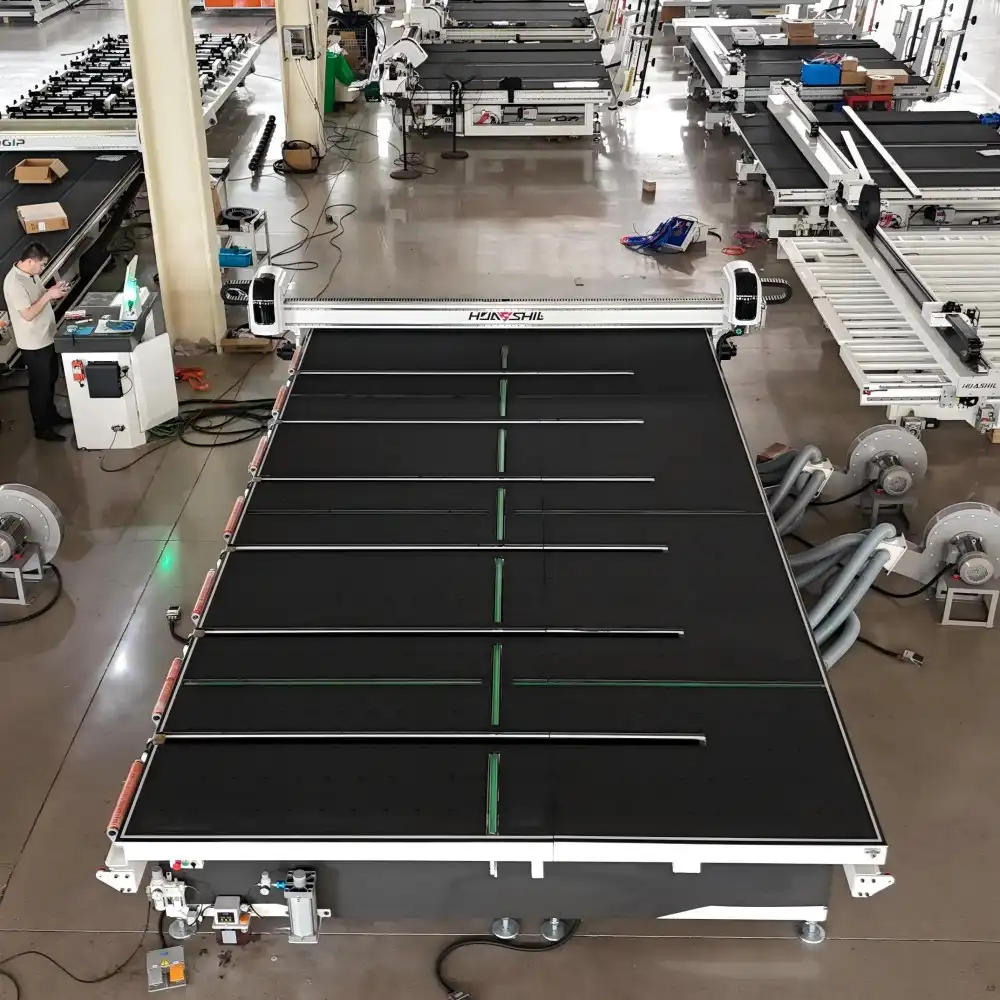
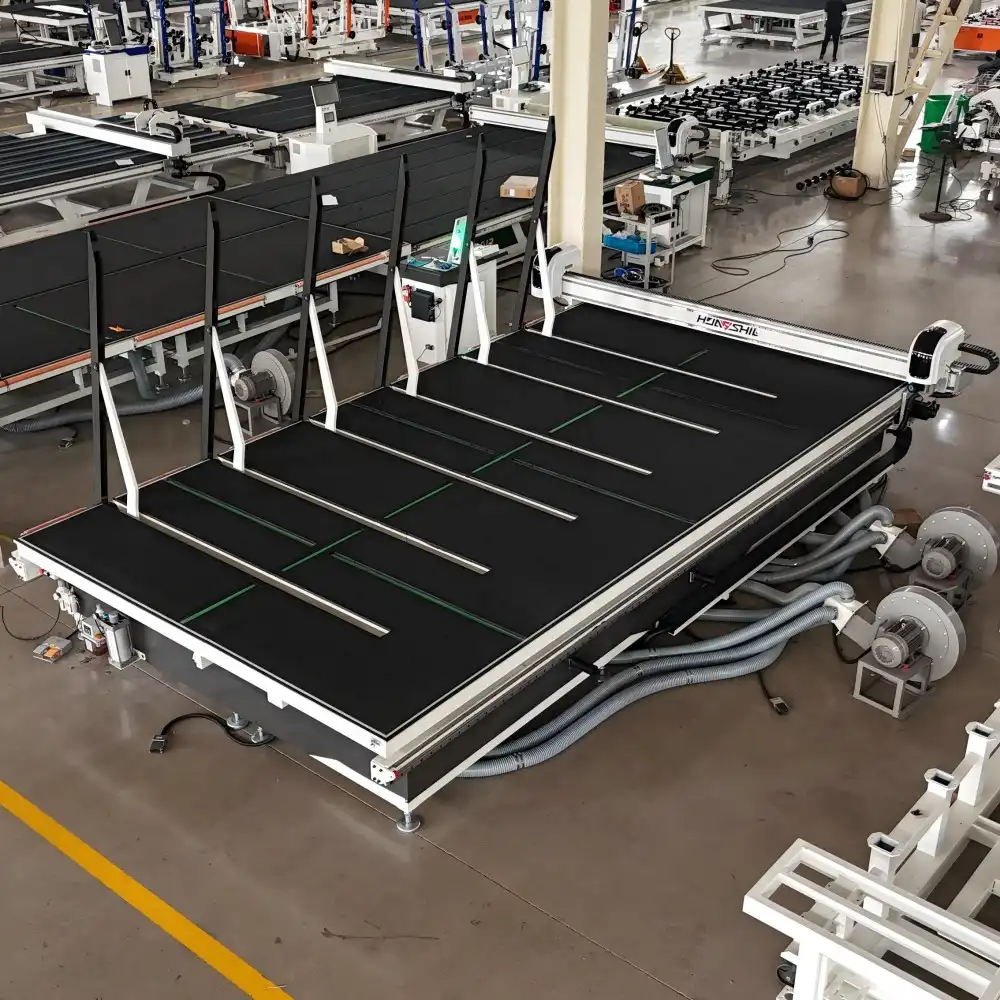
Between pickup and placement, glass sheets travel across the machine bed of automatic glass loading machine manufacturers on a cushion of precision-controlled air. This air-floating system eliminates surface contact that causes scratches, particularly problematic when handling coated or polished glass destined for high-end architectural applications. The technology works through hundreds of micro-nozzles embedded in the transport surface, creating an evenly distributed air cushion that supports the glass's weight while allowing nearly frictionless lateral movement.
Production engineers appreciate how air flotation accommodates slight variations in glass flatness without applying corrective pressure that might induce stress fractures. The system automatically adjusts air pressure based on glass size and weight, ensuring consistent float height whether handling a small shower door panel or a full-size curtain wall section.
Flexible Capacity for Diverse Production Needs
Flexible loading equipment can handle a wide range of glass sizes without having to change over, which takes time. With a maximum capacity of 3,660 x 2,440 mm, this machine can handle most building and car needs. It can also easily handle smaller furniture, glass, and custom forms. This versatility is very helpful for planning production because it lets plant managers arrange different types of jobs throughout the day without having to switch out tools or rearrange the line.
Specifications for load ability should be carefully looked over during purchase. Beyond the maximum size, make sure the machine can handle the weight of your heaviest fused or insulated glass pieces. Both the maximum surface area and weight limits should be made clear in technical documents.
360-Degree Walking Capability
When a filling machine is mobile, it stops being a fixed spot and starts being a flexible production tool. Systems that can walk in all directions can move freely around your facility and precisely position themselves at different workstations as production needs change. This ability to move in any direction, made possible by special wheel configurations or tracked bases, gets rid of the need for multiple loading machines in complicated production layouts.
Curtain wall makers like this feature a lot because it lets them move around easily while handling big projects that need temporary line setups. Moving the machine to different cutting tables or edging lines lets it adapt to the way work is done on each job instead of making the work have to change to fit where the equipment is set.
Comprehensive Customization Options
Even though most fabrication plants have advanced standard features, they all work in slightly different ways. Genuinely useful loading systems can be changed in a number of ways, including the size of the footprint to fit facilities with limited space, the ability to connect to your existing PLC system, and the ability to create custom gripping configurations for odd-shaped glass.
We often design unique solutions for clients who want to process both standard glass and solid stone. These solutions require changed vacuum systems and stronger arm structures. Others need licenses for buildings with certain air classifications that have explosive atmospheres. Companies that make good products have engineering teams that can handle these specific needs without making delivery times too long.
Comparing Custom Glass Loading Machines with Standard and Manual Alternatives
In order to understand what customization gives you, you need to compare it to easier options. A lot of procurement decisions get stuck because the people making them can't see why custom automated systems are more expensive than cheaper options.
Precision and Consistency Advantages
Handling glass by hand relies on the skill and attention of the person doing it, which introduces some natural variability. During long shifts, even experienced workers make mistakes, and handling accuracy slowly gets worse as people get tired. Standard automated loaders from automatic glass loading machine manufacturers make things more consistent, but they can't be changed when the needs of the production change.
Custom automatic systems can consistently place things within ±1 mm, even after thousands of rounds per day. This accuracy goes beyond just placement; pick-up points, transfer speeds, and grip pressure stay the same even when shifts change or production runs longer. When glass comes in properly positioned from automated loading, quality control managers say that measurements are much more accurate in later steps.
Total Cost of Ownership Analysis
The initial purchase price is only one part of the total cost of investing in equipment. When engineering managers do detailed reviews, they figure out the total cost of ownership over the expected 10 to 15-year lifetime of the equipment. This includes things like upkeep costs, the availability of spare parts, energy use, and changes in output.
Custom automatic loaders usually cost 30–50% more than standard models, but they make up for it by having lower breakage rates, higher output, and less work that needs to be done by hand. A medium-sized architectural glass plant that processes 500 sheets of glass every day can recover the extra cost of the investment within two years just by reducing breakage. This is before any savings on labour or increased productivity are taken into account.
Warranty Coverage and After-Sales Support
Whether a filling machine becomes your best friend or your worst enemy depends on how reliable it is. Manufacturers with a good reputation back up their custom systems with full warranties that cover the software, electrical systems, and mechanical parts. Standard warranty terms are usually between 12 and 24 months, but for critical production environments, longer coverage is available.
Infrastructure for after-sales support is just as important. Make sure that the company that sells you the equipment keeps an adequate supply of spare parts on hand and offers technical support through channels that work for your team, such as phone consultations 24 hours a day, seven days a week, remote diagnostic access, or on-site service responses within set timeframes.
How to Choose the Right Custom Glass Loading Machine for Your Business
To go from knowing about features to actually choosing tools, you need to do a structured review that is in line with how you run your business. When their new machine comes, plant managers who didn't do this evaluation properly often feel bad about buying it.
Assessing Your Production Requirements
Start by writing down how much glass you currently handle and how much you plan to handle in the future. Include all the different sizes, thicknesses, and types of glass you handle. Don't just list your most common products; also list the ones that don't fit the norm, even if they only happen once in a while. Equipment that can't handle these rare cases causes bottlenecks that slow down the whole line.
Figure out your throughput needs in a reasonable way. A machine that can handle 400 sheets per eight-hour shift sounds like it would be enough for your daily average of 350 sheets, but it won't be able to handle high volumes or regular maintenance downtime. By reducing constant maximum-load operation, specifying equipment with 20–30% extra capacity gives operators breathing room and increases the life of the equipment.
Evaluating Supplier Credentials
If your equipment provider doesn't know how to make things or isn't financially stable, technical specs don't mean as much. Do a lot of research on potential suppliers. Look at their attendance at big industry events like Glasstec or GlassBuild America, make sure their certifications are up to date with international standards, and ask for customer references from businesses in the same line of work as yours.
Tours of manufacturing facilities are a great way to learn about what a supplier can do. Manufacturers who care about quality accept these kinds of trips and are happy to show off their manufacturing processes, quality control methods, and testing routines. Be wary of providers who won't give you access to their facilities or customer references.
Integration Planning and Installation Support
Custom glass loading machines aren't separate from the rest of your production line; they're physically and electronically linked to it. When evaluating suppliers, be clear about the integration requirements you have, such as power specifications that work with your building's electrical system, communication protocols that work with current control systems, and physical dimensions that fit your floor space and allow for easy maintenance.
Make it clear what the provider gives you during the installation of the custom glass loading machine. Full installation packages include delivering and setting up the equipment, connecting it to utilities, integrating the control system, teaching the operators, and doing production tests with your team. Less full plans might just bring the machine to your loading dock and think the deal is done, leaving your maintenance staff to deal with difficult integration issues.
Financial Considerations and Payment Terms
Buying capital tools needs careful planning of your finances. Aside from the price that was given, you should also plan for the costs of installation, user training, the original stock of extra parts, and any changes that might need to be made to the production line in order to integrate it. Some suppliers let you lease their products or make payments over time, which can help your cash flow. This is especially helpful for smaller fabricators or when you're expanding your facility.
When buying things internationally, there are extra financial things to think about. A lot of makers will take letters of credit as payment for overseas sales. This protects both sides. Make sure everyone knows who is responsible for clearing customs, paying import taxes, and getting shipping insurance, so you don't end up with unexpected costs that make your total investment go up.
Maintenance Tips and Industry Trends to Maximize Your Investment
What you do when you buy equipment is just the start of your connection with a glass loading machine. Depending on how well you manage and update the system, it will either work reliably for as long as it was designed to or become a constant source of annoyance.
Establishing Preventive Maintenance Protocols
To keep working at its best, automated glass handling equipment needs to be checked on a regular basis. Make maintenance plans that include daily tasks (like looking for damage and making sure the safety systems are working), weekly tasks (like cleaning the air floatation tubes and lubricating the moving parts), and monthly tasks (like making sure the reading is correct and checking the wear parts).
Operators are the first people you should call if problems start to happen. Teach them to spot early warning signs like strange sounds when they move their arms, inconsistent grip pressure, or shifting of the machine's position. Set up clear ways for problems to be reported so that maintenance teams can fix them before they break down. Production managers have found that unexpected equipment breakdowns happen 40–50% less often in places where workers are involved and paying attention.
Embracing Emerging Technologies
The industry that works with glass is always changing, and loading equipment is getting smarter and smarter. An IoT connection lets important working factors be monitored from afar, which makes predictive maintenance possible. This type of maintenance replaces parts based on how they wear instead of at random time intervals. Some manufacturers now make retrofit packages that can add these features to older equipment, which makes it last longer.
Advanced loading systems are starting to use AI to improve grip pressures and transfer speeds by using machine learning algorithms that look at thousands of handling cycles. These technologies are only available on high-end tools right now, but as the cost of processing power goes down over the next three to five years, they will probably become normal.
Sustainability Considerations
As makers deal with rising power costs and company climate requirements, energy efficiency is becoming a bigger factor in their choices about what tools to buy. Modern loading machines have variable-speed drives that use less power when the load is light, and better air management systems that cut down on the time that flotation systems need to run their compressors.
Think about how the tools will be disposed of when it's no longer useful. When manufacturers design machines to be environmentally friendly, they use recyclable materials and make sure that parts can be swapped out. This way, equipment can last longer because it can be upgraded over time instead of being replaced completely.
Conclusion
Selecting a custom glass loading machine represents a significant decision affecting your operation's efficiency, safety, and profitability for years ahead. The features we've explored—three grand arm automation, air flotation systems, flexible capacity, mobility, and customization options—distinguish equipment that truly elevates your production capability from machines that merely occupy floor space. By systematically assessing your requirements, thoroughly vetting suppliers, planning comprehensive integration, and committing to ongoing maintenance, you position your facility to capture the full value these systems offer. The glass fabrication industry continues advancing, and the right loading equipment serves as your foundation for adapting to whatever challenges and opportunities emerge in your market.
FAQ
1. What glass types can custom loading machines handle?
Custom glass loading machines accommodate virtually all glass varieties used in industrial fabrication, including annealed float glass, tempered and heat-strengthened glass, laminated assemblies, insulated glass units, coated architectural glass, and decorative products. Advanced systems also handle sintered stone and artificial stone panels that share similar dimensional characteristics. The key lies in the proper configuration of gripping systems and flotation pressures matched to your specific material properties. When discussing requirements with suppliers, specify your complete material range, including thicknesses, coatings, and any unusual shapes, to ensure the proposed equipment handles your full production spectrum.
2. How long does installation typically require?
Installation timelines vary based on system complexity and facility readiness. Standalone loading machines with minimal integration requirements typically complete installation within 3-5 business days, including positioning, utility connections, and basic operator training. Comprehensive systems integrating with existing production lines require 1-2 weeks for complete commissioning, control system integration, and thorough testing. Your preparation significantly impacts these timelines—having electrical connections, compressed air supply, and adequate floor space ready before equipment arrival prevents costly delays and keeps your project on schedule.
Ready to Upgrade Your Glass Loading Capabilities with HUASHIL?
At HUASHIL, we've spent years perfecting automated glass handling solutions specifically designed for the challenges architectural glass fabricators, curtain wall integrators, and furniture manufacturers face daily. Our custom glass loading machine lineup combines proven three-arm automation, precision air flotation, and flexible 360-degree mobility in configurations tailored to your exact production requirements. Whether you're processing maximum-size architectural panels or managing diverse furniture glass production, our engineering team designs solutions that integrate seamlessly with your existing workflow. Reach out to our specialists at salescathy@sdhuashil.com to discuss how our custom glass loading machine supplier capabilities can address your specific handling challenges. We provide comprehensive support from initial specification through installation, training, and ongoing technical assistance—ensuring your investment delivers measurable returns from day one.
References
1. Glass Manufacturing Industry Council. Automation in Glass Fabrication: Best Practices and Equipment Selection Guidelines. Industrial Glass Technology Press, 2022.
2. Peterson, Michael R., and Zhang, Wei. "Comparative Analysis of Manual Versus Automated Glass Handling Systems in Architectural Fabrication." Journal of Manufacturing Efficiency, vol. 47, no. 3, 2023, pp. 112-129.
3. International Glass Processing Standards Committee. Safety and Performance Requirements for Automated Glass Loading Equipment. Technical Specification ISO/TS 17894, 2021.
4. Sullivan, Rebecca T. "Total Cost of Ownership Models for Capital Equipment in Glass Processing Facilities." B2B Procurement Quarterly, vol. 18, no. 4, 2023, pp. 67-85.
5. European Glass Technology Institute. Emerging Technologies in Glass Handling Automation: IoT Integration and Predictive Maintenance. Research Report EGTI-2023-14, 2023.
6. Martinez, Carlos, and Hoffman, Julia. "Energy Efficiency in Industrial Glass Processing: Equipment Selection and Operational Optimization." Sustainable Manufacturing Review, vol. 31, no. 2, 2024, pp. 201-218.