




Plant managers and procurement specialists must choose a Chinese cutting laminated glass machine provider that offers precision, safety, and long-term value. Shandong Huashil Automation Technology is a valued partner in this field, supplying CE-certified laminated glass cutting solutions for US architectural glass factories, curtain wall integrators, and furniture makers. Our equipment fulfills strict European safety requirements and American manufacturers' manufacturing efficiency. This book helps you choose the proper equipment, understand certification requirements, and maximize your automated glass processing technology investment.
Understanding Laminated Glass Cutting Machines: Technology & Benefits
Laminated glass production equipment is far more advanced than hand-cutting. Precision mechanics and intelligent control systems solve the problems of cutting multi-layered glass joined with interlayer layers.
How Automated Cutting Technology Works
Modern cutting laminated glass machines include numerous crucial parts that function together. First, photoelectric positioning sensors identify glass edges with sub-millimeter precision. CNC controllers guide diamond-tipped cutting wheels along programmed paths while maintaining pressure across glass thicknesses. Our machine can handle 3+3mm to 8+8mm glass combinations with 0.38mm to 1.52mm interlayer layers. Cutting at 100 meters per minute eliminates human error in dimensional precision and outpaces manual processes. This automation level reduces labor and ensures precision over thousands of cuts, transforming industrial operations.
Core Advantages of CE-Certified Equipment
CE certification goes beyond regulations. It confirms that equipment design includes robust high-speed operator safety features. Our machines include EN-standard emergency stop systems, guards, and electrical safety isolation. CE-certified systems are tested for durability and safety. The device maintains cutting precision throughout industrial use. Optimized motor control and standby modes minimize power consumption by 20-30% compared to prior generation equipment, saving multi-shift facilities money.
Production Efficiency Gains
After installing a China laminated glass cutting machine, operational metrics change fast. A typical architectural glass production factory processing 200 panels per day may save unit time by 60% compared to semi-automated processes. Because automated controls minimize measuring errors and irregular cutting pressure, error rates decline considerably. Advanced diagnostic systems warn operators of maintenance needs before breakdowns, saving production stoppages that can cost thousands.
Types of Laminated Glass Cutting Machines: Choosing the Right Solution for Your Business
Match machine capabilities to production volume, product complexity, and quality needs while choosing equipment.
Manual Versus Automated Systems
Manual cutting tables are still used in specialized applications with low production quantities and changing bespoke forms. Handheld tools directed along straight edges are suited for artisan glass companies making fewer than 50 units daily. In consistent, high-volume situations, automated methods flourish. An expanding furniture factory producing 100-200 shower door panels daily might use a semi-automatic setup where workers load glass and machines cut. Curtain wall fabricators delivering thousands of similar panels for big building projects benefit from fully automated material handling, cutting, breaking, and stacking lines.
Compact Systems for Small and Medium Enterprises
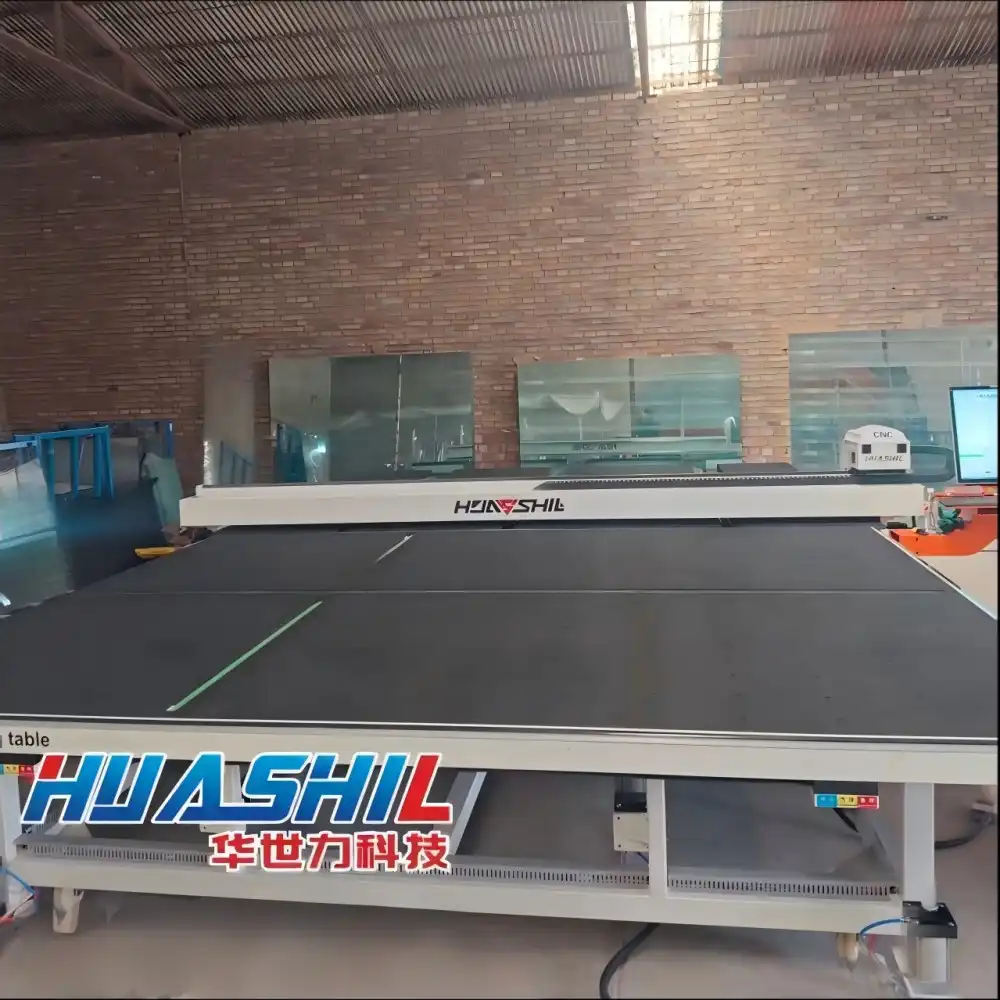
Footprint-efficient equipment benefits space-constrained facilities. Our basic model, measuring 4700mm × 3100mm × 840mm, fits in common workshop areas and supports panels up to 3800mm in length. The work table height of 820mm±50mm enables operator comfort without substantial floor changes. This size category meets the needs of furniture, partition, and regional glass fabricators supplying local building markets without the financial investment or floor area of industrial-scale lines.
Industrial-Grade High-Throughput Equipment
Large architectural glass factories and curtain wall system integrators need continuous-operation cutting laminated glass machines for tight production schedules. Heavy-duty frames resist vibration, innovative cooling systems lengthen cutting cycles, and automatic loading mechanisms save manual handling. Industrial versions generally include upstream and downstream equipment—automated storage systems, edging lines, and washing stations—to decrease material handling and enhance throughput.
The Role of CE Certification in International Procurement
CE certification assures American purchasers that Chinese-made equipment satisfies worldwide safety and performance requirements. This accreditation streamlines customs clearance, insurance underwriting, and supplier quality control. Requesting certification paperwork and third-party test results from possible vendors helps check authenticity and prevent equipment that may fail safety inspections or pose liability problems.
Procuring Laminated Glass Cutting Machines from China: What B2B Clients Need to Know
Engineering managers and buying supervisors may balance cost, quality, and risk by understanding procurement.
Investment Considerations and Pricing Factors
Based on automation, customisation, and manufacturing capacity, equipment prices vary greatly. Entry-level semi-automatic systems cost $15,000–$25,000 for organizations testing automation or handling moderate quantities. Mid-range automated cutting tables with controls and safety systems cost $30,000–$50,000. Custom fully integrated manufacturing lines might cost over $100,000, depending on throughput and accompanying equipment. In addition to the purchase price, the total cost of ownership includes installation, operator training, yearly maintenance expenditures, and spare parts availability during a normal 10-15 year equipment lifespan.
Evaluating Chinese Suppliers
Due diligence distinguishes respectable manufacturers from unqualified vendors. Find vendors with export histories, similar industry installations, and timely technical support. With years of manufacturing expertise, Huashil Automation Technology offers equipment design, installation support, operator training, and technical support. Architectural glass plants, curtain wall fabricators, and furniture makers on several continents are among our customers, proving our versatility.
Verification and Quality Assurance
Request production-specific technical specs for the cutting laminated glass machine. Check cutting speed, thickness handling, and positioning accuracy against operational demands. Request customer references from comparable sectors and manufacturing sizes. Video demonstrations of equipment performance are more dependable than marketing brochures. The warranty should cover crucial components for at least one year with explicit technical assistance and parts replacement processes. For bigger deals, letters of credit may be used to deposit 30-40% and pay the rest upon installation or trial production.
Operation, Maintenance, and Safety: Maximizing Your Cutting Laminated Glass Machine's Performance
Operation practices and preventative maintenance affect equipment lifetime and production consistency.
Essential Maintenance Practices
Maintenance begins every day with cutting wheel examinations for wear patterns and replacement needed. Every 200 operational hours, linear guides and drive systems need lubrication to prevent premature wear. Monthly alignment checks ensure cutting heads are perpendicular to the table surface, eliminating production-run dimensional mistakes. Genuine replacement parts match original specifications; aftermarket parts may cause tolerance variances that impact cut quality. Detailed service records reveal trends of underlying mechanical difficulties before production disruptions for the cutting laminated glass machine.
Safety Protocols Aligned with CE Standards
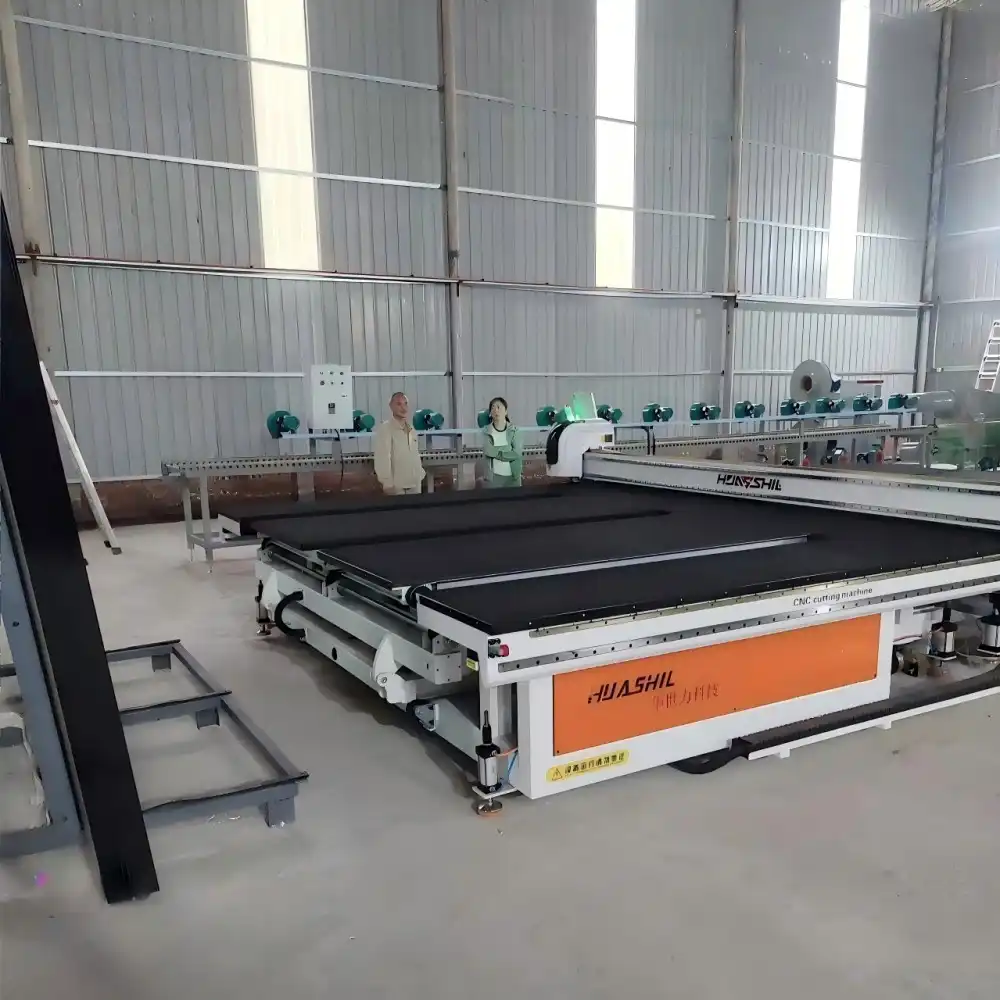
Safety must be emphasized in CE-compliant equipment operator training. In emergencies, nearby emergency stop buttons allow quick shutdown. Operators are protected from moving cutting heads by barriers. Electrical systems are grounded and isolated to prevent shock. Safety evaluations ensure guards are correctly fitted, and warning labels are visible. Lockout-tagout protocols protect mechanical or electrical system maintenance professionals from activating equipment accidentally.
Troubleshooting Common Issues
Worn cutting wheels or inappropriate wheel pressure settings cause accuracy issues. Chipping edges can be fixed by increasing the cutting speed or wheel angle. Unusual operating noise may indicate bearing wear or loose mounting bolts requiring prompt care. Photoelectric sensors contaminated with glass dust often give spurious results that misalign. Systematic troubleshooting reduces downtime and prevents small faults from becoming catastrophic failures needing expensive repairs.
Comparison & Decision-Making Guide: Laminated Glass Cutting Machines vs. Other Glass Processing Technologies
Understanding how different technologies meet production demands is crucial to strategic equipment selection.
Laminated Glass Versus Tempered Glass Processing
Tempered and laminated glass processes differ greatly. After connecting interlayer layers between glass sheets, cutting laminated glass machines require accuracy to minimize delamination along cut edges. Tempered glass must be cut before heat treatment because internal strains prevent post-treatment cutting. Laminated glass processors need heavier composite material equipment with cutting wheels that cleanly separate all layers. Both kinds of glass are frequently cut on different lines to suit their properties.
Evaluating 2024 Equipment Options
User interface and diagnostic capabilities are prioritized in the current equipment. Compared to button-based systems, touchscreen controls simplify programming and reduce operator training. Remote monitoring using mobile devices lets technical workers analyze equipment status and respond quickly to production concerns. Variable frequency drives that change motor speed to meet load needs rather than operating at maximum power improve energy efficiency. Comparing models, emphasize characteristics that help your production workflow above those you won't use.
Total Cost of Ownership Analysis
Purchase price is only one of the equipment economics factors. Electricity, cutting wheels, periodic maintenance, and occasional repairs are annual running expenditures. A 15kW machine working 16 hours a day costs $10,000–$12,000 in power at regular US industrial rates. Cutting wheel replacement may cost $2,000–$3,000 yearly, depending on productivity. Consider these ongoing costs when evaluating equipment options—a somewhat more costly machine with better energy efficiency and longer consumable life may have better five-year economics than a cheaper initial purchase with higher running costs.
Conclusion
Technical requirements, safety compliance, supplier reputation, and long-term support must be considered when choosing a CE-certified cutting laminated glass machine from a dependable Chinese provider. Understanding equipment technologies, maintenance needs, and total ownership costs helps procurement teams meet production targets and manage capital budgets. CE certification assures foreign customers that the equipment satisfies safety and performance criteria. As automation transforms glass processing industries, working with experienced manufacturers that provide complete assistance enables easy adoption and operational success.
FAQ
Q1: What certifications should I verify when sourcing from Chinese manufacturers?
CE certification is the principal quality indicator for Western-market goods, demonstrating conformity with European safety requirements for machinery, electrical systems, and electromagnetic compatibility. Request certification documentation listing directions and third-party testing laboratory results verifying performance. ISO 9001 quality management certification shows methodical manufacturing, while export permits prove the supplier's worldwide trading authority.
Q2: What after-sales support should I expect from quality suppliers?
Installation assistance—onsite professional visits or extensive remote advice during equipment setup—begins comprehensive support for the cutting laminated glass machine. Basic operation, maintenance, and troubleshooting should be taught in operator training. Major component warranties last 12–24 months with proper reporting and replacement processes. Technical help via email, phone, or video conference is important for production challenges needing professional direction. Spare parts availability and delivery timelines reduce downtime.
Partner with HUASHIL for Your Laminated Glass Automation Needs
HUASHIL provides proven automation solutions for architectural glass, curtain wall, and furniture manufacturing. Our CE-certified cutting laminated glass machine supplier can handle 3+3mm to 8+8mm glass, 300mm to 3800mm cutting lengths, and 100 meters per minute production speeds for American production environments. We assist with equipment selection, installation, operator training, and technical support to ensure your investment delivers productivity and quality increases. Our technical staff at salescathy@sdhuashil.com may review your production demands and provide equipment options that fit your operating objectives and budget.
References
1. Glass Association of North America. "Laminated Glass Manufacturing Standards and Safety Guidelines." Technical Publication Series, 2023.
2. International Organization for Standardization. "ISO 12543: Glass in Building - Laminated Glass and Laminated Safety Glass." Standards Documentation, 2022.
3. European Committee for Standardization. "EN 1279: Glass in Building - Insulating Glass Units - Manufacturing and Testing Requirements." Brussels, Belgium, 2023.
4. National Glass Association. "Glazing Industry Automation Technology Report: Trends and Investment Patterns." Market Research Division, 2024.
5. Machinery Safety Council. "CE Marking Compliance for Industrial Glass Processing Equipment." Regulatory Guidance Document, 2023.
6. American Architectural Manufacturers Association. "Glass Fabrication Equipment Selection Guide for Curtain Wall Production." Technical Manual, 2024.