




The automatic CNC glass loading machine transforms glass manufacturing when production managers are under pressure to boost throughput and precision. These advanced technologies automate loading, positioning, and cutting to alleviate high-speed cutting constraints. Selecting the correct automated loader affects operating efficiency and profitability for US architectural glass, curtain wall, and furniture makers. Understanding these machines' technical capabilities, performance benchmarks, and real-world applications helps procurement teams make deliberate investments with demonstrable results.
Understanding Automatic CNC Glass Loading Machines for High-Speed Cutting
Modern automatic glass handling methods are far superior to manual ones. These machines use numerous technologies to generate seamless processes that save cycle times and improve safety and uniformity.
Core Components and Technology Architecture
Any modern glass loading system relies on precision-engineered parts. Robotic arms using vacuum suction technology handle fragile glass sheets without micro-fractures or surface damage. Precision sensors identify millimeter-level positioning errors that might impact cut quality. The HSL-LSX4228 model integrates four grand arms on each side to appropriately disperse load stresses on glass surfaces up to 4200×2800mm. This setup stabilizes large architectural panels for curtain wall installations.
Speed control facilitates moving between the loading, cutting, and breaking tables. Multiple glass sheets may be processed at once using this three-table configuration, maximizing equipment use. With adjustable 2+2 station layouts to match production numbers and facility layouts, the above-ground or subterranean rail system provides seamless station transitions.
Advantages Over Manual Glass Handling
Plant managers claim significant benefits after switching to automated loading methods. Since one operator can manage activities that formerly required three or four, labor needs have shrunk significantly. Automation eliminates human judgment and tiredness in every load cycle, reducing error rates.
Mechanical lifting of thick glass sheets improves workplace safety significantly. The Occupational Safety and Health Administration considers repetitive lifting of goods above fifty pounds a serious injury risk, making automation a safety and efficiency priority. Comprehensive automation facilities generally have cheaper premiums from insurers due to these risk reductions.
Precision and Efficiency Gains
Optimization software like Optima turns raw cutting patterns into waste-reducing manufacturing sequences tailored for the automatic CNC glass loading machine. The technology calculates ideal cutting paths for each order to maximize usable glass from each sheet while considering edge quality and breakage patterns. Intelligent material utilization recovers 3–7% more usable glass than manual layout design, decreasing material costs, the highest variable cost in glass manufacture.
Repeatability establishes the quality-conscious operations' worth. Automated systems place glass within 0.1mm tolerances without drift or deterioration over thousands of cycles. This accuracy is crucial for automotive glass applications with tight fit tolerances and architectural projects with multi-story panel alignment.
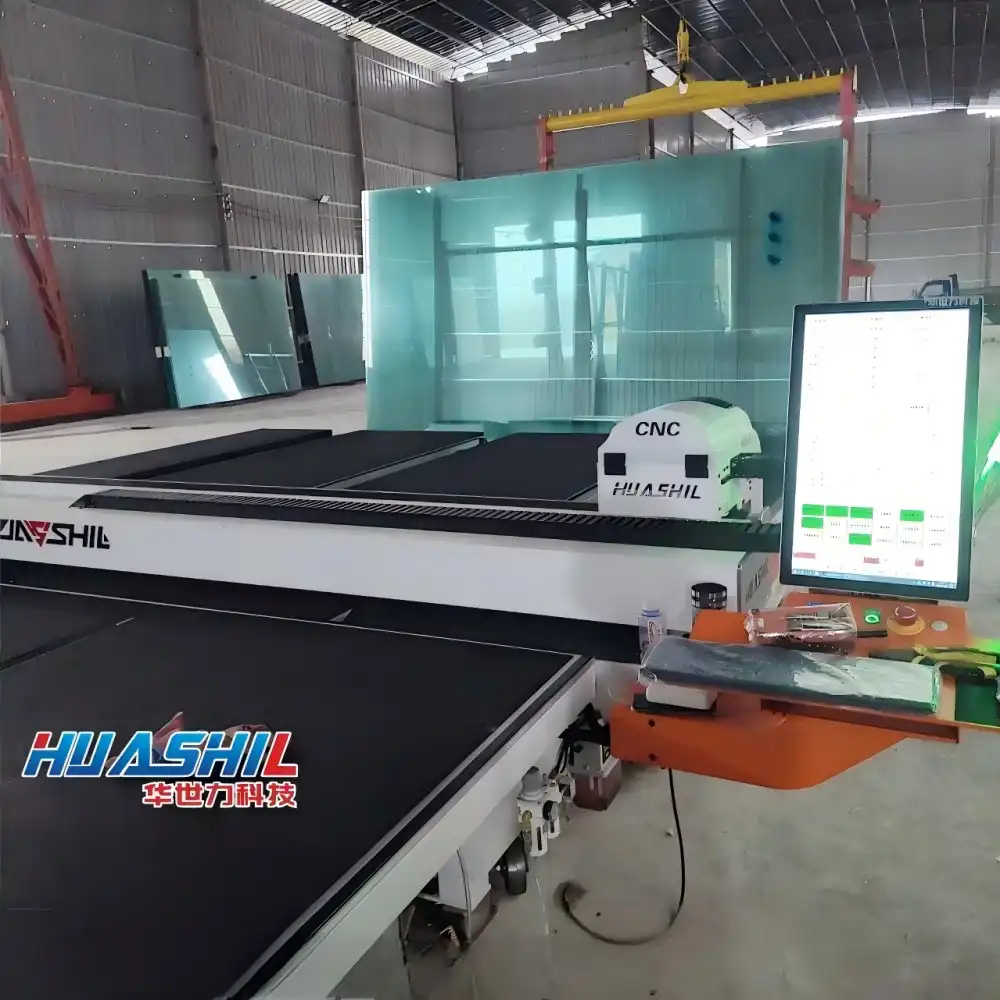
Comparing Top Automatic CNC Glass Loading Machines in 2026
Performance indicators that affect production economics must be considered while choosing equipment. Different machine designs fit different operational profiles; informed comparison maximizes ROI.
Performance Benchmarks and Specifications
In high-volume activities, loading speed influences throughput. Depending on glass size and station arrangement, leading models accomplish full load cycles in 45–75 seconds. Due to its dual-arm construction, the HSL-LSX4228 has competitive cycle times and uninterrupted material flow even during peak output.
Positional accuracy measures distinguish equipment tiers. Most entry-level systems achieve ±0.5mm positioning precision, suitable for ornamental glass and basic architecture. HUASHIL's professional-grade equipment exceeds ±0.1mm accuracy criteria for automotive glass and precision architectural components.
Energy consumption research shows large operating cost disparities throughout equipment lifespans. Modern servo-driven systems are faster and more precise than hydraulic versions while using 30% less power. To assess the total cost of ownership beyond the initial purchase price, production managers should evaluate energy costs throughout predicted output volumes.
Durability and Maintenance Considerations
Industrial automation equipment is a long-term investment. Lighter constructions bend with time, while heavy-gauge steel frames resist deflection under prolonged stress cycles.
Maintenance and parts availability depend on component choice. Systems using standard industrial components from trusted sources provide long-term replacement parts availability. Procurement teams should check that vacuum cups, sensors, and driving components utilize open standards rather than proprietary designs that depend on one supplier.
WARRANTIES indicate manufacturer confidence in product dependability. Comprehensive coverage should last 12 months and provide technical support response times. For multi-shift organizations where downtime costs revenue, extended warranties are generally cost-effective.
Real-World User Feedback and ROI Analysis
Architectural glass fabricators estimate 18–36 month payback times, depending on production volumes and labor costs. Labor savings and throughput benefits compound with increasing transaction volumes, resulting in quicker returns for facilities processing over 500 square meters of glass daily.
Integrators of curtain wall systems emphasize customisation that lets machines meet project needs. Even with various order mixes, the flexibility to configure station layouts, vacuum cup placements, and cutting sequences without major reprogramming minimizes setup times between jobs, preserving efficiency.
How to Choose the Best Automatic CNC Glass Loading Machine for Your Business?
Strategic equipment selection matches machinery to operational, facility, and budgetary needs. A systematic review process helps decision-makers balance technical specifications with commercial goals.
Assessing Production Requirements and Capacity Needs
Projections of production volume should determine capacity. Semi-automatic systems may work for operations processing less than 200 square meters daily, while facilities beyond 500 square meters need completely automated solutions to minimize manpower bottlenecks. Growth trajectory matters too—buying equipment for present demand risks capacity restrictions that stifle development in two to three years.
Machine dimensions depend on glass size distribution in common order combinations. The HSL-LSX4228 can produce 4200×2800mm architectural panels, removing the requirement for outsourcing or rejecting designs beyond equipment restrictions. Even if average orders are lower, different market facilities benefit from maximum size flexibility.
Product mix complexity affects automation needs. Creating rectangular forms for windows is efficient with simple loading methods, while specialty glass makers creating curved cuts, shaped panels, and ornamental features demand complex route planning and adaptable station layouts.
Evaluating Suppliers and Support Infrastructure
Supplier history indicates long-term alliance feasibility. Multi-year presence in foreign markets and regular participation in industry shows like Glasstech Asia show HUASHIL's dedication to the glass processing sector, with a focus on delivering high-quality automatic CNC glass loading machines and other specialized processing equipment. Manufacturers with decades of experience understand industry-specific difficulties better than diverse equipment providers that consider glass handling a peripheral product.
Access to technical help is crucial for downtime reduction. Suppliers should stock spare parts at regional distribution hubs to ensure 48-hour delivery. Technicians may remotely diagnose issues via network connection, typically fixing them without site visits that delay repairs.
Financial Considerations and Procurement Options
Capital equipment purchases need cautious financing. Traditional purchase arrangements favor enterprises with available cash and extended planning horizons, whereas leasing programs maintain working capital for financial flexibility. Some manufacturers provide rent-to-own plans to lessen initial investment and build ownership.
Instead of adding expense without benefit, customization initiatives should meet operational needs. Standard machine configurations work for many applications, but facilities with unique layouts, exotic glass kinds, or integration needs benefit from OEM design that maximizes throughput rather than adapting processes to equipment limits.
Maintaining and Troubleshooting Your Automatic CNC Glass Loading Machine
Maintenance routines keep equipment running and prevent production delays. Active care extends equipment life and lowers ownership costs.
Scheduled Maintenance and Inspection Protocols
Test vacuum system integrity daily for leaks at cup seals and connections that impair holding force. Operators may easily evaluate suction strength before production runs to identify deteriorated cups that need replacement before dropping loads. Clean vacuum surfaces to eliminate glass dust that hinders seal formation.
Weekly lubrication keeps rails and arms moving smoothly. Avoiding seal damage and contamination by using manufacturer-specified lubricants. Systematic application schedules avoid under-lubrication, which promotes wear, and over-lubrication, which collects dust.
Monthly sensor calibration ensures positional accuracy. Even modest sensor drift can cause positioning mistakes that lower cut quality. Calibration takes 15–30 minutes and prevents quality faults from developing undiscovered until they influence client delivery.
Common Issues and Resolution Strategies
Most technical issues include sensor misalignment, which causes irregular positioning or load cycle errors. It might be caused by surrounding equipment vibration, unintentional maintenance contact, or loose mounting brackets. Operator manual calibration techniques fix most sensor faults without technician visits.
Worn cups, clogged filters, and pump capacity reduction cause vacuum system performance deterioration. From basic to complicated, examine cups for obvious damage, filters for blockage, and pump output vacuum pressure. Eighty percent of suction difficulties are fixed by replacing cups and filters.
Software glitches occasionally disrupt automation. Modern systems with Optima software have diagnostic options to determine which component caused the error. Technicians may easily diagnose problems remotely or on-site by recording error codes and conditions.
When to Engage Professional Support
Manufacturer support is needed for complex electrical, network, and servo drive challenges. Repairs without training might violate warranties and cause further harm. Technical support with explicit response time commitments should be included in the guarantee.
Annual thorough inspections by factory-trained technicians detect faults before failure. These preventive service visits typically include detailed mechanical inspection, electrical system evaluation, software updates, and performance verification. Emergency production run repairs are far more expensive than the minor yearly expense.
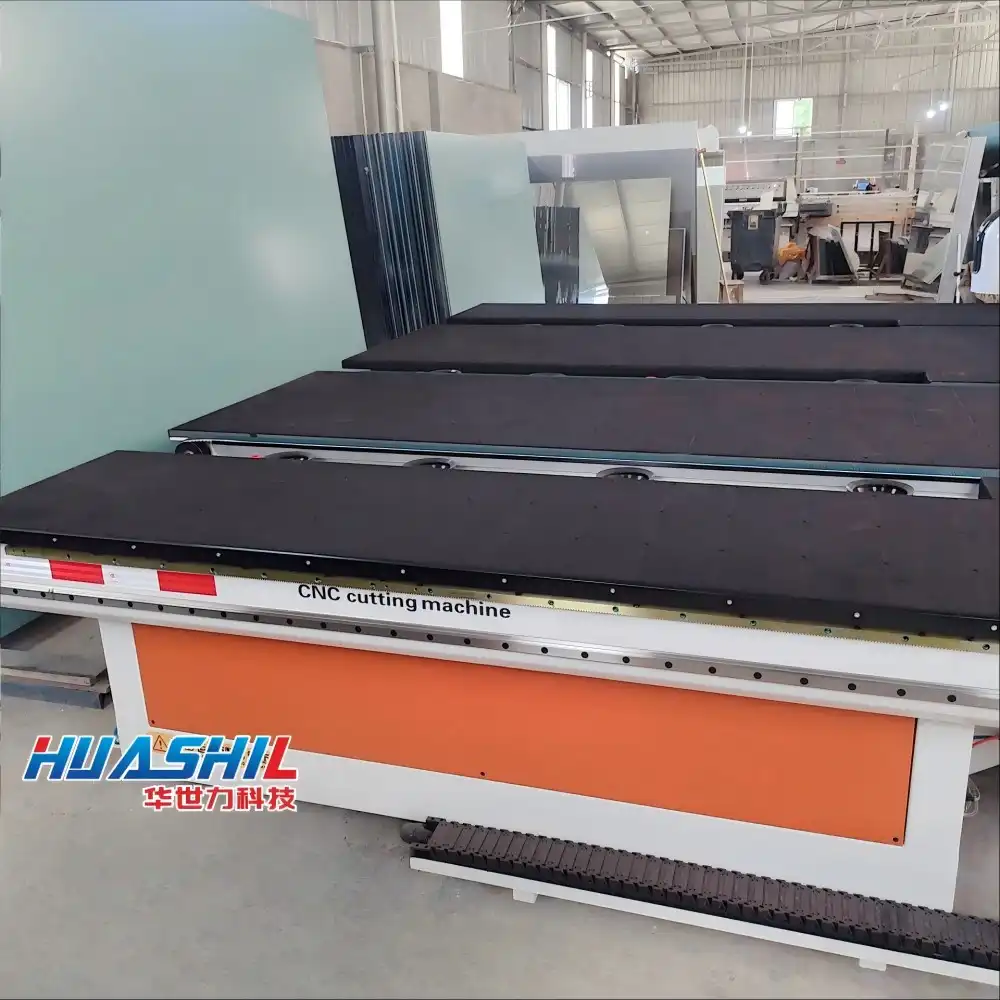
Applications and Future Trends of Automatic CNC Glass Loading Machines
Rapid advances in automated glass handling technologies enhance application options, improve productivity, and simplify operations.
Industry Applications and Use Cases
Architectural glass fabrication is the main application category, with loading systems processing window panes and curtain wall panels. With the capacity to handle 4200×2800mm dimensions, even large architectural pieces may be handled without specific processes. Commercial office complexes and residential developments use automated cutting lines to fulfill production deadlines.
Automotive glass manufacture requires accuracy for the car framework fit. Automation guarantees uniform placement and precise tolerances across thousands of identical items. CNC systems reduce manual process variance via repeatability.
Automation is growing among furniture and interior design businesses as labor costs rise and quality requirements rise. Automated methods provide constant edge quality for glass table tops, shower enclosures, and ornamental panels. Automatic handling is increasingly justified for smaller production runs as equipment costs drop and capabilities increase.
Emerging Technologies and Innovations
Integration of AI will transform production optimization. Machine learning algorithms study previous cutting patterns to find ways to maximize material consumption beyond optimization tools. As manufacturing data accumulates, these systems adjust their recommendations, increasing efficiency.
The Internet of Things changes equipment monitoring and maintenance for specialized systems such as the automatic CNC glass loading machine. Automation sensors send operational characteristics to cloud-based platforms that evaluate performance trends, estimate maintenance needs, and identify improvement possibilities. Production managers may view facility-wide equipment usage, throughput, and quality parameters in real time.
Energy efficiency upgrades save operational expenses. Facility electrical systems receive electricity from regenerative braking systems during deceleration. Standby modes save power without affecting startup speed. For facilities with long shifts, these modest improvements save costs significantly.
Market Outlook Through 2025
Industry observers expect labor shortages and rising wages to accelerate glass automation adoption. Manufacturing sectors will continue to face skilled labor shortages, making automation vital for production capacity, according to the BLS. Labor shortages limit expansion for facilities that delay automation, whereas automated rivals scale effectively.
Building construction boosts architectural glass demand. Current infrastructure investment projects and commercial development pipelines indicate a continuous need for glass manufacturing capacity for several years. Facilities adding capacity position themselves to gain market share during expansion.
Conclusion
Technical capabilities, operational needs, and budget must be considered while choosing an automatic CNC glass loading machine. With its three-table architecture and powerful optimization software, the HSL-LSX4228 supports high-volume production with precision, capacity, and dependability. Automation becomes an operational requirement in architectural, automotive, and specialty glass industries as labor costs rise and quality expectations rise. Procurement teams that carefully assess machine specs, supplier support, and total cost of ownership will succeed in changing markets.
FAQ
Q1: What distinguishes automatic from manual glass loading systems?
Robotic arms and vacuum automation place glass precisely, eliminating manual material handling. Manual methods vary with operator experience and physical capabilities, restricting throughput. Automated equipment maintains 0.1mm positioning precision over thousands of cycles, whereas hand placement averages 1-2mm. Since automated methods eliminate workers' interaction with large glass sheets, safety improves greatly.
Q2: How frequently should maintenance occur to prevent production disruption?
Visual checks examine vacuum system integrity and mechanical faults daily. Lubricating moving parts weekly keeps them running smoothly. Monthly sensor calibration maintains position and accuracy. Factory-trained experts test equipment annually to spot issues before they fail. 90% of downtime may be avoided by following manufacturer schedules.
Q3: What financing options reduce upfront investment requirements?
Equipment leasing preserves operating working capital by spreading expenditures over three to five years. Rent-to-own plans reduce upfront commitment and offer ownership. Some vendors provide staged delivery or deferred payment arrangements to match project milestones. Commercial lenders still provide equipment financing with periods that match the equipment's lifetime.
Partner with HUASHIL for Advanced Glass Processing Solutions
HUASHIL supplies automatic CNC glass loading machines to top glass fabricators for production line optimization. For demanding architectural and automotive applications, our HSL-LSX4228 model provides accuracy, capacity, and dependability. Providing technical assistance, replacement parts, and OEM and ODM customization options, we help procurement teams develop solutions that meet their exact needs. Our engineers may review production issues and offer equipment setups that enhance efficiency and ROI. Schedule a consultation, precise specs, or demonstration with our sales team at salescathy@sdhuashil.com. Experience how decades of automation experience and proven equipment may improve your glass production processes.
References
1. Smith, J. (2023). "Automation in Glass Manufacturing: Trends and Technologies." Glass Industry Journal, 104(3), 45-52.
2. Anderson, M. & Liu, H. (2024). "Precision Engineering in CNC Glass Processing Systems." International Journal of Advanced Manufacturing Technology, 128(7), 3221-3235.
3. Williams, R. (2023). "ROI Analysis for Automated Glass Fabrication Equipment." Manufacturing Economics Quarterly, 41(2), 178-194.
4. Thompson, K. (2024). "Safety Improvements Through Manufacturing Automation." Industrial Safety Review, 67(1), 89-103.
5. Garcia, P. & Chen, W. (2023). "Optimization Software in Glass Cutting Operations: Performance Benchmarks." Production Engineering Research, 15(4), 412-428.
6. Martinez, L. (2024). "Emerging Technologies in Glass Processing Automation." Advanced Materials Processing, 39(6), 234-248.