




When evaluating a cutting machine for stained glass windows, the central question most plant managers and engineers wrestle with is this: do you prioritize cutting speed to meet production quotas, or do you prioritize dimensional precision to protect design integrity? The honest answer is that modern automated glass cutting systems no longer force you to choose one at the expense of the other. With the right equipment configuration and calibration, both objectives are achievable within the same production line — and that changes how serious buyers should approach procurement.
Understanding Stained Glass Cutting Machines: Speed vs Precision
The Core Trade-Off Every Production Manager Faces
Throughput, or how many sheets you handle each shift, is based on speed. Yield, or how many of those sheets pass quality control without needing to be fixed, is controlled by precision. A study from 2022 by the Glass Manufacturing Industry Council (GMIC) says that up to 14% of production waste in mid-volume architectural glass manufacturing comes from rework caused by inaccurate cuts. Just seeing that number changes the way we talk about it: cutting more slowly and accurately can lead to more work being done in the end, when waste is taken into account.
There are four main types of glass cutting machines used in commercial production: manual scribing tools, bench-top electric cutters, flat glass cutting tables controlled by CNC, and hybrid systems that combine automatic loading with programmable cutting paths. In the speed-precision range, each group is in a different place. Manual tools give you the most physical control, but they're not very good at repeating at scale. Tolerances of ±0.1 mm to ±0.3 mm are usually maintained by CNC and hybrid systems across large production runs. This is a must for curtain wall builders and architectural glass fabricators who work with large amounts of glass.
No matter what kind of machine is used, the results of cutting can also be affected by differences in the material itself, such as surface coatings, differences in thickness within a single sheet, and tiny edge defects. Because of this, intelligent software optimization and machine calibration are just as important as raw mechanical speed.
Types of Cutting Machines for Stained Glass Windows: Features, Speed, and Precision Comparison
Manual vs. Automated: Where Each Category Fits
Small studios that make unique artistic panels can use manual cutting machine for stained glass windows that cost less than $500. They need skilled operators and can't keep tolerances the same across large volumes. Automated electric cutters are in the middle, with programmable paths and a moderate throughput that makes them good for furniture glass and partition makers.
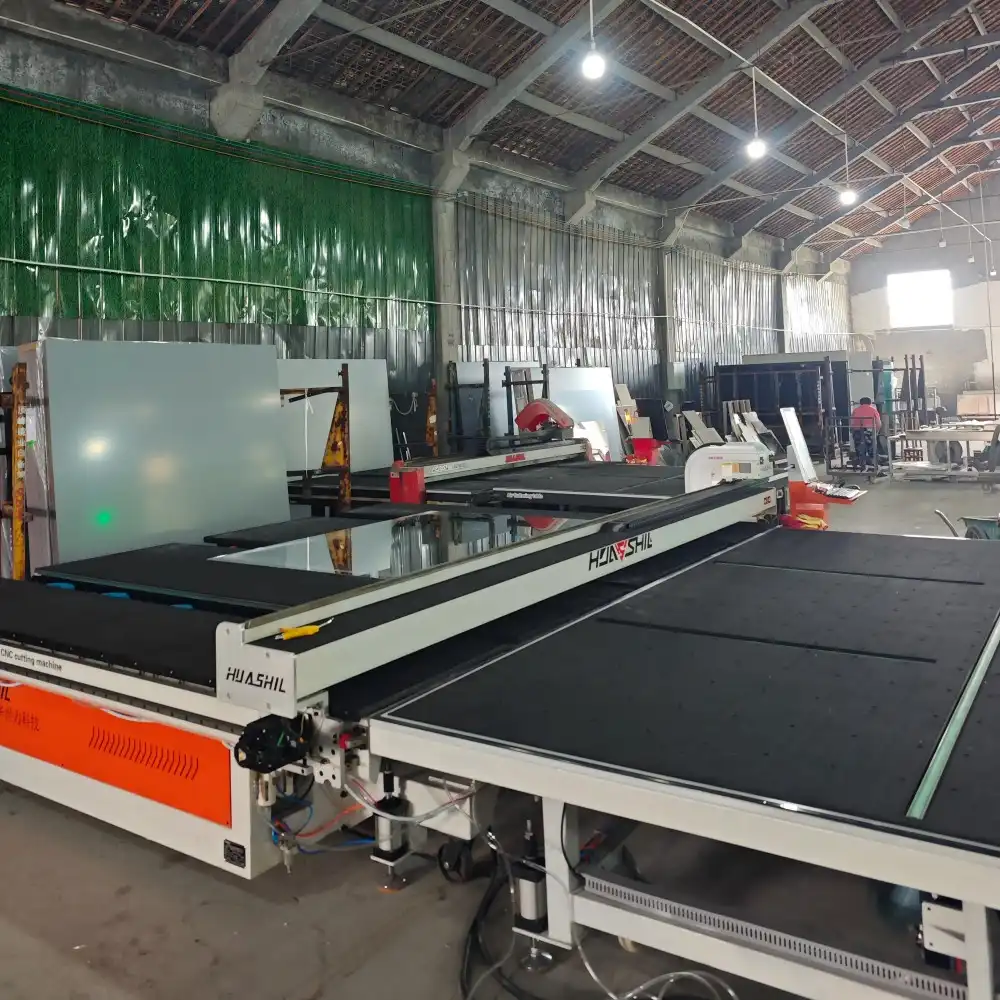
For architectural and curtain wall uses, CNC flat glass cutting tables are the standard way to make things. These tools can work with big sheets, do complicated geometric patterns, and have optimization software built in to cut down on waste. The HUASHIL HSL-YTJ3829 works at this level, and its specs are just what makers who make a lot of things need.
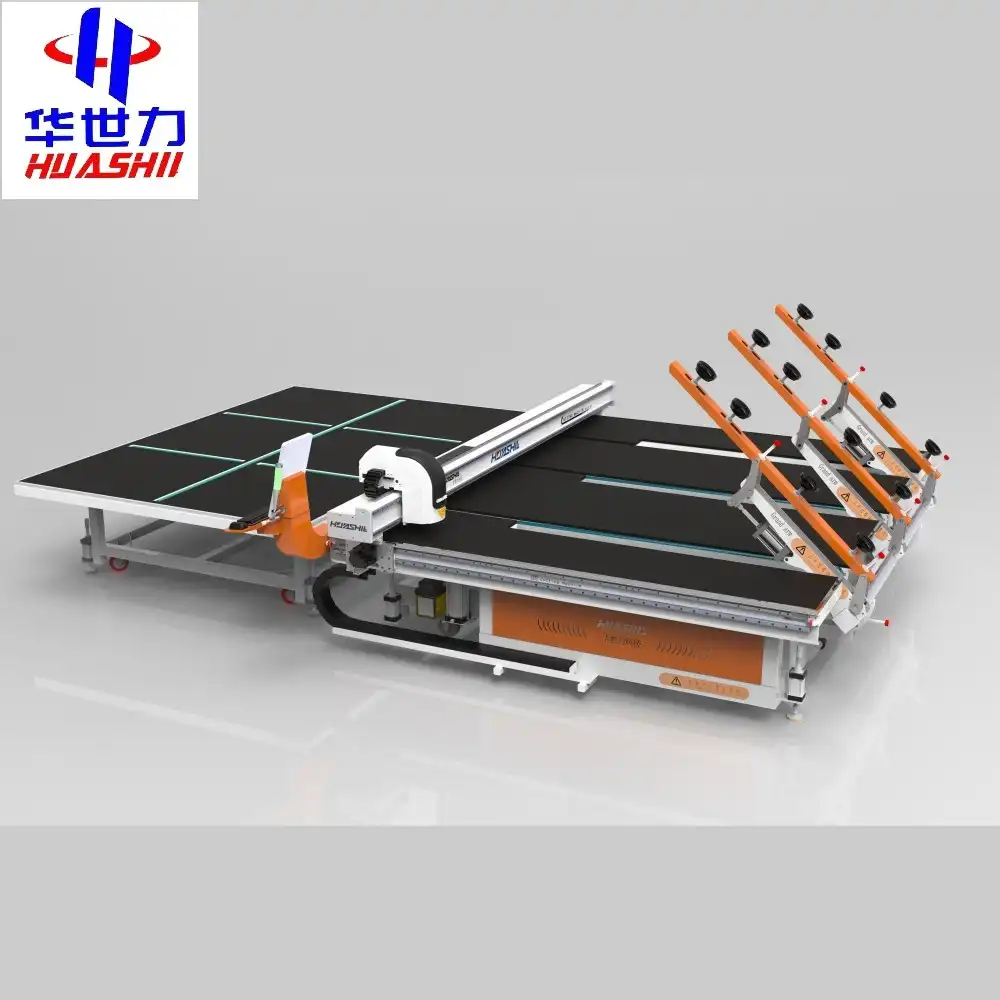
The HSL-YTJ3829 has the following main technical specs:
- Model: HSL-YTJ3829, CE and ISO 9001 certified
- Maximum glass size: 3,660 × 2,800 mm — accommodates full jumbo sheets used in curtain wall and architectural projects
- Cutting thickness range: 2–19 mm, covering float glass, laminated glass, and decorative glass substrates
- Machine footprint: 5,780 × 4,925 mm, designed for industrial floor layouts
- Optimization software: Optima — automatically calculates the most material-efficient cutting layout per batch
- Key functions: Automatic loading, automatic pressure control, automatic edge finding, air flotation system, integrated breaking table, and 360-degree remote control travel
- Glass conveying: Synchronous belt system ensuring stable, vibration-free sheet transport throughout the cutting cycle
All of these skills work together to solve the speed-precision problem at its source. Automatic pressure control stops score-line changes that are caused by inconsistent operator force, which is one of the main reasons cuts don't line up right in manual and semi-automated systems. Air float shields the surfaces of sheets while they move, which lowers the chance of micro-scratching that can damage the quality of the edges after they break.
The Optima software interface is very important for buying managers who are figuring out the total cost of ownership. By making the most of sheet usage, it directly lowers the cost of raw materials per unit created. This is a measurable return on investment (ROI) that finance teams can figure out before approving capital.
How to Choose the Right Cutting Machine for Your Business Needs
A Practical Screening Framework for B2B Buyers
When looking for the right stained glass cutting tools, you need to make sure that it can handle three things: the average size of your sheets, the amount of work you do every day, and the level of accuracy you need for your finished pieces.
When looking at automatic glass cutting systems, people who work in procurement should consistently look at four dimensions. The real throughput capacity can be found by looking at cutting speed and accuracy measurements (cycles per hour under load, not theoretical maximums). Specifications that say the tolerance is ±0.1 mm or less mean that it can be used for precise architectural work. The operational continuity risk is based on the after-sales infrastructure, such as the availability of parts, remote diagnostics, and on-site service response. The most honest way to approve a budget is to look at the total cost of ownership over five years. This includes things like energy use, replacement parts, and the chance of downtime.
For medium-sized makers who work with 800 to 1,200 square meters of glass every day, a full-format CNC cutting table that can also break glass removes the need to manually move the glass from one step to the next, which wastes time and increases the risk of breaking it. The HSL-YTJ3829's built-in breaking table solves this production problem right away.
When OEMs and system integrators buy equipment for full-line installations, they should also check to see if there are ways to customize it. Line planning is a lot easier when the equipment can be set up by the OEM and can integrate software with cells further down the line.
Maintenance, Safety, and Troubleshooting for Stained Glass Cutting Machines
Protecting Output Quality Through Consistent Upkeep
Maintaining the cutting speed and edge accuracy of a cutting machine for stained glass windows over its lifetime depends on three regular tasks: keeping the cutting wheel assemblies clean and well-oiled, replacing the scoring wheels at the manufacturer-recommended times (usually every 80–120 hours of active cutting, depending on the type of glass), and checking the cutting bridge alignment calibration on a regular basis.
It's helpful to know about common speed issues and what they are most likely caused by before they stop work. Score lines that aren't straight or are ragged are usually a sign of a worn cutting wheel or bad pressure calibration. When sheets move during cutting, it can be seen as differences in where the finished pieces are placed. This is usually a sign of uneven belt tension or uneven air flotation pressure. Changes in speed in the middle of a run can be a sign of servo motor feedback problems that need to be fixed by a service technician.
Safety rules for automatic glass cutting tables need to cover three areas: areas where operators aren't allowed to be during automatic loading cycles; wearing the right PPE (like cut-resistant gloves and safety glasses) when handling glass by hand at the breaking table; and being able to reach the emergency stop from different spots around the machine's edge. The HSL-YTJ3829 has a 360-degree remote control walking feature that lets workers watch and change how the machine works from anywhere on the cutting table, without having to go into the active cutting zone. This is a real safety benefit in busy production areas.
If there is still a performance difference after standard calibration checks, contacting the equipment supplier's technical support line right away stops small calibration drift from becoming component damage.
Cutting Machine Procurement: Where and How to Buy
Navigating Supplier Selection and Purchase Terms
When looking for glass cutting tools, B2B buyers usually start their research on B2B platforms and company websites. They then make sure the seller is trustworthy by visiting the factory, taking part in trade shows, and asking current customers for references. For full production line setups, the buying process usually takes three to six months because of the technical review and site visit phase. This is because the investment is very complicated and costs a lot of money.
When looking at different suppliers, the commercial proposal must include warranty terms, lead times for spare parts, and technical training programs. Suppliers who give clear paperwork packages with machine specs, acceptance standards, and installation dates lower procurement risk for both the person in charge of buying the goods and the people in charge of clearing the spending.
For foreign sales, the most common ways to pay are a deposit plus the balance or a Letter of Credit. Both of these are standard ways to buy capital tools in the glass-making industry.
Conclusion
Now, cutting glass quickly and accurately doesn't have to be a trade-off; it's an engineering result that depends on the tools used. Computerized CNC cutting tables with smart optimization software, automatic pressure control, and built-in material handling functions can now make things quickly and accurately within tight limits all in the same production cycle. This feature directly means less waste, higher output, and better margins for architectural glass fabricators, curtain wall installers, and decorative glass producers who work in markets that are competitive. Even a cutting machine for stained glass windows benefits from this approach. Making the choice to buy equipment that fits your current production level and quality standards is what makes that result repeatable.
FAQ
1. What glass thickness range does the HSL-YTJ3829 handle?
The HSL-YTJ3829 can cut glass that is 2 mm thick up to 19 mm thick. It can handle normal float glass, thicker architectural lites, and artistic glass substrates that are often used in furniture and partitions.
2. How does automatic pressure control improve cut quality?
Automatic pressure control keeps the score force the same along the whole cutting path, even if the person changes what they are doing. This gets rid of one of the main reasons why score lines don't match up and lowers edge chipping during the breaking stage.
3. What is the role of Optima software in production efficiency?
Optima is a program for cutting that figures out the best layout for each set of cuts based on how much material is used.
4. Is the HSL-YTJ3829 suitable for curtain wall production volumes?
With a maximum glass handling capacity of 3,660 × 2,800 mm and CE/ISO 9001 certification, it can be used in high-volume architectural and curtain wall production settings that need accurate measurements across big sheet forms.
Reach Out to HUASHIL for a Verified Quote on Our Cutting Machine
Industrial-grade glass cutting tools made by HUASHIL are trusted by fabricators on six continents. We offer the HSL-YTJ3829 as a certified cutting machine for stained glass windows. It comes with full technical documentation, can be configured in a variety of ways (OEM/ODM), and comes with quick customer service after the sale. Talk to our engineering team about your production needs and get a thorough business plan that is made to fit your line's needs. You can email us at salescathy@sdhuashil.com to see all of our products.
References
1. Glass Manufacturing Industry Council (GMIC). Glass Processing Waste and Yield Efficiency Report. 2022.
2. Pilkington. Glass in Architecture: Technical Manual for Fabricators. 2021.
3. American National Standards Institute (ANSI). Safety Requirements for Glass Cutting and Processing Equipment. 2020.
4. Glass International Magazine. "Automation Trends in Flat Glass Processing." 2023.
5. ISO. ISO 9001:2015 Quality Management Systems — Requirements. International Organization for Standardization, 2015.
6. USGlass Magazine. "Total Cost of Ownership in Automated Glass Fabrication Lines." 2022.