




A door glass cutting machine is an advanced precision tool designed specifically for efficiently cutting glass panels used in doors, windows, and architectural applications. These automated systems combine mechanical accuracy with digital control technologies to deliver consistent, high-quality cuts across various glass thicknesses. In today's competitive manufacturing landscape, integrating these machines means transforming production workflows—reducing manual labor, minimizing material waste, and ensuring repeatable precision that manual methods simply cannot match. Whether processing standard door panels or custom architectural glass, modern cutting machines have become indispensable assets for fabricators seeking operational excellence and competitive advantage.
Understanding Door Glass Cutting Machines
Core Technologies and Working Principles
Multiple technologies are used in modern door glass cutting machines to get accurate results. With diamond-tipped tools, manual cutting stations depend on the skill of the person using them and are good for small-scale custom work. In semi-automatic models, powered cutting heads are guided by operators, which gives you more freedom while also making things more consistent. Fully automatic and CNC-controlled tools use computer code to cut in complicated patterns with little help from a person. To control the cutting speed, pressure, and path, these high-tech systems use servo motors, linear guides, and complex software. The cutting head usually has diamond wheels or carbide cutters that stay in contact with the glass while it moves along predetermined paths. Vacuum tables keep workpieces stable while they're being worked on, so they don't move around and lose accuracy.
Essential Features Impacting Production
The quality of the end product and the needs for further preparation are directly related to how accurately the cuts are made. Tolerances within ±0.2mm are met by machines that cut down on edge grinding time and costs. Throughput capacity is affected by operational speed. For normal door panels, high-performance systems finish cutting cycles in less than two minutes. Built-in safety features like emergency stops, laser guards, and automatic shut-offs keep workers safe while still meeting OSHA standards. Automatic edge recognition in more advanced models makes up for differences in where the glass is placed, so cuts stay perfectly lined even if the glass is loaded incorrectly. Pressure control systems change the cutting force based on the thickness of the glass. This stops tiny cracks from forming that weaken the structure.
Productivity and Workplace Benefits
Automated cutting tools make operations better in a number of ways that can be measured. When processing standard parts, it is common for production speeds to go up by 300 to 400% compared to manual methods. As one assistant takes over tasks that used to require three-person teams, labor costs go down. When workplace safety is improved, workers don't have to physically score and break big glass sheets, which lowers insurance costs and lost time. Optimization software that nests cutting designs increases the amount of material that is used by getting the most out of each sheet of glass and cutting waste by 15 to 25 percent. When edge quality is consistent, the need for extra finishing processes is reduced. This speeds up order fulfillment and makes customers happier.
Types of Door Glass Cutting Machines
Manual and Semi-Automatic Systems
Small shops with specialized projects that need to be set up and taken down often use manual cutting tables. Handheld cutting tools are guided along straight edges or models by operators. These systems are easy to get into and don't require a lot of money up front. Motorized cutting heads on guided tracks are added to semi-automatic tools. The operators put the glass in place and start the cuts, while the motors keep the speed and pressure constant. These configurations are good for businesses that are moving away from doing everything by hand because they make things more repeatable without the need for programming knowledge. Some problems are that cycle times are longer and excellent results rely on operators being consistent.
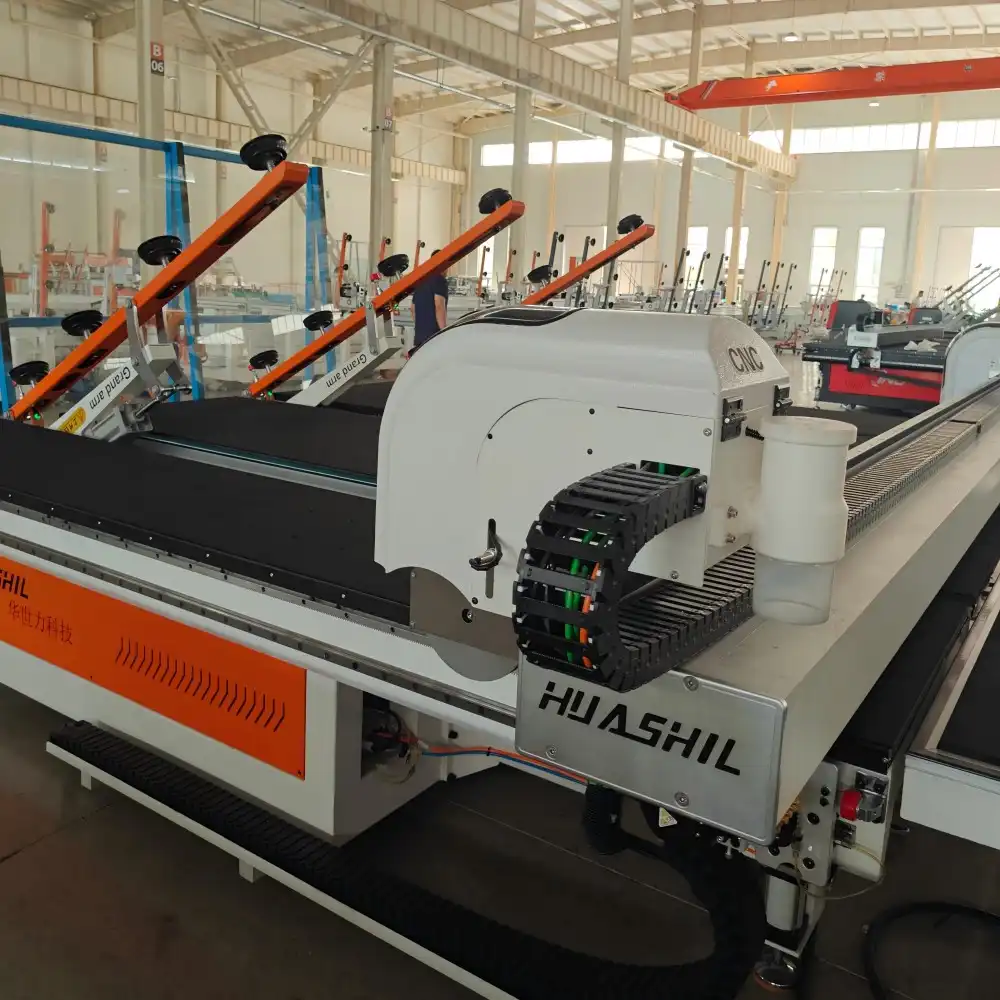
Automatic and CNC-Controlled Equipment
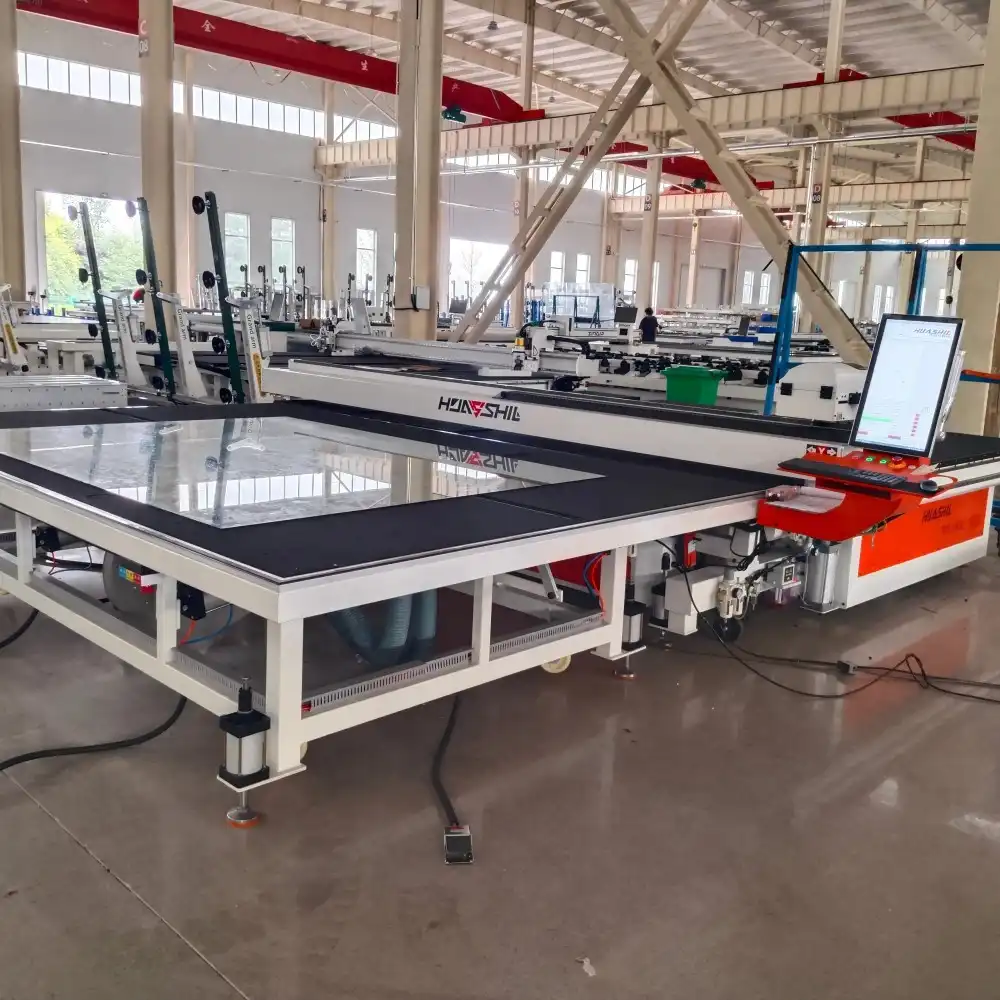
Fully automatic door glass cutting machines make a big difference in how much work medium- to high-volume producers can get done. These machines have automatic conveyors for filling, computer-controlled cutting routines, and built-in tables for breaking. The HSL-YTJ3826 model is a good example of this type because it can handle glass up to 3660mm x 2440mm and 2mm to 19mm thick. Its Optima optimization software figures out the best ways to cut, and automatic pressure control adapts to changes in the material. When glass moves, air flotation systems keep the surface from touching other things, which keeps premium coated materials from getting scratched. During large panel processing, the 360-degree remote control lets operators control equipment from a safe distance. At each stage of production, synchronous belt conveyors make sure that the flow of materials is smooth.
CNC glass cutting tools can make any form, and they can change patterns all the time. Computer-aided design integration lets you import files directly from architectural drawings, so you don't have to do any programming by hand. When it comes to making curtain walls and handmade furniture, where unique shapes are common, these tools really shine.
Innovations Shaping Manufacturing Technology
Recently, there have been a lot of improvements in smart workplace integration and the comfort of operators. Leading makers now make tools that can connect to the internet of things (IoT) and send real-time data about their performance to tracking systems in the cloud. Predictive maintenance programs look at patterns of sound and wear on cutting tools to plan service visits before problems happen. As an example of an ergonomic improvement, touchscreen interfaces with clear graphics cut down on the time needed to train new operators. Drive systems that use less energy lower running costs and meet guidelines for environmental sustainability. When a product has CE and ISO9001 certifications, as the HSL-YTJ3826 does, buyers know that it meets international standards for safety and quality management.
Performance and Maintenance of Door Glass Cutting Machines
Cutting Precision and Operational Efficiency
Precision cutting affects both the quality of the product and the amount of work that needs to be done later. Tight standards on the door glass cutting machine cut the time it takes to clean the edges by up to 40%, which has a direct effect on the cost of production. Different types of tools use very different amounts of power. High-efficiency motors and changing frequency drives make the best use of energy based on cutting loads. When you switch from older hydraulic systems to newer servo-driven ones, you can save a lot of money on your energy bills. The automatic edge-finding feature of the HSL-YTJ3826 makes sure that accuracy stays the same even if the glass sheets aren't placed perfectly. This keeps quality high without slowing down production.
Common Issues and Maintenance Strategies
Maintenance plans help tools last longer and keep them from breaking down, which costs a lot of money. Cutting wheels should be inspected every day, and replacements should be planned based on how badly the edges are wearing down instead of at set times. Lubrication systems need to be checked once a week to make sure that the linear guide systems and bearing kits have the right amount of oil. To keep the suction force for stable workpieces, vacuum pump filters need to be cleaned once a month. Every year, the machine is calibrated to make sure that the cutting bed is in the right place and to fix any physical shift. Setting up preventative maintenance plans that are in line with what the maker suggests can cut unplanned downtime by 60 to 75% compared to reactive repair methods.
Safety Protocols and Compliance
Comprehensive safety programs keep workers safe and meet government standards. Machine guards keep people from touching moving parts while the machine is running. When entry doors open, interlock systems turn off cutting functions, removing dangerous exposure risks. There are emergency stop keys in several places that let you immediately cut off the power. Personal protective equipment, like safety glasses and hands that won't cut, is still required when working with glass. Safety checks are done on a regular basis to make sure that ANSI Z87.1 standards for eye protection and OSHA rules about operating industrial tools are being followed. Written training programs make sure that all operators know what to do in a situation and how to use the tools correctly.
How to Choose the Right Door Glass Cutting Machine for Your Business
Evaluation Criteria for Procurement Decisions
Production volume is the most important factor in choosing a door glass cutting machine. Facilities that process less than 50 panels per day may be fine with semi-automatic systems, but facilities that process more than 200 panels per day need fully automatic systems. A person's budget should include more than just the purchase price. It should also include the costs of installation, operator training, and ongoing maintenance. The total cost of ownership should include how much energy is used, how often consumables need to be replaced, and how much productivity is expected to rise. The amount of automation needed depends on how complicated the product is and how often orders change. Automated systems with pattern optimization software are best for manufacturers who make standard door panels, while custom makers may value CNC freedom more.
Capacity planning needs to take into account both current demand and expected growth over the next five years. The HSL-YTJ3826 can handle normal architectural panels with a maximum glass size of 3660mm x 2440mm, and it also has room for bigger custom projects. It can handle doors and windows with thicknesses from 2 mm to 19 mm, so you don't have to buy any extra equipment.
Comparative Analysis of Available Models
When choosing a piece of equipment, the insurance coverage shows how confident the maker is in it and how committed they are to long-term support. Full warranties that cover both parts and work for 24 to 36 months are a sign of good building and steady performance. Installation services vary a lot. Some offer "turnkey" solutions that include setting up the equipment, training the operators, and improving production so that it can be used quickly. Response times for expert help and spare parts supply are set by after-sales support networks. When manufacturers keep parts and service centers in different areas, downtime during fixes is kept to a minimum. When you buy a lot of different configurations for a production line, you often get discounts and longer payment terms. This makes the project more affordable for big installations.
Scalability factors make sure that investments in tools can grow with the business. Modular systems let you add small amounts of functionality without having to replace the main parts. Integration problems can be avoided by making sure that new equipment works with current handling and processing equipment. Technical specifications should match what is needed now while also leaving room for growth.
Applications and Industry Use Cases
Residential and Commercial Applications
By far, the most common use for door glass cutting machines is when making architectural glass. Automated systems help window makers make thousands of standard units every day while keeping the tight limits needed for modern building shells. Fabricators of curtain walls use CNC machines to cut complicated shapes that meet architectural requirements. They often work from digital models of buildings. Edge quality is good for shower door makers because it speeds up the tempering and finishing processes. Glass furniture makers use these tools to cut very precise lines on tabletops, shelves, and decorative panels that people can see.
Automotive and Specialized Processing
Making auto glass requires a lot of accuracy to make sure it fits right and works safely. Cutting machines made just for this industry have special tools for working with bent glass and laminating materials. Making a smart mirror requires being able to make complex cuts that can fit electronics and sensors. CNC's flexibility lets it make unique designs for decorative glass uses like etched panels and art installations that set products apart in competitive markets.
Case Studies and Measurable Improvements
A window fabricator in the Middle Atlantic said that after adding automatic cutting equipment, output went up by 35% and labor costs went down by $4.20 per unit. Making changes to quality cut down on customer returns by 68%, which greatly increased profits. With the help of optimization software, a furniture maker on the West Coast cut material waste by 22%, which saved them $47,000 a year in raw material costs. During the first year of operation, the equipment was up more than 96% of the time, which proved the dependability predictions that were used to make capital investment choices.
Emerging Trends in Glass Manufacturing
As businesses move toward integrating smart factories, the need for connected tools that can analyze production data grows. Real-time tracking lets you respond right away to changes in quality and make process improvements based on how things have worked in the past. Sustainability programs push makers to use equipment that uses less energy and tools that cut down on waste. Optimization software that cuts down on off-cut trash helps the environment and makes the business more profitable at the same time. CNC systems that are flexible and can be customized make mass personalization strategies possible. This lets makers make customized goods without sacrificing efficiency.
Conclusion
Choosing the right door glass cutting machine has a big effect on how competitive production is by improving quality, efficiency, and cost structure. By knowing the differences between fully automatic, semi-automatic, and manual systems, you can make sure that operating needs and technological skills are met. Modern machines like the HSL-YTJ3826 offer complete solutions by combining accurate cutting, automated material handling, and software for optimizing performance on single platforms. A careful look at the amount of production, the budget, and the need for scalability makes sure that investments pay off over the lifecycle of the equipment. As automation and digital integration continue to change manufacturing, companies that adopt advanced cutting technologies early will have a long-term economic edge.
FAQ
1. What maintenance schedule should I follow for optimal performance?
Every day, the cutting wheels should be checked for damage, and the vacuum table should be cleaned. As part of weekly tasks, the coolant level and lubrication system must be checked. Maintenance tasks done once a month include changing the filters, adjusting the belt tightness, and checking the alignment. Professional servicing once a year should include full system diagnostics, precise recalibration, and an evaluation of component wear. When compared to reactive maintenance methods, following the manufacturer's suggested plans usually adds 40 to 60 percent to the life of the door glass cutting machine.
2. How do CNC systems compare to manual cutting methods financially?
Even though CNC equipment costs more up front, it saves a lot of money in the long run by cutting down on labor, making better use of materials, and making sure that quality is always the same. For operations that process 100 or more panels every day, breakeven usually happens in 18 to 24 months. Manual methods are still better for specialty work that isn't done very often and where setup time flexibility is more important than speed.
3. What financing options exist for full production line purchases?
Leasing equipment spreads costs over three to five years, so you can keep your working capital for other business needs. Competitive rates and deferred payment plans are common features of manufacturer financing programs. Small business loans backed by the government may offer better terms for certain manufacturing projects, especially those that create jobs or boost efficiency.
Partner with a Trusted Glass Cutting Machine Manufacturer
When it comes to designing and making door glass cutting machines, HUASHIL has decades of experience with robotics. Our HSL-YTJ3826 automatic cutting system has advanced features like Optima optimization software, automatic edge recognition, and air float technology. It has been tested and proven to work well. Our CE and ISO9001 certifications show that we follow international quality standards, and our full after-sales service makes sure that your investment lasts. Our solutions meet the most difficult practical needs for production managers who want to cut down on labor costs, improve cut quality, and boost output. Our engineering team can build full production lines or just improve tools that you already have. They can also make configurations that are specific to your manufacturing needs. Email our sales team at salescathy@sdhuashil.com to talk about your needs and get full technical specifications.
References
1. Glass Manufacturing Industry Council. (2023). Automation Technologies in Architectural Glass Production. Industrial Glass Quarterly, Volume 48.
2. National Glass Association. (2024). Best Practices for Glass Cutting Equipment Maintenance and Safety Compliance. Technical Standards Publication.
3. American Society of Mechanical Engineers. (2023). Precision Cutting Systems: Engineering Standards and Performance Metrics. ASME Manufacturing Engineering Division.
4. International Journal of Advanced Manufacturing Technology. (2024). Comparative Analysis of CNC Glass Processing Equipment Efficiency and ROI Factors.
5. Building Envelope Design Guide. (2023). Glass Fabrication Equipment Selection for Curtain Wall Manufacturing. Architectural Glass Institute.
6. Manufacturing Productivity Research Center. (2024). Cost-Benefit Analysis of Automated Glass Cutting Systems in Mid-Scale Production Environments.