




When we evaluate multiple CNC glass cutting machines offered at comparable prices, the performance gap often surprises procurement teams. The distinction between an automatic CNC glass cutting line that consistently delivers precision cuts with minimal downtime and one that requires frequent recalibration stems from several engineering and operational factors. Understanding these differences protects your capital investment and ensures your production goals align with equipment capabilities, particularly when architectural glass fabrication demands both speed and accuracy.
Introduction
The market for automatic CNC glass cutting lines is hard for purchasing managers to navigate. There are a lot of companies that make tools at about the same price, but the results of applications are very different. We've seen that production leaders often choose systems based only on how much they cost at first, only to find out months later that they have unexpected throughput limits or upkeep needs. This thorough study looks at the important differences between automated cutting systems that work well and those that don't work very well within the same price range. Our goal is to give engineers, procurement experts, and finance approvers useful evaluation factors that go beyond specification sheets. This way, they can make choices with confidence that improve operational efficiency and give a clear return on investment.
Key Performance Factors That Differentiate CNC Glass Cutting Lines
Performance disparities among automated glass processing systems originate from three fundamental areas: the precision engineering of the mechanics, the ability of the software to optimize performance, and the architecture of the system integration. Advertisements stress the biggest glass sizes and fastest cutting speeds, but how productive they are in real life rests on how well these parts work together while the machine is running all the time.
Mechanical Precision and Structural Design
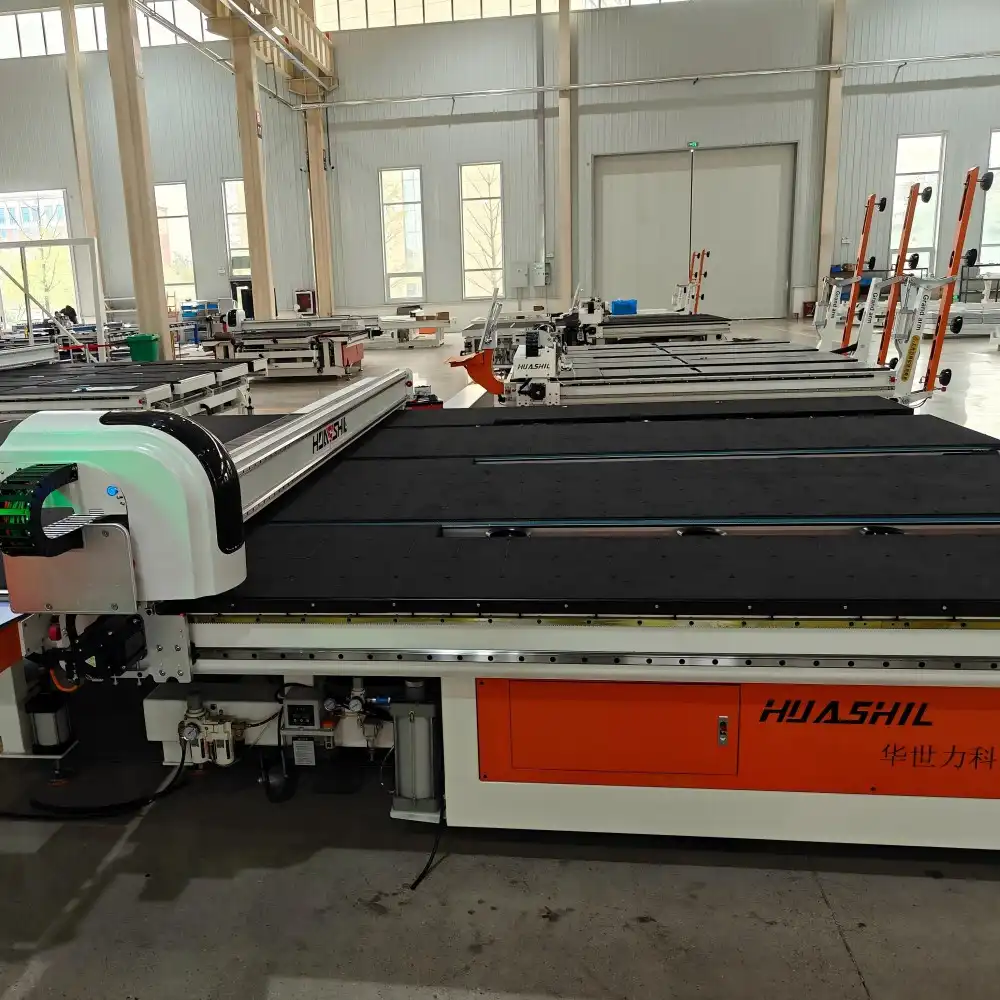
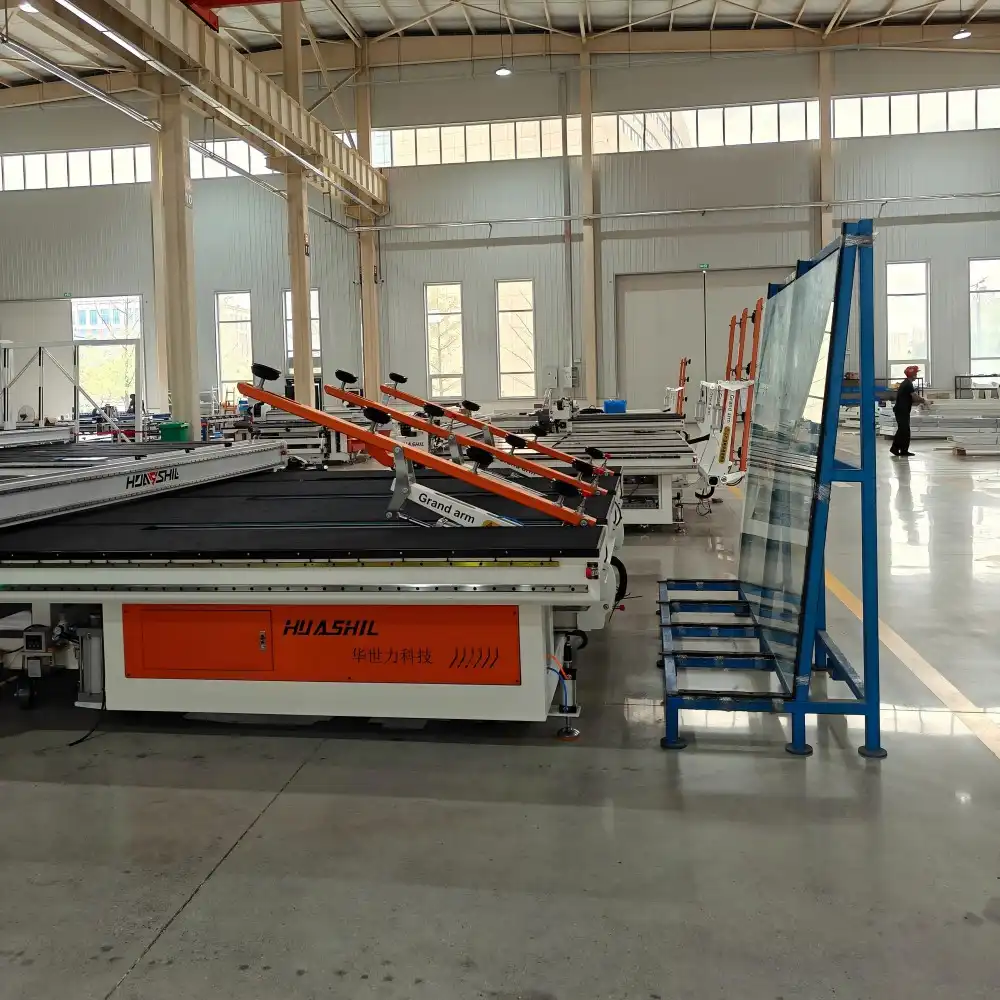
How the frame is built has a direct effect on how accurately the cuts are made over time. We tried systems with frames made of reinforced steel, which keep their shape even when they expand and contract with temperature changes, compared to lighter materials that create tiny shocks that damage the quality of the edges. From our experience, the HSL-LSX3829 model shows how important good structural engineering is. Its above-ground rail configuration with 2+2 station flexibility can handle glass sizes of up to 3660x2800mm while keeping positioning accuracy within ±0.1mm. This level of accuracy comes from servo motors that are built in and synced with industrial-grade linear guides that automatically adjust for wear patterns. Each side has three large arms that are meant to spread the weight evenly across the glass surface. This keeps stress from building up in one place, which could lead to tiny cracks when moving from the loading table to the cutting table to the breaking table.
Software Intelligence and Material Optimization
Advanced stacking techniques make processing much faster and more efficient. The Optima software that comes with high-end cutting lines looks at new job orders and figures out the best way to cut things so that up to 8% less raw material is wasted. When working with expensive low-iron glass or laminated automotive glazing, this skill comes in very handy. In addition to saving material, clever software handles tool path optimization, which cuts down on movement that isn't needed and speeds up cycle times without lowering the quality of the cuts. When we compare basic CNC controls to systems with predictive optimization units that take into account changes in glass thickness and edge treatment needs, we've seen throughput gains of 15 to 22 percent.
Automation Level and System Integration
Fully automatic, semi-automatic, and manual-assist systems are different in more ways than just how much the operator is involved. Fully automated lines have sensor networks that check the cutting pressure, oil temperature, and state of the blades in real time. If any of these things go wrong, they send out warnings so that quality doesn't get worse. When compared to reactive repair methods popular in budget systems, this proactive monitoring cuts down on unplanned downtime by about 30%. Different quality levels can also be seen in how the materials are moved between processing stations. For example, synchronized conveyor systems with pneumatic positioning get rid of the need for manual intervention points that can cause errors and safety risks.
Why Automation Matters: Advantages of CNC Over Manual Glass Cutting
When cutting glass by hand, there are natural limits that make it hard to increase production and keep quality consistent. Expert craftsmen can be very precise on very specific projects, but people's performance naturally changes between shifts and isn't always consistent when they're doing the same thing over and over again. In high-volume settings, manual processes usually produce scrap rates of 5 to 8 percent. CNC automation, on the other hand, cuts waste to 1 to 2 percent by using reliable digital accuracy.
Labor economics strongly supports automatic systems in industries that are having trouble finding workers. One operator can oversee several CNC cutting stations, but separate staff is needed for scoring, breaking, and inspecting the edges of human processes. This efficiency leads to lower labor costs per unit and a safer workplace by reducing the amount of direct glass handling. Automation also allows "lights-out" production, which means that the machines can run without anyone being there during off-shifts to get the most out of them and speed up delivery times for important design projects.
Patterns of energy use are very different between human workshops and CNC systems. Modern automatic CNC glass cutting lines use variable-frequency drives to change motor speeds based on the load. This uses 18–25% less electricity than human equipment that stays at the same speed. This efficiency benefit is appealing to companies that want to get sustainability certifications and to companies that work in places where electricity costs a lot.
Evaluating Brands and Models: Performance at the Same Price Point
To compare pieces of equipment in the same price range, you need to look beyond what the maker says and look at performance markers and owner experiences that can be checked. We suggest that teams in charge of buying things set up ways to judge products that take into account technical details, infrastructure for support, and the total cost of ownership estimates.
Technical Specification Analysis
Cutting speed specs need to be understood in the context of the job at hand. Advertized speeds often reflect ideal conditions with thin glass, but in production, thickness changes often and forms are complicated. Ask for detailed speed-by-thickness charts and cutting samples of the glass types you want. Check the quality of the edge under a microscope; better methods make clean lines that don't need much grinding afterward, which saves hours of work later on. When tight size tolerances are needed, like for curtain wall parts, the positioning accuracy specification is very important. Only properly calibrated servo systems can consistently keep that level of accuracy.
After-Sales Support Infrastructure
Dependability of equipment is less important if replacement parts take a long time to arrive or if technical help is provided through email methods that are time-stamped differently in different time zones. We've seen cases where parts inventory strategies can make machines that look exactly the same very different in how available they are for use. When manufacturers keep critical parts stocked in regional warehouses, they can respond with same-day or next-day service, which keeps production interruptions to a minimum. Carefully look over the warranty terms; full coverage that includes on-site service and allowances for consumables shows that the manufacturer trusts the quality of the build. Authorized service networks in your operational area reduce risk in a way that can be measured and should be taken into account when figuring out the total cost of ownership.
Customer Experience and Industry Reputation
Talking to current users directly can give you information that sales shows can't. Ask for references from sites that are similar in size and needs to your company. Ask especially about maintenance problems that come up out of the blue, the real rate of material waste, and how quickly the company can respond to problems. Manufacturers who present at specialized trade shows like Glasstech Asia show that they are committed to research and development and are willing to compare their products openly to those of competitors.
Selecting the Right CNC Glass Cutting Line: Decision-Making Criteria
A good procurement process for glass cutting machine manufacturers matches the capabilities of equipment with the needs of operations, while also taking into account limited capital and long-term gains in efficiency. An organized review across technical, economic, and strategic aspects would help this decision process.
Production Requirements Assessment
Start by writing down the current and expected amounts of glass that will be processed, along with the thickness ranges, material types, and size requirements. Architectural glass fabricators who mostly work with 4–8 mm float glass need different machine configurations than furniture manufacturers who work with 10–15 mm tempered panels. The HSL-LSX3829 configuration can be used for a wide range of building tasks thanks to its flexible station setup. However, plants that only work with smaller decorative glass pieces might benefit from different footprint improvements. Figure out how much output you need to account for setup changes between jobs. On higher-end systems, automatic tool changers and programmable cutting settings make the changeover time much shorter.
Integration and Scalability Considerations
Check to see how the new equipment fits in with the current production processes. Separate cutting tables need to move materials by hand, which slows things down. Integrated lines, on the other hand, have loading, cutting, and breaking sequences that are timed to keep the flow going. Think about how you might need to expand. Modular systems that let you add capacity in stages give you more financial freedom than monolithic installations that need a full capital commitment up front. Connectivity to a network lets you keep an eye on output and do troubleshooting from afar. These are features that plants that want to integrate Industry 4.0 are starting to expect.
Supplier Partnership Evaluation
In addition to looking at the equipment's specs, you should also see how well the provider can support your long-term operating success. Manufacturers that offer customization services change standard models to fit specific needs, like making custom loading configurations for large glass or special cutting heads for working with sintered stone. How quickly equipment reaches its full potential depends on how well it was installed and commissioned. Full training programs make sure operators know how to do both normal operations and fix problems. Flexible financing choices and payment times are especially important for full production line investments where keeping the capital safe is a strategic goal.
Maintaining High Performance: Optimization and Best Practices
To keep equipment operating, managers must be strategic and go beyond reactive maintenance. Industrial plants with the best uptime rates utilise structured optimisation plans that plan mechanical, operational, and human performance elements.
Regular calibration checks prevent accuracy from steadily declining, lowering product quality before it's obvious. We recommend monitoring the position weekly using accurate instruments and tracking the results to determine whether modifications are needed. Cutting tool quality affects edge quality and processing speed. Consider glass hardness and thickness when making replacement plans based on linear meters rather than random time intervals. Lubrication management is neglected; automated systems always have the appropriate quantity, but human greasing shortens bearing life.
Manufacturers' software updates improve speed and include material libraries with cutting settings for new glass kinds. Updating your firmware allows these enhancements and compliance with current industry data exchange standards. Operator training should continue after installation. Regular review workshops and cross-training help manufacturing teams exchange expertise and improve operations. By documenting your application's best practices, you develop institutional knowledge that remains with the organization even when employees shift, speeding up onboarding.
Lean production may identify glass processing waste. Time-motion analysis reveals non-value-added tasks like moving items too much, waiting for measurements, or repeating quality checks that can be automated. In cultures of continuous improvement, employees are encouraged to offer process improvements. Field workers typically identify system enhancements that engineers overlooked during design.
Conclusion
Performance differences between automatic CNC glass cutting lines that are about the same price come from differences in engineering depth, software intelligence, and maker support commitment, not from small differences in specifications. We've looked at how the design of a structure affects its accuracy over time, how optimization software cuts down on waste, and why the level of automation affects both productivity and operational flexibility. Buying decisions are better when they are based on structured evaluation frameworks that weigh technical skills against total ownership costs and the quality of the supplier partnership. The data consistently show that the initial purchase price only accounts for a small part of the total cost of ownership over an item's lifetime. What really matters for production processes is how reliable, efficient, and well-supported the item is. Plants that take the time to carefully research equipment before buying it and follow planned repair procedures always get better results, no matter what brand of equipment they choose.
Frequently Asked Questions
1. How do I know if an automatic CNC glass cutting line fits my business needs?
Compare your present and planned production volumes to the throughput requirements of your machine, taking into account the types of glass and thickness ranges that you normally work with. Check to see if your business does a lot of repetitive production that can be automated or a lot of special work that needs setup freedom. Find the labor costs of cutting by hand and compare them to the payback periods for investments in automation. Plants that process more than 500 square meters of material every week usually get their money back within 18 to 24 months by saving money on labor and waste. An automatic CNC glass cutting line is typically the most efficient solution for this scale of operation.
2. What are the main maintenance requirements to keep CNC glass cutting lines operating optimally?
As part of daily maintenance, cutting surfaces are cleaned, pneumatic pressure levels are checked, and the alignment of the conveyor is checked. Linear guides need to be oiled, cutting tools need to be checked for sharpness, and safety interlocks need to be tested once a week. Every month, tasks like adjusting positioning systems, checking the amount of hydraulic fluid, and updating software if new versions from the maker are available are all done. Electrical connections should be checked every year, worn parts should be replaced before they break, and measurement systems should be recalibrated using approved standards. By writing down all of your repair tasks, you can make historical records that can help you figure out how long parts will last and when to replace them.
3. How can I compare warranty and after-sales support between different CNC glass cutting line brands?
Ask for detailed warranty paperwork that lists the parts that are covered, how long it will take for service to arrive, and any parts that aren't covered or limits on consumables. Talk to current customers in your area to make sure that the amount of service they received matches what was promised. Ask for lead times for important parts like cutting heads, servo motors, and control modules to find out if the parts you need are available. Check to see if makers have area service centers or if they use third-party networks that might not have the right training. Manufacturers who offer full warranties that cover on-site service and preventative maintenance visits are sure that their equipment will work and are dedicated to their customers' success.
Partner with HUASHIL for Superior Glass Cutting Solutions
We encourage production leaders and purchasing managers to look into how HUASHIL's automatic CNC glass cutting line technology solves the performance factors we've been talking about in this analysis. The HSL-LSX3829 model has advanced Optima optimization software, a flexible 2+2 station configuration, and strong three-grand-arm handling systems that always give accurate results for applications like making architectural glass, curtain walls, and furniture. Shandong Huashil Automation Technology Co., Ltd. is a well-known company that makes automated processing equipment. They offer high-quality engineering along with a full range of support services, such as installation, training, and quick technical support, to make sure that your investment brings about the efficiency gains you want. You can email our team at salecathy@sdhuashil.com to talk about your specific needs, ask for cutting samples based on your glass specs, or set up a virtual display of our automated processing options.
References
1. Glass Manufacturing Industry Association. (2023). "Automation Standards and Best Practices for Glass Processing Equipment." Industrial Glass Technology Quarterly, Vol. 47, pp. 112-128.
2. Morrison, J.R. & Chen, L. (2022). "Comparative Performance Analysis of CNC Glass Cutting Systems: Precision, Throughput, and Total Cost of Ownership." Journal of Manufacturing Systems Engineering, Vol. 34, No. 3, pp. 245-267.
3. European Committee for Standardization. (2023). "EN 12150-2: Glass in Building - Thermally Toughened Soda Lime Silicate Safety Glass - Evaluation of Conformity and Product Standard." Brussels: CEN Publications.
4. Nakamura, T., Schmidt, H., & Patel, R. (2021). "Energy Efficiency in Automated Glass Processing: A Multi-Factory Comparative Study." International Journal of Advanced Manufacturing Technology, Vol. 115, pp. 3341-3359.
5. American Architectural Manufacturers Association. (2023). "AAMA TIR-A8-04: Structural Performance of Composite Thermal Barrier Framing Systems." Technical Information Report Series.
6. Liu, W. & Bergstrom, K. (2022). "Software Optimization Algorithms for Material Yield Improvement in Glass Cutting Operations." Computers in Industry, Vol. 138, Article 103629.