




When production quality and throughput matter, the choice between a door glass cutting machine and manual cutting carries real consequences. Automated glass cutting equipment—like the HUASHIL HSL-YTJ3826—delivers repeatable precision, handles panels up to 3660×2440mm, and processes glass from 2mm to 19mm thick with consistent edge quality. Manual cutting, by contrast, depends heavily on operator skill and introduces variability that undermines yield rates. For most architectural, furniture, and curtain wall fabricators operating at scale, automated cutting is the stronger investment.
Understanding Door Glass Cutting: Manual vs Machine
How Manual Cutting Works—and Where It Falls Short
A small tungsten carbide wheel is used to cut glass the old-fashioned way, by scoring it along a straightedge and then carefully breaking it. Skilled operators can get good results with simple rectangular panels, but they lose accuracy when they have to make cuts in complex shapes or more than once. The work is very hard, and people's energy and attention spans naturally limit their output. The Occupational Safety and Health Administration (OSHA) says that a disproportionate number of laceration injuries in fabrication environments happen when people handle and cut glass by hand. Manual methods can still be used for small batches or prototypes, but they can't keep up with the output needs of modern manufacturing.
What Modern Automated Cutting Machines Offer
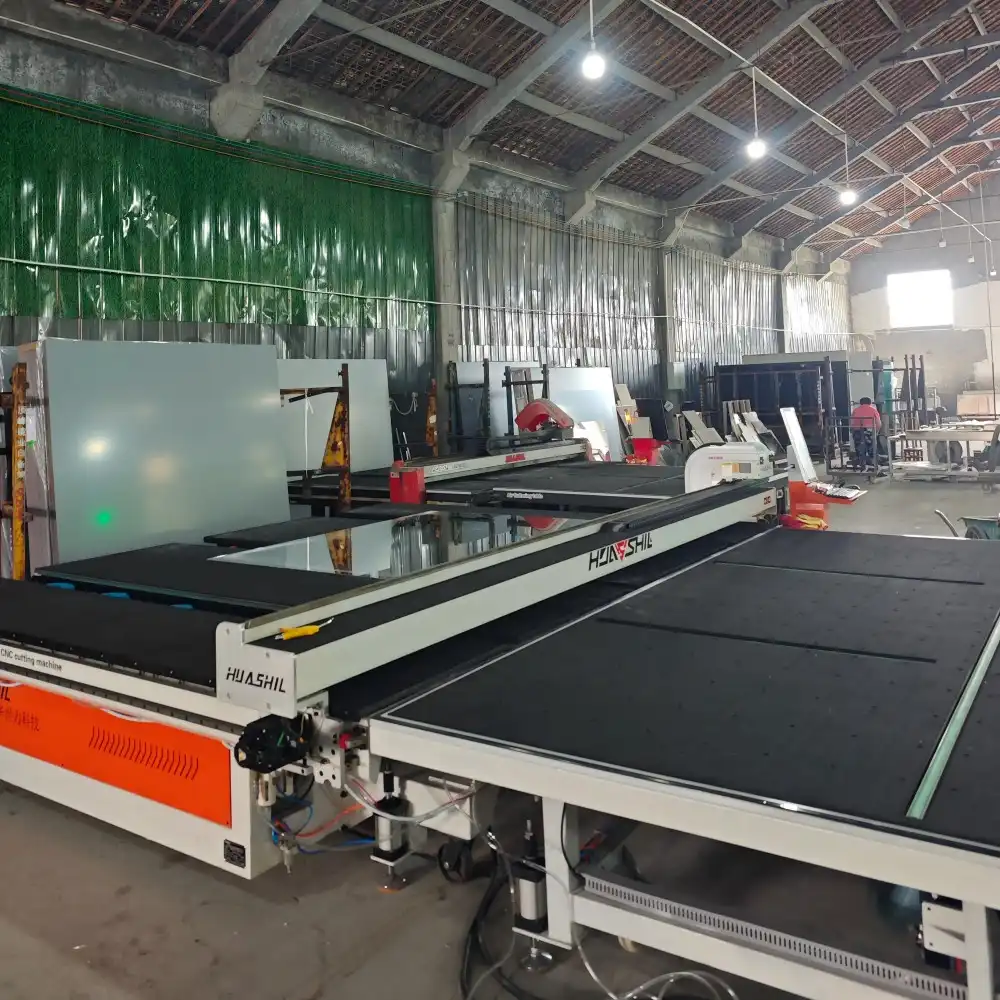
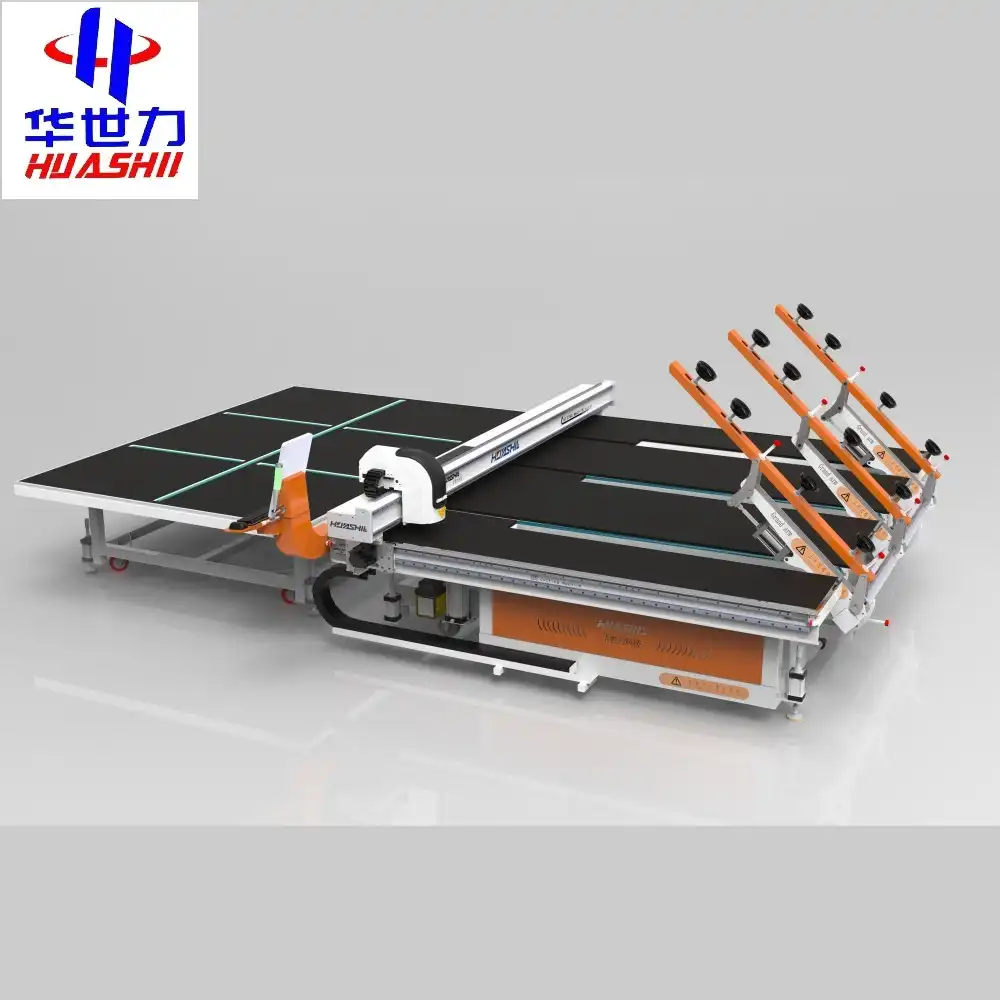
Automated glass cutting systems include bridge saws that only do some of the work and flatbed cutters that are fully controlled by CNC. This generation is shown by the HUASHIL HSL-YTJ3826, which has automatic filling, automatic pressure control, automatic edge finding, an air floating system, a built-in breaking table, and remote control operation from any angle. Synchronous chains move the glass from one place to the next, so there is no need to move the glass by hand. Before the first score line is made, the built-in Optima optimization software figures out the best cutting patterns to reduce waste. This machine meets CE and ISO 9001 standards for quality that can't be achieved by hand.
How Technology Has Raised the Bar
Over the past ten years, CNC controllers, servo-driven cutting heads, and intelligent nesting software have come together to make automated cutting available to mid-sized fabricators as well as large plants. Real-time pressure feedback loops change the cutter force flexibly across different glass layers (2–19 mm), stopping tiny cracks that cause the glass to break further down the line.
Comparing Performance and Productivity
Precision and Edge Quality
Machines make tolerances for dimensions that are tighter than those made by humans. A door glass cutting machine can cut with an accuracy of within ±0.5mm, which is not possible with manual methods during a full production shift. A better edge finish cuts down on the need for secondary grinding, cutting cycle time, and the cost of consumables all at the same time.
Speed and Throughput
On standard panels, one person cutting them by hand can make about 30 to 50 cuts per hour. An automated flatbed cutter keeps working at multiples of that number while keeping the quality the same. Handling architectural glass panels that are 3660x2440mm, which is the biggest size that the HSL-YTJ3826 can handle, by hand becomes a real problem. Automation gets rid of that limitation and lets you scale up in batches without adding as many workers.
Operational Efficiency and Waste Reduction
Speed isn't the only thing that makes an operation efficient. Software like Optima that does nesting optimization looks at incoming order sets and sets up cut patterns to get the most out of each sheet. According to data from the industry, efficient nesting can cut down on waste by 10–20% compared to plans that are planned by hand. When there is less scrap, the cost of materials per unit goes down. This is a measure that plant managers and finance directors use to carefully evaluate capital equipment.
Cost and Investment Considerations
Upfront Investment vs. Long-Term Value
Manual cutting tools don't require a lot of money to buy. For example, a good handheld cutter and straightedge system doesn't cost thousands of dollars. The price of buying an automated cutting machine is a lot higher. But comparing prices based on stickers alone is not helpful. The total cost of ownership (TCO) must include the cost of labor, the amount of waste, the cost of repair, and the time the machine is down.
A fabrication plant with two manual cutting shifts hires many trained operators who are paid at skilled-trade rates. Several manual jobs can be replaced by a single automated system, which also increases throughput. For facilities that handle medium to high numbers, the payback time for automated equipment is usually between 18 and 36 months, based on the amount of work saved each year over a five-year period.
Here are the main ways that buying automatic cutting tools will save you money:
- Lower scrap rates: Optima nesting software reduces material waste by up to 20%, directly lowering raw glass costs per order.
- Reduced rework costs: Consistent ±0.5mm accuracy minimizes defective panels that require reprocessing or replacement.
- Labor reallocation: Freed operators shift to higher-value tasks such as edging, tempering supervision, or quality inspection.
- Warranty and after-sales support: CE- and ISO 9001-certified machines come with documented service agreements, reducing unplanned maintenance costs.
Over time, these financial benefits add up, making automated equipment the smart choice for businesses that want to grow in the long term rather than cut costs in the short term.
Maintenance and Ongoing Expenses
Automated cutting machines have predictable and easy-to-handle preventative maintenance, like lubrication schedules, cutting wheel replacement, and belt inspection. The HSL-YTJ3826's door glass cutting machine synchronous belt moving system is made to work well with little upkeep and for a long time. On the other hand, manual cutting tools wear out in unpredictable ways depending on how they are used, and the need to replace consumables often adds hidden costs that don't show up in the initial cost analysis.
Safety and Compliance in Glass Cutting
Hazards in Manual Operations
When people cut glass by hand, they risk getting cut by shards and chips, getting repetitive strain injuries from scoring for long periods of time, and putting stress on their muscles and joints from lifting heavy panels. In places where glass is made, OSHA standard 1910.212 says that machines must have proper guarding and workers must wear personal protective equipment (PPE). Even though there are strict rules about PPE, most accidents in this sector are still caused by mistakes made by people when they are handling things by hand.
How Automation Reduces Risk
These risks are built into automated cutting tools. The HSL-YTJ3826 has automatic loading, so workers don't have to place big glass panels by hand, which is one of the most dangerous jobs in a fabrication shop. The air float device lifts glass panels on a cushion of air while they are being placed. This gets rid of drag and the chance that the panels will move. Safety features like emergency stop circuits, sensor-based collision detection, and enclosed cutting zones make the operator even less exposed. CE certification shows that the product meets European safety standards for machinery, which are often used as a standard by U.S. purchasing teams to judge the quality of equipment.
Decision Guide: Which Cutting Method Is Right for Your Business?
Whether to use manual or automatic cutting relies on the amount of work being done, how complicated the product is, and how fast the business is growing. Manual cutting works best in businesses that don't do a lot of work, for unique panels that are only made once, or in places where access to capital is limited. From an economic point of view, these situations do not yet favor automation.
It is clear that automated cutting equipment is the best option when any of the following are true:
- High daily volume: Processing more than 100 panels per day makes manual methods a throughput ceiling.
- Tight tolerances: Projects involving curtain walls, shower enclosures, or architectural glazing demand dimensional consistency that manual cutting cannot reliably deliver.
- Labor cost pressure: Rising skilled-trade wages in the U.S. market make labor substitution through automation increasingly attractive.
- Full-line integration: Fabricators building or expanding a complete processing line need cutting, edging, and packaging equipment that communicates seamlessly—automated cutters integrate naturally into such architectures.
A window factory that recently switched from human scoring to an automated flatbed system saw a 35% drop in the number of broken windows and a 40% rise in daily output in the first three months of operation. This is exactly what procurement professionals at architectural glass plants, curtain wall installers, and furniture glass makers always say happens after they improve their automation.
The HUASHIL HSL-YTJ3826's small 5550×4925mm footprint means it can fit into current production halls without major facility changes. This is an important practical factor that often affects equipment selection in facilities with limited space.
Conclusion
While cutting by hand can be useful in some situations, it is not as accurate, fast, safe, or cost-effective in the long run as automated equipment. The HSL-YTJ3826 door glass cutting machine is a great choice for makers who work on a large scale because it is technically advanced, meets all safety standards, and is reliable in use. In the end, the choice comes down to how seriously a company takes its plans to grow.
FAQ
1. How often does an automated glass cutting machine require maintenance?
The HSL-YTJ3826 needs to have its guide rails oiled once a week, its cutting wheels inspected every so often, and its synchronous belt tension checked every three to six months.
2. Can manual cutting match machine precision for door glass applications?
When skilled workers make simple rectangular cuts, they can get pretty good results, but under long-term production conditions, tolerances usually range from ±1mm to ±2mm. Automated machines constantly hold ±0.5mm across full shifts and panel sizes up to 3660 x 2440 mm, which is a big difference in building and curtain wall uses.
3. How much energy does an automated cutting machine consume compared to manual methods?
Servo motors, air blowers for the flotation system, and control electronics are the main parts of automated flatbed cutting systems that use energy. Higher output and less waste usually make up for the energy used per panel cut. This means that the cost of energy per salable unit is often less than the cost of energy per unit for human methods when waste is taken into account.
Explore HUASHIL's Automated Glass Cutting Solutions
Precision-engineered automated cutting equipment made by HUASHIL is accepted by glass makers in many fields. With CE and ISO 9001 certification, Optima nesting software, and a strong after-sales support network, the HSL-YTJ3826 is a tried-and-true door glass cutting machine option. Get in touch with our technical team to talk about specifications, get a competitive quote, or look into OEM configurations that are made to fit your production line. Please email salescathy@sdhuashil.com to get in touch with us.
References
1. Occupational Safety and Health Administration (OSHA). Controlling Hazardous Energy and Glass Handling Safety Standards. U.S. Department of Labor, 2021.
2. Glass Magazine. Automation Trends in Architectural Glass Fabrication. National Glass Association, 2022.
3. International Journal of Advanced Manufacturing Technology. "Precision and Waste Reduction in CNC Glass Cutting Systems." Springer, 2020.
4. Freedonia Group. World Flat Glass Market Report: Demand Forecasts and Industry Trends. Freedonia Group, 2023.
5. Glass Processing Days Conference Proceedings. "Nesting Optimization and Material Yield in Automated Cutting Lines." Tampere University of Technology, 2019.
6. ISO. ISO 9001:2015 Quality Management Systems — Requirements. International Organization for Standardization, 2015.