




If you run a small glass fabrication shop, you already know how tight margins can get. A low cost automatic glass cutting line gives small factories a practical path to higher output without the capital burden of a full industrial setup. Instead of choosing between manual labor and expensive premium systems, affordable automated cutting lines now sit in the middle—delivering real precision, consistent quality, and measurable labor savings. This article walks through how these machines work, what to look for, and why HUASHIL's HSL-LSX3829 deserves serious consideration.
Introduction: Why Small Factories Need Affordable Glass Cutting Automation
It used to be cut glass by hand until it doesn't grow. A skilled cutter can make about 80 to 100 cuts in a shift that are accurate enough. But the math changes quickly when the number of orders goes up, the rate of rework goes up, and the cost of labor goes up. The Glass Association of North America (GANA) says that in small glass fabrication companies, worker costs make up about 30–40% of all production costs. Cutting that number down directly makes businesses more competitive.
Small factories also have trouble with space. A small, automated cutting line has a clear footprint and can work with glass sheets up to 3660x2800 mm, which is a size range that works for most building, furniture, and shower wall needs. There is a real worry about the initial investment, but when procurement teams look at the total cost of ownership (TCO) over three to five years, automated lines always do better than manual ones in terms of cost-per-cut.
How Automatic Glass Cutting Lines Work and Their Core Benefits
The Three-Table Workflow
Some new glass cutting lines, like the HSL-LSX3829, have three tables in a row: a "loading table," a "cutting table," and a "breaking table." The raw glass sheet is put down on the loading table. The cutting head, which is guided by rails above or below ground, makes precise cuts on the cutting table. The breaking table then neatly divides the pieces that have been scored. In standard setups, one of the main ways mistakes and injuries happen is when people have to move around by hand between steps. This sequential flow gets rid of that problem.
With three gantry arms on each side, the HSL-LSX3829 can be set up in a 2+2 station configuration that can be changed depending on the needs of the production. This design lets both sides of the cutting table be used at the same time, which cuts down on the time between cycles by a large amount.
Software-Driven Optimization
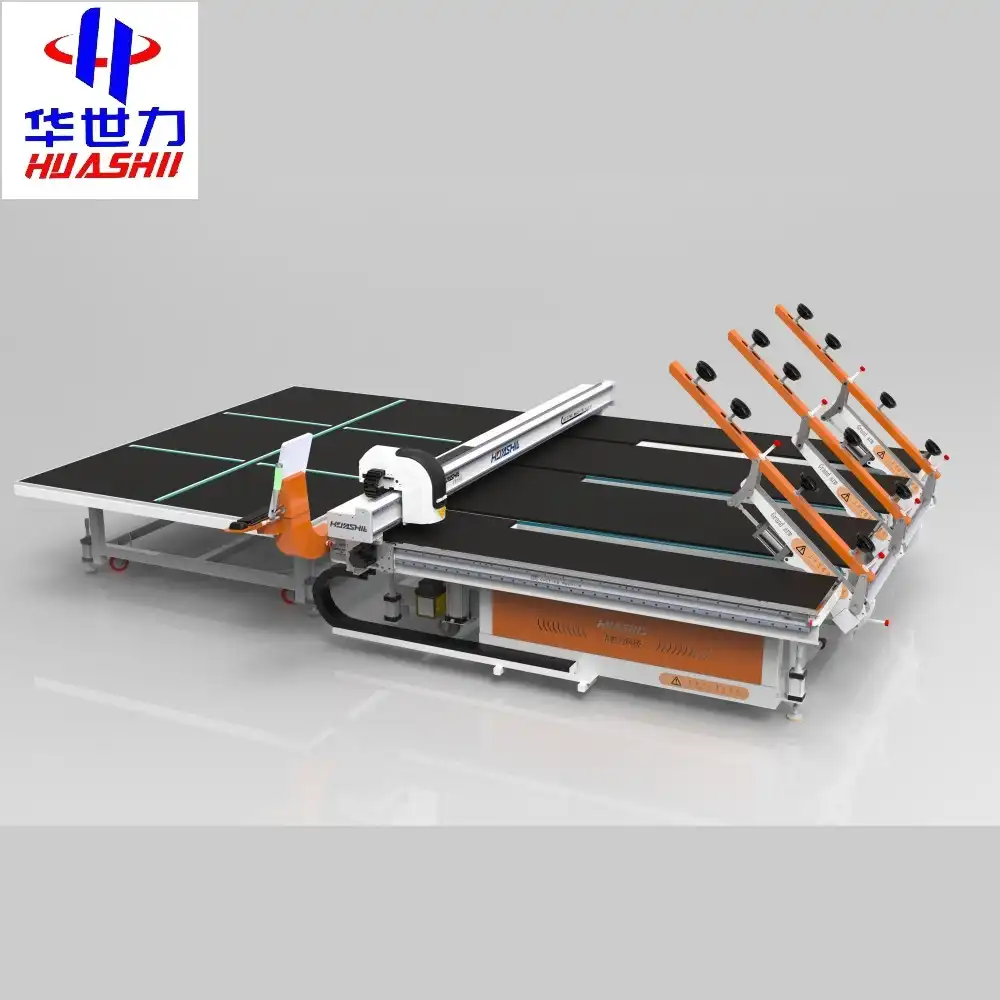
The machine has Optima optimization software that figures out the best way to cut the material before any cuts are made. Material waste is one of the highest secret costs in the glass industry. Material usage rates above 90% are regularly reached by a low cost automatic glass cutting line using Optima's building algorithms, which directly lowers the cost of raw materials. For a small factory that works on 20–30 sheets a day, the savings add up quickly over the course of a year.
Here are some of the main ways that this automatic cutting method works better:
- Cutting accuracy within ±0.25 mm, ensuring dimensional consistency across all glass types, including Low-E, tempered glass blanks, and decorative glass. This level of precision meets both architectural and furniture fabrication standards.
- Cutting speed up to 150 m/min, which dramatically shortens cycle time per sheet compared to manual scoring. Higher throughput means the line pays for itself faster.
- Max glass size of 3660×2800 mm, covering standard jumbo sheets used in curtain wall, window fabrication, and large furniture panels without requiring additional handling.
- Above-ground or underground rail options, giving plant engineers flexibility to configure the line according to existing floor layouts without major civil work.
These benefits fix the main problems that small factories have with production every day: wasted materials, uneven sizes, and slow turnaround times. With the HSL-LSX3829, a factory can make sure that the quality of the work is the same across shifts without having to rely on the skill levels of each operator.
Comparing Budget Cutting Lines with Manual and Premium Options
Automatic vs. Manual Cutting
Cutting glass by hand requires trained workers, makes cuts of varying quality, and raises the risk of injury on the job. The National Glass Association released an industry safety study in 2022 that said most accidents in the glass manufacturing industry involve cuts and musculoskeletal injuries. These injuries usually happen when workers are scoring and breaking glass by hand. By automating these steps, workers are no longer in direct contact with the glass, and accidents happen much less often.
Budget Lines vs. Premium Models
Premium automatic lines have high-tech features like cutting heads with multiple axes, built-in sorting, and full Industry 4.0 connection. These features are important for plants that make a lot of things and work three shifts a day. These functions often come at an extra cost for a small business that only processes 15 to 40 sheets per shift. The HSL-LSX3829 is a well-designed budget line that meets the practical needs of precise scoring, material optimization, and reliable breaking, without the extra cost of advanced modules that a small business won't fully utilize.
If you want to be honest, there is a difference: a low cost automatic glass cutting line wins on TCO for small factories, while premium lines win on throughput ceiling for large plants. It is important to make sure that the machine fits the amount of work that will be done.
How to Choose the Right Glass Cutting Line for Your Small Factory
Key Selection Criteria
It takes more than just checking prices to choose the right tools. These things should be looked at by plant managers and engineering teams together:
- Glass size range compatibility: Confirm the machine handles your largest sheet dimension. The HSL-LSX3829 accommodates up to 3660×2800 mm, which covers most small-factory requirements.
- Optimization software capability: Software quality directly impacts material yield. Optima is a recognized nesting platform used across the glass industry.
- Station configuration flexibility: The 2+2 adjustable station setup allows the line to grow with your production volume without requiring a full equipment replacement.
- Rail installation preference: Choose above-ground or underground rail based on your floor condition and budget for site preparation.
After going over the specs, procurement managers should ask the seller for technical documentation, cutting test results, and installation case references. It's not just one machine that is affected by downtime on an automated line; warranty coverage and wait times for spare parts are also very important.
In this category of equipment, leasing and phased payment terms (deposit plus final payment, or Letter of Credit for foreign buyers) are common. You should talk to sellers about these options early on in the evaluation process.
HUASHIL: A Reliable Low-Cost Automatic Glass Cutting Line Supplier
Shandong Huashil Automation Technology Co., Ltd. is a high-tech company that makes and sells manufacturing equipment for processing glass. It does everything automatically. HUASHIL has been making and exporting goods for many years and has clients all over the world, including architectural glass plants, curtain wall installers, furniture makers, and sintered stone fabricators.
The HSL-LSX3829 from HUASHIL is designed to help small and medium-sized factories that need real automation at a price they can afford. The company lets buyers customize the number of stations, the type of rail, and the software settings to fit their specific production workflows. As standard, the service package includes help with installation, training for operators, and technical support after the sale.
HUASHIL is different from other companies that sell general tools because they offer application-specific engineering and responsibility after the sale. The HSL-LSX3829 is a low-risk purchase for plant managers who can't afford long downtime because spare parts are easy to get, technical help can be accessed remotely, and acceptance standards are written down.
Conclusion
Glass factories that aren't very big no longer have to pick between inefficient manual work and expensive automation. A well-specified, low cost automatic glass cutting line can fill that gap with its proven accuracy, ability to optimize materials, and reasonable cost. The HUASHIL HSL-LSX3829 has an accuracy of ±0.25 mm, a cutting speed of 150 m/min, Optima software integration, and a flexible 2+2 station layout. Its small size makes it perfect for smaller operations. If plant managers and buying teams are looking at ways to improve their equipment, this line is a reliable and technically sound choice that should be looked at more closely.
FAQ: Common Questions on Automatic Glass Cutting Lines
1. How long does an automated glass cutting line typically last?
A well-built automated glass cutting line will work reliably for 10 to 15 years with regular maintenance. Wear on cutting heads and conveyor systems happens slowly and can be managed with regular maintenance.
2. Does an automatic cutting line consume more energy than manual cutting?
Modern automated lines use servo-driven motors and well-thought-out motion tracks to use about the same amount of energy as—and sometimes less than—running the same number of human workstations for a full shift.
3. What safety features should I look for?
Look for safety features like emergency stop systems, guarding around the cutting heads, and sensor-based glass detection that stops the machine from running when it's not safe to do so. These common safety rules are built into the HSL-LSX3829.
4. Can the HSL-LSX3829 cut Low-E glass?
Yes. Low-E glass, clear float glass, and etched glass can all be used in this machine. The Optima program lets you change the cutting settings to protect Low-E coatings while the scoring is happening.
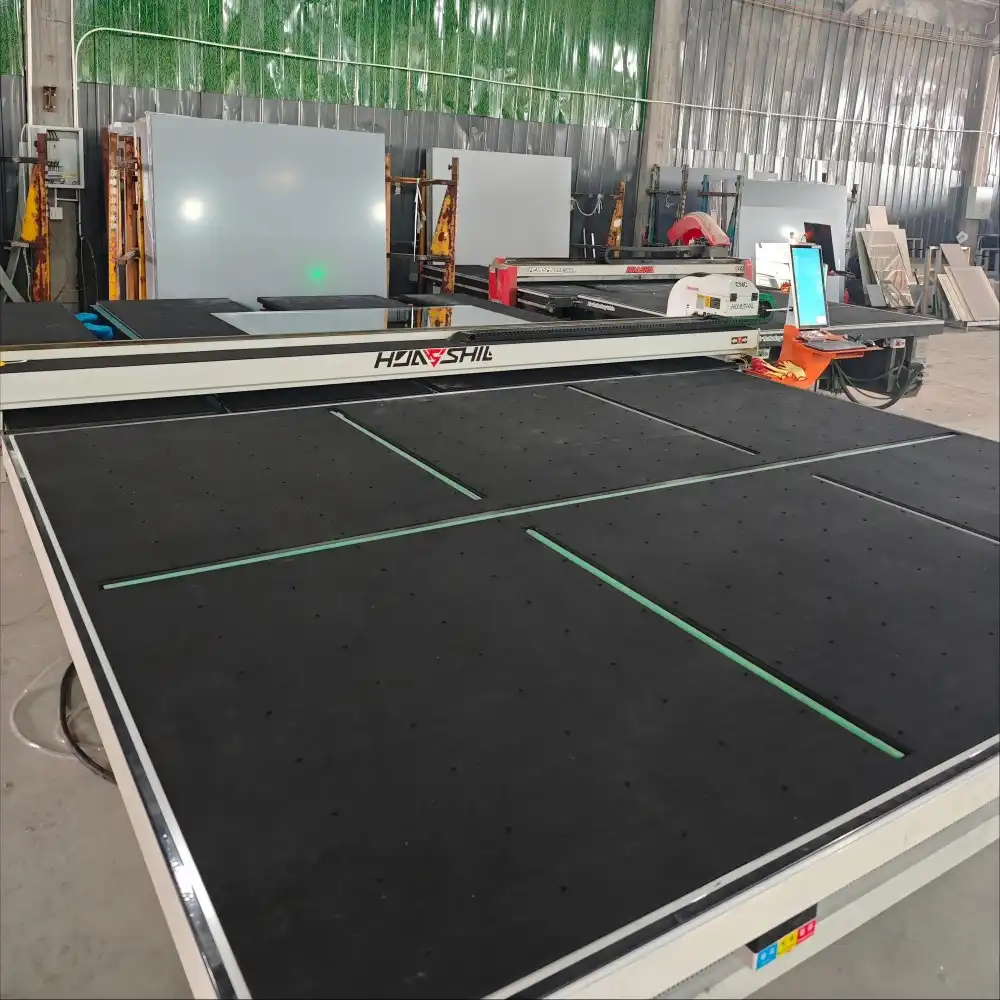
Start Your Upgrade with HUASHIL's Affordable Glass Cutting Solution
Are you ready to stop cutting by hand? The low cost automatic glass cutting line manufacturer team at HUASHIL is ready to give your factory a personalized technical proposal and a competitive quote. With the HSL-LSX3829, small glass shops across the U.S. can get automation because it blends reliable engineering with useful affordability. To get your free consultation today, email salescathy@sdhuashil.com to learn more about the products.
References
1. Glass Association of North America (GANA). Glass Fabrication Industry Labor Cost Benchmarks. GANA, 2021.
2. National Glass Association. Workplace Safety in Glass Fabrication: Annual Incident Report. NGA, 2022.
3. Pilkington, NSG Group. Glass Technology: Processing and Performance Standards. NSG Group Technical Publications, 2020.
4. Freedonia Group. World Flat Glass: Industry Study with Forecasts. Freedonia Group, 2023.
5. American Institute of Architects (AIA). Glazing Performance Standards for Curtain Wall and Window Systems. AIA Press, 2021.
6. Society of Glass Technology. Advances in Automated Glass Processing Equipment. SGT Journal, 2022.