




A china glass edger machine improves production by automating the edge grinding process, replacing slow manual operations with consistent, high-speed precision. Modern glass edge grinding machines reduce defect rates, increase throughput, and lower labor dependency across architectural, automotive, and furniture glass lines. At Huashil, our double edger machines run on servo motor controls for both conveying and automatic opening and closing, delivering repeatable accuracy that manual methods simply cannot match. The result is a measurable uplift in output quality and a shorter cycle time per unit.
Understanding Glass Edger Machines and Their Industrial Uses
Glass edger tools are designed to smooth, shape, and finish the sides of raw glass. This is an important step that must be taken before glass panels can be used. Without the right edge treatment, glass can crack under stress, chip, and change sizes in ways that make it impossible to put together later.
Who Relies on Glass Edge Grinding Machines?
In the U.S. market, glass cutting tools are always in high demand from four types of businesses:
- Architectural glass and window fabrication plants rely on automated edging lines to process high volumes of flat glass for doors, windows, and curtain wall systems with tight dimensional tolerances.
- Curtain wall and construction system integrators require full processing lines where edge quality directly affects structural glass performance and compliance with ASTM standards.
- Furniture and interior decoration manufacturers — producing shower enclosures, glass partitions, and decorative panels — depend on polished, chamfered edges for both safety and aesthetics.
- Sintered stone and artificial stone fabricators apply similar edging technology to achieve clean, chip-free finishes on engineered surfaces.
Chinese companies now make a wide range of machines, from simple flat edgers to fully automated double edgers that can work on both sides of a glass panel at the same time. These machines have programmable CNC controls and energy-efficient servo motors that keep the quality of the work the same over long production runs.
How China Glass Edger Machines Overcome Traditional Production Challenges
Both manual and semi-automated edging have real costs: operator fatigue causes chamfer angles to be off, grinding wheel wear isn't checked, and production stops when a single workstation causes a bottleneck. These aren't small problems; they add up to refused batches, rework cycles, and ships that are late.
This is fixed by a high-performance china glass edger machine from Huashil, which has a well-thought-out mechanical design. There are eight grinding wheels on one side of the machine. They are set up as two upper chamfers, two lower chamfers, and four flat grinding wheels. This setup does both chamfering and flat finishing on the whole edge profile in a single pass, so there are no more alignment mistakes caused by moving parts between stations.
The machine's servo motor-controlled conveying system keeps the feed rate steady and can be changed, so each piece of glass moves through the grinding process at the same speed. A servo-driven conveyor keeps the speed constant, while a belt-and-pulley system drifts. A servo-driven conveyor adapts to changes in load flexibly, while a belt-and-pulley system drifts.
The machine's useful range is greatly increased by its automatic opening and closing controlled by a servo motor. The biggest opening is 2.5 meters, which can fit big architectural panels. The smallest opening is 0.35 meters, which can fit smaller decorative or furniture glass. This whole range of sizes can be handled by a single machine line without having to fix the tracks by hand. This cuts the time it takes to switch between machines from minutes to seconds.
These skills work together to give plant managers what they want most: more work getting done, less waste, and a production floor that goes as planned. These capabilities combine to deliver what plant managers care about most: higher throughput, lower scrap, and a production floor that runs predictably.
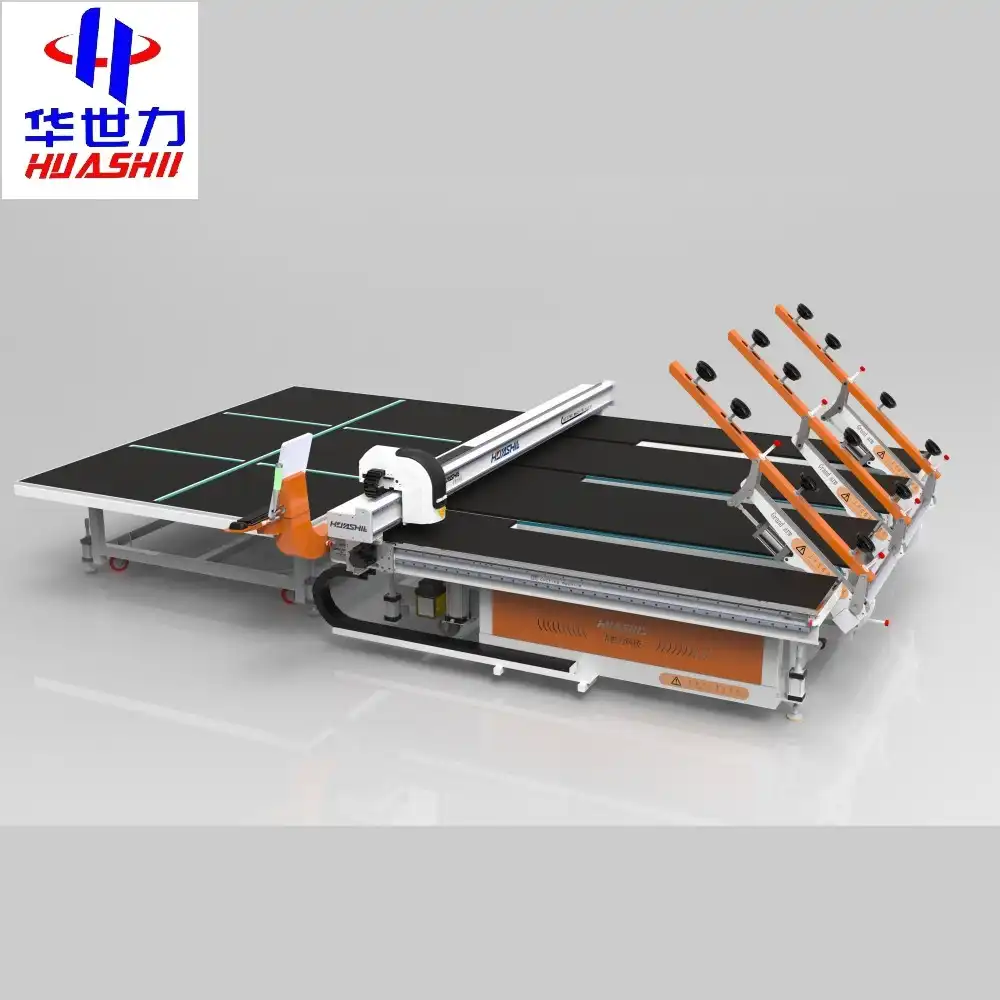
Choosing the Right Glass Double Edger Machine for Your Business
To choose the right equipment, you need to make sure that the machine specs match your production needs, not just buy the cheapest item.
Key Evaluation Criteria for Production Directors and Engineers
Before buying a glass cutting machine, here are the main things you should think about:
- Grinding wheel configuration: An 8-wheel layout (2 upper chamfers + 2 lower chamfers + 4 flat grinding) handles complex edge profiles in one pass, reducing handling and improving consistency compared to machines with fewer wheels.
- Size range: Confirm that the machine's opening range covers your full product mix. A range of 0.35 m to 2.5 m is unusually broad and reduces the need for multiple machines on one line.
- Drive technology: Servo motor controls for both conveying and width adjustment represent a meaningful step up in precision over older mechanical systems, particularly for tight-tolerance architectural or automotive glass.
- Customization capability: Production lines vary. A supplier that offers OEM and ODM configurations lets you integrate the edger into an existing workflow without expensive workarounds.
When you compare these criteria to your production volume and glass types, you have a solid reason for proposing a capital expenditure, which is something that finance committees are more likely to accept than a general specification sheet.
These factors can effectively solve common procurement problems such as machine footprints that are too big, capacity that isn't matched to size, and poor integration with existing conveyors.
Maintenance and Safety Practices for Glass Edger Machines
Disciplined upkeep is rewarded by automated equipment. A china glass edger machine with eight grinding wheels that are always under load will wear out grinding segments at a regular rate. Keeping track of that wear plan keeps quality from dropping in the middle of the run.
Practical Maintenance and Operator Safety Guidelines
A double edger machine should have its grinding wheel wear patterns checked regularly, its coolant flow checked to keep it from getting too hot, and its servo-controlled conveyor speed calibrated on a regular basis. By cleaning the machine frame every day with glass slurry, you can stop gritty buildup that speeds up the wear on parts.
For safety reasons, workers should protect their eyes and wear gloves that won't cut when they work with glass panels or switch out grinding wheels. Leading Chinese makers, like Huashil, make sure that their machines meet international safety standards for CE by building them with protected grinding zones and emergency stop systems. Remote troubleshooting help and full user guides make it even easier for new workers to learn, so the line is safe from the start.
Procurement Strategies and Working with Trusted Glass Edger Machine Suppliers
Getting automated glass processing equipment from China is more complicated than buying it in the United States, but the process is well-known and can be handled with the right supplier.
A trustworthy Chinese company that makes glass edger machines will have export qualifications that can be checked, CE approval, and a clear after-sales support program that includes spare parts availability and remote technical assistance. The warranty terms should be clear and cover both parts and labor support. The provider should also be able to show you examples of installations that have been done in your business.
A deposit-plus-balance arrangement or a Letter of Credit (L/C) is usually used to pay for foreign capital equipment. Both of these are common ways for well-known Chinese exporters to do business. Procurement managers should ask for a formal commercial proposal that includes details about the machine, when it will be delivered, how it needs to be installed, and what the acceptance criteria are. This is the paperwork that is needed to get internal approval for a capital expenditure.
The ability to customize is a useful way to set yourself apart. A provider who can set up machines to fit your line plan, add specific conveyor measurements, or change the grinding parameters for your glass types lowers the chance of an expensive mismatch between the equipment and the process.
Conclusion
Edge processing can go from being a slow part of production to a reliable, high-throughput process with the right china glass edger machine. With an adaptive opening range of 0.35 m to 2.5 m, servo-driven conveying, and an 8-wheel grinding head, makers in architecture, furniture, and building glass can get the precision and freedom their production lines need. The technology behind Huashil's equipment comes from years of exporting and is always being improved. It's made to give you stable output from the start and grow with your business.
FAQ
1. Does servo motor control really make a difference in edge quality?
Yes, servo motors keep the feed rate the same no matter how heavy or small the glass is. This level of regularity directly lowers chipping at the entry and exit points for the glass edges, which are the two places where problems are most likely to happen with regular motorized conveyors.
2. What glass sizes can a Huashil double edger machine handle?
The machine can handle openings as small as 0.35 meters and as big as 2.5 meters, so it can handle everything from small decorative panels to large architectural sheets.
3. Can the machine be customized for our production line?
Huashil has both OEM and ODM options. You can change the machine's structure, grinding settings, and the size and shape of the conveyor to fit the needs of your current line.
4. How does an 8-wheel configuration compare to a 4-wheel setup?
A full edge shape can be made in one pass by an 8-wheel setup with 2 upper chamfers, 2 lower chamfers, and 4 flat grinding wheels. A four-wheel machine can usually only do flat grinding, so chamfering needs to be done separately and with more care.
Get a Custom Quote from HUASHIL — Trusted China Glass Edger Machine Manufacturer
HUASHIL makes glass edging for factories that can't afford to be closed for any reason. As a china glass edger machine supplier with years of experience, we can offer servo-controlled double edger machines, full-line customization, CE-certified equipment, and quick after-sales support. You can email our team at salescathy@sdhuashil.com to get detailed information and a competitive project quote right away.
References
1. Glass International — "Advances in Automated Glass Edge Processing Technology," 2022.
2. China National Building Material Group (CNBM) Annual Report — Glass Processing Equipment Export Data, 2023.
3. ASTM International — Standard Specification for Heat-Treated Flat Glass (ASTM C1048), 2022.
4. Processing Magazine — "Servo Drive Technology in Industrial Manufacturing Equipment," 2021.
5. Glass Machinery Plants & Accessories (GMP&A) — "Global Glass Processing Equipment Market Overview," 2023.
6. Occupational Safety and Health Administration (OSHA) — "Machine Guarding: Safety Standards for Industrial Equipment," U.S. Department of Labor, 2022.