




Every efficient cut line starts with a glass loading table because a cutting machine can only work as fast as it receives glass. A good loader lifts, carries, and places each sheet in the right spot without scratches, chips, or heavy manual lifting. When this first step runs smoothly, the cutting table stays busy, operators stay safer, and breakage drops. When it stalls, the whole line waits. I wrote this guide for plant managers, engineers, and buyers in the United States who want to understand how a glass loading table works and how to choose the right one.
What Is a Glass Loading Table and How Does It Work?
The Basic Job of a Glass Loading Table
A glass loading table moves and holds flat glass from a rack or stack so that it can be cut. Auto glass, art and furniture glass, smart mirror glass, and building glass all need this clean, steady start. There are simple platforms that can be moved by hand, units that use vacuums to help, and automatic loading tools that are linked to cutting and storage equipment. Pick the right one based on speed, sheet size, weight, thickness, and condition of the surface. But the loader makes everything else possible. A lot of people first look at the cutting machine. The next choice is easy once you know what it does.
How an Air Floating System Moves Heavy Sheets
In order to make a cushion between the sheet and the table, air is pushed under the glass. Because of this, there is less friction, so the sheet glides along without much trouble instead of dragging. When there is less pulling, things and people are less likely to get hurt or worried. It really stands out when the panels are big. An inch and a half of glass weighs about 2,500 kilograms, according to most books on the subject. It weighs about 223 kg, which is 490 pounds, for a sheet that is 3660 mm long, 2440 mm wide, and 10 mm thick. It doesn't need power to move when that mass floats on air.
What the HUASHIL Glass Loading Table Offers
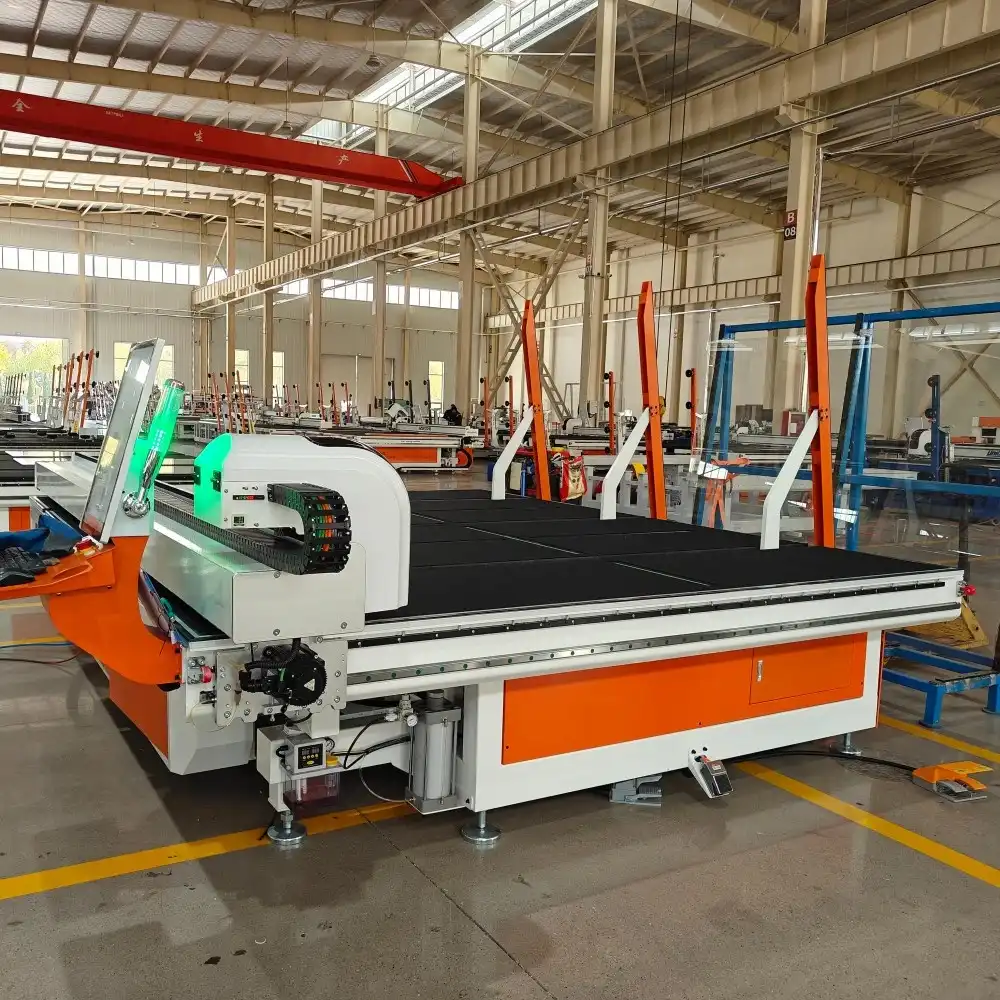
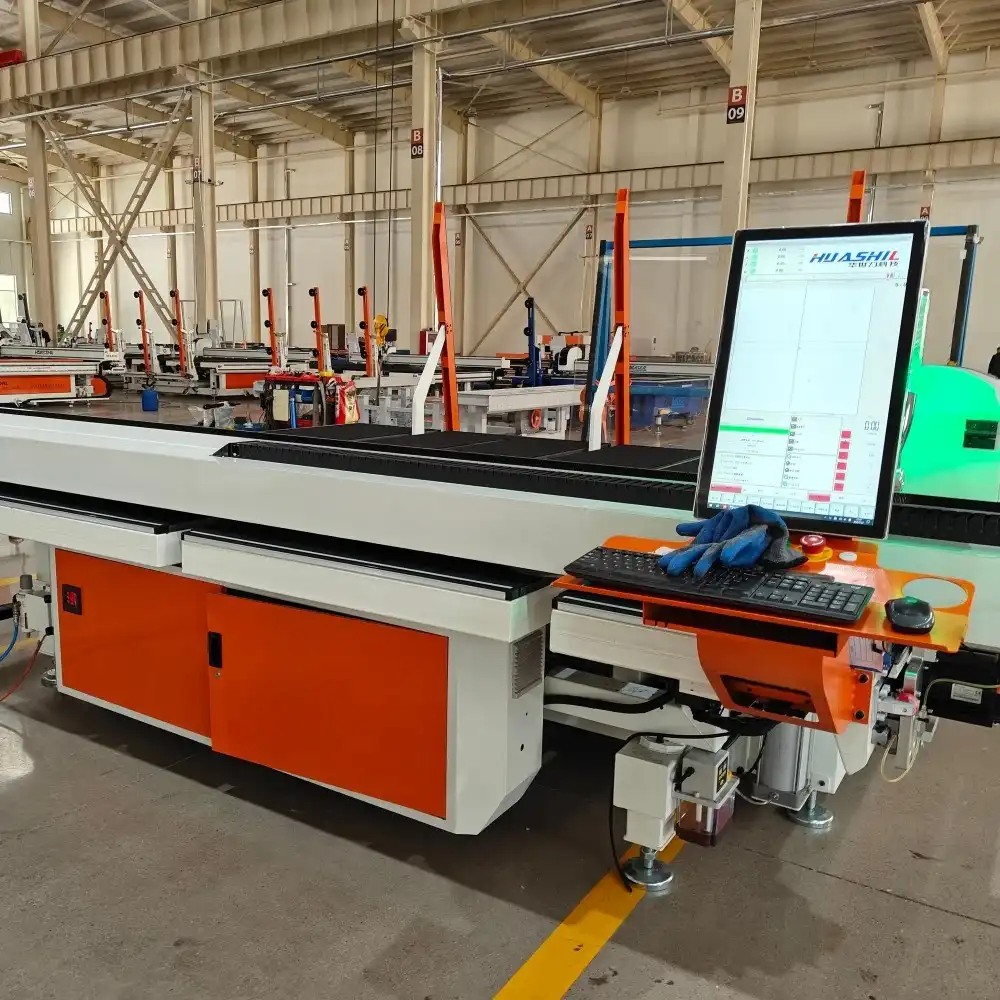
Our glass loading table has three big arms that make loading easy. You don't have to do as much work by hand because the three arms handle the loading step. The unit can also walk in any direction, which lets it move around your workshop and do different tasks. The largest piece of glass that can be used is 3660 x 2440 mm, which is 144 x 96 inches. We can also change the machine to fit your floor and glass range. The accident stop and overload safety features make it safer, and the anti-scratch surface helps keep the glass in good shape. The surface, arms, and air floating system all work together to move the glass, lift it, and keep it safe.
Why the Loading Table Determines Cut-Line Performance
The Loader Is the First Bottleneck
It's not possible for a fast cutting machine to make up for a slow start. Moving things slowly, making the same adjustments by hand over and over, not being straight, and stopping without planning to do so all slow down work. They also make it more likely that the glass will break and get lost. When the loader correctly places each sheet, the cutting table can stick to its plan with fewer changes. This helps keep the sizes the same and keeps the edges from getting damaged. Pay attention to the space between each cut. If people have to move the glass by hand for that long, your machine will take longer to work.
Safety and the Limits of Manual Lifting
Safety and speed should be talked about at the same time. A new equation from NIOSH says that the best time to lift something is when it weighs 51 pounds (23 kg). That amount is less than ten times the weight of a 10 mm sheet, which is about 490 pounds. It is not safe to lift it by hand. In its rules for moving and handling materials, OSHA also talks about the risks of using mechanical aids and lifting things by hand. People who work on the glass loading table shouldn't come into direct contact with the sheet, but they should still check it before every run, wear safety gear, and never skip a safety device to get things done faster. It's also important to keep up with maintenance. Check the air lines, sensors, and safety stops, clean the touch surfaces, and write down what you did to fix it.
How to Measure Line Performance
Don't judge the equipment by a single speed claim; instead, use whole-line numbers. It's important to keep an eye on the downtime, damage rate, filling cycle time, machine availability, positioning accuracy, human participation, and damage rate. This is the loader that has the cutting table, storage racks, elevators, and software controls that you should look over. Because making progress in one place can make the slow spot move to another. Also, pay attention to the scratch rates. To keep the item you bought in good shape, follow the care instructions that come with ASTM C1036. Your team can see every week in a simple log what happened before and after new tools were added. You should show these numbers to your plant boss and the finance team because they will help the business case.
How to Choose the Best Glass Loading Table for Your Application
Match the Type to Your Production
The operator has to do more work with manual tables, and each worker may need to be put in a different way. This is only possible in small shops with limited funds and a lot of different things to do. A semi-automatic table has some work that is done by both the machine and the person who is operating it. Automatic tables make it easier to connect to automated cutting lines and repeat the same loading process. They also get rid of the need to lift things by hand. On the other hand, they need to be set up carefully and regularly checked for problems. A horizontal layout sticks to straight lines, while a vertical layout can save space on the floor. People who install curtain walls and make OEM parts often need settings or sizes that aren't standard. HUASHIL can change the glass loading table to fit their needs.
Start With Your Glass and Your Floor Plan
It's important to write down the different kinds of glass, their coatings, sizes, lengths, and the most weight that they can hold. Make a list of how much will be put in every day, which way, and whether the loader will work alone or as part of an automatic line. Then, take a picture of the space, making sure to include the racks, aisles, and path to the cutting board. Make sure that the largest sheet can fit in the loader. For the HUASHIL model, that's 3660 x 2440 mm. Before you work with them, let them know if you use coated or laminated glass. For the material to work, the contact areas and load-bearing capacity must be the same. An engineer can make sure that everything works together before they talk about price if they have a clear plan.
Compare Total Cost, Not Only Price
One part of the cost is the amount you pay for something. All of the costs of setting up, training, spare parts, energy use, repairs, and downtime add up over the life of the machine. Buying managers should ask for written rules about the warranty, how long it will take to ship, and how to get spare parts. Ask for both. A clear breakdown of the prices is what the financial team wants. On the other hand, the engineering team wants drawings and scientific data. A deposit and a final payment, or a letter of credit, are common ways to pay for things shipped from one country to another. Things move faster when everyone agrees on these points right away. This is especially true for full production lines, which need to be looked over every three to six months.
Check the Supplier Before You Sign
Someone you can trust will show you real work and clearly explain any technical questions you have. You can get videos, installation guides, a tour of the plant, or a live show over the phone or video call. If you're working with a company, make sure you know if they make things, trade things, or put things together. Find out how to set up the machine, how to get spare parts, and how to get service after the machine is delivered. The Shandong Huashil Automation Technology Co., LTD plans, builds, and sells machines that do things automatically. It's been years since we made and sent tools abroad. For your buyers and engineers to be able to fairly compare us to other sources, our team can share specs and allow for customization.
Conclusion
The speed of a cut line is controlled by a glass loading table. This is because the cutting machine can only work as fast as smooth, straight glass comes in. The article talked about how a loader moves and positions sheets and how heavy panels don't rub against each other thanks to an air-floating system. A full-size 3660 x 2440 mm sheet of 10 mm steel weighs about 490 pounds, which is a lot more than the NIOSH load constant of 51 pounds. This means it's not safe to hold the sheet by hand. Rates of damage, cycle time, and availability are better ways to judge line output. You should match the type to the glass, the floor space, the total cost, and the supplier's help. The piece talks about a filler with three arms that can fill sheets up to 3660 x 2440 mm in size. It floats on air too.
FAQ
1. What does a glass loading table do?
It holds flat glass up, moves it around, and sets it up so that it can be cut. This keeps you from having to lift things by hand and makes it less likely that they will get scratched, chipped, or broken.
2. What is the maximum glass size?
Up to 3660 x 2440 mm (144 x 96 inches) of glass can be put in the glass loading table. We can change how the machine works if your project needs something different.
3. How does an air floating system help?
It's easier to move around because of the air cushion under the sheet. It's easy for the glass to slide, so the surface doesn't get worn down as fast and people don't have to work as hard.
4. What information should I send for a recommendation?
Send your glass sizes, thickness range, maximum weight, types of glass, daily volume, information about your cutting line, and a plant plan. That will help our techs figure out what tool you need.
Request a HUASHIL Glass Loading Table Quotation
Want to find a business that makes glass loading tables and knows how to work with big sheets? HUASHIL makes glass equipment that is automatic. Our loader can be changed to fit your needs and has three arms for filling, an air floating system, and the ability to move in all directions. Please send your glass sizes, volume, and line layout to salescathy@sdhuashil.com. Our team will figure out the best way to set up your order and send you a quote. Tell us about your project today.
References
1. ASTM International, Standard Specification for Flat Glass (ASTM C1036), 2021.
2. Occupational Safety and Health Administration, Materials Handling and Storage (OSHA 2236), 2002.
3. Occupational Safety and Health Administration, Concepts and Techniques of Machine Safeguarding (OSHA 3067), 1992.
4. National Institute for Occupational Safety and Health, Applications Manual for the Revised NIOSH Lifting Equation, 1994.
5. International Organization for Standardization, ISO 12100 Safety of Machinery: General Principles for Design, 2010.
6. Shelby, J. E., Introduction to Glass Science and Technology, Royal Society of Chemistry, 2005.