




When evaluating a float glass cutting machine for your production line, accuracy is not a secondary concern — it is the foundation of every downstream process. Whether you fabricate architectural panels, curtain wall systems, shower enclosures, or decorative furniture glass, dimensional errors at the cutting stage cascade into rework, material waste, and delivery delays. This article examines the technical features that define high-precision glass cutting, backed by machine specifications, operational best practices, and procurement insights to help you make a confident investment decision.
Understanding Accuracy Challenges in Float Glass Cutting
There are small changes in the thickness and surface tension of float glass that affect how a scoring wheel works with the material. A difference of just 0.1 mm in the thickness of the glass can change the way it breaks under a cutting wheel, leading to lines that aren't exactly what was intended. When you add in calibration drift over time, which is when wear and tear on linear guides, servo motors, and cutting heads makes it harder to repeat positions, the error window gets smaller very quickly. Variability in the operator adds to this problem. In manual or semi-automated setups, uneven hand pressure or bad alignment adds to the problem, which is exactly what automated control systems are designed to get rid of.
It is very important for plant managers and tech teams looking for new tools to be aware of these factors from the start. Machines that don't have stability, real-time feedback, or strong software optimization will make mistakes over time, which will raise the total cost of ownership through scrap rates and upkeep that wasn't planned.
Core Features Enhancing Accuracy in Float Glass Cutting Machines
Precision Scoring Mechanisms and Cutting Head Technology
Whether a score line turns into a clean, controlled break depends on the cutting wheel and how it delivers the edge. With the help of pneumatic pressure control and high-quality diamond-tipped or tungsten carbide wheels, the marking level stays the same along the whole length of the sheet. Cutting head pressure changes automatically in computerized systems based on the type and thickness of the glass. This is something that can't be done by hand on a large scale.
CNC and PLC Integration for Real-Time Control
Precision at the production level is different from results at the workshop level because of the complex control system. With positional accuracy of less than a millimeter, CNC systems can handle complicated cutting paths. PLC integration controls machine sequencing, sensor feedback loops, and real-time fault detection. These two things work together to make a closed-loop system where errors are found and fixed before they spread.
Structural Rigidity and Vibration Dampening
When the machine frame bends under load, or floor vibrations reach the cutting bridge directly, they cause positional errors that a float glass cutting machine software can't fix. Precision-grade tools always have heavy-duty welded steel frames with vibration-absorbing mounts.
Precision in the mechanics, smart control, and structural support are the three layers that work together. A machine that is great at one thing will still do poorly when it comes to the whole system.
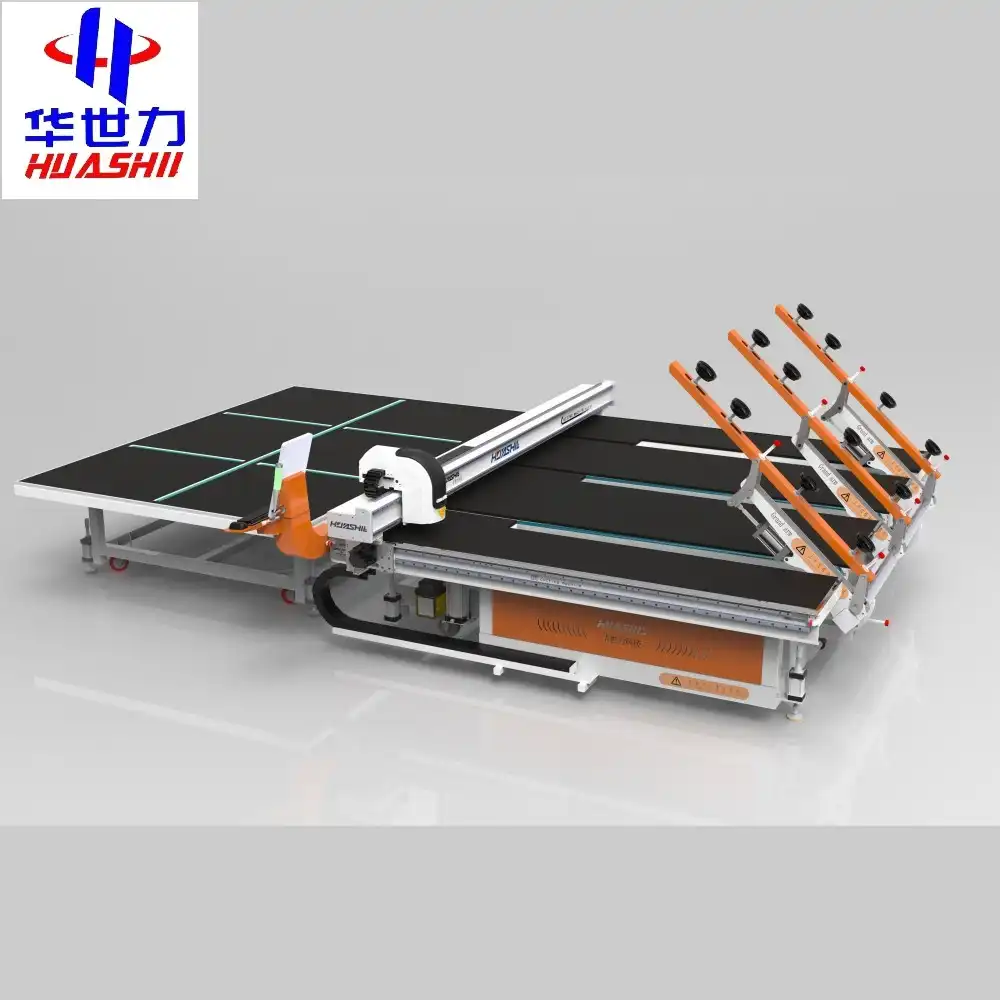
The HUASHIL HSL-LSX4228: Engineering Precision Into Every Cut
The HUASHIL HSL-LSX4228 is a full-line float glass cutting tool that is made to deal with all of the above accuracy issues. Here is a structured look at how it is put together at its core:
The largest piece of glass that can be processed is 4200 × 2800 mm, and the table configuration includes a loading table, a cutting table, and a breaking table. The rail type can be above or below ground, and the station layout can be 2+2 (adjustable). There are 4 grand arms on each side. The optimization software is Optima.
| Component | Specification |
|---|---|
| Model | HSL-LSX4228 |
| Max Glass Size | 4200 × 2800 mm |
| Table Configuration | Loading table + Cutting table + Breaking table |
| Rail Type | Above/underground rail (selectable) |
| Station Layout | 2+2 stations (adjustable) |
| Arms Per Side | 4 grand arms per side |
| Optimization Software | Optima |
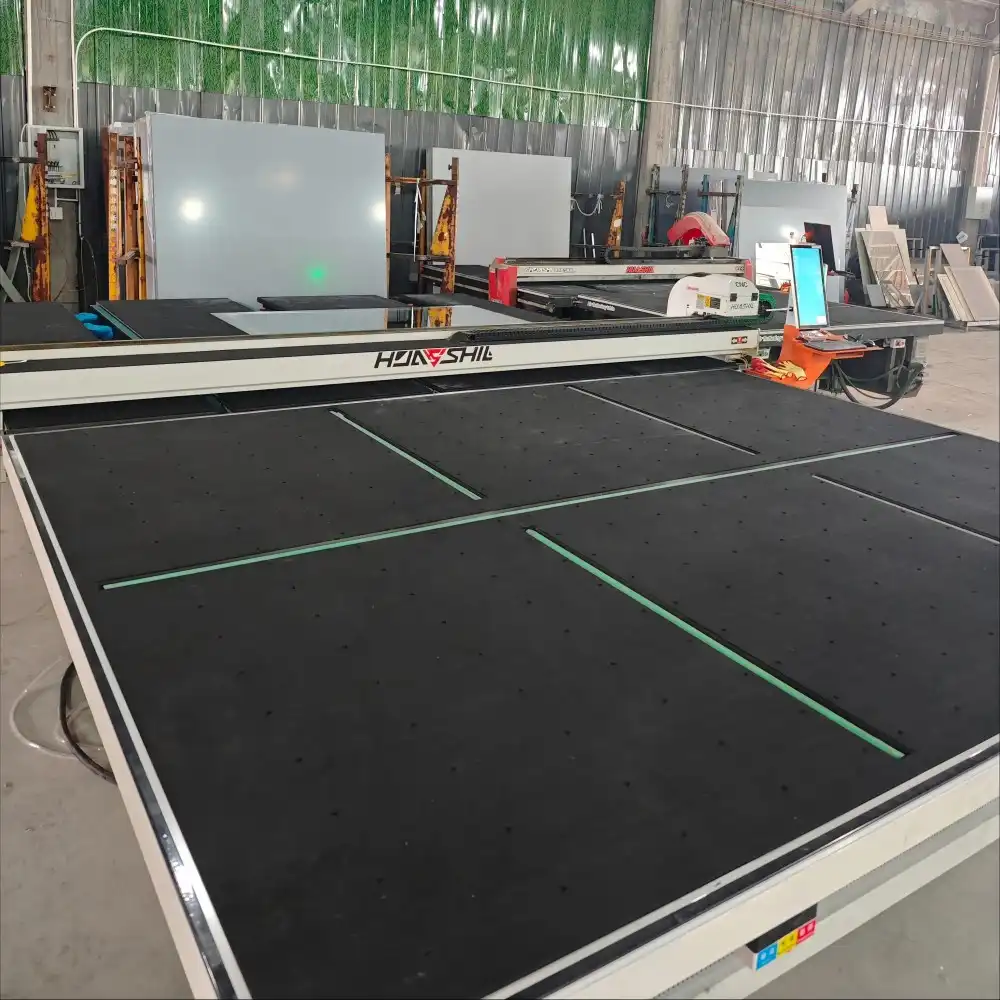
The three-table setup (loading, cutting, and breaking) makes sure that each step of the glass processing process takes place on a specific, well-designed surface. This split lowers the stress on the glass, makes it safer to handle, and keeps the alignment stable during the cut cycle.
The machine can work with multiple operators or processes at the same time because it has a 2+2 station layout that can be changed to fit the flow of production. There are four large arms on each side that support large sheets of glass up to 4200 × 2800 mm evenly. This is a size range that includes most architectural and curtain wall panel sizes.
The above/underground rail option lets installation teams fit the machine to the plant's current infrastructure without affecting the accuracy of the travel. The rail-guided bridge movement keeps the positional accuracy over the whole cutting area.
Optima optimization software is built in to get the most glass out of each sheet. Optima lowers the amount of scrap by figuring out the best stacked layout before the cutting starts. This is one of the most concrete ways for plant managers to judge the performance of a cutting line. Studies in glass manufacturing have shown that optimized nesting software can increase material output by 8–15% compared to planning layouts by hand. This number goes up a lot when a lot of glass is being made.
Optima optimization software is integrated to maximize glass yield from each sheet. By computing the most efficient nesting layout before cutting begins, Optima directly reduces scrap rate — one of the most tangible metrics plant managers use to evaluate cutting line performance. Studies in glass fabrication have shown that optimized nesting software can improve material yield by 8–15% compared to manual layout planning, a figure that compounds significantly at high production volumes.
Maintenance and Operational Best Practices to Sustain High Accuracy
Cutting wheels wear out over time, and the way they wear affects the quality of the edge. Setting a replacement schedule based on the thickness of the glass, how often it needs to be cut, and the type of material used is better than running wheels until they break. This keeps the dimensions consistent on your float glass cutting machine. Every so often, you should check the linear guides, lead screws, and pneumatic lines to catch wear before it causes positioning drift.
The machine stays within its planned limits thanks to routine lubrication checks for moving parts and digital calibration checks using high-precision measuring tools. Operators who know how cutting oil thickness, bridge speed, and wheel pressure affect each other regularly do a better job than those who only follow basic working procedures.
These actions lead to observable results: longer equipment life, less unexpected downtime, and continued compliance with quality standards for dimensions. For buying managers, this means that the total cost of ownership figure changes in a good way as the machine is used.
Comparing Float Glass Cutting Technologies: Selecting the Most Accurate Solution
Manual cutting machines are cheap to buy at first, but they add human error that costs a lot when used on a large scale. Manual setups are not good for high-volume or tight-tolerance production because they require a lot of labor, make operators tired, and make it impossible to follow complex cutting lines without making mistakes.
Cutting lines that are automatic and have CNC control, servo-driven bridges, and software optimization make thousands of cuts per shift with repeated accuracy. In this group, the HSL-LSX4228 fits right in—it was made for fabricators who can't have their work being inconsistent in terms of size.
The most important things to look at when comparing models are positional repeatability (usually stated as ±0.1 mm or tighter for high-end equipment), software capabilities, infrastructure for after-sales support, and the supplier's ability to provide certified spare parts on demand. Energy-efficient servo motors, which are becoming more common on modern automated lines, lower running costs while keeping the cutting speed the same. This is a sustainability benefit that makers who have to meet environmental standards appreciate.
Procurement Considerations for High-Accuracy Float Glass Cutting Machines
When choosing a supplier for a glass cutting line, you need to look at more than just the specs sheet. When making your procurement decision, you should think about the following things:
- Precision matched to production scale: Confirm that the machine's positional accuracy and maximum sheet size align with your most demanding cutting requirements. The HSL-LSX4228's 4200 × 2800 mm capacity covers large-format architectural and curtain wall glass without requiring oversized infrastructure.
- Warranty and service coverage: A standard warranty backed by documented spare parts availability and responsive technical support channels is non-negotiable for capital equipment. HUASHIL provides structured after-sales support with accessible spare parts supply timelines.
- Customization and OEM capability: For integrators and system builders, the ability to configure station layouts, rail types, and software parameters to match existing line architecture reduces integration risk and commissioning time.
- Supplier authorization and certification: Procuring from a verified manufacturer — rather than an intermediary — ensures equipment traceability, genuine spare parts, and direct access to engineering support.
These factors together show how valuable a cutting line investment will be in the future, beyond the price paid for it.
Conclusion
Cutting glass accurately depends on engineering decisions made at every stage, including the design of the cutting head, the structure's rigidity, the optimization of software, and the training of the operator. The HSL-LSX4228 float glass cutting machine combines these parts into a single, production-ready platform that solves the real problems that architectural glass makers, curtain wall installers, and furniture glass manufacturers face. Over time, facilities that put precision first when choosing tools regularly see lower scrap rates, less rework, and better quality compliance.
FAQ
1. How often should cutting wheels be replaced to maintain precision?
Replacement frequency depends on glass thickness, daily cut volume, and material type. A general rule in the industry is to check the wheels every 50,000 to 80,000 linear meters of cutting and replace them if they start to chip or score unevenly at the edges. Setting up a usage log instead of just looking at it visually leads to more consistent results.
2. What safety precautions apply to automated glass cutting systems?
During busy cycles, operators should keep clear areas around the cutting bridge, wear the right PPE like cut-resistant gloves and safety glasses, and make sure the emergency stop features are checked at the start of every shift.
3. Can software upgrades improve the accuracy of an existing cutting machine?
Yes, most of the time. Updating optimization software, like making Optima's nesting algorithms better, can improve yield calculations and cutting path efficiency better without changing the hardware. But location accuracy limits set by mechanical parts can't be fixed by software alone; worn guides or servo systems that aren't tuned right need to be fixed physically.
Upgrade Your Glass Cutting Line With HUASHIL
Huashil makes tried-and-true float glass cutting machines for fabricators who need precise results that last a long time. The HSL-LSX4228 is a system designed for real production settings that has three tables, the Optima optimization software, and the ability to cut big formats. As a reliable maker of float glass cutting machines, HUASHIL helps clients with everything from making the specifications to putting the machines to use and beyond. To get specs, a unique quote, or a product demonstration, please email our technical team at salescathy@sdhuashil.com.
References
1. Glass Processing Technology and Fabrication Methods — Glass Industry Journal, 2022
2. Automation in Flat Glass Manufacturing: Trends and Benchmarks — International Glass Review, 2023
3. CNC Precision in Industrial Cutting Applications — Manufacturing Engineering Magazine, 2021
4. Material Yield Optimization in Glass Fabrication Operations — Journal of Manufacturing Processes, 2022
5. Total Cost of Ownership for Automated Glass Processing Lines — Industrial Equipment Review, 2023
6. Safety Standards for Automated Glass Cutting Equipment in Production Environments — Occupational Safety in Manufacturing, 2024