




Choosing the right glass cutting loading machine for your factory is one of the most consequential equipment decisions you will make. The right machine directly determines your cutting accuracy, throughput speed, labor overhead, and long-term production costs. Whether you run an architectural glass fabrication plant, a curtain wall workshop, or a furniture glass operation, the selection process involves matching technical specifications to your actual production workflow—not simply buying the most expensive model available. This guide walks you through every critical factor so you can procure with confidence.
Understanding the Role of Glass Cutting Loading Machines in Your Production Workflow
Loading, positioning, and cutting big sheets of glass with accuracy that can't be achieved by hand is made possible by a glass cutting loading machine. In modern fabrication settings, these machines hold up the first part of the production line and feed glass into the next steps for edging, tempering, or insulating.
How Automation Changes Your Output Quality
Handling glass by hand introduces variation. Due to fatigue and mistakes in repositioning, even experienced operators make differences in dimensions between shifts. That difference is gone with automated loading systems. A report from 2022 called the Glass Processing Technology Review says that factories that switched from semi-manual to fully automated cutting lines saw up to 18% less cutting waste in the first year. That number directly means less waste of raw materials and fewer times of redoing.
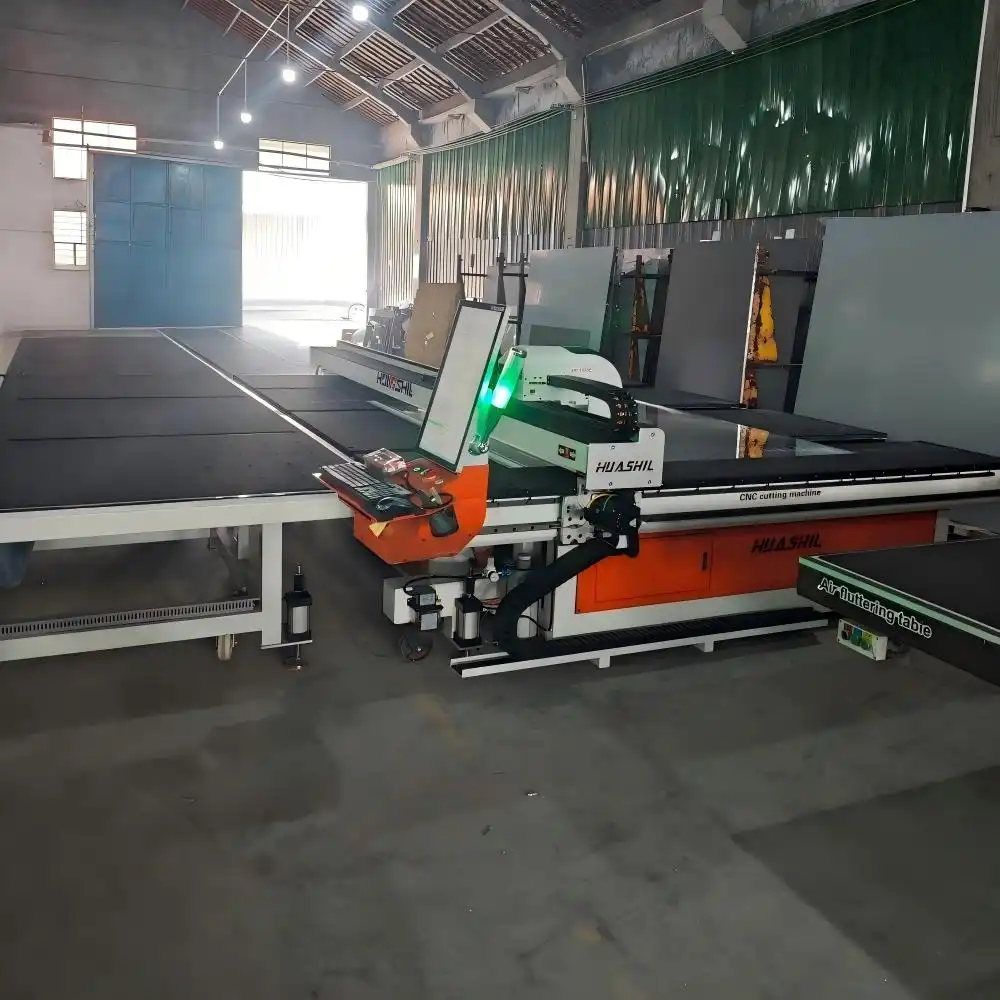
Modern machines, like the HUASHIL HSL-LSX5133, combine three useful tables—a loading table, a cutting table, and a breaking table—into one continuous process. The glass goes from being loaded to being scored to being controlled broken without having to be moved by hand, and the measurements stay the same at every step.
Key Machine Configurations Available Today
On the market today, you can find everything from semi-automatic cutters that work on their own to fully combined CNC lines that load, cut, and break. The HSL-LSX5133 can work with either an above-ground or underground rail system. It has a 2+2 station layout that can be changed to fit different floor plans and traffic goals. Each side has five gantry arms, which lets multiple sheets be handled at the same time and greatly reduces the turn time per piece.
Core Criteria to Consider When Choosing a Glass Cutting Loading Machine
Before you ask any glass cutting loading machine provider for a price, your team needs to agree on a set of evaluation standards that can't be changed.
Production volume and glass size range are at the top of that list. The HSL-LSX5133 can handle glass up to 5,100 × 3,300 mm in size, which makes it perfect for large-format architectural and curtain wall glass. If some of the panels you make are too big, make sure that any machine you're thinking about fits that size limit.
Optimization software capability is often overlooked. The Optima cutting optimization program runs on the HSL-LSX5133 and figures out the best way to cut each batch of materials. In a high-volume operation, optimizing layout planning can cut down on wasteful offcuts and raise the rate at which raw glass is used.
Low-E glass compatibility is a requirement for any plant that makes energy-efficient windows. Before edge processing, low-E coatings need to be carefully removed. The HSL-LSX5133 has a low-E deletion mode that quickly removes the coating along cut edges while protecting the quality of the edges further down the line.
These are some more important criteria that your engineering and procurement teams should look at together:
- Automation compatibility: Make sure the machine works with your current MES or ERP system using standard data ports.
- Footprint and rail configuration: Installing train lines above or below ground changes the cost of civil works and how much floor space is used. Think about this choice before you finish your layout.
- Total Cost of Ownership (TCO): Don't just look at the price tag; include installation, user training, yearly upkeep, and the cost of spare parts in your budget.
- After-sales support: Before signing any purchase deal, make sure that the guarantee terms, wait times for extra parts, and access to online technical help are all written down and clear.
These factors together tell you if a machine will really help your business over the course of five to ten years, rather than just meeting your initial production needs.
Manual vs. Automatic Glass Cutting Loading Machines: An In-Depth Comparison
Which of the manual, semi-automatic, or fully automatic systems you choose will depend on how much you produce and how much labor costs.
When Manual or Semi-Automatic Systems Make Sense
A semi-automatic cutter may give a good return on investment with a lower initial cost for handmade glass shops that make less than 200 sheets per day. These setups let the user still be involved in loading and breaking, which lets them make cuts with very odd shapes. They do, however, have higher labor costs per unit and make it more likely that different production runs will have different sizes.
Why Fully Automatic Lines Deliver Superior ROI at Scale
For medium to large production settings, a fully automatic CNC loading, cutting, and breaking machine like the HSL-LSX5133 is clearly more useful. The three-table method that includes loading, cutting, and breaking removes the need for manual work between steps. With five vertical arms on each side, the machine handles sheet transfer from the inside, protecting the operator from the dangers of handling glass and reducing cutting time per sheet.
Within 18 to 36 months of installation, plants that make a lot of architectural, curtain wall, or shower door glass always get back the extra capital cost of full automation through lower labor costs, less breakage, and more accurate cutting.
How to Maintain and Troubleshoot Your Glass Cutting Loading Machine for Optimal Performance
The best way to protect your equipment investment is to do preventative maintenance on a regular basis. On automated cutting lines, the glass cutting loading machine cutting heads should be oiled, the rails should be clean, the suction cups on the gantry arms should be in good shape, and the sensor calibration should be checked once a week. The quality of the score is directly related to the state of the cutting wheel. Dull wheels create tiny cracks that lead to breakage instead of clean separation.
Every month, electrical fault diagnostics should be done. The HSL-LSX5133 and most other current CNC cutting systems have built-in diagnostic tools that show sensor mistakes and axis positioning changes before they become major problems that stop production. Training at least two workers on these diagnostic tasks cuts down on the need for outside service calls and shortens the time that the system is down.
Safety rules must be followed at all times when working with glass. When working near automatic loading tables, everyone should wear the right safety gear for handling big sheets of glass, and machine guards should never be skipped during production.
Where and How to Procure the Best Glass Cutting Loading Machine for Your Factory
Choosing a supplier is just as important as choosing a machine. A technically better machine from a seller with poor after-sales service becomes a liability as soon as a part stops working in the middle of production.
When evaluating glass cutting loading machine makers, it's best to look for export records, English-language technical documentation, and links to real installations. Manufacturers in Asia who have established export channels, especially those who exhibit at trade shows like Glasstec or Glasstech Asia, show that they can trust the market and handle logistics for orders from other countries.
HUASHIL is a high-tech manufacturing company run by Shandong Huashil Automation Technology Co., Ltd. It has a lot of experience making things and exporting them to many different markets. Their line of equipment includes automated systems for cutting, edging, and processing glass that are made for use in industrial settings. Standard terms of purchase allow for frameworks with a deposit and a final payment or Letters of Credit for buyers from other countries.
Before you sign off on a deal for a big production line, make sure you get all of the technical information you need, such as the machine specs, installation instructions, acceptance standards, and insurance terms.
Conclusion
To choose the right glass cutting loading machine and loading tools, you need to carefully consider the amount of glass that needs to be cut, the size of the glass, the software's capabilities, the level of automation, and the dependability of the provider. The HUASHIL HSL-LSX5133 takes care of all of these aspects with its built-in three-table design, Optima optimization software, five-gantry-arm setup, adjustable station layout, and ability to delete low-E signals. When factories buy tools with these specs, they always see improvements in how much they produce, how well they use materials, and how efficiently they use workers. If you buy things based on long-term practical goals instead of short-term capital minimization, the money you spend on tools will pay for itself for years.
FAQ
1. How do I determine the right machine capacity for my production volume?
First, figure out how many sheets you want to print each day and what the average glass size is. Compare those numbers to the machine's stated cutting speed and largest glass size. The HSL-LSX5133 can work with sheets that are up to 5,100 × 3,300 mm, which is big enough for most architectural and curtain wall needs. If your number is growing, choose a machine with station setups that can be changed to fit your needs instead of one that can only barely handle what you need now.
2. What is the difference between filling tools that are partially automatic and ones that are fully automatic?
Semi-automatic machines need help from an operator at least once, usually when they're loading or unloading. Fully automatic CNC systems take care of the whole process, from loading to breaking, so you don't have to do anything between rounds. When daily volumes get higher, the difference in productivity between the two gets bigger because of differences in labor costs and cycle times.
3. How often should I plan to have my glass cutting line serviced?
Visual exams and oil checks should be done once a week. Electrical and sensor diagnostics done once a month can help find problems early on. How often you need to change the cutting wheel relies on the type of glass and how much you cut every day. Harder glass compositions wear out faster. Unplanned downtime is kept to a minimum by following the manufacturer's maintenance schedule and keeping spare parts on hand.
Partner with HUASHIL for Your Next Glass Cutting Loading Machine
When it comes to glass cutting loading machines, HUASHIL makes solutions that work well in tough production settings. The HSL-LSX5133 has precise engineering, smart Optima software, and a variety of configuration options that can be changed to fit your factory's needs. As a reliable company that has exported glass cutting loading machines around the world, HUASHIL backs up every purchase with technical documentation, installation help, and quick service after the sale. To get specifications and a custom quote, please email our team at salescathy@sdhuashil.com.
References
1. Glass Processing Technology Review – 2022
2. International Journal of Advanced Manufacturing Technology – 2021
3. Glass Worldwide Magazine – 2023
4. Automation in Glass Fabrication: Industry Trends and Equipment Benchmarks, Glass Technology International – 2022
5. Total Cost of Ownership in Industrial Equipment Procurement, Plant Engineering – 2021
6. CNC Machinery and Smart Manufacturing Integration in the Glass Industry, Manufacturing Engineering Journal – 2023