




Proper maintenance and safety management for a float glass cutting machine directly determine production efficiency, equipment lifespan, and workplace safety. Whether you operate an architectural glass fabrication plant, a curtain wall production facility, or a furniture glass workshop, neglecting these two areas creates costly consequences. This guide walks through key machine components, practical maintenance schedules, critical safety protocols, and procurement considerations—giving plant managers, engineers, and production teams a reliable operational reference grounded in real industry practice.
Understanding Float Glass Cutting Machines and Their Components
Machine Types and Core Components
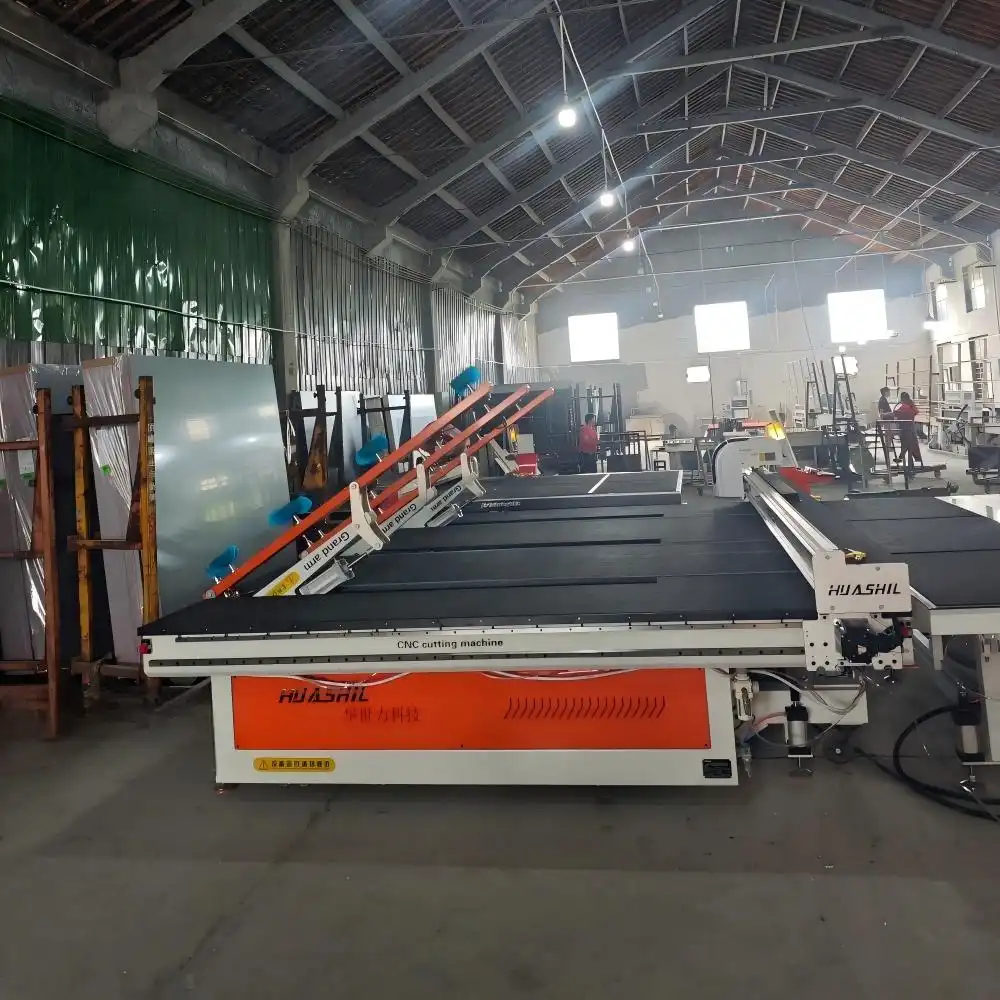
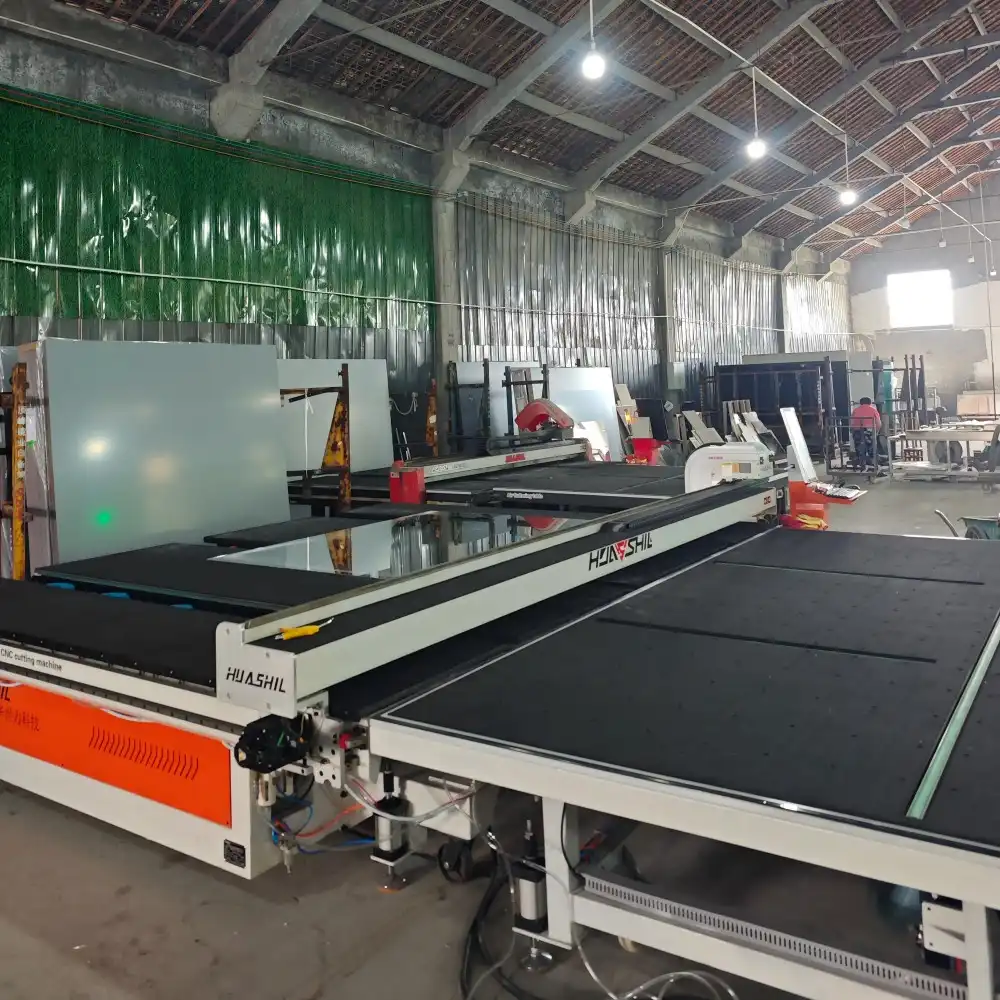
Glass cutting tools range from scoring tools that you use by hand to fully automated CNC lines. Each level of technology works best for a different amount of work. The HUASHIL HSL-LSX4228 is an example of a high-capacity automated system that can handle glass pieces up to 4200×2800mm. It has three built-in useful tables: a loading table, a cutting table, and a breaking table. Its frame can support either above-ground or underground rail layouts. It has two sets of two stations that can be adjusted, and each side has four grand arms for safe, balanced glass handling. The built-in Optima optimization software figures out the best way to cut materials so that as little waste as possible occurs.
Some of the most important parts of most automated cutting systems are:
- Cutting head and scoring wheel: The scoring wheel creates a precise stress line across the glass surface. Wheel condition directly affects cut quality, making it one of the highest-wear components in daily operations.
- Conveyor and rail system: Glass sheets travel along precisely aligned conveyors. Rail alignment affects dimensional accuracy across every single cut.
- CNC control system: Coordinates movement, cutting speed, and pressure based on programmed parameters. Integration with optimization software like Optima elevates pattern efficiency and reduces offcuts.
- Breaking table: Applies controlled mechanical pressure to separate glass along scored lines without surface damage.
By understanding these parts, production directors and technical managers can check to see if new equipment will work with the way lines are already set up before they buy it.
Comprehensive Maintenance Guide for Float Glass Cutting Machines
Maintenance done on a regular basis saves your investment and keeps output at full capacity. Industry data shows that unplanned downtime in glass processing plants using a float glass cutting machine costs around $22,000 per hour in lost wages, wasted materials, and late orders. A structured maintenance schedule gets rid of most failures that could have been avoided.
Daily Maintenance Tasks
Daily checks don't take long—less than 20 minutes—but they keep most operations from being interrupted. Check to see if the score wheel has any cracks or flat spots. To keep the glass from sticking or being out of place, clean the surface of the conveyor belt and the air holes. Check the amount of cutting fluid—not enough oil speeds up wheel wear. Before each shift, check the control panel for error codes or readings that don't make sense.
Weekly and Monthly Maintenance Tasks
As part of the weekly tasks, all moving train parts must be oiled, the tension of the belts on the conveyor drives must be checked, and the emergency stop reaction must be tested. As part of the monthly maintenance, test cuts on scrap glass should be used to fully calibrate the cutting pressure and speed. Check the mechanical devices on the breaking table for damage or leaks of hydraulic fluid. It is best to replace scoring wheels before they break. Depending on the type and thickness of glass, most wheels are rated to last between 80,000 and 120,000 linear meters.
For machines like the HSL-LSX4228, the Optima software takes care of the cutting layout automatically. It is also a good idea to check the software cutting patterns once a month to make sure the optimization settings are still in line with the current glass sheet sizes and order mix. This has a direct effect on the rates of material output.
All of these maintenance methods lower the total cost of ownership (TCO) and help finance teams and plant managers meet their long-term ROI goals, which they use to justify spending money on new production lines.
Essential Safety Precautions When Operating Float Glass Cutting Machines
Working with glass poses real health risks. According to the U.S. Bureau of Labor Statistics, cuts and eye injuries are two of the most common accidents that happen at glass and glass product production plants. Most accidents don't happen because of broken tools; they happen because safety rules aren't followed completely or regularly.
Personal Protective Equipment Requirements
Cut-resistant gloves (ANSI Level A4 or higher), safety glasses with side shields, and steel-toed shoes must be worn by everyone who works near a glass cutting line. When automated breaking machines break glass into small pieces, face shields add extra safety. The choice of PPE should be in line with OSHA 1910.138 standards for personal safety equipment that can be used in places where glass is processed.
Machine Safety Systems and Emergency Protocols
Each workstation on an automated cutting machine, even ones with more than one station, should have an easy-to-find emergency stop button that is clearly marked. At the start of every shift, test these stops. Make sure that the light curtains or proximity sensors on the loading table work properly. These sensors stop the machine from cycling when an operator's hands are in the danger zone. For any maintenance task that needs to access moving mechanical parts, write down a lockout/tagout (LOTO) procedure.
A well-organized safety management system with regular safety checks, written records of operator training, and an easy-to-understand way to report crashes greatly lowers the number of injuries and the costs that come with them at work. Companies that started official safety plans for handling a float glass cutting machine say that recordable accidents dropped by up to 40% in the first year after they started using them.
Choosing the Right Float Glass Cutting Machine for Your Business
Matching Machine Capacity to Production Volume
The amount of glass that needs to be cut and the size of the sheets are the main factors that go into choosing cutting tools. Semi-automatic or entry-level CNC systems are a good value for small decorative glass shops that work with sheets smaller than 2000x1500mm. Larger architectural glass fabricators and curtain wall integrators need machines like the HSL-LSX4228 to work with jumbo float glass sheets. This machine can handle sheets up to 4200 x 2800 mm and can run multiple stations at high speeds.
The software environment is just as important as the hardware when looking at automated systems. Optimization software like Optima figures out the best way to nest cut forms to get the most out of the glass. This increases the rate of glass utilization and, over time, lowers the cost per unit of raw materials.
Besides technical details, the reliability of the provider has a bigger impact on the overall cost of doing business than the initial buy price. Check to see what the warranty covers, how long it takes to get replacement parts, and whether you can get expert help remotely. For buyers in the United States, make sure the seller can provide paperwork, operator training materials, and easy-to-use service lines after the sale.
Advantages of Automated Float Glass Cutting Machines and Future Trends
Why Automation Matters for Glass Processing Efficiency
Automation is not just about speed; it changes the consistency and traceability of the things that are made in a fundamental way. CNC-driven cutting systems get rid of the need for operators to change the cutting path and scoring pressure. This directly improves the accuracy of measurements and lowers the risk of glass breaking during further processing.
Industry 4.0 features are being added to glass cutting lines faster and faster. Machines that are connected to the internet now send real-time operating data to centralized tracking screens, such as scoring pressure, wheel wear indicators, and cycle counts. This information helps with predictive maintenance plans, in which actions for maintenance are planned based on real-time wear metrics instead of set times. When compared to traditional scheduled maintenance methods, predictive maintenance cuts unplanned downtime in plants by up to 30%.
In the years after 2025, the glass-making industry will continue to put an emphasis on saving energy, cutting down on waste, and increasing the number of automated systems. Automated float glass cutting machines that use optimization software and smart sensors will continue to be the most popular investment choice for factories that want to keep their costs low and their quality high.
Conclusion
Maintaining your glass-cutting tools properly and following constant safety rules are not choices; they have a direct effect on your profits, the quality of your products, and the safety of your workers. From checking the score wheels every day to reviewing the software's calibration every month, every job helps keep production going. Long-term operating success depends on getting the right float glass cutting machine for your output volume from a dependable source with a history of good after-sales service. As automation technology improves, businesses that buy the right tools and keep them in good shape will have a clear edge over their competitors.
FAQ
1. What is the recommended scoring wheel replacement interval for automated glass cutting machines?
The estimated service life for most score wheels in CNC glass cutting systems is between 80,000 and 120,000 linear meters. This depends on the type of glass, its thickness, and the cutting fluid that is used. The best way to tell if a wheel needs to be replaced before the rated interval is to check the cut quality and look for edge chipping or incomplete scoring lines.
2. How does optimization software like Optima reduce material waste?
Optima figures out the best way to nest each group of cut shapes so that the offcut area on each glass sheet is as small as possible. It is possible for plants that make a lot of building or furniture glass to use less raw material, which directly lowers the cost per unit of production.
3. What safety standards apply to glass cutting machine operators in the U.S.?
Facilities that work with glass have to follow OSHA 1910 General Industry standards. These include the rules for PPE under 1910.138 and machine guarding standards under 1910.212. Under 1910.147, lockout/tagout rules must be followed for all repair work on powered cutting tools.
4. Can the HSL-LSX4228 handle both standard and jumbo float glass sizes?
The HSL-LSX4228 can handle glass sheets up to 4200 x 2800 mm, which includes both standard architectural sizes and larger jumbo formats that are common in commercial and curtain wall glazing projects. Its two-plus-two station configuration (which can be changed) and four grand arms on each side make it stable enough to handle all sizes.
Connect with HUASHIL for Your Float Glass Cutting Machine Needs
HUASHIL is a reliable company that makes float glass cutting machines and has years of experience helping architectural fabricators, curtain wall integrators, and furniture glass producers around the world automate their glass processing needs. The HSL-LSX4228 shows our dedication to precise engineering, built-in optimization tools, and reliable help after the sale. You can email our technical team at salescathy@sdhuashil.com to see all of our products and ask for details, prices, or a plan for a unique production line.
References
1. Glass Processing Technology and Equipment, Society of Glass Technology, 2021.
2. OSHA General Industry Standards: Personal Protective Equipment and Machine Guarding, U.S. Occupational Safety and Health Administration, 2022.
3. Industry 4.0 Applications in Flat Glass Manufacturing, Glass International, 2023.
4. Total Cost of Ownership in Industrial Equipment Procurement, Plant Engineering Magazine, 2022.
5. Predictive Maintenance Strategies for CNC-Controlled Manufacturing Systems, Manufacturing Engineering Society International, 2023.
6. Glass Fabrication Safety and Risk Management Guidelines, National Glass Association (NGA), 2021.