




Choosing the right low cost automatic glass cutting line can genuinely transform your production floor. Whether you run a window fabrication plant, a curtain wall workshop, or a glass furniture operation, the right cutting line reduces labor dependency, improves dimensional accuracy, and lowers your cost per unit over time. This guide walks you through every stage of the decision process — from understanding what these machines actually do to evaluating suppliers to making a confident purchase. If you are currently comparing options or preparing a capital investment proposal, this is the resource you need.
Understanding Low-Cost Automatic Glass Cutting Lines
What Does an Automatic Glass Cutting Line Actually Do?
An automatic glass cutting line combines moving the glass by hand, scoring, and breaking it with CNC control into a single, continuous process. Glass sheets are put on an input table and then moved to a cutting bridge, where a scoring wheel follows a predetermined path. The sheets are then moved to the breaking station. The whole process works with very little help from a person. Models that are easy on the wallet offer the same basic features at a price that small and medium-sized work settings can afford.
Standard float glass, Low-E coated glass, laminated glass, and even sintered stone panels can be cut by modern automatic devices, based on the shape. The main difference between entry-level and premium lines is not always the quality of the output, but the amount of redundancy, the fastest speed, and the level of software sophistication built into the system.
Types of Cutting Lines Worth Knowing
The market has a number of different options. Straight-line cutting tables work best for making simple rectangles and a lot of the same thing over and over again. It saves floor space because inline systems connect loading, cutting, and breaking in a single area. Architectural glass processors and decorative glass producers like CNC cutting lines because they can cut free-form forms and complicated designs. The first step in your evaluation is to figure out which type meets your needs for output.
Criteria for Choosing the Right Cutting Line
The Core Parameters That Actually Matter
Before looking at price tags for a low cost automatic glass cutting line, make sure that your selection factors are in line with your business's top goals. These are the most important technical factors that every plant manager and production engineer should look at:
- Cutting precision: Production-grade lines should achieve accuracy within ±0.25 mm. This tolerance is critical for architectural glazing, shower enclosures, and curtain wall panels where dimensional deviation creates downstream rework costs.
- Cutting speed: Entry-level automated lines typically reach 80–120 m/min. Higher-end systems push past 150 m/min. Match the speed rating to your daily output target rather than purchasing excess capacity you will not use.
- Maximum glass size: Confirm that the machine handles your largest panel dimension. Oversizing or undersizing the working envelope wastes either money or opportunity.
- Energy consumption: Servo-driven systems consume significantly less power than older pneumatic designs. This translates to measurable savings across a full production shift.
- Maintenance cycle: Assess the replacement interval for scoring wheels, conveyor belts, and lubrication points. Frequent maintenance means more downtime and higher operating costs over the machine's lifespan.
Production-level lines should be accurate to within ±0.25 mm when it comes to cutting. This tolerance is very important for architectural glazing, bathroom screens, and curtain wall panels, where differences in size lead to extra work that costs money.
Analyzing Market Options and Brand Reliability
How to Evaluate Suppliers Without Visiting Every Factory
To buy glass cutting equipment, you can go to authorized dealers, OEM manufacturers, regional distributors, or go straight to an exporter. There are pros and cons to each program. OEM makers allow for the most customization and have the closest contact with customers after the sale. Distributors help people in their area and get extra parts to people faster.
When evaluating a supplier, ask to see documented installation cases from industries that are similar to yours. A company that has sold systems to companies that make windows, furniture glass, and curtain walls has cross-industry support that a company that only works in one niche can't match.
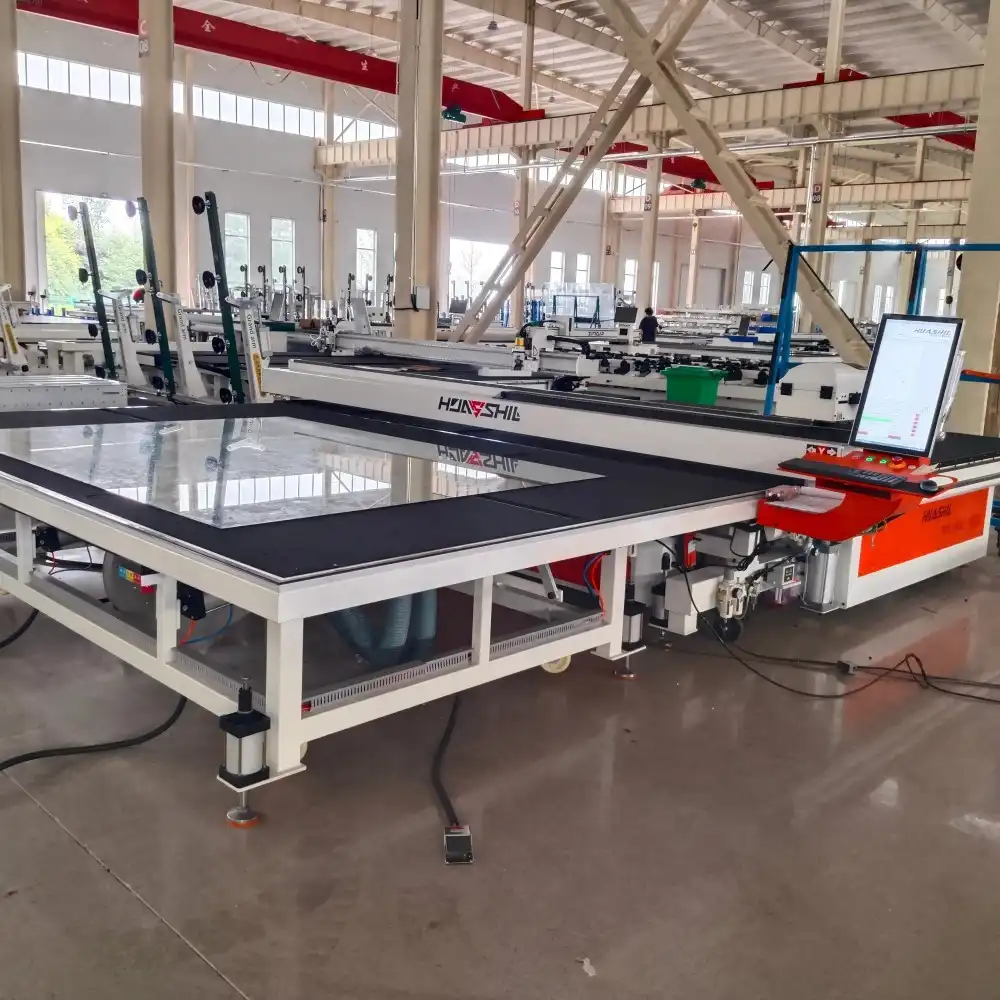
The HUASHIL HSL-LSX3829 is an automatic cutting line intended for medium- to large glass handling jobs that you should look at more closely. It can work with glass that is up to 3660 x 2800 mm and has three tables: one for loading, one for cutting, and one for breaking. The system uses optimization software called Optima to find the best cutting patterns for the material. This is a real way to cut down on wasteful raw glass use and increase yield.
The HSL-LSX3829 can work with either above-ground or underground rail setups, which lets you use it in a variety of plant floor layouts. It can be set up with two (2) stations, which can be changed depending on the needs of the project. Each side has three crane arms, which make handling sheets stable and accurate throughout the cycle. Because of these features, it is a good choice for production areas that need reliable automation without having to pay very high prices.
HUASHIL is a high-tech company with its headquarters in Shandong, China. It has a lot of experience making automated glass processing equipment for a low cost automatic glass cutting line. The company sells its goods all over the world and has a good reputation for keeping its equipment stable and providing quick, expert help.
Best Practices for Operating and Maintaining Your Cutting Line
Protecting Your Investment After Installation
Routine maintenance is necessary—it's the difference between a machine that keeps producing well for five years and one that starts having quality issues in eighteen months. A useful repair plan includes the following:
- Daily: Clean the cutting bridge rails and inspect the scoring wheel for chips or wear. Remove glass dust from conveyor surfaces to prevent scoring inconsistencies.
- Weekly: Check belt tension, lubricate linear guides, and verify that the breaking table alignment matches the cutting table output.
- Monthly: Calibrate the CNC positioning system and confirm that software optimization parameters still reflect your current glass inventory dimensions.
Safety rules should also get your full attention. Operators should always wear safety glasses and gloves that won't cut. Every time a shift changes, make sure that the emergency stop switches are checked. Proper operator training, which should ideally be given by the equipment's maker during commissioning, greatly lowers the risk of injury and misuse.
When looking for common problems, scoring wheel pressure settings or worn wheels are often to blame for bad break quality. Positioning drift over time is often a sign that the servo motor needs to be recalibrated or the rails need to be cleaned. If these problems are dealt with quickly, they won't get worse and cause production to stop.
Making the Purchase — How and Where to Buy
Breaking Down the True Cost of Procurement
An automated cutting line's purchase price covers the machine itself, but it also covers installation, commissioning, operator training, and sometimes custom integrations made to fit your floor layout. When buyers only plan to budget for the price of the tools, they often have to pay extra for setup costs they didn't expect.
When you ask for quotes, tell suppliers to list these parts separately. This openness helps finance and procurement managers compare deals correctly and stay away from secret costs. Before signing an agreement for an international order, make sure you know if the supplier takes care of the export paperwork and what the shipping terms are (FOB, CIF, or DAP).
Buyers who are planning full production lines care a lot about the customization options they have. Suppliers who can do both OEM and ODM can set the number of stations, the type of rail, the software settings, and the places where the equipment can connect to the equipment further down the line. This adaptability is very helpful for curtain wall installers and big factories that are making custom production systems.
Most of the time, foreign orders are paid for with a deposit and the rest due at a later date, or through a Letter of Credit (L/C). Before you sign any contract, make sure you understand what the warranty covers, how long it takes to get replacement parts, and if you can get remote technical support.
Conclusion
Instead of just comparing prices for a low cost automatic glass cutting line, there is an organized way to choose the best automated glass cutting solution. Precision tolerances, output speed, upkeep needs, and source dependability should all be looked at together, not separately. The HUASHIL HSL-LSX3829 is a well-specified choice for people who want capable, adaptable automation without extra costs. It has Optima software, a three-table workflow, and a maximum glass size of 3660 × 2800 mm, so it can meet the needs of most medium-sized glass processing businesses. Finding the right machine for your production volume and mix of products will always be more valuable in the long run than looking for the lowest price.
FAQ
1. Is an automatic cutting line actually better than manual cutting for a small factory?
When it comes to both speed and accuracy of size, automated cutting lines always do better than human cutting. Even the most basic systems get rid of the variation that comes with scoring by hand, which is especially important when making a lot of panels that are all the same. When it comes to small companies, the return on investment is usually seen within twelve to eighteen months because they waste less glass and need fewer workers per unit of output.
2. What safety features should I look for in a glass cutting line?
Key safety features include emergency stop buttons in several operator positions, guarding around the cutting bridge for extra protection, and sensors that stop the line immediately when glass breaks.
3. Can I customize the configuration for my specific production layout?
Most reputable manufacturers, like HUASHIL, offer flexible choices that can be put together in different ways. For example, they can place the rails above or below ground, change the number of stations, and help with connecting equipment further down the line. Talking to the provider early on about your floor plan and output needs is the best way to make sure you get a standard that fits your operation without adding extra things that aren't needed.
Start Your Automation Journey with HUASHIL
Fabricators in the US and around the world trust HUASHIL's low cost automatic glass cutting line because it has been used and proven to work. For plants that want to improve their cutting operations, the HSL-LSX3829 is the best choice. It has Optima optimization software, a flexible 2+2 station configuration, and a maximum glass capacity of 3660 × 2800 mm. Get in touch with our technical team right away to get a plan that is specifically made for your business needs. Get in touch with us at salescathy@sdhuashil.com to see all of our glass cutting line options.
References
1. Glass Technology: International Journal of Glass Science and Technology — Society of Glass Technology, 2022.
2. Automation in Glass Processing: Trends and Equipment Standards — Glass International Magazine, 2021.
3. Industrial Machinery Procurement Guide: Capital Equipment Decision Frameworks — Thomas Publishing, 2023.
4. Energy Efficiency in Glass Manufacturing Operations — U.S. Department of Energy, Advanced Manufacturing Office, 2020.
5. CNC Glass Cutting Technology and Application Standards — Glassman World, 2022.
6. Total Cost of Ownership in Industrial Equipment Purchasing — Plant Engineering Magazine, 2023.