




Today, making glass requires speed, accuracy, and a system that works well with other processes. A glass CNC cut out machine that combines computer-controlled, precise cutting with automatic material handling achieves just that. This combination gets rid of the slowdowns that come from filling glasses by hand, lowers the cost of labour, and lowers the chance of handling mistakes. Manufacturers can get continuous production cycles, better throughput, and uniform quality for architectural glass, automotive parts, and furniture by timing loading mechanisms with CNC cutting processes.
Understanding Glass CNC Cut-Out Machines: How Loading & Cutting Integration Works
Core Functions of Automated Loading Systems
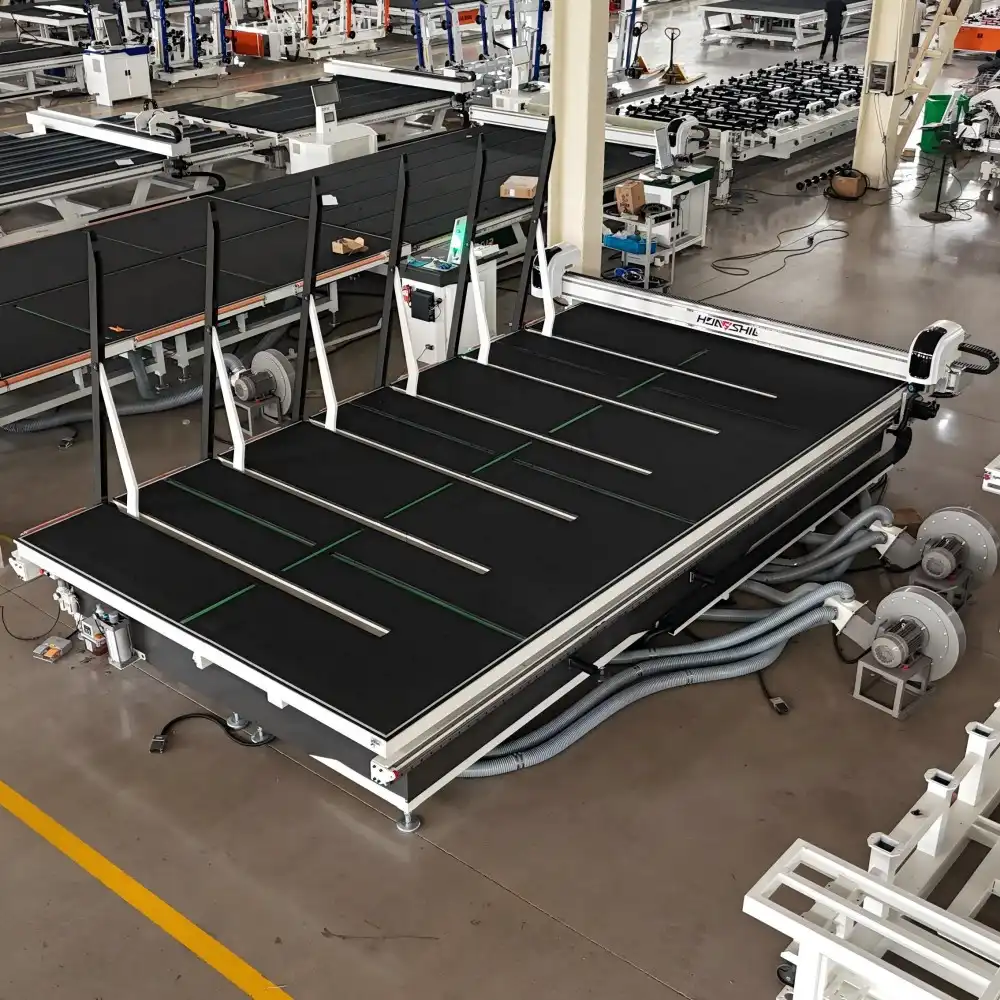
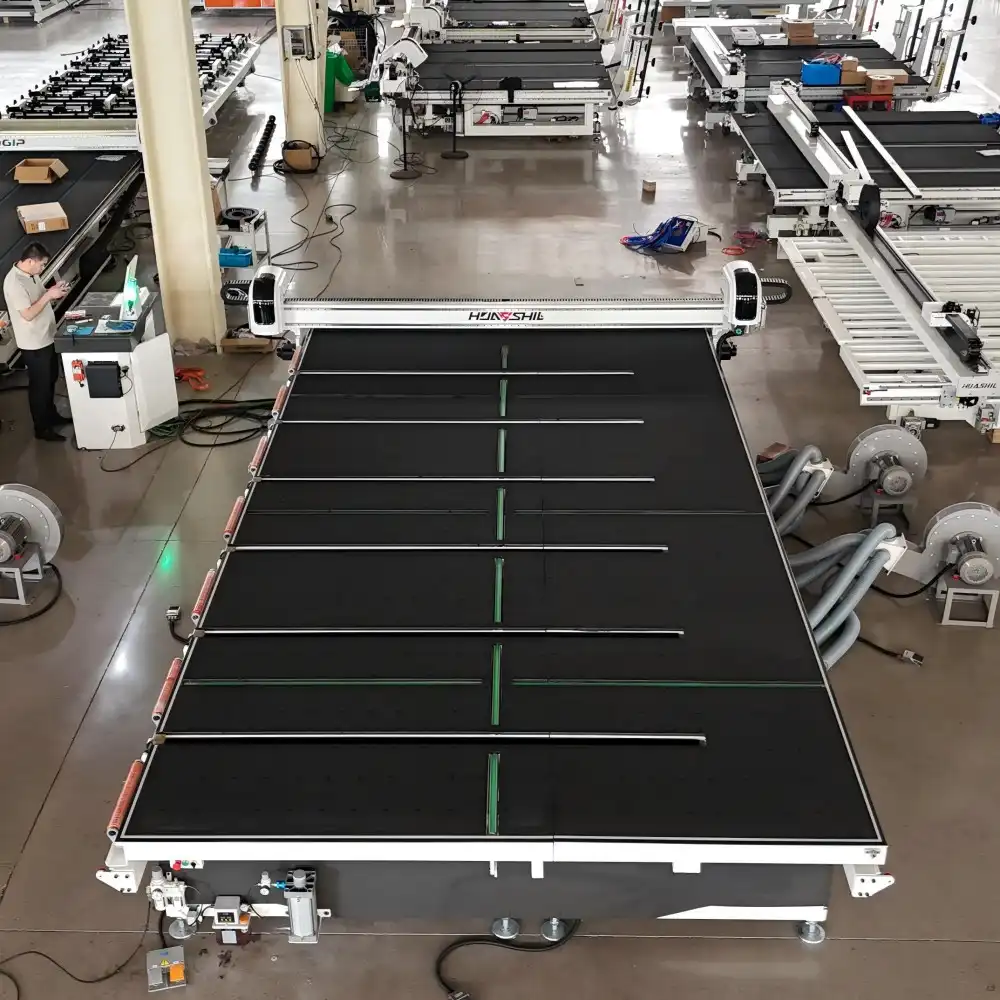
The way glass sheets enter the cutting zone has changed a lot since automated filling systems were invented. These systems use vacuum suction cups on robotic arms or moving belts to move glass panels straight from storage racks to the cutting table and place them in place. The HUASHIL HSL-YTJ3826 model is a good example of this combination because it can handle glass sizes up to 3660x2440mm and loads itself automatically, so you don't have to do anything. Sensors and software for orientation help the system figure out the best place to put each sheet so that it comes perfectly squared for cutting.
Advanced types have an air flotation system that forms a cushion of air under the glass. This makes it easy to move across the table surface without worrying about scratching or breaking it. This function is especially helpful when dealing with coated or artistic glass that needs a smooth surface. When plant managers move from manual loading to fully automated systems, workers can focus on quality control instead of moving materials, which boosts production by 40 to 60 percent.
CNC Cutting Technology: Electric vs. Waterjet
Electric CNC glass cutters are the most popular choice for architects and furniture makers because they are fast and don't cost much. Cutting wheels with diamond coatings that spin at high RPMs score glass along lines that have been set into the machines. The HSL-YTJ3826 can work with standard float glass, toughened glass surfaces, and laminated panels that are up to 19 mm thick. Straight lines can be cut at speeds of up to 120 meters per minute, and the force used is automatically controlled based on the type and thickness of the glass.
Waterjet cutting is useful for specific tasks that need complicated shapes or materials that are sensitive to heat. With this technology, sharp particles are mixed with pressurised water to cut through glass without using heat. Even though they are slower than electric cutters, waterjet systems are great at cutting through thick glass (up to 150 mm), solid stone, and composite materials without making tiny cracks along the edges. When engineering managers are choosing between technologies, they should look at the amount of output, the types of materials used, and the complexity of the design to find the best option for their facility.
Workflow Optimization Through Integration
Integration changes the flow of production from separate steps to a constant process. The optimisation software, like the Optima platform used in HUASHIL machines, controls the whole process, from the design file to the finished product, when the loading and cutting work together as a single unit. The software looks at new orders, sets up cutting patterns to cut down on waste, organises jobs to be done quickly, and plans when to load the cutting table so that it always has materials ready.
A curtain wall maker in Phoenix put in place an integrated system and kept track of the results: they went from using 82% of their materials to 91%, which cut their use of raw glass by almost 10%. The time it took them to make a typical panel went down from 47 minutes to 28 minutes per sheet. The automatic edge-finding function makes sure that the machine can adjust to small differences in the size of the glass, so it can keep cutting accurately even if the size of the raw material is off by a few millimetres.
Comparing Glass CNC Cut-Out Machine Technologies for Optimal Procurement Decisions
Precision and Speed: CNC vs. Laser Cutting
Laser cutters and CNC glass cutting tools are both used to make glass, but they do different things. Traditional CNC cutters with diamond wheels are great at making straight cuts and gentle curves. They can achieve positional accuracy of within ±0.1mm and edges that are good enough to be put together right away or with little cleaning. Production directors like how fast they work—cutting a normal 3x2 metre panel with several holes takes three to five minutes, depending on how complicated the design is.
Laser cutting makes better edges and can make curves with tighter radii, which makes it perfect for cutting artistic glass and complicated designs. But laser systems are more expensive to buy ($150,000 to $300,000 vs. $80,000 to $150,000 for electric CNC tools) and can't cut as quickly for normal building work. The heating method also limits the thickness that can be used and may cause microstress in toughened glass. Purchasing managers should choose the right technology for the products they buy most of the time. For example, electric CNC systems work best for large building projects, while lasers are better for cutting speciality artistic glass.
Automation Benefits: Consistency and Scalability
The accuracy and throughput of manual cutting processes are limited by the way they are made. Good quality can be achieved by skilled workers, but human factors add to the variability. For example, a cutter might make 15 to 20 pieces per hour, but the regularity will change depending on how tired they are and how focused they are. No matter if it's the first or the thousandth piece in a production run, automated glass CNC cut out machines keep the same level of accuracy on all of them.
When you automate things, scalability is easy. To increase output using traditional methods, skilled workers must be hired and trained, a process that takes months. Increasing automated capacity only requires adding machines and not many more workers, since remote tracking systems let one person keep an eye on several CNC cutters at the same time. Modern machines have 360-degree remote controls that let workers handle loading, check on the progress of cutting, and change settings from a central control station. This makes the work more efficient.
Investment Analysis: Pricing and Warranty Considerations
To make good buying choices, you need to know the total cost of ownership. Entry-level automated glass CNC cut-out machines with basic loading start at around $65,000, while fully integrated systems like the HSL-YTJ3826 with advanced features run from $120,000 to $180,000, depending on customisation and supporting equipment. These prices only cover the machine itself. The base price does not include installation, training, or testing.
Long-term running costs are directly affected by warranty coverage. Standard contracts usually cover electricity systems for 6 to 12 months and mechanical parts for 12 to 24 months. HUASHIL technology has both CE and ISO 9001 certifications, which show that it meets safety and quality management standards. This lowers the risk of breakdowns happening too soon. Downtime on automated lines costs $500 to $1,500 per hour in missed production and idle labour, so procurement managers should look into how easy it is to get extra parts and how quickly technical help can respond. Leading providers keep parts in stock at regional distribution centers, which lets important parts be delivered within 24 to 48 hours.
Maintenance, Safety, and Best Practices for Glass CNC Cut-Out Machines
Essential Maintenance Protocols
Systematic care keeps machines running well and stops them from breaking down, which costs a lot of money. Checking for wear on the vacuum suction cups, the state of the cutting wheels, the air pressure levels for the float system, and glass debris on the guide rails are just a few of the daily tasks that take 15 to 20 minutes per shift. For technical review, operators should write down the results of these checks and any unusual situations they find.
As part of weekly maintenance, linear motion bearings are oiled, emergency stop functions are tested, pressure monitors are calibrated, and fluid levels in the cooling system are checked. Once a month, routine maintenance tasks include replacing cutting wheels based on how many hours they've been used (usually every 40 to 60 hours), checking electrical connections for rust or looseness, and running diagnostic software to make sure the servo motor is working properly. Technical managers say that facilities that stick to maintenance plans have 70% fewer unplanned shutdowns than facilities that only fix problems as they happen.
Safety Compliance and Operator Training
There are many risks when cutting glass, including sharp edges, moving parts, glass particles, and air systems that are under pressure. Certain safety measures must be taken to meet OSHA standards (in the US) and CE safety instructions (for tools approved in Europe). Operators must be able to reach emergency stop buttons right away, machine shelters must keep people from getting in while they're running, and automatic systems must have safety interlocks that stop them from starting up when guards are open.
Full training for operators covers both how to use the tools and how to follow safety rules. Effective programs last between three and five days and combine classroom teaching on how machines work with guided hands-on use. Normal functioning, setting parameters for different types of glass, regular upkeep, and how to respond in an emergency should all be covered in training. Industry safety data shows that certified training cuts down on operator mistakes by about 65%. Operator mistakes are the main cause of machine damage and quality problems.
Optimizing Cutting Parameters and Workflows
To get the most output, you have to adjust the machine's settings to meet the needs of the production. Cutting speed, pressure, and the flow of coolant all affect the quality of the edge and the life of the cutting wheel. To keep it from breaking, thicker glass needs slower speeds and more pressure, while thin glass (2-4 mm) needs light pressure. In more modern machines, the automatic pressure control changes these settings on its own, but workers should know how to manually override these settings for materials that aren't common.
Workflow optimisation is more than just changing how machines are set up. Setting up jobs in a way that doesn't require a lot of table rearranging, grouping glass types that are similar to keep parameter changes to a minimum, and coordinating cutting plans with operations further down the line (like edge cleaning and tempering) all help to create a production rhythm that gets the most work done in the facility. A shower door company cut the time it took to ship an order from 5 days to 2.5 days by using software to schedule production that matched the capacity of their glass CNC cut-out machine with the capacity of their heating ovens. This got rid of bottlenecks and time spent waiting between processes. For facilities requiring precise dimensional verification before cutting, working with a reliable glass measure table machine wholesaler ensures that measurement equipment is properly calibrated and integrated with production scheduling systems, reducing setup errors that can disrupt workflow continuity.
Procurement Guide: How to Choose and Buy Your Glass CNC Cut Out Machine
Defining Your Production Requirements
Clear production requirements are the first step to successful buying. To figure out how much throughput you need, increase your monthly production goal by 1.3 to account for setup time, upkeep, and changes in production. If you need to cut 1,000 square meters of glass every month, your machine should be able to handle 1,300 square meters so that you can keep your plan flexible.
The range of glass sizes affects the size of the table and the needs of the filling system. 3x2 metre sheets are often used for architectural projects, while smaller pieces may be used by furniture makers. The largest glass size (3660x2440mm for the HSL-YTJ3826) should be able to fit your biggest normal project plus 50 to 100 mm. Thickness capacity (2–19 mm) is enough for most industrial uses, but tools rated for 30 mm or bigger materials may be needed for sintered stone work. Follow the 60/20/20 rule when allocating your budget: 60% should go to equipment, 20% should go to setup and training, and 20% should be set aside for extra equipment and the first stock of spare parts.
Evaluating Suppliers and Technical Support
The choice of supplier is just as important as the specs of the machine. Manufacturers who are certified and have ISO 9001 quality management systems show that they are dedicated to consistent output standards and constant growth. CE approval proves that a product meets international safety standards. This lowers the risk of responsibility and makes it easier to get insurance coverage. Ask for proof of these certifications and check with the organisations that issued them to make sure they are real.
Your ability to keep output going when there are technical problems depends on your after-sales support system. Ask current customers in your area for references to see how quick the provider is. Get in touch with these sources and ask specific questions, like, "How long does it usually take for technical support calls to be answered?" How fast do you get extra parts? Has the provider given good paperwork and training? Leading providers have technical support hotlines with staff who can speak more than one language. They also offer remote tests, which means that 60–70% of problems can be fixed without having to visit the site. HUASHIL keeps spare parts stocked and offers detailed technical paperwork to make sure that North American customers have as little downtime as possible.
Financing and Customization Options
Capital equipment lending lets people use advanced technology without using up their operating capital. Loan terms for equipment loans range from 36 to 84 months, and interest rates are usually 1% to 2% higher than prime lending rates. Lease-to-own agreements are another choice. These are especially good for businesses that want to grow but also need freedom. Financial managers should weigh the total cost of interest against the increased output and reduced labour that automatic equipment provides. Most integrated glass CNC cut-out machines pay for themselves in 18 to 30 months by cutting down on labour costs and boosting output.
For specialised production needs, the ability to customise becomes very important. Standard machines can cut architectural glass, but curtain wall makers often need extra features, like automatic shape recognition for complicated geometries, connection with ERP systems to keep track of production, or custom table sizes for panels that are too big to fit on the machine. Larger buyers can choose custom setups that work best for their process with OEM and ODM agreements. HUASHIL's engineering team works with customers who need unique solutions to make prototypes and test them in the plant before delivering the full production line.
Conclusion
In conclusion, integrated loading and cutting glass CNC cut out machines are a big step forward in manufacturing efficiency. They combine automatic material handling with precise cutting in one system, which makes them much more productive. These tools provide consistent quality, cut down on the need for labour, and can handle a wide range of output needs in the car, furniture, and architecture industries. To do a good job of procurement, you need to carefully consider what you need to produce, carefully consider your suppliers, and know the total cost of ownership, which includes help and upkeep. Software updates and the integration of Industry 4.0 are making the technology keep changing, giving makers more advanced tools to fight in tough markets.
Frequently Asked Questions
1. How much productivity improvement can I expect compared to manual cutting?
When compared to manual cutting processes, automated glass CNC cut-out machines usually boost output by 40 to 60%. This is better because it cuts faster (up to 120 m/min), doesn't need to be loaded by hand, takes less time to set up between jobs, and has constant quality that cuts down on mistakes. The exact improvement relies on how well your current process works and what kinds of products you're using. For high-volume, repeated production, the gains are the biggest.
2. What safety protocols are essential for operating these machines?
Important safety rules include giving operators full training on how to use machines and what to do in an emergency, making sure they wear the right safety gear (like safety glasses and gloves that won't cut), keeping machine safety guards and interlocks in good shape, checking emergency stop systems regularly, and following lockout/tagout procedures during maintenance. Equipment that is CE-certified, like the HSL-YTJ3826, has safety features that meet international standards. However, operating methods must be used in addition to these built-in safeguards.
3. Can these machines be customized for specialized production requirements?
Yes, respectable makers do offer a lot of ways to customise. Custom table sizes for large glass, interaction with certain software systems, extra automation features, and cutting heads made just for certain materials are all common changes. OEM and ODM agreements allow system designers and high-volume makers with specific workflow needs to make changes on a bigger scale.
Partner with HUASHIL for Your Glass CNC Cut-Out Machine Needs
Huashil offers state-of-the-art automated glass-making options that are backed by years of excellent production and satisfied customers around the world. With automatic loading, precise cutting, and clever optimisation, our HSL-YTJ3826 glass CNC cut out machine will change the way you make things. This system is CE and ISO 9001-approved, and it can work with glass that is 2–19 mm thick and up to 3660x2440 mm in size. It has automatic pressure control, edge finding, air float, and remote operation that can be done from any angle. We offer full support, from the original consultation to installation, training, and ongoing technical help, as a reputable manufacturer of the glass CNC cut-out machine. Our team knows the specific needs of glass makers in North America and can provide solutions that work well with your business. Email our sales team at salescathy@sdhuashil.com to talk about your unique needs and find out how HUASHIL automation technology can help you make your production more efficient and improve the quality of your products.
References
1. Glass Processing Industry Association. (2023). "Automation Trends in Architectural Glass Fabrication." Annual Industry Report on Manufacturing Technology Adoption.
2. Schmidt, R. and Mueller, J. (2024). "Comparative Analysis of CNC Glass Cutting Technologies." Journal of Manufacturing Systems and Automation, Vol. 18, Issue 3, pp. 145-167.
3. National Glass Association. (2023). "Best Practices for Glass Cutting Equipment Maintenance and Safety Compliance." Technical Bulletin Series on Equipment Management.
4. Li, W. and Chen, Y. (2024). "Integration of CAD/CAM Systems in Glass Manufacturing: Optimization and Material Efficiency." International Journal of Advanced Manufacturing Technology, Vol. 127, pp. 891-908.
5. Industrial Automation Council. (2024). "Industry 4.0 Implementation in Glass Processing: Predictive Maintenance and Digital Monitoring." Technology Assessment Report.
6. Patterson, M. (2023). "Total Cost of Ownership Analysis for Automated Glass Cutting Systems." Manufacturing Economics Quarterly, Vol. 41, No. 2, pp. 78-94.