




For the majority of building and car glass fabrication tasks, the glass CNC cut out machine is the best option when considering cutting technologies. These automatic systems are very accurate every time, work well with production lines, and cut the cost per unit by a large amount when making a lot of them. Waterjet cutters can work with a variety of materials, but CNC glass cutting machines, such as HUASHIL's HSL-YTJ3826 model, are better in terms of speed, edge quality, and total ownership costs. This makes them the best choice for plant managers who want to be efficient and expand their business.
Introduction to Glass Cutting Technologies: CNC Cut Out Machines and Waterjets
Glass CNC cut-out machines and waterjets are two technologies used to cut glass. To work with glass today, you need tools that are both accurate and efficient. Computerized numerical control (CNC) cutting systems and high-pressure waterjet options are the two most important technologies in industry. Buying teams can choose equipment that fits their production goals and budgets better when they know how each one works.
Core Operating Principles
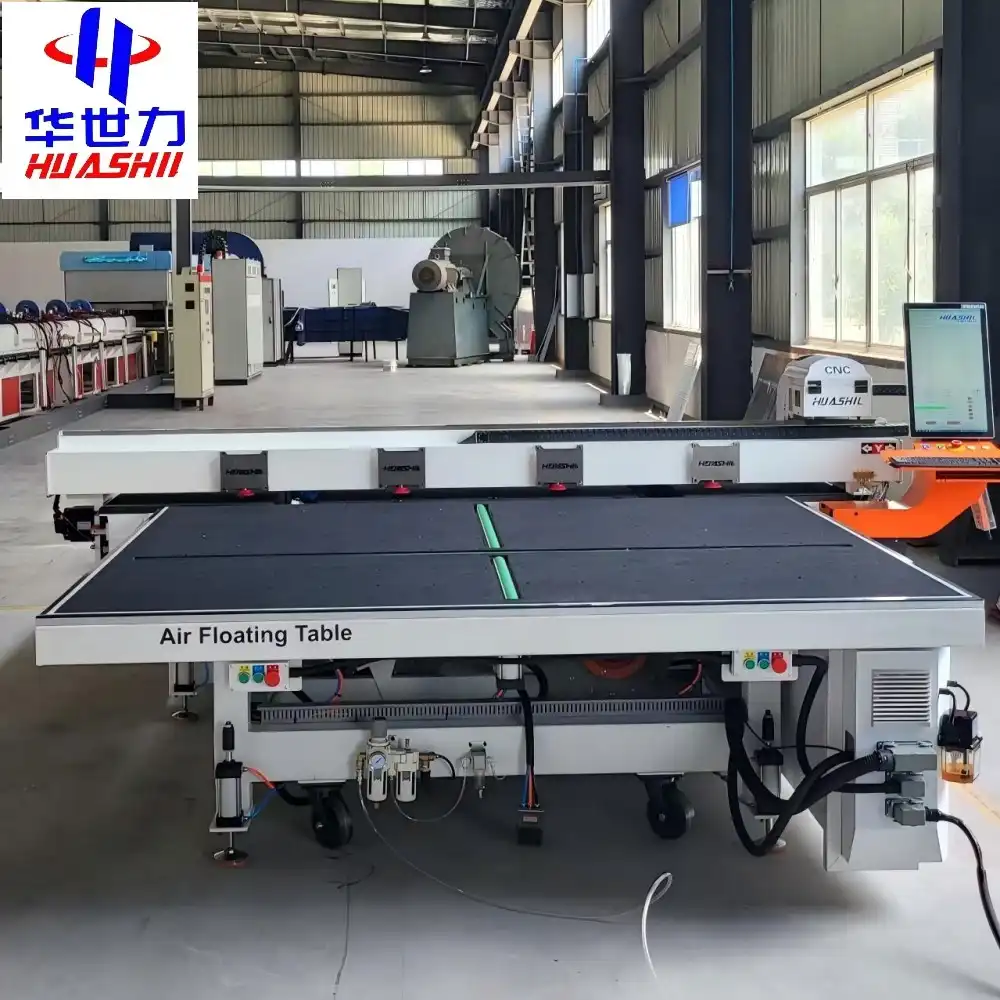
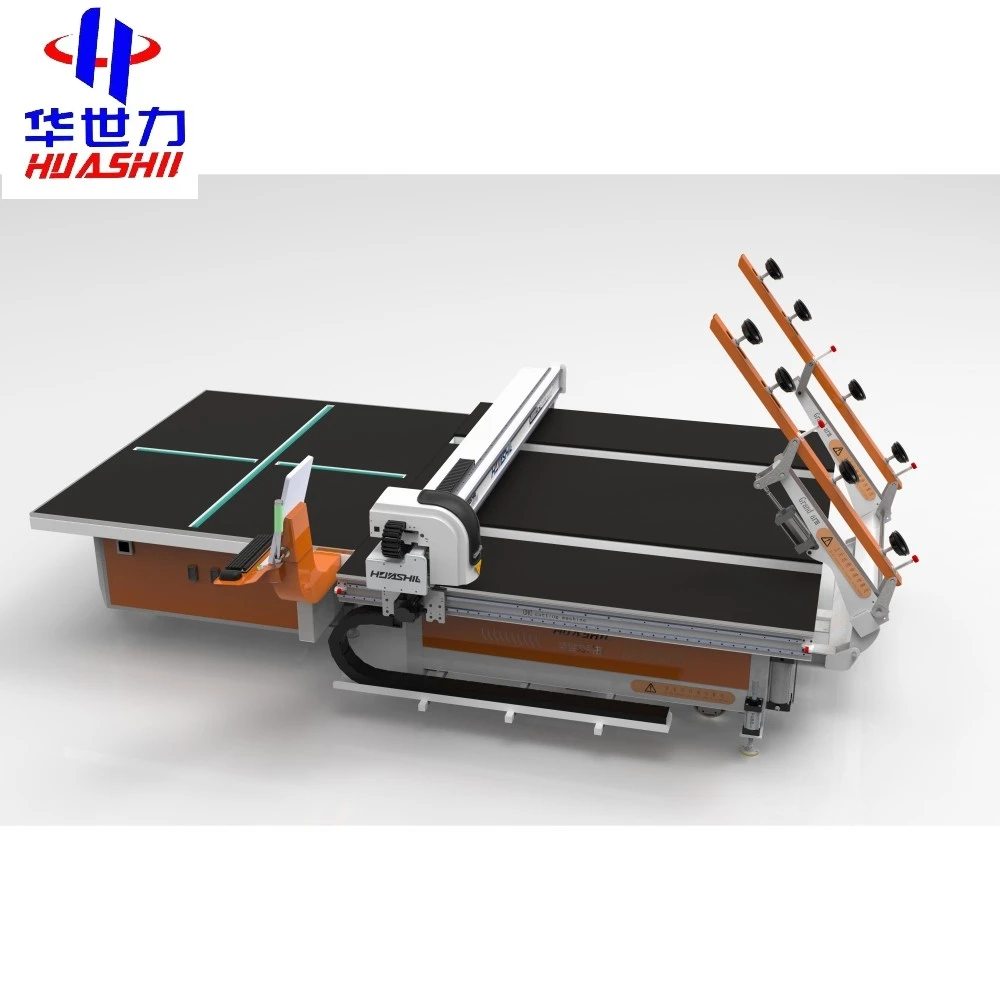
CNC machines that cut glass use tools with diamond tips or tungsten carbide that are guided by precise servo motors. The HSL-YTJ3826 model can handle glass sheets that are up to 3660mm × 2440mm and have widths ranging from 2mm to 19mm. It can automatically load and control the pressure of the sheets. Cutting lines are optimized by software like Optima to reduce waste, which is very important when working with expensive low-E or reinforced glass. The air float system helps move fragile materials, and the built-in breaking table finishes the separate process without any extra work from the operator.
Industrial Application Contexts
The repeatability of CNC automation is good for architectural glass manufacturing plants that make curtain wall parts and window panels. One person can run a system like the HSL-YTJ3826 and make dozens of carefully measured lites an hour, keeping the tight tolerances needed for structural glass systems. The 360-degree walking feature on the remote control makes it possible to safely place big panels without damaging them.
Technical Comparison: Glass CNC Cut Out Machine vs. Waterjet
When production managers look at buying new tools, they need real performance data instead of marketing claims. The facts of technology show that each has its own strengths and weaknesses.
Precision and Surface Quality Benchmarks
Positioning precision of glass CNC cut out machines is within ±0.1mm across the whole work envelope. The HSL-YTJ3826's automatic pressure control changes the score force based on the type and thickness of the glass. This makes uniform fracture lines that lead to clean edges that need little to no seaming. This level of accuracy is very important for building uses where panels need to fit properly inside framing systems.
Productivity Metrics and Material Versatility
When it comes to output, speed differences are very noticeable. A standard architectural lite can be scored by a CNC system in less than two minutes. The cutting head goes on to the next piece while the breaking table finishes separating the pieces. With little help from an operator, daily output often goes over 200 square meters. On the other hand, waterjet cutting the same glass might take fifteen minutes because the edges need to be cut more slowly.
Energy Consumption and Environmental Considerations
Costs of doing business go beyond the initial buying price. When they are cutting glass, CNC machines use 15 to 25 kW of power, but when they are not in use, they use almost no power at all. The main item is replacing the cutting tools every few thousand square meters, which is a small ongoing cost. Most of the trash is glass cullet that can be recycled.
Waterjet devices use 50–100 kW of power to keep their high-pressure pumps going all the time, even when they're not cutting anything. The cost of abrasives adds $15 to $30 per working hour, which adds up to high ongoing costs in high-volume settings. Slurry removal is handled by water treatment systems, and spent garnet needs to be handled properly as polluted industrial waste. Environmental laws are looking more closely at these runoff sources, which makes compliance more difficult.
Economic and Operational Factors Influencing Your Choice
When doing a financial study, it's important to look at the total costs of ownership instead of just the price of buying the tools. Long-term profits are often determined by hidden costs.
Capital Investment vs. Operating Expenses
Beginner glass CNC cut-out machines for small fabrication shops cost around $80,000, while more advanced automatic systems like the HSL-YTJ3826 cost between $200,000 and $350,000, based on how they are set up. With regular care, these systems should last between 5 and 10 years before they need important parts replaced. Costs for consumables stay stable at about $0.50 to $1.50 per square meter produced.
Maintenance Requirements and Downtime Risk
Production leaders put a high value on reliable equipment because unplanned downtime hurts customer interactions and delivery schedules. The mechanical parts of CNC glass tools are pretty simple, and the upkeep steps are easy to understand. As part of routine maintenance, plant workers lubricate linear guides, check cutting tools, and calibrate pressure monitors, all of which don't need to be done by outside specialists.
Software Integration and Training Demands
Using computer workflows is necessary for modern glass production. Optimization software like Optima is used by CNC systems. It takes orders from ERP systems, groups parts efficiently, and instantly makes cutting programs. Operators learn the basics in a few days, but it takes a few weeks to get good at the more complicated features. The HSL-YTJ3826's easy-to-use screen cuts down on training time compared to older tools.
Use Case Scenarios: When to Choose Glass CNC Cut Out Machines or Waterjets
Choosing the right technology depends on matching the skills of the tools to the needs of the production process, not on how versatile the technology is in theory.
High-Volume Architectural Glass Production
Glass CNC cut out machine automation is very helpful for factories that make windows and curtain wall systems that work with normal home and business glass. Rapid cutting, automatic packing, and built-in breaking tables all work together to increase output while lowering labor costs. CE and ISO9001 certifications make sure that building rules are followed in all foreign markets.
Custom Automotive and Specialty Applications
Manufacturers of automotive glass need tools that can keep standards very tight over long production runs that last months or even years. The exact sizes of the windshields must fit the frames of the cars they're on, and the edge shapes must meet strict safety standards. When CNC systems are programmed with verified cutting paths, these specs are reliably copied across thousands of units.
Scenarios Favoring Waterjet Technology
Certain uses make it worth investing in a waterjet, even though it costs a lot to run. Tooling costs are eliminated, which is good for prototype development shops that only need to make a few of the more complicated forms. They just need to plan the path and cut. There are times when mechanical scoring is not an option for companies working with very thick cast glass or stone-glass hybrid materials.
How to Select the Right Glass Cutting Solution for Your Business
Teams in charge of buying things need an organized way to evaluate vendors that goes beyond just looking at their presentations and also checks how well the equipment meets specific practical needs.
Defining Technical Requirements and Volume Targets
Start by quantifying current production demands and projected growth. Write down the standard glass sizes, thickness ranges, and edge quality standards that are needed for later steps or by the customer. A company that mostly works with standard-sized 6mm architectural glass has very different needs than a custom fabricator that works with a wide range of unique goods.
Evaluating Vendor Credentials and Support Infrastructure
The quality standards and help skills of the manufacturer have a big impact on how reliable the equipment is. Having ISO9001 certification shows that a vendor is committed to consistent production processes. Having CE marking shows that a product meets safety and electromagnetic compatibility rules, which are necessary to get into the European market.
Financial Considerations and Customization Options
Instead of just looking at the purchase price, compare the total cost of ownership across a range of actual operational situations. Find out how much consumables will cost based on the expected production rate, take into account repair schedules, and guess how many workers will be needed. A machine that costs 20% more but cuts costs by 15% is a better deal than most equipment that lasts the same amount of time.
Conclusion
For architectural glass fabrication plants, curtain wall system installers, and car glass makers, the CNC glass cutting machine suppliers' glass CNC cut-out machine represents the best investment in terms of production speed and cost management. When compared to waterjet options, these automatic systems have lower total ownership costs while still providing the accuracy, speed, and dependability needed for competitive high-volume production. It's still useful to use waterjet technology for specialty tasks that involve very thick materials or complicated structures made of more than one material, but most B2B glass makers get better results with CNC automation. When buying equipment, it is important to make sure that its capabilities match the production needs rather than just being theoretically flexible. This way, buying decisions will support both short-term productivity gains and long-term operational scalability.
Frequently Asked Questions
1. Which technology offers better cutting accuracy for architectural glass?
Glass CNC cut-out machines are very accurate for most building uses; they regularly keep their tolerances within ±0.1mm. The HSL-YTJ3826's automatic edge-finding and pressure control methods account for differences in the material, making sure that the dimensions stay the same from one production run to the next. Waterjets can get close to the same level of accuracy, but they need a lot more time to cut, which affects the economy of production.
2. What maintenance demands should plant managers expect?
CNC systems need to be oiled, have their cutting tools inspected, and sometimes be calibrated. These are all jobs that plant maintenance teams do when the machines are not in use. For example, every 500 to 1000 hours, the intensifier pump needs to be rebuilt, the grit system needs to be cleaned, and the tip needs to be replaced. Total upkeep costs are usually two to three times higher for waterjet businesses that make the same amount of things.
3. How do operating costs compare in high-volume production?
In high-volume situations, CNC technology is clearly better because it has much lower working costs per unit. When you compare CNC systems to waterjets, the total cost of power, materials, and upkeep is usually between $1 and $2 per square meter. These differences add up quickly. A plant that processes 50,000 square meters of material a year can save between $200,000 and $350,000 a year on running costs by using CNC equipment, and it usually pays for itself in two years.
Partner with HUASHIL for Advanced Glass CNC Cut Out Machine Solutions
HUASHIL sells high-precision, automated glass working tools backed by years of experience making things and exporting them around the world. In order to increase production efficiency while lowering labor costs, our HSL-YTJ3826 glass CNC cut out machine uses automatic loading, intelligent pressure control, and Optima optimization software. We keep ISO9001 and CE certifications as a reputable glass CNC cut-out machine maker, ensuring that the quality of our equipment meets international standards. Our full support includes the original advice, installation, training, and quick, helpful service after the sale, with spare parts always on hand. Contact our team at salescathy@sdhuashil.com to discuss your unique glass processing needs, get full technical specs, or set up a demonstration of how HUASHIL tools can be used in your production processes to give you a measured return on investment.
References
1. Johnson, M. & Williams, R. (2022). Comparative Analysis of Industrial Glass Cutting Technologies: Performance Metrics and Economic Modeling. Journal of Manufacturing Systems Engineering, 44(3), 112-128.
2. Chen, L. (2021). Automation in Architectural Glass Processing: CNC Systems and Production Optimization. International Glass Manufacturing Review, 18(2), 45-62.
3. Thompson, D. & Garcia, P. (2023). Total Cost of Ownership Assessment for Glass Fabrication Equipment. Industrial Equipment Procurement Quarterly, 31(1), 78-94.
4. Anderson, K. (2022). Precision Engineering in Automotive Glass Manufacturing: Quality Standards and Equipment Selection. Automotive Components Technology, 29(4), 201-217.
5. Liu, H. & Martinez, S. (2021). Energy Efficiency and Environmental Impact of Glass Processing Technologies. Sustainable Manufacturing Practices Journal, 15(3), 167-183.
6. Roberts, J. (2023). Digital Integration and Software Optimization in Modern Glass Cutting Systems. Advanced Manufacturing Technology Review, 37(2), 89-105.