




Plant managers and engineering teams need to find a reliable industrial glass cutting table manufacturer that makes equipment that is accurate, long-lasting, and flexible. An industrial glass cutting table is the most important piece of equipment in modern glass manufacturing shops. It makes precise cuts in building glass, car parts, and decorative glass. Manufacturers that offer OEM services make custom solutions that work well with current production lines and solve specific process problems while keeping throughput high. Shandong Huashil Automation Technology Co., Ltd. has decades of experience making things and is also very good at engineering, so we can make glass cutting solutions that are exactly what you need.
Understanding Industrial Glass Cutting Tables – Features, Types, and Uses
Over the past ten years, glass-making equipment has changed a lot, turning manual tasks into streamlined automatic ones. Modern cutting tables have advanced safety features, computer-controlled accuracy, and smart optimization software that keeps material waste to a minimum while speeding up production.
Core Components and How They Work Together
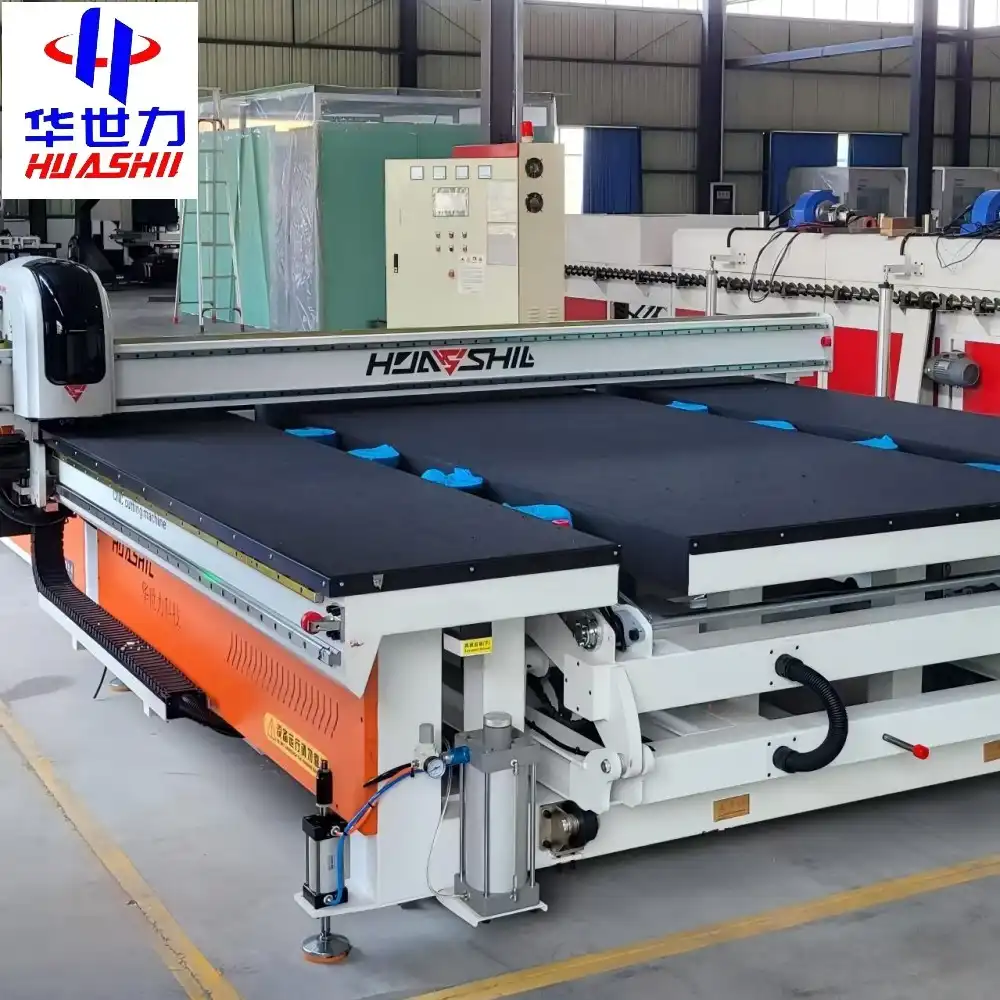
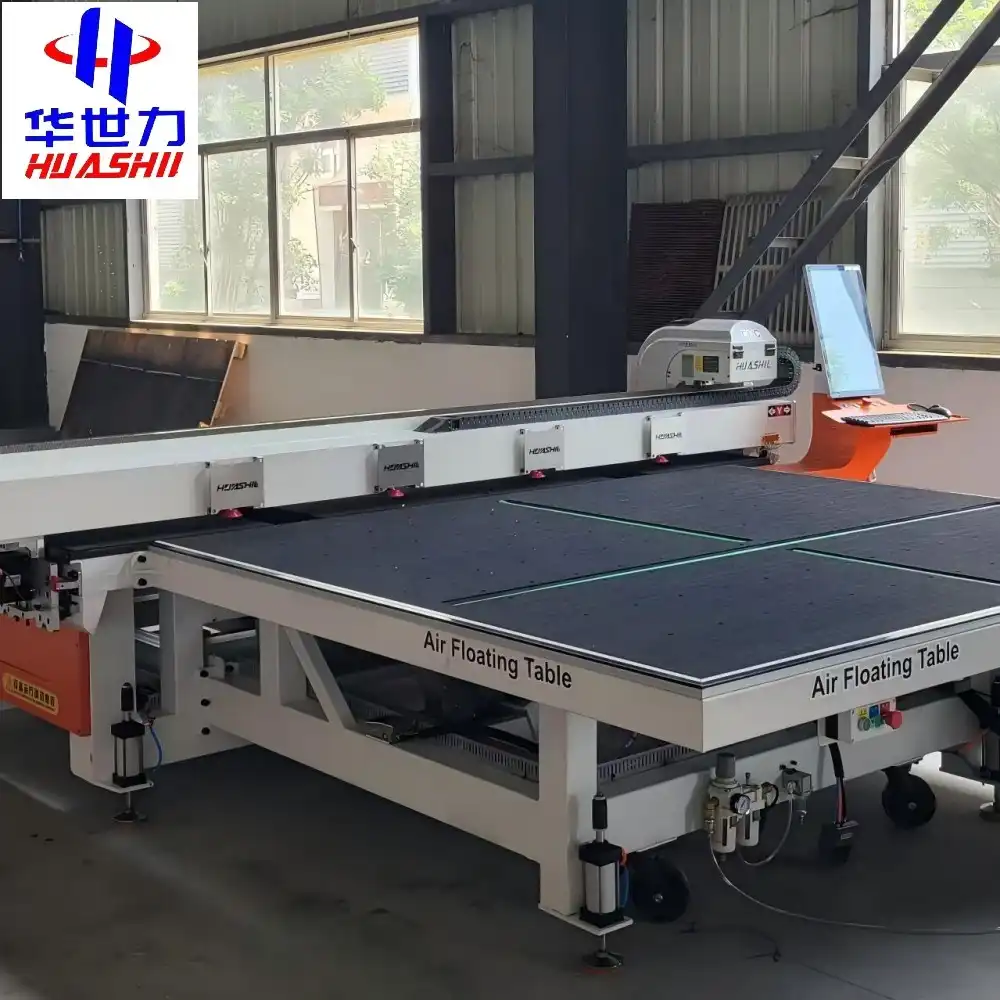
A skilled glass cutting device is made up of several parts that are all connected and work together. Diamond-tipped wheels or laser modules on the cutting head score or separate glass panels along lines that have been set. The table surface has an air float system that keeps heavy glass sheets in place on a cushion of air. This keeps the surface from getting scratched while the sheets are being placed. Control panels with touchscreens let workers enter cutting patterns, change pressure settings, and see real-time data for production. Finished pieces are moved to places further down the line by synchronized drive systems on conveyor belts so they can be edged, tempered, or packaged. These parts work together with the help of programmable logic controls that carry out complicated cutting routines that can be repeated within fractions of a millimeter.
Pneumatic Versus Electric: Choosing the Right Power System
Compressed air is what moves the cutting heads on pneumatic cutting tables and controls how much pressure is applied. They work best in places where there is already equipment for compressed air and where repair teams prefer simpler mechanical systems. Electric models with servo motors allow for exact speed control and high energy economy, making them perfect for high-volume facilities that care most about long-term costs. Our HSL-YTJ3829 model takes the best parts of both electric accuracy and gas safety features and puts them together in one package.
Automation Levels and Safety Integration
Entry-level semi-automatic tables need to be loaded with glass by hand and have cutting cycles that are started by the user. These tables are good for small businesses that make custom orders. Fully automatic systems can load, identify edges, cut, break, and unload panels without any help from a person. Each shift, these systems can handle hundreds of panels. The HSL-YTJ3829 has automatic mechanisms for loading, pressure control that can handle glass thicknesses from 2 mm to 19 mm, and automatic edge-finding sensors that can find the position of the glass no matter how well it is placed. The built-in breaking table cleanly splits scored glass, and the 360-degree remote control lets workers run the equipment during production runs from a safe distance.
How to Choose the Right Industrial Glass Cutting Table for Your Business
When choosing the right cutting tools, you need to look at a number of things that have a direct effect on your return on investment and your ability to produce. An organized assessment method helps buying teams avoid expensive problems when operating needs don't match up with what the tools can do. Working with a reliable industrial glass cutting table ensures both productivity and long-term value.
Matching Capacity to Production Volume
Find out how much glass you process every day in square meters and match that number to the equipment's specs. The HSL-YTJ3829 can handle panels up to 3660mm x 2800mm, which are normal sizes for building glass used in making curtain walls and big windows. Facilities that mostly work with smaller pieces of furniture glass might think this capacity is too high, but facilities that cut big pieces of glass for business buildings will like the larger cutting area. Not only does cutting speed affect production speed, but so do filling time, optimization formulas, and how well materials are handled.
Accuracy Requirements and Quality Consistency
For dimensional accuracy, architectural glass limits are usually within ±0.5mm, but because windshields in cars are curved, automobile glass needs even stricter standards. The accuracy of the cut relies on how rigid the machine is, how well the servo motors work, and how well the software interpolation methods work. Our system's Optima optimization software figures out the best nested patterns that make the best use of material while keeping cutting accuracy high across the whole production batch. When compared to planning a layout by hand, this software intelligence cuts the cost of raw materials by 3 to 8 percent.
Energy Consumption and Maintenance Accessibility
Look at the total cost of ownership, which is more than just the buying price. Electric cutting systems use power based on how long they are actually cutting, while pneumatic systems constantly use energy to keep the compressed air going. Access to maintenance has a big effect on performance. Equipment made with flexible parts and quick-change tools cuts down on the time it takes to fix problems. Our engineering team makes cutting tables with service screens that are easy to reach and standard extra parts that can be shipped anywhere in the world in 48 hours. This keeps production from stopping too often.
OEM Customization Versus Standard Models
Off-the-shelf cutting tables can be used for a wide range of tasks, but they might need to be adjusted to work with current production lines. Through OEM relationships, engineering teams can choose conveyor heights, control system connections, and safety interlocks that work with the equipment that is already in use. Custom automation routines can time cutting operations with glass washing stations upstream and tempering ovens downstream, making the flow of materials smooth. We work closely with curtain wall integrators and furniture makers to create cutting solutions that work with their unique production environments instead of pushing them to adapt to standard equipment designs.
Advantages of Partnering with an Industrial Glass Cutting Table Manufacturer Offering OEM Services
When you buy standard tools, it can be hard to make it work with other things, which lowers the expected efficiency gains. OEM manufacturing relationships turn sellers of tools into engineering partners who care about the success of your business.
Tailored Engineering for Unique Production Environments
Standardized measurements and features on generic cutting tables make them useful for a wide range of customers, but they don't always work perfectly with specific production needs. OEM manufacturers do thorough assessments of facilities to learn about how materials move, how much room is available, and how the facilities need to be integrated. Through this joint design process, equipment specifications are made that meet all of your unique needs, whether they are for custom conveyor interfaces, specialized glass handling fixtures, or integrating a control system with current plant management software. When you work with an OEM, you don't have to make the trade-offs that come with choosing a standard product.
Enhanced Compatibility and System Integration
Cutting tables must be able to talk to inventory management systems, quality control stations, and shipping logistics platforms in modern glass fabrication facilities, which work like linked production environments. OEM partners use standard communication methods to build control systems that let production tools easily share data. Our cutting tables can send signs when the cutting pattern is finished to start automatic cycles of washing the glass or send data for verifying the dimensions to databases for quality management. This level of integration turns separate pieces of equipment into well-coordinated production systems that get the most work done at the fastest rate possible across multiple steps of the process.
Quality Certifications and Global Service Networks
When looking at possible OEM partners, you need to look at their factory certifications and service infrastructure. If a product has CE certification, it means it meets European safety standards. If it has ISO 9001 certification, it means it follows structured quality management methods throughout the entire manufacturing process. At Huashil Automation Technology, we keep our certifications up to date and do regular checks to make sure we stay in line. Our service network covers most of the major glass-making regions and includes local expert help, storage for spare parts, and the ability to respond to emergencies. This worldwide presence is especially important when production stops, causing companies to lose money and not meet their supply obligations.
Pros of working with a company that makes industrial glass cutting tables and offers OEM services combine to give you cutting-edge solutions that work efficiently in your specific operational setting and come with the technical help you need for long-term productivity. Investing in an OEM partnership usually pays off because integration costs are lower, setup times are shorter, and after-sales support is better than with regular equipment purchases.
Maintenance, Safety, and Best Practices for Industrial Glass Cutting Tables
Following the right upkeep and safety rules directly affects the life of tools and the health of the people who use them. Setting up systematic care routines stops failures from happening out of the blue and protects workers from risks at work.
Calibration and Component Inspection Schedules
As mechanical parts wear down, cutting accuracy slowly decreases. To keep measurement limits, frequent calibration is necessary. We suggest checking the cutting wheel's state once a week to see if it's chipped or has odd wear patterns that could affect the quality of the score. Precision measurement fixtures that look for errors before they affect production quality are used in monthly calibration processes to check the accuracy of positioning. To keep the glass suspension stable, the air float system needs to have its filters changed every three months and its pressure checked. Synchronous belt tension affects how accurately the conveyor tracks. Tension gauges should be used to check the tension of the belt once a month and make any necessary adjustments to keep the belt from slipping while heavy panels are being moved.
Operator Training and Safety Equipment
Even cutting tables with a lot of automation needs workers who know what to do in an emergency and can spot when something is wrong. Loading methods that keep the glass from moving while it's being cut, emergency stop activation routines, and how to fix common operating problems like incomplete scoring or positioning mistakes should all be part of thorough training programs. For physical handling tasks, operators must wear gloves that won't cut them and safety glasses to protect their eyes from glass shards that are made during breaking tasks. Our HSL-YTJ3829 model has built-in safety features like light screens that stop cutting operations when people enter dangerous areas and emergency stop buttons placed at several entry points around the equipment's edge.
Troubleshooting Common Operational Issues
When the quality of the cuts gets worse, a thorough evaluation quickly finds the reasons why. When the glass scoring isn't full, it's usually because the cutting wheels are dull and need to be replaced, or the cutting pressure settings aren't right. Positioning mistakes can happen when conveyor belts are worn out, edge-finding sensors are not adjusted correctly, or linear guide systems have mechanical play. The Optima software has diagnostic tools that check the accuracy of placement and the usefulness of sensors. This makes it easy to find the source of a problem. Our technical support team can help with online diagnosis through video chat, showing maintenance staff how to fix problems and suggesting what they should do based on the signs they see.
Following these protocols helps maintain the performance of industrial glass cutting tables and protects personnel during intensive production cycles.
Pricing, Procurement, and After-Sales Service – What to Expect When Buying From a Leading Manufacturer
Understanding how costs are structured and what services are promised helps buying teams make smart investment choices that fit their budgets and meet business needs.
Investment Factors and Market Benchmarks
The price of glass cutting tools depends on how automated it is, how big the cutting area is, and what technologies are included. Semi-automatic cutting tables for small workshops usually cost between $15,000 and $40,000. Fully automated systems with a lot of cutting space and powerful optimization software cost between $60,000 and $150,000. The HSL-YTJ3829 is in the middle to upper range because it has a lot of automation features, a big cutting area, and optimization software that is built right in. Customization costs rely on how complicated the changes are. For example, adjusting the height of a conveyor belt doesn't cost much, but redesigning the whole control system to work with a factory system costs a lot of money and time. We give thorough quotes that include the prices of the base equipment, any customizations, shipping, and installation services. This lets you plan your budget more accurately.
Flexible Payment Terms and International Logistics
Buying equipment from other countries means arranging shipping processes with payment security. Standard terms include a 30% fee when the order is confirmed, full payment in full before shipping, and the last 10% payment after the installation has been confirmed. Letters of credit are a way for buyers who need banking intermediaries to protect their payments to make purchases. Shipping logistics for big cutting tables need special care. Our experienced logistics partners handle container loading, customs paperwork, and port clearance at the destination. Standard models usually take 45 to 60 days to arrive at the plant after the order is confirmed. OEM customized systems, on the other hand, need 90 to 120 days to make technical changes and make sure the testing is correct.
Warranty Coverage and Technical Support Infrastructure
Comprehensive guarantee programs protect investments in technology against flaws in the way it was made and parts that break down too soon. Our normal guarantee includes mechanical and electrical parts for 12 months from the date of commencement. For important production equipment, we offer choices for longer warranties. As part of the warranty, you can get online technical help, replacement parts, and service calls to your home or business if remote diagnosis doesn't work. We keep extra parts for popular wear items like cutting wheels, conveyor belts, pneumatic cylinders, and sensor assemblies in stock so that we can quickly get a new part to you. Authorized service sites in key manufacturing regions offer local technical knowledge and speed up reaction times for urgent service needs.
Investment in an industrial glass cutting table requires balancing these procurement factors against long-term operational requirements.
Conclusion
When choosing an industrial glass cutting table manufacturer, you need to look at their technical skills, ability to make changes, and long-term support infrastructure. For modern glass manufacturing, you need tools that can cut different kinds of glass precisely and work well with automatic production processes. OEM manufacturing partnerships give engineers more freedom than buying standard equipment can offer, allowing them to create unique solutions that solve specific business problems. Our HSL-YTJ3829 cutting table from Shandong Huashil Automation Technology is a great example of this method. It has a lot of automation features, can be customized in many ways, and comes with strong after-sales support backed by international service networks. When you combine cutting-edge technology, manufacturing know-how, and service that is focused on the customer, you get relationships that go beyond selling tools and include ongoing operating success.
FAQ
1. What glass thicknesses can industrial cutting tables process effectively?
Professional tools for cutting glass can handle thicknesses ranging from 2 mm for artistic glass to 19 mm for building panels. The HSL-YTJ3829 type can handle all of these ranges because it has automatic pressure control that changes the cutting force based on the thickness of the glass. For full scoring entry, bigger panels need more force, while thinner glass needs less cutting pressure to keep it from breaking. Modern industrial glass cutting tables use pressure sensors that give real-time input to automatically change for differences in thickness between different batches of output without the need for an operator to make adjustments by hand.
2. How does optimization software reduce material waste?
Cutting optimization programs compare the size of the glass panel to the number of pieces that need to be cut and then figure out the best way to group the pieces so that the most material is used. The Optima software that is built into our systems quickly checks thousands of possible plans and chooses the ones that produce the least amount of scrap. When compared to human layout planning, typical efficiency improvements cut the amount of raw materials used by 3 to 8 percent. Over the course of a year's worth of production, these savings more than cover the cost of the software and also lower the cost of getting rid of the scrap glass.
3. What distinguishes OEM cutting tables from standard models?
OEM equipment doesn't just follow general design templates; instead, it goes through unique engineering to meet the needs of the production process. Customization includes changes to the machine's mechanics, like adding conveyor connections and panel handling fixtures, setting the control system to do different cutting routines, and integrating safety features that match the rules already in place at the facility. Standard models work well for most tasks, but they need to be operationally changed to fit certain processes. When you work with an original equipment manufacturer (OEM), you can get equipment that is built to work with your processes instead of having to change your processes to fit the equipment. This makes integration easier and increases productivity.
Ready to Transform Your Glass Production Efficiency?
Huashil Automation Technology is ready to come up with cutting options that are perfect for your business needs. We can offer standard equipment or fully customized OEM systems that are made to fit your specific process as an industrial glass cutting table manufacturer. The HSL-YTJ3829 model has been tested and proven to work well in architectural glass, car uses, and furniture making. It also has CE and ISO 9001 certifications, which show our dedication to quality greatness. Email our engineering team at salescathy@sdhuashil.com to talk about your unique cutting needs, the limitations of your building, and your integration goals. We offer full consultations that include production analyses, advice on the right size equipment, and thorough quotes that include investment costs and timelines for implementation.
References
1. Glass Manufacturing Industry Council. (2023). Automation Standards for Architectural Glass Fabrication Equipment. International Glass Processing Standards Committee.
2. Anderson, M. & Chen, L. (2022). Precision Engineering in Industrial Glass Cutting Systems. Journal of Manufacturing Technology, 45(3), 287-304.
3. European Committee for Standardization. (2023). Safety Requirements for Glass Processing Machinery – CE Certification Guidelines. Brussels: CEN Technical Board.
4. Thompson, R. (2021). Total Cost of Ownership Analysis for Automated Glass Production Lines. Industrial Equipment Procurement Quarterly, 18(2), 45-62.
5. International Organization for Standardization. (2022). ISO 9001 Quality Management Systems – Requirements for Manufacturing Operations. Geneva: ISO Central Secretariat.
6. Williams, J. & Zhao, H. (2023). OEM Manufacturing Partnerships in Glass Processing Equipment: Strategic Advantages and Implementation Best Practices. B2B Industrial Equipment Review, 31(4), 112-129.