




In a glass cutting assembly line, the automation workflow represents a sophisticated manufacturing process. Through integrated robotics, sensors, and control systems, it transforms raw glass sheets into precisely cut components. This automated method eliminates manual inconsistencies, providing superior precision, enhanced throughput, and improved workplace safety. Modern automation processes use advanced CNC technology, real-time tracking, and smart optimization software to create seamless production environments. These environments meet the strict needs of the automobile, architectural, and decorative glass industries.
Understanding Glass Cutting Assembly Line Automation
Automating the processing of glass fundamentally changes how manufacturers approach precision cutting tasks. Unlike traditional manual methods, which rely heavily on operator skill and experience, automated systems provide consistent results through programmed accuracy and mechanical reliability. These high-tech production lines integrate multiple technologies to create a cohesive workflow that maximizes efficiency while minimizing waste.
Core Benefits of Automated Glass Processing
Automated glass cutting systems offer measurable benefits that directly impact production metrics and operational costs. Precision improvements, reaching tolerances within 0.1 mm, significantly reduce material waste and rework requirements. Compared to manual operations, labor costs typically drop by 40-60% because fewer skilled workers are needed to manage higher production rates.
Workplace safety improvements are another critical benefit of automation. Automated systems prevent workers from coming into direct contact with heavy glass sheets and cutting tools, greatly lowering the risk of injury. Environmental benefits include energy-efficient motors and optimized cutting designs that reduce material waste, supporting sustainability efforts.
Workflow Integration Technologies
Modern automatic systems rely on synchronized technologies working seamlessly together. Robots move and position materials with sub-millimeter accuracy, while sensor arrays check glass dimensions, detect flaws, and ensure proper alignment throughout the process. Advanced control systems coordinate these components, creating a production environment where each operation flows smoothly into the next.
Key Components and Process Steps in Automated Glass Cutting
Automated glass cutting assembly line systems are made up of several essential components that work together to produce reliable, high-quality results. When procurement professionals understand these components, they can better judge a system's capabilities and make informed investment decisions.
Essential Hardware Components
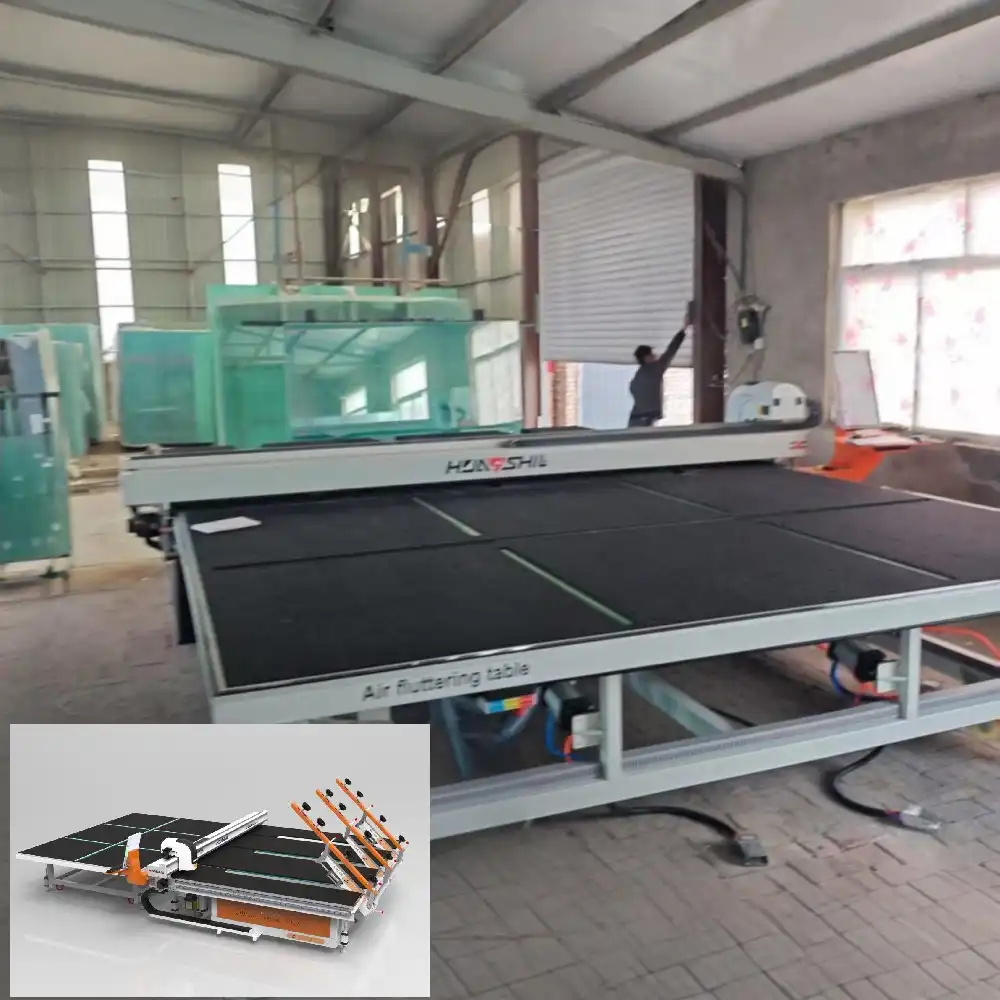
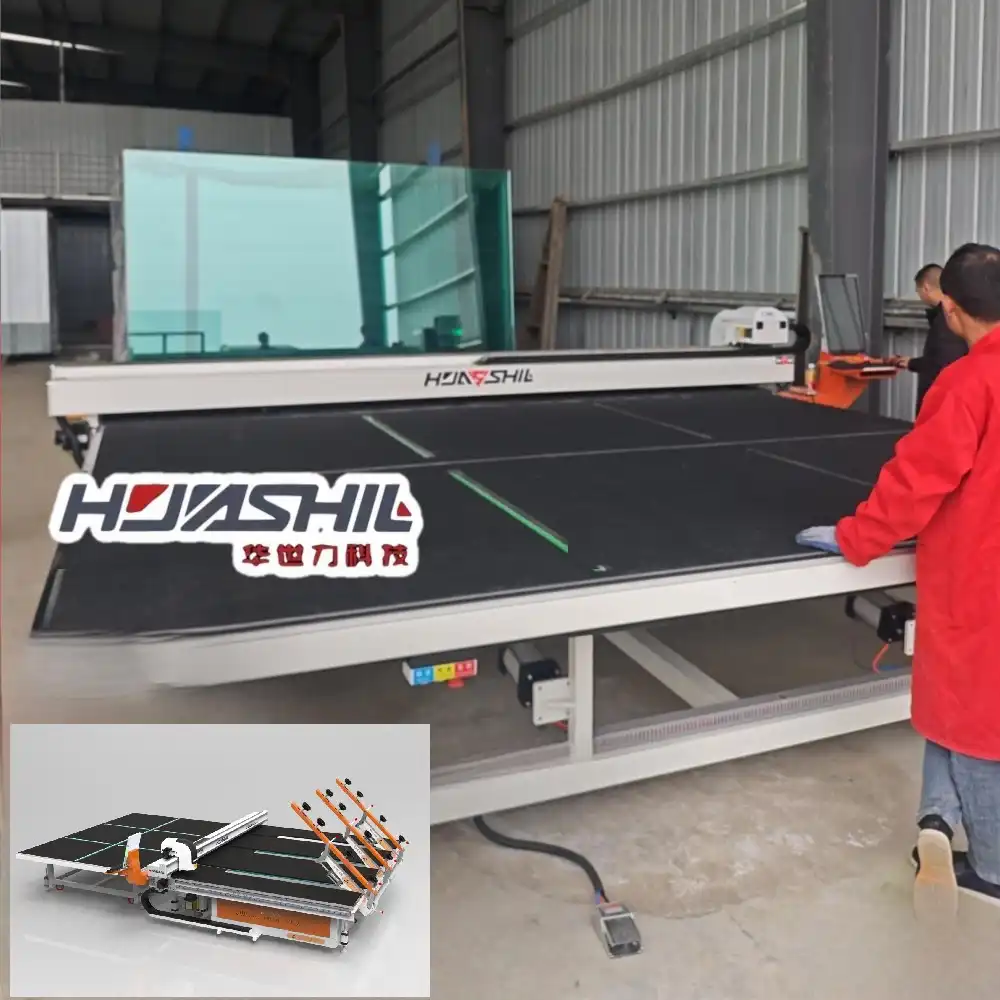
The foundation of any automatic cutting system is built around three main work areas that each handle a different step in the process. Loading tables receive raw glass sheets and place them for processing, equipped with vacuum systems and positioning lines to ensure correct placement. Precision tracks and cutting heads on cutting tables enable programmed cutting patterns to be executed very accurately. Breaking tables finishes the separation process by applying controlled pressure to achieve clean edges.
Rail systems provide the structural foundation for cutting head movement. Depending on the facility layout and production needs, above-ground and underground rail configurations each offer distinct benefits. The HSL-LSX3829 model features configurable rail systems with 2+2 station capabilities, allowing operators to customize the workflow to fit specific production needs.
Cutting heads represent the precise heart of the system, using diamond wheels or laser technology to make clean, accurate cuts. Each side of the system has three large arms that offer exceptional flexibility when it comes to handling glass up to 3,660 x 2,800 mm.
Software Integration and Optimization
Automation software serves as the intelligent controller that coordinates all system components. Optima optimization software figures out the best way to cut things, minimizing waste and ensuring efficient material utilization. This program works with CNC controllers to make exact cuts while constantly monitoring system performance.
IoT-enabled tracking systems gather information throughout the production process, which helps with quality control and predictive maintenance. Vision tools check the quality of the cuts and find possible flaws before they affect the finished goods. Real-time analytics provide workers with instant feedback on how the system is working and how much is being produced.
When these software components are put together, they create a production environment where continuous improvement is possible through data-driven insights and automatic adjustments.
Comparing Automated Glass Cutting With Traditional Methods
Traditional glass cutting methods face inherent limitations that automation effectively addresses. Manual cutting processes depend heavily on operator skill levels, creating variability in cut quality and production speed. Throughput limitations become apparent when comparing manual operations, which typically process 20 to 30 pieces per hour, to automated systems, which can handle 100 or more pieces per hour.
Operational Efficiency Comparisons
Semi-automatic systems bridge the gap between manual and fully automated operations, offering improved consistency while maintaining human involvement. Compared to manual methods, these systems usually boost output by 200 to 300 percent while requiring less capital than fully automatic lines.
Fully automated glass cutting assembly line systems offer the highest efficiency gains, often boosting productivity by more than 500% compared to human processes. These systems work great for tasks that need to be precise and repeatable, making them perfect for making glass for buildings and cars, where accuracy is very important.
Cost-Benefit Analysis
When making investment choices, it's important to carefully weigh operational costs against gains in efficiency. The cost of labor is higher for manual tasks, but the initial investment needed is cheaper. Semi-automatic systems have good cost-benefit ratios that make them suitable for medium-sized businesses. For high-volume uses, fully automatic lines have the lowest cost per unit but require a big initial investment.
The analysis must also take into account quality consistency, waste reduction, and long-term operating costs. In high-volume production settings, automated systems usually pay for themselves in 18 to 24 months by saving money on labor costs and making better use of materials.
Selecting the Right Glass Cutting Assembly Line for Your Business
Procurement professionals must evaluate multiple factors when selecting automatic glass cutting tools. The best system design is affected by factors like the amount of production needed, the budget, the amount of floor space available, and plans for future growth.
Evaluation Criteria for System Selection
The main thing that determines which system to choose is its production ability. Systems can make anywhere from 50 to 200 pieces per hour, depending on the size of the business. The HSL-LSX3829 type can handle glass panels up to 3660mm x 2800mm, which makes it good for architectural and large-format uses.
Systems can meet specific business needs when they can be customized. With OEM and ODM support, it's possible to connect to existing production processes and maintain consistent quality standards. After-sales support is important for keeping operations running, so providers need to be able to offer a wide range of spare parts and expert help.
Vendor Selection Considerations
Reliable suppliers have a history of success with automation technology and a lot of experience using it in glass-making applications. Certification standards, quality control systems, and customer references can help you figure out how reliable and skilled a seller is.
Shandong Huashil Automation Technology Co., Ltd. exemplifies the type of supplier that buying professionals should consider. These providers have a lot of experience making automatic mechanical equipment and are dedicated to new technology and stable quality. They are reliable enough to make automation projects work.
Long-term operating success is guaranteed by technical assistance, training programs, and maintenance services. Suppliers who offer full-service packages minimize operational disruptions while maximizing equipment performance throughout its operational life.
Maintaining and Optimizing Your Automated Glass Cutting Assembly Line
Long-term operational success depends on implementing comprehensive maintenance strategies and safety protocols. With regular upkeep, you can make your glass cutting assembly line last longer and maintain the quality and speed of your production.
Safety and Compliance Standards
When working with glass in an industrial setting, strict safety rules must be followed to protect workers and maintain regulatory compliance. Safety interlocks, emergency stop systems, and security barriers built into automated systems go beyond the safety levels of human operation. Staff training programs ensure that workers know how to follow safety rules and what to do in an emergency.
Regular safety checks ensure that industry standards are still being followed and look for ways to make things better. Emergency reaction guidelines spell out exactly what to do when equipment breaks down or when something goes wrong with safety.
Preventive Maintenance Protocols
Scheduled repair programs keep cutting quality and system performance high, and stop unexpected downtime. Every day, checks are done to make sure that the cutting tools are properly oiled, aligned, and in good shape. As part of weekly maintenance, optical systems are cleaned, software tuning is checked, and the safety system is confirmed to be working.
Every month, maintenance includes thorough checks of the mechanical parts, the electrical system, and the software. For annual maintenance, the whole system has to be looked at, major parts have to be inspected, and efficiency has to be improved.
Having good ties with vendors ensures that spare parts and technical help are available quickly when needed. Keeping enough extra parts on hand helps keep operations running smoothly and minimizes output interruptions.
Performance Optimization Strategies
Operating in an energy-efficient way lowers costs and helps achieve environmental sustainability goals. Motor efficiency improvement, standby mode setting, and waste heat recovery systems are all ways to cut down on energy use.
Upgrades to technology keep businesses ahead of the competition by adding new features and making old ones work better. Changes to software add new features and improve optimization methods, and changes to hardware make systems more useful and last longer.
Monitoring performance with IoT systems provides data-driven ideas for projects that aim to make things better all the time. Regular performance reviews find ways to improve things and confirm that maintenance is working.
Conclusion
Automated glass cutting assembly line systems represent essential investments for manufacturers seeking competitive advantages in precision, efficiency, and quality. These sophisticated systems deliver measurable benefits through reduced labor costs, improved cutting accuracy, and enhanced workplace safety. The HSL-LSX3829 model with Optima optimization software exemplifies modern automation capabilities, providing flexible configurations with three-table workflows and maximum glass handling up to 3660x2800mm. Successful implementation requires careful vendor selection, comprehensive maintenance strategies, and ongoing performance optimization to achieve maximum return on investment.
FAQ – Frequently Asked Questions
1. What is the typical ROI timeline for glass cutting automation?
Most glass-cutting assembly line installations achieve payback periods between 18 and 24 months in high-volume production environments. ROI calculations should include labor cost savings, material waste reduction, and quality improvement benefits. Production volume directly impacts payback speed, with higher volumes accelerating return timelines.
2. How do automated systems handle specialized glass types?
Modern automated systems accommodate various glass types, including tempered, laminated, and coated varieties, through programmable cutting parameters and specialized tooling. Software optimization adjusts cutting speed, pressure, and cooling requirements based on glass specifications. Operator training ensures proper handling procedures for different glass types.
3. Should businesses buy, lease, or customize glass-cutting equipment?
Equipment acquisition strategy depends on production volume, capital availability, and operational flexibility requirements. Purchasing provides long-term cost advantages for high-volume operations. Leasing offers lower initial investment with operational expense benefits. Customization ensures optimal integration with existing workflows while meeting specific production requirements.
Transform Your Glass Processing with HUASHIL Automation Solutions
HUASHIL's advanced glass cutting assembly line technology delivers the precision, efficiency, and reliability your manufacturing operation demands. Our HSL-LSX3829 model combines three specialized work tables, Optima optimization software, and flexible rail configurations to handle glass sizes up to 3660x2800mm with exceptional accuracy. As an experienced glass-cutting assembly line manufacturer, we provide comprehensive support from initial consultation through installation and ongoing maintenance. Contact our expert team at salescathy@sdhuashil.com to discuss your specific requirements and receive a customized quotation.
References
1. Zhang, L., & Wang, M. (2023). "Advanced Automation Technologies in Glass Processing Industries." Journal of Manufacturing Automation, 45(3), 112-128.
2. Anderson, R. J. (2024). "Cost-Benefit Analysis of Automated Glass Cutting Systems in Industrial Applications." Industrial Engineering Quarterly, 38(2), 89-105.
3. Thompson, K., et al. (2023). "Safety Standards and Best Practices for Automated Glass Processing Equipment." International Safety Engineering Review, 52(4), 234-251.
4. Liu, X., & Chen, H. (2024). "IoT Integration and Performance Optimization in Modern Glass Cutting Assembly Lines." Automation Technology Today, 29(1), 67-82.
5. Rodriguez, C. A. (2023). "Comparative Analysis of Manual versus Automated Glass Processing Methods." "Manufacturing Efficiency Studies," 41(6), 178-194.
6. Kumar, S., & Patel, N. (2024). "Maintenance Strategies and Equipment Lifecycle Management in Glass Manufacturing Automation." Industrial Maintenance Engineering, 33(3), 145-162.