




Water treatment issues in glass manufacturing affect production quality and environmental compliance. The microbubble technique separates suspended particulates from wastewater streams from glass cutting, edging, and polishing in the glass industry air flotation machine. Cleaner water may be recycled into industrial processes after this sophisticated treatment eliminates glass particles, polishing chemicals, and chemical residues. The air flotation technique is crucial to contemporary glass fabrication operations because it removes 90% more material than conventional settling tanks while lowering chemical usage and footprint.
Understanding the Air Flotation Machine in the Glass Industry
How Air Flotation Technology Works in Glass Processing
By attaching microscopic air bubbles to suspended particles, air flotation devices reduce their density and lift them to the water surface, where they produce a detachable sludge layer. This system processes wastewater from glass factories that contains glass particles, cerium oxide, and other abrasives that sedimentation cannot absorb. A flotation chamber releases pressured air to create 10–100 micron microbubbles from wastewater. Bubbles connect with contaminating particles through surface chemistry, lifting them in minutes instead of hours with gravity.
Physical and Chemical Principles Behind Efficient Separation
Bubble size, contact duration, and chemical conditioning affect flotation system performance. Smaller bubbles increase particle collection by increasing surface area per volume. Coagulants and flocculants improve particle surface characteristics and bubble attachment. Chemical dosing provides complete treatment of glass manufacturing effluent, which comprises organic coolants and inorganic glass particles. Warmer water lowers air solubility, impacting bubble formation. Architectural glass cutting lines and artistic glass polishing processes have unique wastewater properties, flow rates, and pollutant loads that engineers must balance.
Advantages Over Traditional Wastewater Treatment Methods
The glass industry air flotation machine uses 50-70% less floor space and treats faster than sedimentation basins. The small design helps plant managers with limited facility footprints. Flotation devices produce concentrated sludge that's easier to dry and dispose of than filtration systems, decreasing waste handling expenses. The system accommodates bespoke glass fabrication output variations without performance deterioration due to contamination loads. Chemical use is 30% lower than clarifiers, enabling environmental goals while meeting EPA industrial wastewater standards—a key consideration for procurement directors assessing total cost of ownership.
Step-by-Step Process of Glass Industry Air Flotation Machine Operation
Step 1: Wastewater Pre-Treatment and Influent Preparation
Large glass shards, metal bits, and concentrated coolant mixes are common in glass cutting and edging effluent. Coarse screening removes particles bigger than 3-5mm that might harm pumps or nozzles. The filtered water passes to an equalization tank to correct pH—most flotation devices work best at pH 6.5–8.5. At this point, chemical injection systems add coagulants such as aluminum sulfate or polyaluminum chloride. Adequate mixing destabilizes particles before flotation by distributing chemicals uniformly. The equalization tank smooths the flow rate for 15-30 minutes, preventing downstream equipment from hydraulic stress during manufacturing shift changeover.
Step 2: Microbubble Generation and Saturation
The bubble field is created by pressure saturation in the dissolved air flotation chamber with treated water. Clarified water recycles through a 60-90 PSI saturation vessel. Air dissolves above atmospheric saturation in this pressured stream. Air discharged into the flotation chamber through nozzles creates millions of microbubbles due to a pressure decrease. Treatment effectiveness depends on the air-to-solids ratio, usually 0.02-0.05 kg air/kg solids. The right nozzle design prevents clogging and distributes bubbles evenly around the chamber. This step is the heart of flotation, where the designed bubble size and density affect pollutant removal.
Step 3: Flotation and Separation in the Chamber
Bubbles rise through wastewater at 3-6 meters per hour in the flotation tank, meeting suspended particles. Chemical conditioning changes particle hydrophobicity and surface charge, causing collision and attachment. Bubble-laden particles produce a 100-300mm foam layer within 2-3 minutes, forming a float. Laminar flow from chamber baffles prevents turbulence that would break apart floats. Hydraulic loading rates are usually 4-6 cubic meters per square meter per hour. Residence duration of 15-20 minutes enables sufficient contact while retaining small equipment dimensions for existing glass factory architectures.
Step 4: Sludge Removal and Collection
The concentrated float layer is regularly or intermittently removed by surface skimming. Rotating scrapers, belt skimmers, or vacuums move sludge to collection hoppers. The extracted material comprises 3-6% solids by weight, much more than the traditional clarifier underflow. Dewatering expenses decrease at this concentration. Depending on influent loading, skimming speed and frequency may be adjusted to improve performance throughout different production schedules. Sludge is commonly treated using belt presses or centrifuges to get 20-30% solids for landfill disposal or glass cullet recovery. Effective sludge removal avoids re-entrainment and stabilizes treatment performance throughout production shifts.
Step 5: Treated Water Discharge and Recycling Integration
Bottom outlets release clarified water with suspended particles below 20 mg/L, fulfilling discharge or process reuse standards. Many glass fabrication factories reuse treated water for cutting and edging, lowering municipal water use by 60–80%. Polishing filters or UV disinfection may be used before reuse, depending on quality. Real-time flow and turbidity sensors detect treatment efficacy and warn if it declines. Integrating plant control systems with water quality feedback automates chemical dosing and air flow rates. Facility managers and regulatory compliance officials value environmental stewardship, and this closed-loop capacity minimizes operating expenses.
Maintenance and Troubleshooting Guide for Glass Industry Air Flotation Machines
Routine Inspection Schedules and Component Checklists
Preventive maintenance prolongs equipment life and reduces production costs. Skimmer functioning, pump and compressor noise, and chemical input rates should be checked daily. Clean nozzles weekly to avoid mineral accumulation, examine seals and gaskets for wear, and test pressure gauges for accuracy. Maintenance includes lubricating moving equipment, checking electrical connections, and calibrating flow meters and pH sensors monthly. Air compressor filters must be replaced quarterly, and saturation vessel pressure relief valves must be tested annually. Documenting maintenance actions helps discover patterns that may suggest issues, allowing proactive intervention before breakdowns.
Common Operational Challenges and Practical Solutions
For the glass industry air flotation machine, incorrect pH or chemical dosage typically causes poor float formation. Ensure chemical feed pumps deliver appropriate quantities and calibrate pH controls. Heavy sludge in effluent implies hydraulic overload or skimmer failure. Reducing the inlet flow rate or increasing the skimming frequency usually fixes this. Check air filters and backwash saturation vessels for air compressor or saturation system issues if bubble density drops. Unusual energy usage may indicate pump impeller or motor bearing needs repair. Maintaining spare parts inventories for crucial components like nozzles, seals, and sensors reduces maintenance downtime, especially for continuous production operations.
System Upgrades and Customization Options
As production quantities increase or wastewater qualities change, flotation systems may need capacity or performance augmentation. Parallel treatment trains can be added to modular tanks without substantial facility changes. Programmable logic controllers in advanced control packages automate optimization based on real-time water quality monitoring. Certain manufacturers provide retrofit packages that convert clarifiers to dissolved air flotation, increasing efficiency with minimum expenditure. OEM providers can adapt systems to particular glass processing pollutants, such as ornamental coatings and laminating adhesives. Tech managers should explore upgrade pathways with equipment manufacturers during initial purchase to enable future scalability throughout specification development.
Choosing the Right Air Flotation Machine for Your Glass Manufacturing Needs
Critical Selection Criteria and Capacity Assessment
Wastewater characterization—flow rates (cubic meters per day), pollutant concentrations (suspended solids, chemical oxygen demand), and variability patterns—is essential for equipment sizing. Peak flow capacity should accommodate numerous glass cutting or edging lines. Modern systems use 0.3-0.6 kWh per cubic meter treated, affecting operational expenses. Power needs throughout vendor bids. Tank layouts may be vertical or horizontal according to the footprint. Water reuse facilities need stricter effluent quality standards than discharge compliance plants. Procurement experts should require performance guarantees for removal efficiencies under specific influent situations to hold vendors accountable.
Dissolved Air Flotation Versus Induced Air Flotation
As said, pressure saturation creates microbubbles in dissolved air flotation (DAF) systems, which remove tiny glass particles below 50 microns better. Mechanical agitation creates bigger bubbles in induced air flotation (IAF), which works for lighter organic loads but not inorganic glass production waste. DAF systems cost more but produce superior effluent with less chemical use, making them the preferred solution for architectural glass and curtain wall fabricators when water reuse is profitable. IAF may work for smaller furniture glass businesses with fewer discharge criteria and costs. Engineering managers should compare these technologies to plant needs and include capital investment and lifetime operating costs when advising financial decision-makers.
Supplier Reliability and After-Sales Service Considerations
Equipment dependability affects production continuity, making vendor selection as crucial as technical specs. Examine the manufacturer's experience in glass industry applications through reference site visits and case studies with comparable production sizes. Warranty should be 18-24 months with specific parts and labor conditions. Verify crucial component spare parts availability with delivery times within 48-72 hours: after-sales support matters. Technical assistance, including remote diagnostics and on-site service networks, reduces downtime. Annual preventive maintenance and priority emergency response contracts are available from some vendors. Since equipment downtime costs far exceed pricing variations between comparable systems, procurement managers should prioritize these service elements during vendor evaluation.
Environmental and Economic Impact of Air Flotation Technology in Glass Manufacture
Regulatory Compliance and Environmental Footprint Reduction
Glass factories must comply with stricter Clean Water Act and municipal discharge standards. The air flotation method helps plants satisfy suspended solids (usually 30 mg/L), turbidity, and pH standards without chemical volumes. Less chemical use means less hazardous material handling and secondary waste. Flotation systems recycle water, reducing freshwater withdrawals in locations with resource constraints or extraction costs. The compact form reduces land utilization, boosting corporate environmental managers' sustainability reporting KPIs. Regulatory compliance and environmental stewardship through improved treatment technologies improve facility operating permits and community relations, which impact plant managers' capital investment decisions.
Return on Investment and Operational Cost Analysis
For the glass industry air flotation machine, multiple value streams support its financials. For medium-sized glass companies processing 300-500 cubic meters daily, water reuse saves $0.50-1.50 per cubic meter in municipal supply and sewage rates, saving $50,000-150,000 annually. Reduced chemical expenses add $10,000–30,000 annually. A smaller footprint may save on building expansion. Compliance reduces the discharge violation penalty by $10,000–25,000 for each event. Local water tariffs and output amounts determine payback times of 2-4 years. Clear ROI evidence relating equipment investment to operational savings, discharge risk minimization, and production capacity assistance impresses budget approvers. During proposal development, vendors should supply plant-specific economic analysis templates.
Future Technology Trends and Smart System Integration
Wastewater treatment uses Industry 4.0 principles, including sensor networks, predictive analytics, and automated optimization. Next-generation flotation systems use machine learning algorithms to change operational settings based on influent quality trends, enhancing efficiency and lowering operator labor. Remote monitoring tools let corporate engineering teams manage numerous facility treatment systems. To predict component failures, predictive maintenance algorithms examine vibration patterns and power use. Some manufacturers offer mobile-accessible IoT performance dashboards. Glass factories are undergoing digital transformation, and forward-thinking technical managers should include smart integration capabilities in procurement requirements to ensure future operational excellence.
Conclusion
Modern glass production facilities use the glass industry air flotation machine to clean wastewater efficiently. This technique removes contaminants better than conventional methods in less area and with fewer chemicals, supporting manufacturing efficiency and environmental compliance. From pre-treatment to water recycling, the step-by-step method applies to architectural glass, curtain wall fabrication, and ornamental glass production. Plant-specific capacity-based equipment selection and periodic maintenance assure long-term performance. As regulatory demands increase and water supplies become scarcer, improved flotation technology saves money and positions facilities as environmental stewards.
FAQ
Q1: How frequently do air flotation machines require maintenance?
Visual checks take 10-15 minutes daily to ensure normal operation. Weekly nozzle and chemical feed system cleaning takes 1-2 hours. Monthly lubrication and calibration take 3-4 hours. Inspections of major components occur quarterly. The right preventive maintenance may extend equipment life to 15-20 years and reduce unexpected breakdowns.
Q2: Can flotation systems handle varying wastewater compositions from different glass types?
Adjustable chemical dosage and hydraulic retention times allow modern flotation machines to handle varied pollutants. Proper system configuration handles architectural and decorative glass processing effluent. Coated glass and laminated goods can use custom chemical programs. Consulting equipment providers during specification enables flexibility.
Q3: What distinguishes standard air flotation from dissolved air flotation systems?
Pressure saturation creates microbubbles (10-100 microns) in dissolved air flotation, which removes fine glass particles better and produces reusable effluent. Mechanical mixing in standard induced air flotation yields bigger bubbles, making it less efficient for lighter organic loads. DAF is best for glass production wastewater treatment since it handles inorganic pollutants better.
Get Reliable Air Flotation Solutions from HUASHIL
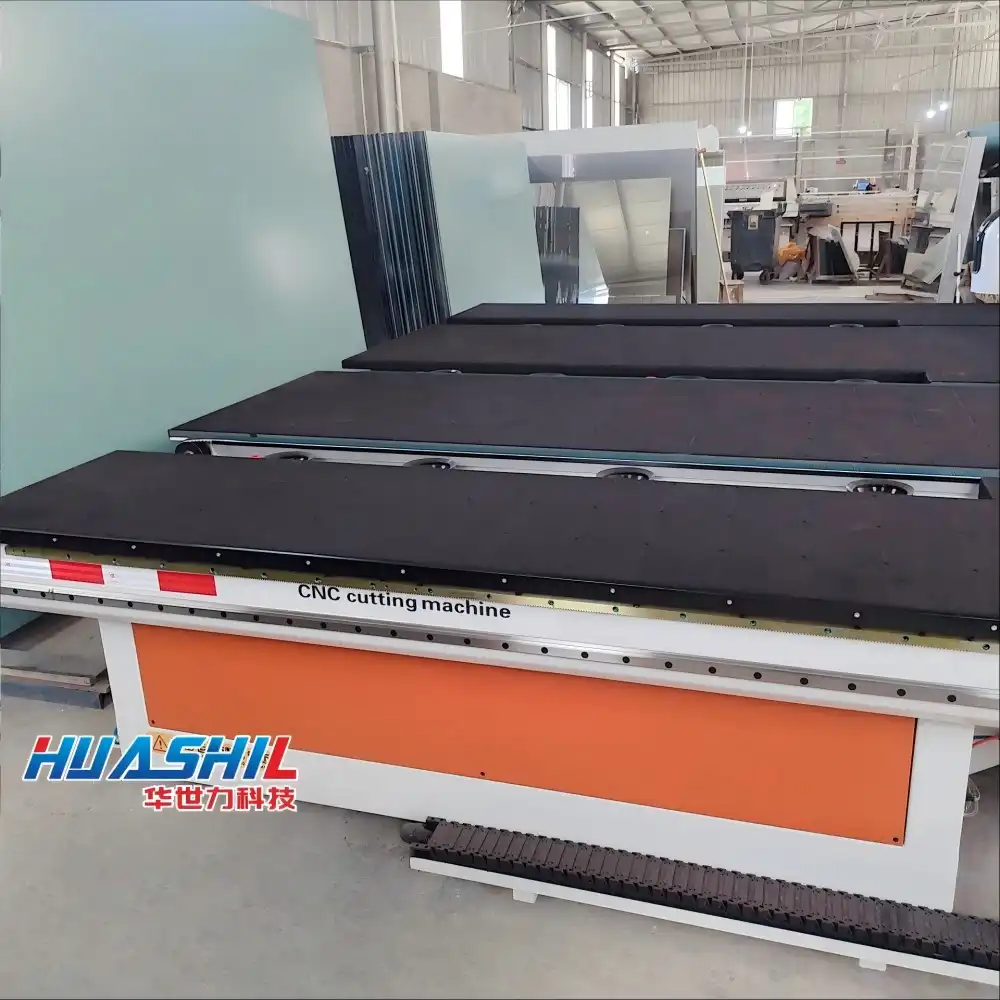
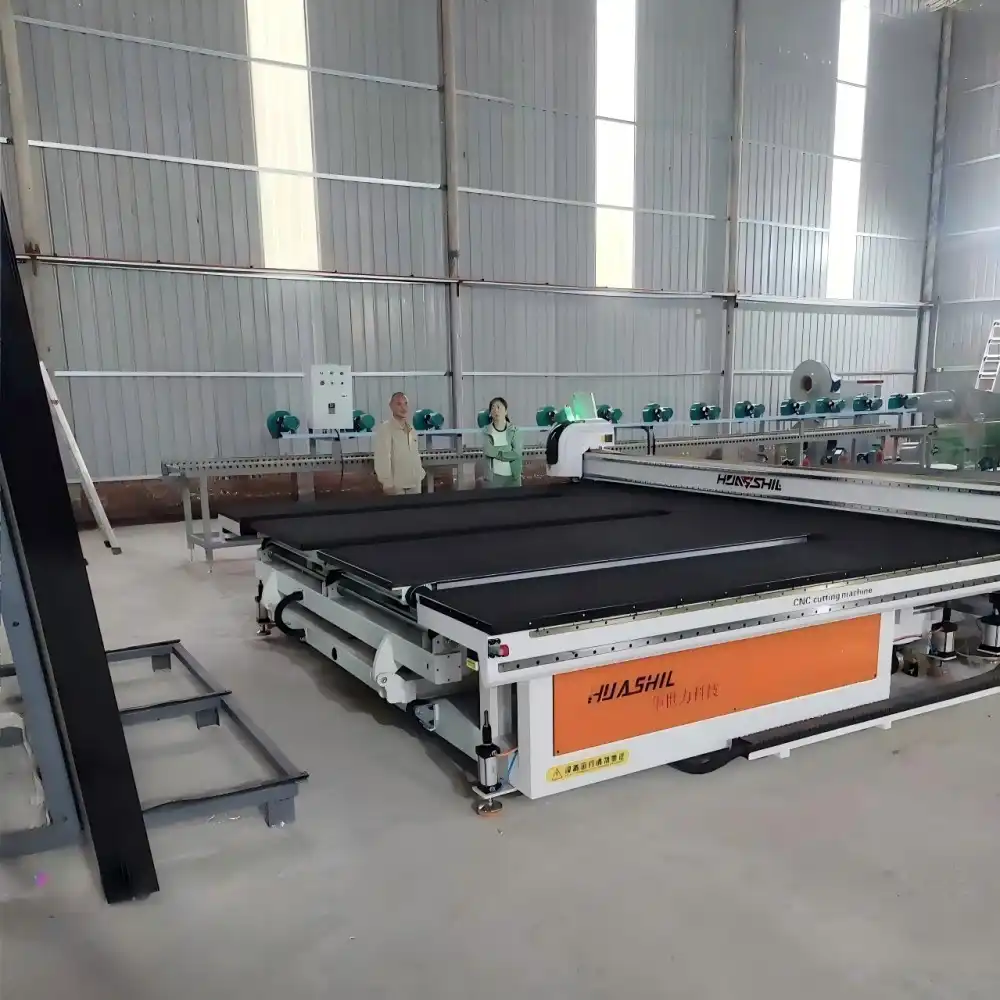
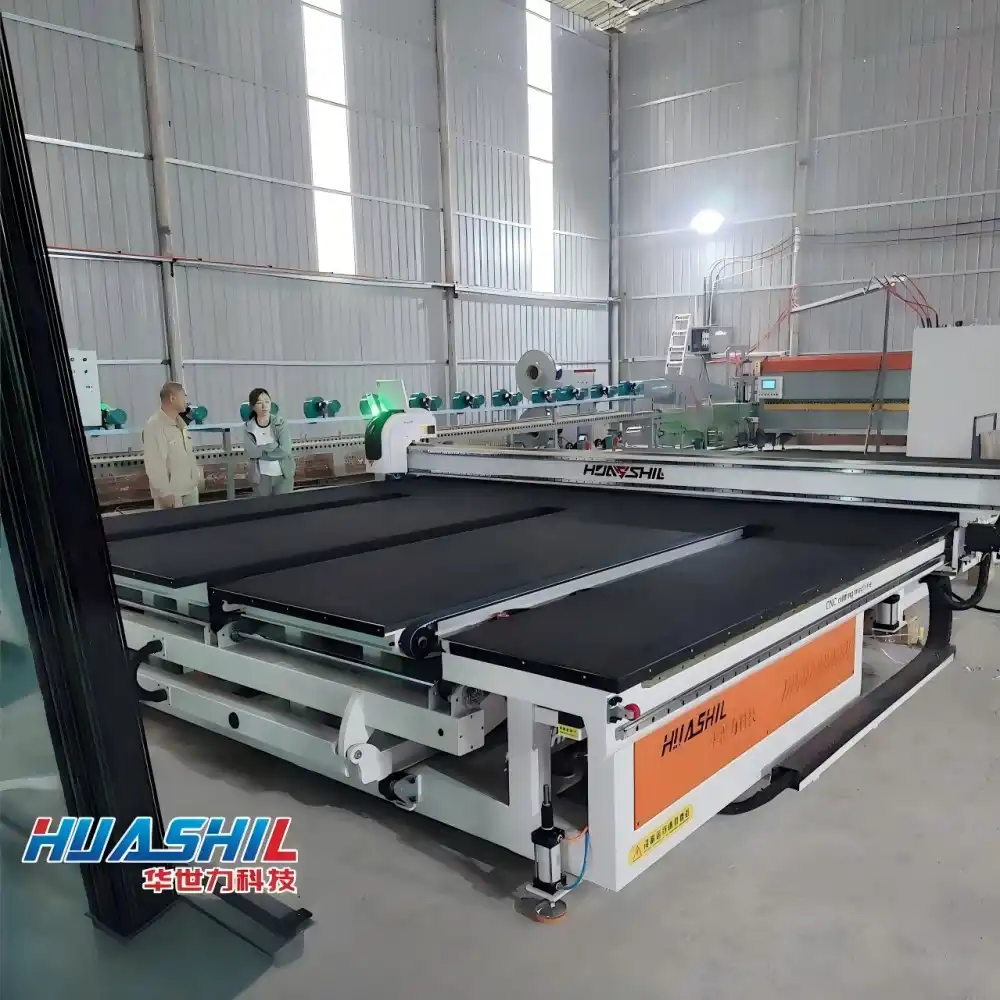
Shandong Huashil Automation Technology Co., Ltd. has decades of experience making glass processing equipment with sophisticated engineering and dependability. We provide wastewater treatment and complete glass production systems, including our flagship HSL-LSX6133 automated cutting equipment with three integrated tables (loading, cutting, and breaking) optimized by Optima software. This equipment, with adjustable 2+2 stations and six grand arms per side, meets the accuracy and throughput needs of architectural glass and curtain wall fabricators for glass sizes up to 6100×3300mm.
When evaluating a glass industry air flotation machine supplier, consider our experience servicing North American window fabrication factories, building system integrators, and furniture makers when choosing a glass industry air flotation machine provider. Complete technical documentation for engineering review, clear commercial bids for procurement teams, and extensive warranty coverage with timely replacement parts delivery. Contact salescathy@sdhuashil.com to discuss your wastewater treatment needs and explore bespoke solutions that interact with your manufacturing processes. We provide extensive capacity analysis, equipment sizing recommendations, and ROI forecasts based on your facility's operational factors and discharge needs.
References
1. Smith, R.L., & Johnson, M.K. (2021). Advanced Wastewater Treatment Technologies for Glass Manufacturing Facilities. Industrial Water Treatment Association Press.
2. Chen, W., & Martinez, E.F. (2020). "Dissolved Air Flotation Performance in Mineral Processing Wastewater Treatment." Journal of Environmental Engineering, 146(8), 04020087.
3. Thompson, A.J. (2022). Glass Industry Environmental Compliance Handbook: Water and Waste Management Strategies. Technical Publications International.
4. Environmental Protection Agency. (2019). Development Document for Effluent Limitations Guidelines and Standards for the Glass Manufacturing Point Source Category. EPA-821-R-19-003.
5. Williams, D.P., & Kumar, S. (2021). "Comparative Analysis of Flotation Technologies for Industrial Wastewater Treatment." Water Environment Research, 93(4), 612-628.
6. International Glass Manufacturing Association. (2020). Best Available Techniques Reference Document for Glass Manufacturing: Water Treatment Systems. European Commission Joint Research Centre.