




When glass production goes beyond handling by hand, safety and economy change in big ways. The glass loading table with arm is an important piece of machinery for companies that work with large amounts of float and tempered glass, like architectural glass makers, curtain wall manufacturers, and furniture manufacturers. This piece of equipment has both a reinforced loading platform and an articulated arm system. This lets workers place glass sheets precisely while lowering their physical strain. The arm can reach across the table surface and handle glass sheets up to 3660x2440 mm with controlled accuracy that can't be achieved by hand. This directly addresses production problems in high-volume facilities.
Understanding Glass Loading Tables with Arms: What They Are and How They Work
Find out what glass loading tables with arms are and how they work. Glass loading tables with arms add technological help to the process of moving things around. The arm part acts as an extension that grabs, moves, and places glass sheets on processing equipment without the need for multiple people to organize their movements.
Core Components and Operating Principles
There is an air float system built into the glass loading table with an arm that makes a cushion under the glass sheets. Hundreds of small air jets make the surface almost frictionless, so a single person can easily move big glass panels across it. The flexible arm is attached to the frame of the table and has vacuum suction cups on the ends that hold the glass sides firmly. The arm is moved to the next processing station, such as a cutting line, edging machine, or tempering furnace, by workers using a remote control. This pulls the glass sheet off the flotation surface.
Operators don't have to stay in one place because of remote control features, especially the ability to walk in any direction. This ability to move around is useful in factories where processing lines are spread out over long lengths or where the size of the glass changes during different shifts.
Advantages Over Traditional Loading Methods
When workers handle glass by hand, they have to organize moves, which can lead to injuries or broken glass. When plans change between making different sizes of glass, fixed transport systems aren't very flexible. Both of these problems can be fixed with air float glass loading tables with arms that have robotic arms. When production leaders switch from manual to automated loading systems, they say that labor costs go down by about 40% and breakage rates during loading processes go down by more than 60%. These numbers come from getting rid of human mistakes at the most vulnerable times of handling.
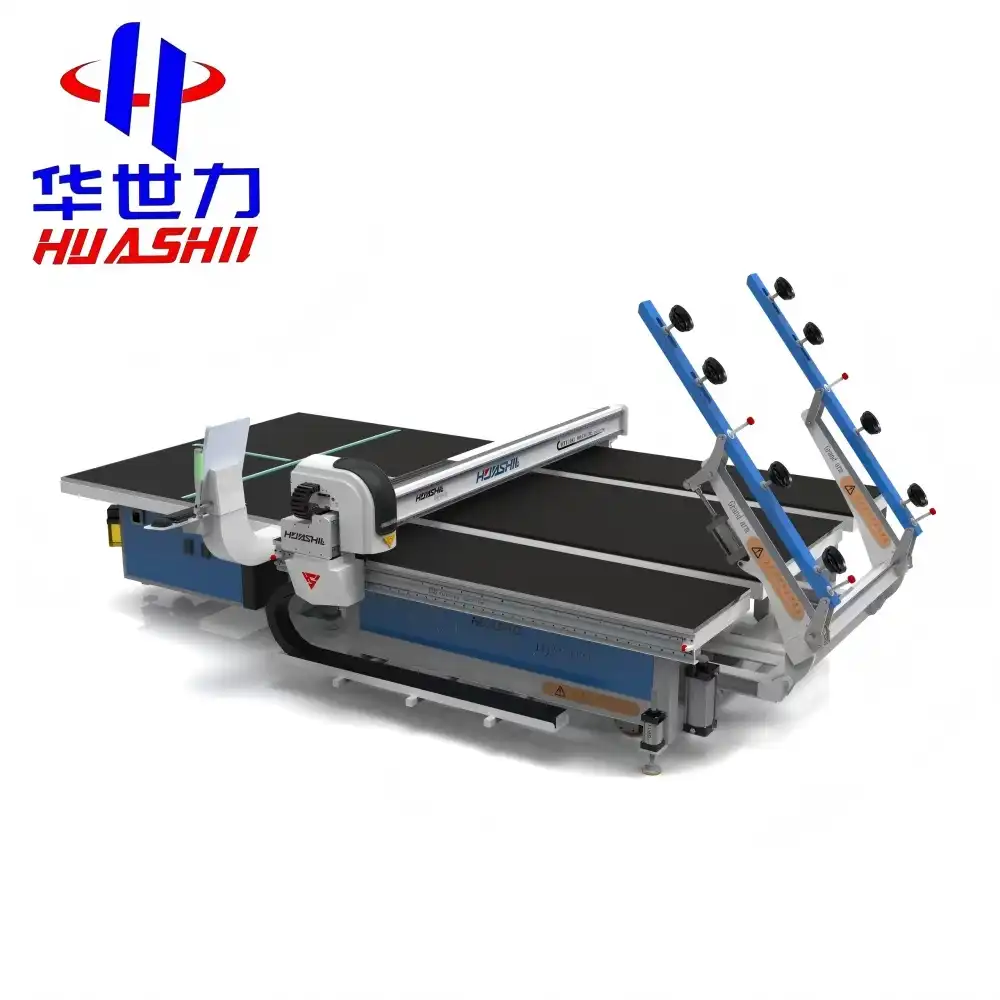
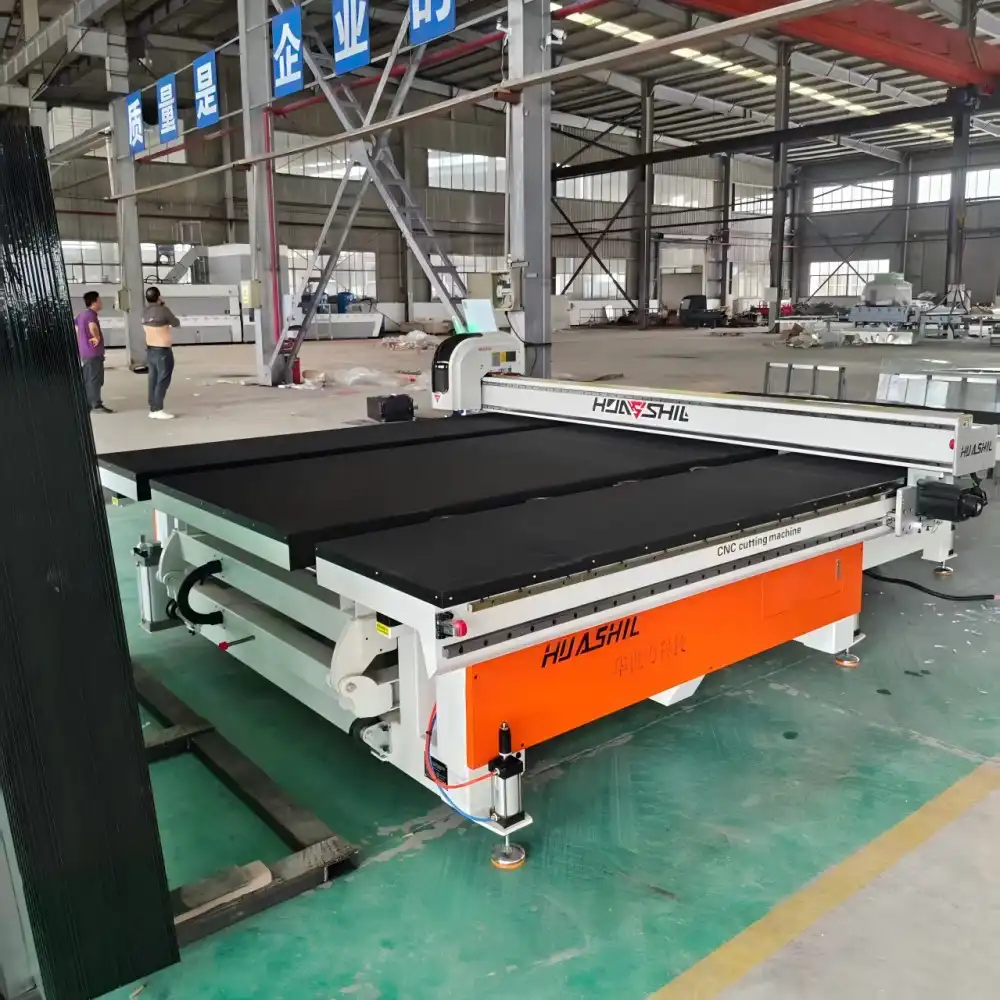
This method is shown by the HSL-SPT3624 type, which is made for glass sheets up to 3660x2440 mm. Its automatic loading system works with the air flotation system and built-in breaking table to make a seamless flow from receiving raw glass to the first steps of processing.
Key Performance Metrics and Safety Guidelines for Glass Loading Tables with Arms
Production managers and technical teams compare the performance of loading tools to certain standards. With these measures, you can tell if a system works well with current lines or if it adds new bottlenecks. Choosing a reliable glass loading table with arm manufacturer ensures that both performance and safety standards are met.
Critical Specifications to Evaluate
Capacity limits are set by the largest measurements of the glass. The HSL-SPT3624 can hold sheets that are 3660 mm x 2440 mm, which makes it good for normal architectural glass uses and large curtain wall panels. It doesn't matter how much something weighs—tempered glass weighs a lot more than float glass of the same size because the mass changes when it is heated. Loading arms that are made well can hold more than 500 kg without moving or losing their grip cups.
Arm reach affects how much room is covered. A flexible arm that can turn 360 degrees can reach the whole table surface and equipment next to it, so there is less need for transfer stations in between. Cycle time is the amount of time it takes for the arm to go from the starting position to placing a glass sheet on downstream equipment and then back to the starting position again. For standard-sized glass, competing systems can do this loop in less than 45 seconds.
Safety Compliance and Maintenance Protocols
When something has CE certification, it means it meets European safety standards for things like electrical parts, emergency stop systems, and steps to protect the user. ISO 9001 approval shows that quality management methods were used during production, which ensures that the quality of each batch of equipment is the same.
Checks on the air pump are the first part of daily maintenance. To keep the glass from getting scratched, the float system needs clean, dry air with steady air pressure. Operators check vacuum suction cups for damage or wear that makes the grip weaker. Arm joints are oiled once a week to keep them from mechanically locking, and they are calibrated once a month to make sure that the placement accuracy stays within ±2 mm.
Safety rules say that every operator station must have an emergency stop button within arm's reach. Protective sensors find things in the arm's way and stop it from moving before it hits something. We suggest lockout methods during maintenance and safety training refreshers every three months to keep operators aware of pinch points and cleared zones.
Comparing Glass Loading Tables with Arms: Selecting the Right Solution for Your Facility
Buying things depends on how well the features of the tools match the needs of production and the available budget. Depending on the size of the business, different amounts of automation are needed.
Manual Versus Electric Arm Systems
Electric systems that do everything for you cost 30 to 40 percent more than manual loading tables with basic arm support. The action of the arm is controlled by hydraulic levers or gas triggers, and the machine can handle 20 to 50 glass sheets per day. These methods lower stress on the body without needing complex control integration.
Programmable logic controls are built into electric arm loading tables and automate the movement patterns. Operators set the measurements of the glass and the coordinates of the location. The system then loads without constant human input. This system works well for businesses that process more than 100 sheets of paper every day and can afford to spend more on capital because the costs of labor are higher. Calculations of return on investment usually show payback times of 18 to 24 months for factories with two shifts.
Integration with Production Line Ecosystems
The HSL-SPT3624's breaking table feature shows how smart design thinking can be used. After being cut, glass sheets need to be carefully broken along the score lines. In traditional workflows, glass is moved from the cutting table to a different area for breaking. This takes time and increases the risk of damage when handling. Integrated breaking tables stop this transfer, so the glass stays on the floating surface while workers use special tools to apply breaking pressure.
In places where glass working equipment is spread out over a lot of floor space, the ability to walk with a remote control becomes very important. Instead of putting several fixed loading stations, one mobile glass loading table with arm coverage can serve multiple processing tools. This saves money on equipment and makes better use of floor space.
Procurement Guide: How to Buy the Ideal Glass Loading Table with Arm
When engineering teams and buying managers choose what loading tools to buy, they have to think about a lot of things. Structured review stops expensive mismatches between what the tools can do and what the production needs.
Defining Facility Requirements
First, write down how much glass is currently being processed, what the standard sheet size is, and what the output mix is. Fixed-configuration tools that are designed for standard sizes help architectural glass fabricators do their jobs better. Facilities that handle special orders with frequent size changes need systems that can adapt to a wide range of dimensions.
Check the floor, room, and ceiling height that are available. For loading tables with arms, there needs to be more space around them than the table itself, usually an extra 1.5 meters on each side where the arm works. Arm height extension may be limited by low overhead buildings or utilities that are placed on the ceiling.
Budget planning includes more than just the price of the item. The costs of installation include updating the electricity service, increasing the capacity of the compressed air system, and possibly strengthening the floor to support the weight of the spread equipment. Training is another cost factor; workers who are switching from manual methods need two to three days of training to become skilled in automated operation.
Supplier Evaluation Criteria
Having access to technical help is what sets reliable providers apart from those who don't offer much after-sales service. The conditions in which glass-making equipment works are tough, so parts will wear out and sometimes stop working. Suppliers who keep extra parts in stock in the US make sure that replacements are sent out quickly, which cuts down on downtime. We give more weight to manufacturers whose direct technical help lines are staffed by engineers who know how to fix certain kinds of equipment.
When facilities add glass loading tables with arms to current production lines, the ability to customize is important. For standard equipment, you might need to change the mounting height, connect the control system to monitoring software, or make sure the suction cups are set up in a certain way for polished glass. Manufacturers who can do both OEM and ODM can meet these needs without having to wait too long for parts.
The terms of the warranty show that the maker trusts the stability of the equipment. Standard guarantees that last between 12 and 18 months offer basic safety, but complete warranties that last up to 24 months show that the build quality is better. Make it clear what the warranty covers—just the parts, or parts plus work and the cost of the service techs' journey.
Enhancing Operational Efficiency: Tips to Optimize Use of Your Glass Loading Table with Arm
Buying new equipment is one step toward making operations better. To get the most value out of an asset, it needs to be carefully optimized throughout its entire lifecycle.
Installation and Integration Best Practices
Place the loading tables so that the glass doesn't have to move too far between handling sites. The glass loading table with an arm should be next to the cutting equipment so that you can see the edging machines and washing stations clearly. This design cuts down on arm cycle times and limits the chances of handling damage during moves.
The quality of the compressed air has a direct effect on how well the floating device works. Put in place particulate filters and moisture separators before the air flow to the glass loading table with an arm. Air that is dirty brings things onto the float surface, which increases the chance of scratches that lower the quality of the glass. Dryers for the air stop mist that could leave water spots on glass.
The electricity service should provide stable power that meets the needs of the equipment. Voltage changes make it hard for controllers to work and shorten the life of servo motors. We suggest that glass loading table with arm systems have their own circuit breakers to keep them from being affected by power drops that happen when other equipment in the building starts up.
Troubleshooting Common Operational Issues
Most of the time, vacuum line air leaks or old cup seals cause suction cups to fail to grip glass. Every three months, check the ties between the vacuum hoses and fix any loose fittings or replace any cracked hoses. After 6 to 12 months of continuous use, suction cups harden and crack on the surface. Replacing them before they break during a shift keeps this from happening.
Positioning error shows up when the arm drops glass pieces in places that aren't where they're supposed to be. This movement is caused by arm joints that are mechanically loose. Tighten the mounting bolts and use the control interface to change the servo motor's tuning settings. When there is a persistent error, the manufacturer's expert help is needed to figure out whether the encoders or control systems are broken.
When dust or glass particles get stuck in individual air jets, they cause the flotation surface to be uneven. As part of the monthly cleaning process, the perforated float plate needs to be taken off, and the air tubes need to be back-flushed with compressed air. Facilities that are in areas with a lot of dust should have their cleaning done every two weeks.
Long-Term Maintenance and Staff Development
Schedules for preventive maintenance increase the useful life of tools by taking care of wear and tear before they break. Different parts need to be oiled at different times. For example, arm joints need to be oiled once a week, while servo motors need to be oiled every 500 hours of use. Keep records of the repair work you do in order to find trends that can help you figure out when to replace parts.
Operator training goes beyond just setting up the tools for the first time. Cross-train several staff members to keep work going even when someone isn't there. Advanced training in regular troubleshooting gives workers the skills to fix small problems without having to wait for a repair technician to arrive, which cuts down on downtime and keeps production plans on track.
Performance tracking shows areas that can be improved. Keep an eye on measures like cycle times, cases of broken glass, and unplanned downtime. Patterns in this data help make specific improvements, like changing the speed at which the arms move, finetuning the flotation air pressure, or making changes to the schedule that make sure output loads are balanced.
Conclusion
Using glass loading tables with articulated arms to automatically move glass around makes float and tempered glass processes much more efficient. The technology directly deals with the rising cost of labor while also making things safer and cutting down on the waste that comes from damaged materials during handling. To choose the right tools, you need to carefully look at your long-term operational goals, output needs, and facility limitations. Proper installation, operator training, and strict care are all important for a successful execution. For companies that work with architectural glass, curtain wall systems, and make furniture that have to compete in tough markets, this technology is a smart way to improve their business capabilities and get ahead of the competition.
FAQ
1. What is an air float glass loading table?
Compressed air jets are spread out across the surface of an air float glass loading table to make a thin air cushion under the glass sheets. This cushion keeps the glass from touching the table directly, which greatly reduces the amount of rubbing that happens. Operators move big glass panels with little force, so scratches and other damage to the surface don't happen, which would lower the quality of the result. The air float theory works especially well for coated and tempered glass, whose worth depends on how well the surface is maintained.
2. What are the primary applications across different industries?
Plants that make architectural glass use glass loading tables with arms to move curtain wall panels and large window glass for business buildings. Auto glass makers use these methods to make windshields and side windows, where precise measurements affect how well the glass fits. The equipment's ability to handle different shapes and sizes is helpful for furniture makers who work with glass countertops and closet doors. Smart mirror makers who work with specialty coated glass count on air float systems to keep the coating from getting damaged while the glass is being handled.
3. How do these systems improve production line safety?
Multiple people don't have to lift and carry big sheets of glass by hand when automated loading arms are used. This eliminates the main risk of damage that comes with handling glass. When something gets in the way of the arm's movement, emergency stop methods stop it right away. Less human handling also means less broken glass, which means there are no more dangerous sharp edges when sheets crack during manual moves. Using a remote handle keeps people out of the arm's range of motion, which makes the workplace even safer.
Partner with HUASHIL for Advanced Glass Loading Solutions
HUASHIL offers tried-and-true automatic technology backed by manufacturing know-how in a wide range of glass-making equipment categories. Our HSL-SPT3624 glass loading table with arm combines the accuracy of air flotation with the freedom of being handled from a distance. It has been approved by CE and ISO 9001 standards, which make sure that it meets quality and safety requirements. Our engineering teams like how detailed our technical paperwork is and how quickly we respond to changes to specifications. Procurement managers like clear prices and dependable arrival dates that help them plan projects. We keep spare parts on hand and offer direct technical help to keep your production as smooth as possible, as a well-known glass loading table with arm maker. Email our team at salescathy@sdhuashil.com to talk about the unique needs of your building and get thorough specs that are made for your production setting.
References
1. Glass Industry Standards Committee. "Safety Guidelines for Automated Glass Handling Equipment in Industrial Settings." Journal of Glass Processing Technology, vol. 28, no. 4, 2023, pp. 156-173.
2. Manufacturing Automation Research Institute. "Comparative Analysis of Manual versus Automated Loading Systems in Glass Fabrication." Industrial Efficiency Quarterly, vol. 15, no. 2, 2023, pp. 89-104.
3. International Glass Technology Association. "Performance Specifications for Air Flotation Glass Handling Systems." Technical Standards Publication Series, 2024 edition.
4. Chen, Wei, and Thomas Rodriguez. "Cost-Benefit Analysis of Automation Investment in Architectural Glass Production." Production Management Review, vol. 41, no. 3, 2023, pp. 201-219.
5. European Committee for Glass Industry Standards. "CE Certification Requirements for Robotic Glass Handling Equipment." Safety Compliance Documentation, revised 2024.
6. American Glass Processing Association. "Best Practices for Glass Loading System Installation and Maintenance." Industry Guidelines Handbook, 12th edition, 2024.